guides
Akuamma (Picralima nitida): The West African Seed That Binds Opioid Receptors Without Being an Opioid
Complete akuamma guide covering Picralima nitida tropical tree ecology, West African traditional use as an analgesic and anti-malarial.
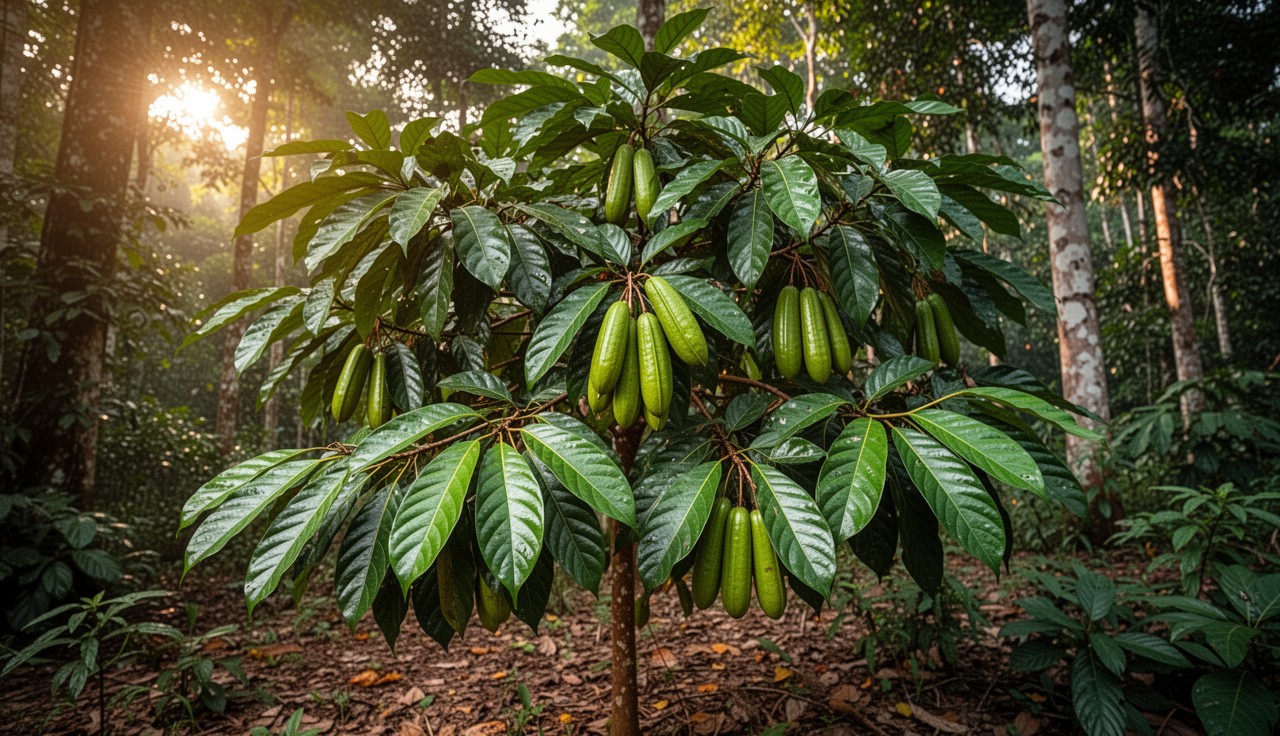
Botanical Description & Ecology
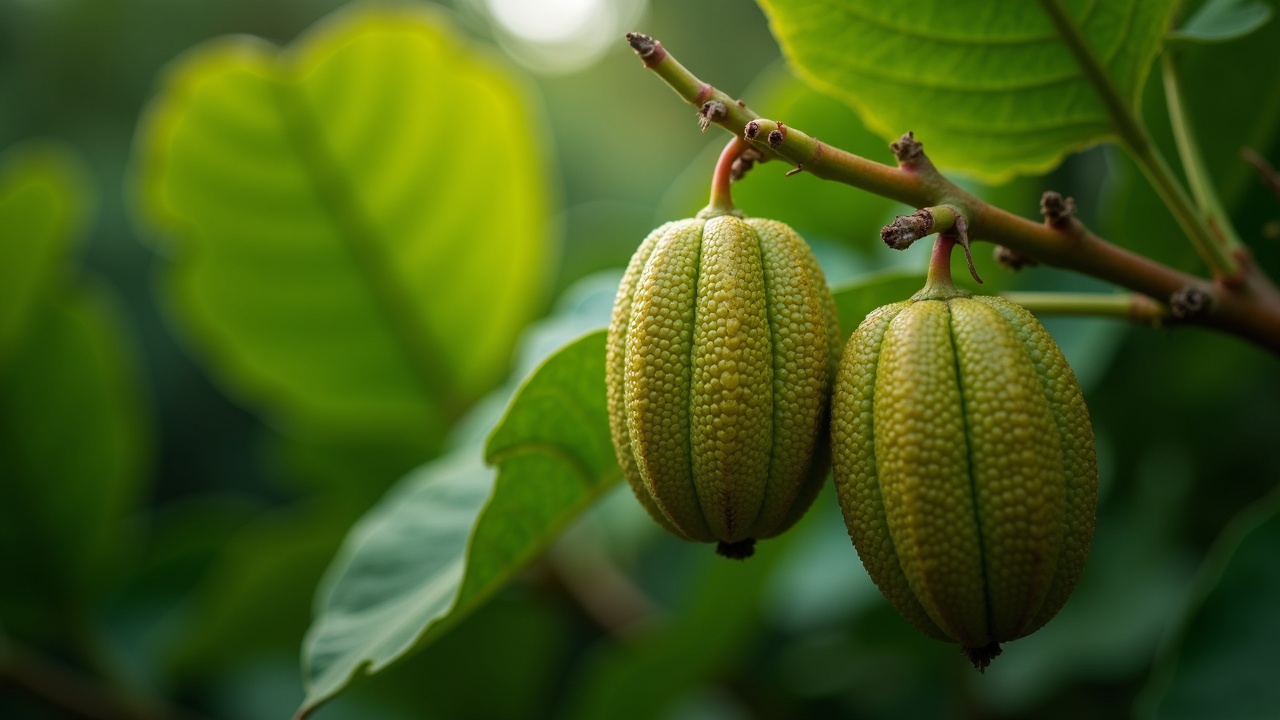
Picralima nitida is a medium-sized evergreen tree in the Apocynaceae (dogbane) family, native to the tropical rainforests of West and Central Africa, from Guinea east to Uganda and south to the Democratic Republic of Congo. The tree grows 50–115 feet tall with a straight trunk, dark green glossy leaves, and white, fragrant flowers that produce large, orange-yellow fruits resembling avocados. Each fruit contains 30–50 flattened, brown seeds embedded in a soft, edible pulp. It is these seeds that are the primary traditional medicine.
The common name “akuamma” comes from the Akan language of Ghana, where the tree is widely distributed in the coastal and transitional forest zones. In Nigeria it is called osi igwe or obi isi (Igbo), dafe (Efik), or abere (Yoruba). Unlike many plants in this guide, akuamma cannot be practically grown outside of the tropics and is presented here primarily as an ethnobotanical and pharmacological subject.
Traditional Use in West Africa
In Ghanaian and Nigerian traditional medicine, akuamma seeds are the most commonly cited use of P. nitida. For pain, 1–3 seeds are chewed or the seed is ground and swallowed with water. The bitterness is extreme. Uses include headache, toothache, general body pain, fever (particularly malarial fever), intestinal complaints, and as a post-operative analgesic in rural areas without access to pharmaceutical painkillers. The bark decoction is used separately for fever and as an antiemetic. Traditional dosing is conservative—typically 1–2 seeds per episode of pain, not regular daily use.
Growing Context
| Parameter | Details |
|---|---|
| Native Habitat | Tropical lowland rainforest; coastal and semi-deciduous forest zones of West Africa |
| Temperature | 75–95°F year-round; no frost tolerance whatsoever |
| Rainfall | 1,500–3,000mm annually; pronounced wet season |
| Soil | Deep, fertile forest soils; well-drained laterite or alluvial |
| Light | Understory to canopy; seedlings shade-tolerant, mature trees reach canopy |
| Maturity | 5–8 years to first fruiting; peak production at 15–25 years |
| Feasibility Outside Tropics | Not practical; strictly tropical; no documented successful cultivation in temperate zones |
Phytochemistry
| Compound | Significance |
|---|---|
| Akuammine | Primary seed alkaloid (0.56% of seed weight); monoterpene indole alkaloid; mu-opioid receptor agonist in binding assays (Ki ~200nM); structurally related to mitragynine (kratom) |
| Akuammicine | Indole alkaloid; weaker opioid activity; additional pharmacological targets under investigation |
| Pericine | Indole alkaloid; anti-inflammatory and antioxidant properties in preclinical models |
| Akuammidine | Minor alkaloid; cardiovascular effects noted in animal studies |
| Alstonine | Indole alkaloid shared with Alstonia species; antipsychotic-like properties in animal models |
| Pseudoakuammigine | Minor alkaloid with emerging pharmacological interest |
The pharmacological interest in akuamma centers on akuammine’s interaction with opioid receptors. In receptor binding assays, akuammine shows partial agonist activity at mu-opioid receptors—the same receptors targeted by morphine, codeine, and synthetic opioids. However, the binding affinity is significantly weaker than pharmaceutical opioids, and the functional pharmacology (partial agonism vs. full agonism) suggests a different and potentially safer interaction profile. This is conceptually similar to how kratom’s mitragynine interacts with opioid receptors, and indeed akuammine and mitragynine are structurally related monoterpene indole alkaloids.
Growing Context
Preclinical Research
- Analgesic activity: Animal studies consistently demonstrate significant pain-reducing effects of P. nitida seed extract, with potency estimated at 10–30% of morphine in writhing and hot plate assays. Effects are partially reversed by naloxone, confirming opioid receptor involvement.
- Anti-inflammatory: Seed extracts reduce inflammation in carrageenan-induced paw edema models, suggesting activity beyond pure opioid-mediated analgesia.
- Anti-malarial: Multiple preclinical studies confirm activity against Plasmodium parasites, supporting the extensive traditional use for malarial fever. The alkaloid alstonine shows particular promise.
- Anti-diabetic: Animal studies show blood glucose-lowering effects, consistent with traditional Nigerian use for diabetes management.
- No human clinical trials: As of this writing, no published randomized controlled trials have evaluated akuamma in humans. All evidence is preclinical (animal and in vitro) or ethnobotanical (traditional use reports).
The Safety Knowledge Gap
Akuamma seeds are increasingly sold online in Western countries as a “natural pain reliever” and, sometimes, as a kratom alternative. This trend has outpaced scientific understanding of safety. No formal toxicology studies, pharmacokinetic profiles, or drug interaction assessments have been published for akuamma alkaloids in humans. The traditional West African use—occasional chewing of 1–2 seeds for acute pain—represents a very different pattern from the daily supplemental use being adopted by some Western consumers. Until proper safety studies are conducted, caution is strongly advised, particularly regarding interactions with opioid medications, sedatives, and other CNS-active substances.
Legal Status & Market
Akuamma seeds are currently legal and unscheduled in the United States, European Union, and most other jurisdictions. They are sold as a botanical supplement, typically as whole seeds or ground seed powder. However, the regulatory landscape could change as the product attracts more attention and scrutiny. The FDA has not evaluated akuamma for safety or efficacy, and no therapeutic claims can be made.
Legal Status & Market
Precautions
- No human safety data: The absence of formal human safety studies is the primary concern. Traditional use provides some reassurance but is not a substitute for pharmacovigilance.
- Opioid interactions: Given mu-opioid receptor activity, combining akuamma with opioid medications, benzodiazepines, or other CNS depressants could theoretically produce additive effects. Avoid concurrent use.
- Dose uncertainty: Alkaloid content varies between seed batches, making consistent dosing difficult. Start with the lowest possible dose.
- Pregnancy/lactation: Contraindicated; no safety data.
- Driving/operating machinery: May cause drowsiness or impaired coordination at higher doses.
- Dependence potential: Unknown; opioid receptor activity raises theoretical concerns about dependence with chronic use.
Extraction & Preparation
Akuamma seeds (Picralima nitida) contain pericine, akuammine, and alstonine — indole alkaloids with opioid receptor binding activity (pericine) and antiplasmodial/adrenergic effects (others). These alkaloids are concentrated in the endosperm of the dried seed. The outer hull contains negligible alkaloid content and is separated before extraction.
Simple Home Methods
Akuamma’s indole alkaloids — pericine, akuammine, alstonine — behave like most alkaloids: they’re more soluble in acidic solvents as salts, and more lipophilic as freebases. This gives you several effective extraction routes from seeds using common household materials.
Seed powder (simplest method): Remove the outer hull from dried seeds by cracking and peeling. Grind the cleaned white endosperm in a coffee grinder to fine powder. The powder is intensely bitter; pack into empty gelatin capsules, mix with honey, or blend into a small amount of nut butter or dark chocolate. Start with one seed equivalent (~300–400 mg) and assess before increasing dose.
Vinegar or lemon juice extraction: Grind cleaned seeds to powder and combine with apple cider vinegar or fresh lemon juice (roughly 5 mL of liquid per 1 gram of seed powder). Stir thoroughly and let sit 30 minutes — the acidic pH keeps the alkaloids in their water-soluble salt form. Strain through a coffee filter to remove insoluble plant material. The clarified liquid is an effective preparation — take in small amounts mixed with juice or honey water to mask the bitterness. Refrigerate and use within 2 weeks.
Mason jar ethanol tincture: Grind seeds to coarse powder, add to a mason jar, and cover with Everclear diluted to 60% or 80-proof vodka. Macerate 3 weeks, shaking every few days. Filter through a coffee filter twice until the liquid runs clear. Take conservatively in small measured doses; the tincture is more concentrated than whole seed powder.
High-pH oil extraction (freebase method): Make the vinegar extraction first (above). Then stir in ¼ teaspoon of baking soda per cup of liquid — the pH will rise, converting the alkaloid salts to their lipophilic freebase form. Add an equal volume of MCT oil or coconut oil and shake vigorously for 2 minutes. Let the layers separate. The oil layer contains the freebased alkaloids. Skim off the oil, discard the aqueous layer. The alkaloid oil can be taken in small doses or encapsulated by mixing with coconut butter. Far more concentrated than the acidified water preparation — use with care.
Ash extraction: Burn dried seeds in a fireproof vessel (cast iron or ceramic) until fully reduced to light grey ash — no black char remaining. Stir ash into water (1 teaspoon of ash per cup of water) and simmer 5 minutes. Strain through cloth to remove charred particles. The alkaline ash water contains alkaloid salts dissolved in a strongly basic solution. Traditional indigenous technique. To concentrate: add vinegar drop by drop until the solution is roughly neutral (no longer tastes soapy), which crashes some alkaloid salts out of solution — filter the precipitate if desired. This method yields lower efficiency than ethanol extraction but requires no purchased solvents.
Seed Powder (Traditional Method)
The traditional West African preparation is direct consumption of finely ground seed powder, typically 1–3 seeds equivalent (0.3–1 gram powder) per dose. The powder is extremely bitter. It is commonly packed into an edible capsule or mixed with honey or food. This remains the most complete preparation, preserving the full alkaloid spectrum including minor alkaloids that modulate the primary compounds’ effects.
Cold Ethanol Extraction
For a more concentrated preparation, macerate finely ground seed (hull removed) in 70% ethanol at a 1:5 ratio for 2–3 weeks. Pericine and akuammine are both ethanol-soluble. Filter through a fine cloth, then activated carbon if desired for decolorization. Evaporate under low heat (below 104°F / 40°C) or use a rotary evaporator for concentration. The alkaloids have moderate heat stability; avoid prolonged high heat. Dose the resulting extract conservatively — extract is more concentrated than seed powder by a factor of the starting ratio.
Acidified Water Extraction
Indole alkaloids can be extracted with acidified water (pH 3–4, using citric or acetic acid), then basified to free base for precipitation or back-extraction into an organic solvent. This is a more involved process suited to producing isolated alkaloid fractions rather than full-spectrum preparations. For most applications, the ethanol macerate or direct powder is both simpler and therapeutically superior due to the entourage effect of the full alkaloid profile.
Product Use
Akuamma is used in West African traditional medicine for fever (particularly malaria), pain management, and diarrhea. Pericine’s mu-opioid partial agonist activity underlies the analgesic and antidiarrheal effects. Akuammine shows antiplasmodial activity in vitro. Clinically, it is used as a safer-profile analgesic alternative for mild-to-moderate pain. The critical safety consideration is avoiding combination with CNS depressants, including alcohol, benzodiazepines, or other opioid-acting substances — additive CNS depression risk is real.
References
- Menzies et al., Journal of Ethnopharmacology (1998) — opioid receptor binding of akuammine
- Ansa-Asamoah et al., Journal of Ethnopharmacology (1990) — analgesic and anti-inflammatory activity
- Duwiejua et al., Journal of Ethnopharmacology (2002) — anti-inflammatory mechanisms
- Addy, Ghana Medical Journal (various) — traditional use documentation
- Olajide et al., Phytomedicine (2000) — anti-malarial activity of Picralima nitida