guides
Blue Java Banana (Musa × paradisiaca ‘Blue Java’): Comprehensive Cultivation, Processing, and Use Guide
Complete guide to Blue Java banana cultivation covering cold-tolerant ABB-type dessert banana growing parameters, propagation from pups.
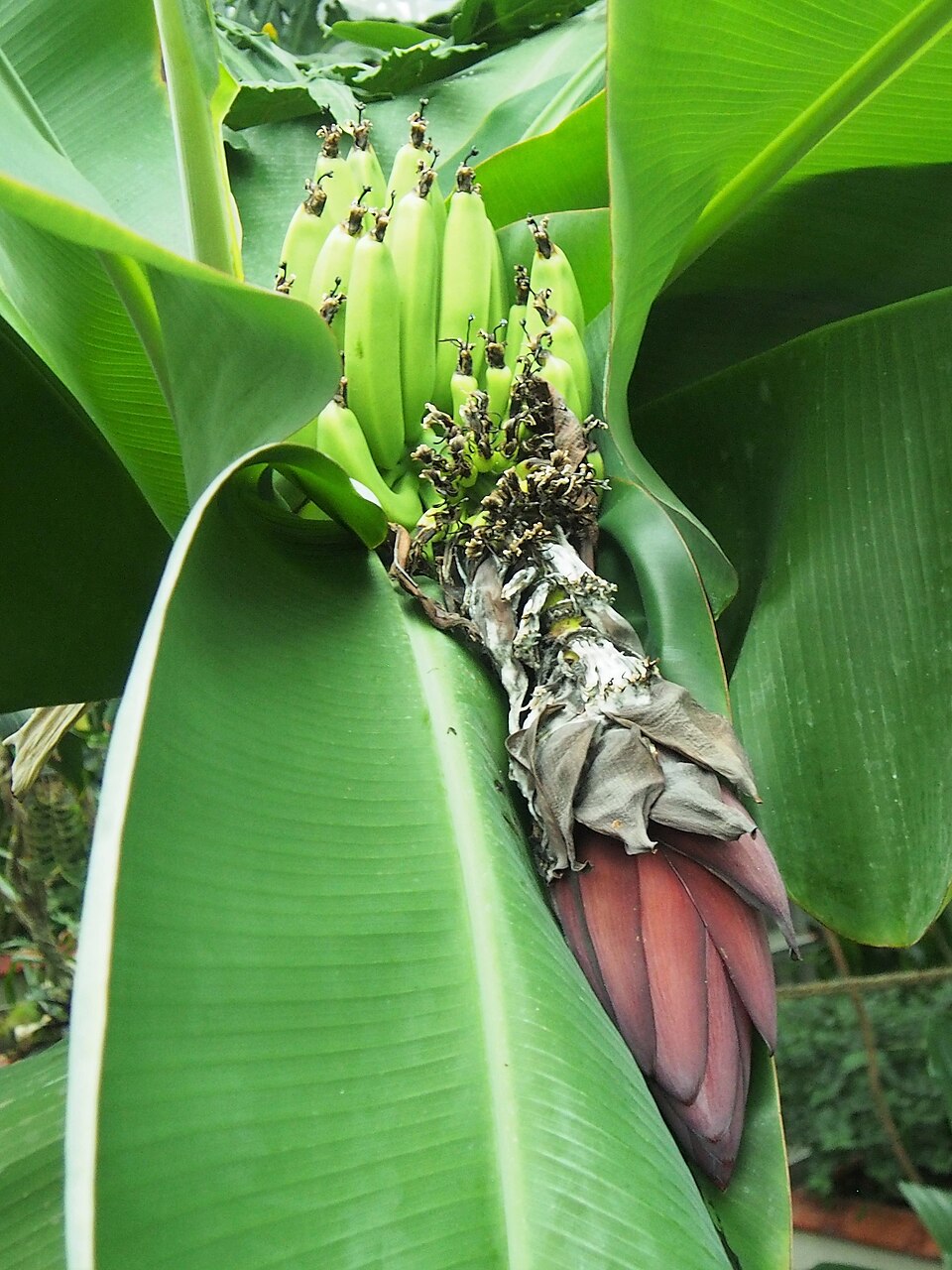
Botanical Description and Modern Scientific Context
Blue Java banana is a cold-tolerant dessert banana cultivar belonging to the Musa × paradisiaca complex, commonly referred to as an ABB-type banana due to its genetic contribution from Musa balbisiana. It is best known for its silvery-blue, wax-coated fruit when unripe and its soft, aromatic flesh when mature.
The plant is a large herbaceous perennial—not a tree—composed of tightly packed leaf sheaths forming a pseudostem that typically reaches 15–20 feet (4.5–6 m) in height. Leaves are broad, flexible, and prone to wind tearing, an adaptive trait that reduces storm damage.
In food science and plant physiology literature, Blue Java bananas are discussed for resistant starch, simple sugars (glucose, fructose, sucrose), potassium, vitamin B6, dopamine (a catecholamine present in peel and pulp), and phenolic compounds. These are evaluated in the context of energy metabolism, gut fermentation, electrolyte balance, and antioxidant signaling—not as pharmacological agents.
Compound Context
The functional compounds in Blue Java banana—resistant starch, dopamine, phenolics, and potassium—are studied within the framework of food-based nutritional research. Dopamine present in banana tissue acts as an antioxidant but does not cross the blood–brain barrier when consumed orally, distinguishing dietary intake from neurotransmitter activity.
Origin, Naming, and Historical Context
Blue Java is believed to have originated in Southeast Asia or the Pacific, later spreading to Hawaiʻi, Central America, and subtropical regions due to its relative cold tolerance.
The nickname “Ice Cream Banana” comes from the fruit’s soft texture and vanilla-like aroma when fully ripe—a sensory description rather than a chemical equivalence.
Historically, ABB bananas like Blue Java were favored in marginal banana climates where pure dessert bananas (AAA Cavendish types) struggled with cold, wind, or poor soils.
Plant Morphology, Growth Habit, and Reproductive Biology
Blue Java produces a single fruiting stalk per pseudostem. After fruiting, that pseudostem dies back and is replaced by pups (suckers) emerging from the underground rhizome (corm).
Flowers are borne on a large inflorescence (“banana heart”), with female flowers forming hands of fruit and male flowers appearing later. Fruits are seedless (parthenocarpic); propagation is entirely vegetative.
Vegetative Reproduction
Because Blue Java fruits are parthenocarpic (seedless), the plant cannot be grown from seed. All propagation relies on division of pups from the parent rhizome or commercial tissue culture, making genetic uniformity both a benefit for consistency and a vulnerability regarding disease pressure.
Climate Adaptation and Environmental Requirements
Blue Java is among the most cold-tolerant dessert bananas, suitable for USDA zones 8b–11, with protection. Growth slows dramatically below 15°C (59°F), delaying flowering and fruiting.
| Parameter | Optimal Range |
|---|---|
| Growth Temperature | 20–32°C (68–90°F) |
| Cold Tolerance | Brief exposure to -2°C (28°F) with damage; rhizomes survive colder if mulched |
| Sunlight | Full sun (8+ hours) |
| Humidity | Moderate to high |
| Wind Exposure | Shelter strongly recommended |
| USDA Hardiness Zones | 8b–11 |
Cold Climate Strategy
In USDA zones 8b–9a, growers commonly apply heavy mulch (12–18 inches) over the corm area before first frost and may wrap pseudostems in insulation. While above-ground tissue may be killed back, well-mulched rhizomes typically regenerate in spring, though this significantly extends the time to fruiting.
Soil Preferences, Fertility, and Root Zone Management
Blue Java requires rich, well-drained soils with high organic matter. Waterlogging causes corm rot and must be avoided.
Ideal Soil Parameters
| Parameter | Specification |
|---|---|
| Soil pH | 5.5–7.0 |
| Texture | Loam or sandy loam |
| Drainage | Excellent; waterlogging causes corm rot |
Nutrient Demands
Nutrient demands are high due to rapid biomass production. Regular feeding is essential throughout the growing season.
| Nutrient | Role |
|---|---|
| Nitrogen (N) | Drives leaf and pseudostem growth |
| Potassium (K) | Critical for fruit size, sweetness, and texture |
| Magnesium (Mg) | Supports chlorophyll production and sugar transport |
| Calcium (Ca) | Structural integrity of tissues |
Propagation, Establishment, and Growing Systems
Propagation is done exclusively via vegetative methods, as Blue Java fruits are seedless.
Propagation Methods
- Sword suckers (narrow-leaved, robust base) are preferred for field planting
- Tissue culture plants are common commercially and offer disease-free starting material
Planting Parameters
| Parameter | Specification |
|---|---|
| Spacing | 10–15 ft (3–4.5 m) |
| Planting Depth | Corm just below soil surface |
Growing Systems
- Backyard orchards
- Food forests and agroforestry systems
- Wind-protected open fields
- Large containers (with reduced yield)
Growth Cycle, Flowering, and Yield Dynamics
Time from planting to flowering is typically 12–18 months, depending on temperature and fertility. Time from flowering to harvest is 3–5 months. Cooler climates extend the timeline but may improve flavor development.
| Parameter | Typical Range |
|---|---|
| Planting to Flowering | 12–18 months |
| Flowering to Harvest | 3–5 months |
| Hands per Bunch | 8–12 |
| Individual Fruit Length | 6–9 inches |
| Bunches per Pseudostem | One |
Harvest Timing and Fruit Quality Optimization
Harvest occurs when fruits are full-sized but still green, with rounded edges rather than angular. The distinctive wax coating gives unripe fruit its characteristic blue-gray appearance.
Fruits ripen off the plant and develop:
- Soft, custard-like texture
- Mild sweetness
- Vanilla-like aroma
Ripeness Indicators
The transition from angular to rounded cross-section is the primary harvest indicator. Fruits harvested too early remain starchy and lack the signature custard texture. Fruits left too long on the plant may split or attract pests. Off-plant ripening at controlled temperatures produces the best eating quality.
Post-Harvest Handling and Storage
Fully ripe Blue Java fruit is delicate and best consumed quickly. Proper post-harvest management is essential to preserve quality.
| Parameter | Conditions | Notes |
|---|---|---|
| Ripening Temperature | 14–18°C (57–65°F) | Optimal range for flavor development |
| Ethylene Exposure | Natural or induced | Accelerates ripening uniformity |
| Chilling Injury Threshold | Below 13°C (55°F) | Causes browning and off-flavors |
Chilling Injury Warning
Cold storage below 13°C (55°F) causes chilling injury in banana fruit, resulting in skin browning, failure to ripen properly, and degraded texture. Refrigeration is not recommended for unripe fruit.
Processing, Preservation, and Transformation
Blue Java banana lends itself to a wide range of processing methods due to its high sugar content and distinctive custard-like texture when ripe. Resistant starch converts to sugars as the fruit ripens, influencing both texture and processing behavior.
| Method | Application | Notes |
|---|---|---|
| Fresh Consumption | Primary use | Best at full ripeness for custard texture |
| Freezing | Smoothies and desserts | Flesh freezes well; preserves aroma |
| Dehydration | Sweet chips | Low heat preserves aroma compounds |
| Purees | Baking and frozen desserts | Versatile base ingredient |
| Fermentation | Lactic or alcoholic fermentation | Sugars support diverse fermentation cultures |
| Cooking | Gentle heat applications | Enhances sweetness without starchiness |
Culinary Use, Intake Forms, and Integration
Blue Java is prized for fresh eating at full ripeness, where its custard-like texture and vanilla-like aroma are most pronounced. Typical intake mirrors other dessert bananas at approximately 100–150 g per serving.
Common Culinary Applications
- Raw consumption at full ripeness
- Smoothies and frozen blends
- Banana “ice cream” preparations (frozen and blended)
- Baking—muffins, breads, and cakes
- Fermented banana products
Functional Compound Context
Blue Java banana contains several compounds of interest in nutritional and food science research. These are evaluated within dietary frameworks, not as pharmacological agents.
| Compound | Context |
|---|---|
| Resistant Starch (unripe) | Ferments in the gut; prebiotic function |
| Simple Sugars (ripe) | Rapid energy source (glucose, fructose, sucrose) |
| Dopamine | Antioxidant activity in peel and pulp; does not cross the blood–brain barrier |
| Potassium | Electrolyte balance and cellular function |
| Phenolics | Oxidative stress modulation; higher concentration in peel than pulp |
Peel Phenolic Content
Banana peel contains significantly higher phenolic content than the pulp, though it is not commonly eaten in Western dietary traditions. Research into peel-derived extracts and flours continues in the context of food waste reduction and functional ingredient development.
Leaves, Pseudostems, and Secondary Uses
Beyond fruit production, Blue Java banana plants provide several secondary resources that contribute to sustainable growing systems.
- Leaves: Used traditionally as food wrappers and cooking surfaces in Pacific and Southeast Asian cuisines
- Pseudostems: High in moisture and fiber; composted or used as mulch to return nutrients to the soil
- Banana heart: Edible when young; fibrous but nutritious, used in salads and cooked dishes
System Integration and Additional Considerations
Blue Java fits well into subtropical food forests and agroforestry systems, providing multiple ecosystem services beyond fruit production.
Agroforestry Benefits
- Shade provision for understory crops
- Substantial biomass production for composting and mulching
- Wind buffering for adjacent plantings
- Rapid nutrient cycling through decomposing pseudostems and leaves
Management Priorities
- Mulching and pup management are critical for sustained production
- Cold protection (mulch, windbreaks) expands the viable growing range
- Regular removal of spent pseudostems maintains planting vigor
- Limiting pup count to 3–4 per mat concentrates energy into productive growth
Scientific and Authoritative References
This article is informed by data and conclusions drawn from, but not limited to:
- Robinson & Saúco, Bananas and Plantains
- FAO Banana Production Manuals
- Stover & Simmonds, Bananas
- USDA Germplasm Resources Information Network (GRIN): Musa
- McGee, On Food and Cooking
- Anyasi et al., Food Chemistry
- EFSA Nutritional Assessments of Bananas
- Dadzie & Orchard, Routine Post-Harvest Screening of Banana
- Daniells et al., Acta Horticulturae
- Duke, Handbook of Edible Plants