plants
Blue Lotus
Complete Blue Lotus (Nymphaea caerulea) monograph: origin and history, active compounds, full cultivation guide, harvest and processing, and extraction.
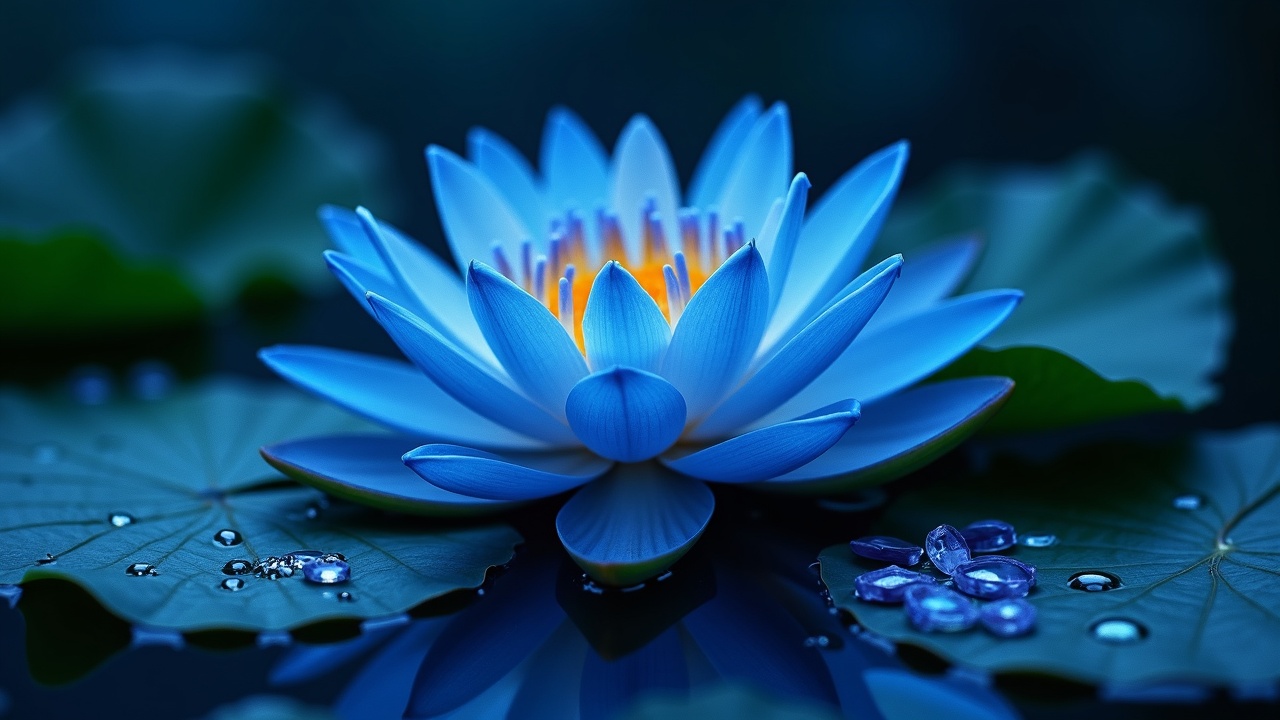
Nymphaea caerulea — A Complete Grower's and Herbalist's Monograph
Pure Euphoria Botanicals • Nored Farms • Austin, Texas
Quick Reference
| Common Name | Blue Lotus, Blue Egyptian Lotus, Sacred Blue Lily of the Nile |
| Botanical Name | Nymphaea caerulea Savigny (Family: Nymphaeaceae) |
| Native Range | Nile River delta and East Africa; naturalized in South and Southeast Asia |
| Plant Type | Aquatic rhizomatous perennial; grows in still or slow-moving fresh water |
| USDA Hardiness | Zones 10–11 outdoors year-round; container overwinter viable in Zones 7–9 |
| Active Compounds | Nuciferine, nornuciferine, aporphine alkaloid analogs, quercetin and kaempferol glycosides |
| Primary Actions | Anxiolytic; mild euphoric; sedative; antispasmodic; historically used as a ritual entheogen |
| Best Extraction Method | Everclear 190-proof tincture (1:5) for full alkaloid spectrum; hot water tea for milder preparations |
| Harvest Part | Flowers fresh and dried; rhizomes in traditional preparations |
| Bloom Season | Late spring through early fall outdoors; year-round indoors with controlled lighting |
| Container Water Volume | Minimum 15 gallons per plant; 25–50 gallons for maximum productivity |
| Legal Status | Legal in the United States; not a scheduled substance; unregulated as a botanical |
Origin and History
Blue lotus holds one of the longest and most visually documented relationships between a plant and human civilization. The flower appears in Egyptian art and religious texts continuously for more than three thousand years. It was associated with Nefertem, the lotus god of the sunrise, and with the creation mythology that placed a blue lotus floating on the primordial waters at the moment of the world's formation.
Archaeological analysis of residues in ancient Egyptian vessels has found evidence of blue lotus macerated with alcohol, supporting the hypothesis that the flower was consumed as a psychoactive sacrament in ritual contexts. Ethnobotanist William Emboden's analysis in the 1980s of Egyptian funerary art documented scenes of priests and nobles inhaling from blue lotus flowers or drinking preparations containing them.
Botanical clarification: Blue lotus is not a true lotus. Nymphaea caerulea belongs to the water lily family Nymphaeaceae, not Nelumbonaceae, which contains the sacred lotus of Hindu and Buddhist iconography (Nelumbo nucifera). The two plants are botanically distant relatives with distinct chemistry, morphology, and cultivation requirements.
Active Compounds
Nuciferine: Dopamine and Serotonin Receptor Modulator
Nuciferine is an aporphine alkaloid that acts as an antagonist at dopamine D2 receptors and serotonin 5-HT2A receptors.
- D2 dopamine antagonism: Calms the background activation of dopamine-driven seeking behavior, producing relaxed contentment without CNS depression
- 5-HT2A antagonism: Creates subtle heightening of sensory awareness and loosening of rigid filtering (the perceptual brightening reported by users). Note: psychedelic compounds like psilocybin act as agonists at this receptor; nuciferine acts as an antagonist, producing a gentler, qualitatively different effect
Onset: 30–60 min oral; 10–20 min sublingual. Duration: 2–4 hours.
Nornuciferine and Flavonoid Glycosides
Nornuciferine shares receptor binding targets with nuciferine at somewhat lower affinity, extending duration. Quercetin and kaempferol glycosides inhibit CYP450 enzymes responsible for alkaloid metabolism, slowing nuciferine breakdown and extending effective duration — the pharmacokinetic entourage effect.
Compound Summary
| Compound | Receptor/Target | Effect | Onset |
|---|---|---|---|
| Nuciferine | D2 dopamine antagonist; 5-HT2A serotonin antagonist | Calm euphoria; mild sensory brightening; anxiety reduction; muscle relaxation | 30–60 min oral; 10–20 min sublingual |
| Nornuciferine | D2/5-HT2A antagonist (weaker affinity) | Extends and supports nuciferine effects | Same as nuciferine |
| Quercetin glycosides | CYP450 inhibition; antioxidant | Extended alkaloid duration; free radical scavenging | Gradual; ongoing |
| Kaempferol derivatives | Antioxidant; mild anti-inflammatory | Neuroprotective; mood-supporting background activity | Gradual; ongoing |
Cultivation: Full Growing Guide
Understanding the Native Ecology
Nymphaea caerulea evolved in the Nile River delta and East African rift lakes, characterized by warm shallow water (typically 18–36 inches deep over a mud substrate), 8–12 hours of strong sunlight daily, and warm air temperatures consistently above 70°F. The critical environmental parameters in order of importance are water temperature, light duration and intensity, and substrate nutrition. Air temperature is secondary as long as water temperature is maintained above 60°F.
Container Setup
Blue lotus cultivation requires a two-container system: an inner rhizome pot and an outer water container.
Inner Rhizome Pot
- Size: 2–5 gallon capacity depending on outer container size
- Material: Unglazed terracotta or standard nursery plastic; avoid containers that may leach plasticizers
- Drainage: No drainage holes needed; the pot sits submerged — waterlogged conditions are normal
- Weight: If using plastic, press pea gravel firmly over the substrate surface to prevent the pot from shifting
Substrate for the Inner Pot
Standard potting mix is completely wrong — it floats immediately when submerged. Blue lotus needs a dense, heavy substrate.
- Heavy garden topsoil: Simplest option if you have access to true loam or clay-loam soil
- Commercial aquatic plant substrate: Most reliable for beginners; specially formulated to stay dense when submerged
- Clay loam mix: 60% garden soil, 30% clay, 10% aquatic plant fertilizer granules
- Top dressing: Finish with 1–2 inches of clean pea gravel to prevent the substrate from clouding the water
Outer Water Container
| Size | Notes |
|---|---|
| Minimum 15 gallons | Supports one rhizome; limited flowering |
| 25–50 gallons | Good production; 1–2 rhizomes |
| 100+ gallons (stock tanks, Rubbermaid tubs) | Maximum flower production |
- Color: Dark-colored containers absorb more solar radiation and maintain warmer water temperature through cool nights
- Depth: 12–24 inches of usable water depth
Water Depth Management
| Growth Stage | Depth Above Crown |
|---|---|
| New plantings and seedlings | 3–6 inches |
| Established vegetative growth | 6–10 inches |
| Mature flowering plants | 8–14 inches (10–12 inches optimal) |
Adjust depth by placing the inner pot on a brick or inverted pot inside the outer container.
Water Temperature: The Critical Variable
Water temperature governs every aspect of blue lotus performance. Maintaining it above 65°F is the single most important management decision.
| Temperature | Effect |
|---|---|
| Below 50°F | Rhizome at risk of cold damage |
| 50–60°F | Survives but does not grow |
| 65–75°F | Active vegetative growth |
| 75–85°F | Vigorous growth; regular flower production (optimal) |
| Above 90°F | Some stress; shade the container |
In Zone 8 central Texas, outdoor water temperature in dark containers in full sun typically reaches the optimal flowering range by late April or early May and stays there through September or October.
Preventing overheating: Move containers to afternoon shade during sustained 100°F+ days, or shade container walls with burlap while leaving the water surface open to light.
Light Requirements
Minimum 6 hours of direct sunlight on the water surface and pads daily. 8–10 hours produces the most consistent flowering and highest alkaloid concentration.
- Outdoor position: South-facing or southeast-facing; avoids hottest afternoon sun while maximizing total daily light hours
- Indoor growing: 300–500 PPFD full-spectrum LED, 14 hours daily, positioned 12–18 inches above water surface
Water Quality and Chemistry
- Dechlorination: Add aquarium-grade sodium thiosulfate or let tap water sit uncovered 24 hours (chloramine requires chemical treatment)
- pH: 6.5–7.5; standard freshwater in this range needs no adjustment
- Water changes: Replace 10–20% of volume monthly to prevent dissolved organic matter accumulation
- Algae: Normal; does not harm the lotus; control by reducing fertilizer or adding water snails
Fertilization
Critical rule: fertilizer must go into the substrate pot — never directly into the water column. Adding liquid fertilizer to the water drives explosive algae blooms without effectively feeding the plant.
- Aquatic plant fertilizer tablets: Insert 1–2 tablets into substrate every 3–4 weeks during active growth (April–September); push 2–3 inches deep
- Stop fertilizing in late September; never fertilize a dormant or stressed plant
- Signs of deficiency: Pale yellow-green pads; slow pad production; no flowering despite adequate light and temperature
- Signs of excess: Excessive algae; very dark green pads with slow growth
Seasonal Management: Zone 8 Texas
Spring Transition (March–April)
Move containers outdoors when nighttime temperatures reliably stay above 55°F and outdoor water temperature consistently reaches at least 60°F during the day. Expect slow or no new growth for 2–3 weeks. Resume fertilization once new growth appears.
Peak Growing Season (May–September)
New pads emerge; flowers appear as water reaches the 75–85°F optimal range. Top up containers weekly as evaporation increases. Monitor water temperature during heat waves.
Fall Transition (October–November)
As days shorten and temperatures drop, flower production slows then stops. Pads begin to yellow and die back naturally — this is normal dormancy, not death. Move containers indoors before the first frost drops water temperature below 50°F.
Winter Overwintering (November–March)
- Place in warmest available indoor location with best available natural light, or set up a grow light
- Aquarium heater in the water column is the most reliable way to maintain water temperature above 60°F; set to 65–68°F
- Reduce water changes to once over the winter
- Reduce fertilizer to one tablet per 6–8 weeks
Propagation
Rhizome Division (Preferred Method)
A mature plant developing multiple growing crowns along the rhizome can be divided in early spring. Each crown with a section of attached rhizome 4–6 inches long can become an independent plant.
- Remove inner pot from the water container
- Carefully excavate the rhizome from substrate
- Using a clean sharp knife, cut the rhizome to separate crowns at natural division points
- Allow cut surfaces to dry and callus for 2–4 hours before replanting
- Plant each division horizontally in fresh substrate, growing tip pointing upward
- Cover with pea gravel; return to water container at 4–6 inches depth until established
Seed Propagation
Seedlings take 2–3 years to reach flowering size vs. 1 season for rhizome divisions.
- Scarify seeds by lightly sanding or nicking the seed coat
- Place in clean water at room temperature (75–85°F); bright location
- Seeds begin germinating in 5–14 days
- When seedlings have 2–3 floating leaves, transfer to individual small pots at very shallow depth (2–3 inches)
- Increase water depth gradually as the plant grows
Pests and Disease
| Problem | Signs | Management |
|---|---|---|
| Aphids on flower buds | Colonies on buds and pad undersides | Strong water spray; insecticidal soap at 0.5% concentration |
| Water snails | Usually beneficial grazers | Remove by hand if population becomes excessive |
| Fungal leaf spot | Brown/black spots on pads, edges expanding inward | Remove affected pads; improve air circulation; regular water changes |
| Rhizome rot (most serious) | Foul smell; soft mushy tissue; sudden collapse | Prevention through proper substrate and water temperature; if caught early: remove affected portion, treat cut with activated charcoal, replant in fresh substrate |
Container Maintenance Schedule
| Frequency | Task |
|---|---|
| Monthly | Top up evaporation; insert fertilizer tablets; observe for overcrowding; 15–20% water change |
| Annually (spring) | Remove dead plant material; divide rhizome if crowded; refresh top substrate layer |
| Every 2–3 years | Full substrate replacement; replant most productive rhizome sections |
Harvest and Post-Harvest Processing
Flower Harvest Timing
The flower is the primary medicinal harvest. Alkaloid concentration is highest on the second or third day of opening, when the flower is fully expanded and fragrance is at peak. The bloom cycle is 3–4 days.
Visual cues for optimal harvest:
- All petals fully open and flat; central corona fully visible
- Distinctive sweet aquatic fragrance strongest at 6–12 inches distance
- Fully saturated blue-violet color on all petals
- Yellow anthers in the center fully open and visible
Harvest Method
- Harvest in the morning, 1–2 hours after the flower has opened
- Cut the flower stem at the base, just above the water surface
- Handle gently; avoid crushing petals
- Process immediately or store in a sealed glass container in the refrigerator for no more than 24 hours
Drying Flowers
Target: complete moisture removal with substrate temperature never exceeding 95°F. Higher temperatures begin to degrade alkaloids and volatile aromatic compounds.
- Air drying (preferred): Single layer on mesh racks in a warm room (70–85°F) with good air circulation; 3–7 days
- Food dehydrator: Set at 95°F or the lowest available setting; verify temperature with a thermometer; 6–12 hours
- Never: Oven above 95°F; direct afternoon sun in summer; microwave
Completeness test: Properly dried flowers are brittle and snap cleanly when bent.
Storage of Dried Flowers
- Container: Amber glass jar with airtight lid; avoid clear glass or plastic
- Location: Cool dark cabinet away from heat sources
- Silica gel: Add a food-grade desiccant packet for additional moisture protection
- Labeling: Mark with harvest date and source
- Shelf life: 12–24 months when stored correctly
Quality Assessment
- Color: Petals should retain characteristic blue-violet color; browning or gray indicates improper drying or age
- Fragrance: Sweet, slightly aquatic floral fragrance; hay-like smell indicates old material or improper drying temperature
- Structure: Petals should be intact and brittle
- Identity verification: Multiple other Nymphaea species are sold as 'blue lotus'; white or pink flowers sold as blue lotus are a different plant
Extraction Methods
Method 1: Hot Water Tea
- Bring water to 170–180°F — do not bring to full boil
- Dose: 3–5 grams dried flowers per cup for mild effect; 5–8 grams for moderate
- Steep 15–20 minutes in a covered vessel
- Strain, pressing flowers gently; consume warm
- Effects onset: 30–60 minutes; duration 1.5–3 hours
Method 2: Everclear Tincture — Recommended Primary Method
190-proof ethanol extraction is the most complete and potent method for blue lotus. The full alkaloid spectrum — including lipophilic alkaloid forms that water cannot efficiently reach — is extracted. Everclear 190-proof is the ideal solvent.
Standard Cold-Process Tincture at 1:5 Ratio:
- Weigh dried blue lotus flowers: 1 gram per 5 mL of Everclear 190-proof
- Coarsely tear or grind flowers to increase surface area
- Place flowers in a clean amber glass jar with tight-fitting lid
- Pour Everclear at the 1:5 ratio; all flowers should be fully submerged
- Seal and shake vigorously for 2–3 minutes
- Store in a cool dark location for 4–6 weeks; shake daily for 30–60 seconds
- Strain through cheesecloth, then through a fine-mesh strainer or coffee filter
- Transfer to amber glass dropper bottles; label with plant name, ratio, percentage, and date
- Store away from heat and light; potency maintained for 3–5 years
Standard dose: 1–2 mL mild; 2–4 mL moderate; start at 1 mL and wait 60 minutes before redosing Sublingual delivery: Hold under tongue 60 seconds before swallowing; onset 10–20 minutes
Concentrated Extract: Evaporate the finished tincture in a wide glass dish at room temperature or under a gentle fan — never above 95°F — to a 5x–10x concentrate. Dissolve in vegetable glycerin, raw honey, or a small amount of Everclear for storage.
Method 3: Honey Elixir
The closest modern equivalent to ancient Egyptian preparation methods.
- Warm raw honey gently to 95°F using a double boiler; do not microwave
- Add dried flowers at 1 part flowers by weight to 8–10 parts honey by weight
- Stir thoroughly; seal and store at room temperature
- Invert or turn daily to keep flowers in contact with honey
- Infuse 3–4 weeks; strain by warming to 95°F to improve flow
- Dose: 1–2 teaspoons for mild effect; onset 45–75 minutes
- Shelf life: 6–12 months
Method 4: Glycerin Extract (Alcohol-Free)
- Combine 1 part dried flowers with 8 parts food-grade vegetable glycerin
- Place sealed jar in water bath at 140–150°F for 24–48 hours (slow cooker on lowest setting)
- Or cold-macerate for 8–12 weeks with daily shaking
- Strain and press; store in amber glass
- Shelf life: 12–24 months
- Glycerin extracts are less potent per mL than equivalent alcohol tinctures; dose at 2–3 times the tincture volume
Method 5: Oil Infusion
Not recommended as a primary medicinal preparation. The psychoactive alkaloids are polar compounds that do not extract significantly into carrier oils. An oil infusion captures only a small volatile aromatic fraction appropriate for topical massage oils or bath preparations only.
Extraction Method Comparison
| Method | Solvent | Alkaloid Extraction | Potency | Shelf Life | Best Use |
|---|---|---|---|---|---|
| Hot water tea | Water at 170–180°F | Moderate; water-soluble fraction | Mild to moderate | Same day | First-time users; daily gentle use |
| Everclear tincture (1:5) | 190-proof ethanol | Excellent; full alkaloid spectrum | High | 3–5 years | Primary medicinal product |
| Reduced tincture concentrate | Everclear evaporated | Excellent; highly concentrated | Very high | 2–3 years | High-potency product formulation |
| Honey elixir | Raw honey | Moderate | Moderate | 6–12 months | Traditional; pleasant; slow onset |
| Glycerin extract | Food-grade glycerin | Low to moderate | Low to moderate | 12–24 months | Alcohol-free product |
| Oil infusion | Carrier oil | Very low (volatile fraction only) | Negligible | 6–12 months | Topical and aromatic use only |
Safety, Dosage, and Interactions
Safety considerations:
- Nuciferine's dopamine receptor activity: do not combine with antipsychotics or Parkinson's disease medications without medical guidance
- Mild serotonergic activity: caution with SSRIs, SNRIs, and MAOIs
- Additive sedation with alcohol and CNS depressants; do not drive after use
- Do not use during pregnancy
- No established safety data for continuous daily long-term use; occasional to regular but not continuous daily use is the appropriate framework
Dosage Reference
| Preparation | Mild Effect | Moderate Effect | Notes |
|---|---|---|---|
| Dried flower hot water tea | 3–5g per cup | 5–10g per cup | Steep 15 min at 170–180°F |
| Everclear tincture (1:5) | 1–2 mL | 2–4 mL | Start at 1 mL; wait 60 min before redosing |
| Honey elixir | ½–1 teaspoon | 1–2 teaspoons | Slow onset 45–75 min |
| Glycerin extract | 2–4 mL | 4–8 mL | Less potent per mL; adjust dose accordingly |
Scientific References
Alkaloid Chemistry — Nuciferine and Aporphines
- [Bhakuni DS, Jain S. 1986. Proaporphine alkaloids. In: Brossi A (Ed.) The Alkaloids: Chemistry and Pharmacology, Volume 28. Academic Press, New York. pp. 95–182.]
- [Zhong Z, Yu H, Wang Y, et al. 2016. Pharmacological activities of nuciferine: a review. African Journal of Traditional, Complementary and Alternative Medicines. 13(4):9–16. doi:10.21010/ajtcam.v13i4.2 [UNVERIFIED — confirm DOI]]
- [Shrestha N, Bhattarai S, Thapa LB. 2006. Phytochemistry and biological activity of Nymphaea species: A review. Journal of Natural Products. (Review article) [UNVERIFIED — confirm full citation]]
Acetylcholinesterase Inhibition
- [Likhitwitayawuid K, Saengsooksree K, Tuchinda P, Rattanajak R, Kamchonwongpaisan S. 2009. Bioactive compounds from Nymphaea lotus. Zeitschrift fur Naturforschung C. 64(1-2):49–54. doi:10.1515/znc-2009-1-209 [UNVERIFIED — confirm DOI]]
Ethnobotany and Historical Use
- [Emboden WA. 1978. Narcotic plants: hallucinogens, stimulants, inebriants, and hypnotics, their origins and uses. Macmillan, New York.]
- [Emboden WA. 1981. Transcultural use of narcotic water lilies in ancient Egyptian and Maya drug ritual. Journal of Ethnopharmacology. 3(1):39–83. doi:10.1016/0378-8741(81)90028-5]
- [Rätsch C. 2005. The Encyclopedia of Psychoactive Plants: Ethnopharmacology and Its Applications. Park Street Press, Rochester, VT.]
Flavonoid Content
- [CITATION NEEDED: Nymphaea caerulea flavonoid kaempferol quercetin content + search: "Nymphaea caerulea flavonoid content kaempferol quercetin HPLC characterization"]
Botanical and Cultivation Reference
- [Perry LM. 1980. Medicinal Plants of East and Southeast Asia: Attributed Properties and Uses. MIT Press, Cambridge, MA.]
- [Slocum PD, Robinson P. 1999. Water Gardening: Water Lilies and Lotuses. Timber Press, Portland, OR.]
- [Texas A&M AgriLife Extension — Aquatic and Wetland Plants for Texas Water Gardens. agrilifeextension.tamu.edu]
"The lotus rises from the water every morning. So does the grower."
Tags
- plant-species: Nymphaea caerulea, blue lotus
- topic: plant-monograph, aquatic-cultivation, extraction, tincture, alkaloids, plant-medicine, entheogen-history
- type: monograph, growing-guide, extraction-guide, educational
- audience: herbalists, growers, product-formulators
- product-ref: blue-lotus-tincture, blue-lotus-extract
- zone: zone-8-focus, zone-10-11-outdoor