Growing
Calendula (Calendula officinalis): The Golden Wound Healer That Doubles as a Kitchen Spice
Complete calendula cultivation guide covering pot marigold botany, easy cool-season growing, triterpene and flavonoid chemistry.
On this page
Botanical Description
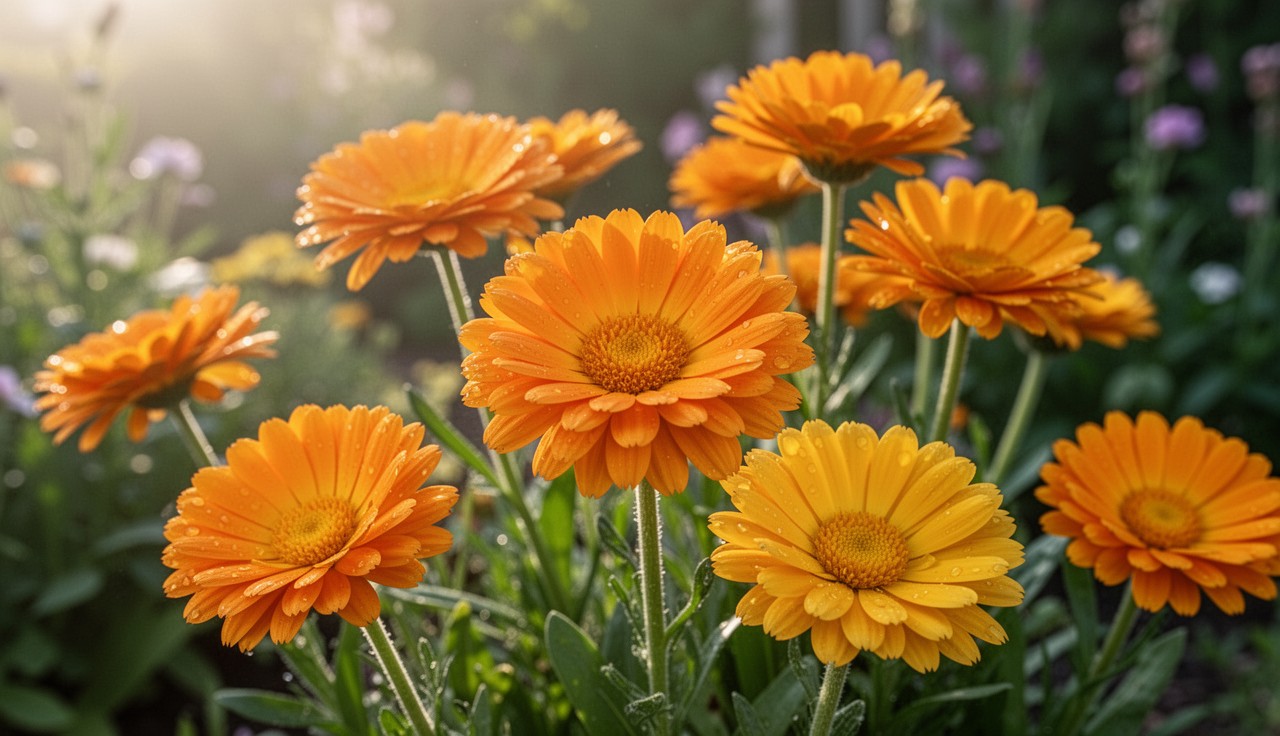
Calendula (Calendula officinalis), commonly called pot marigold, is a cheerful, fast-growing annual or short-lived perennial in the Asteraceae family, native to southern Europe. Plants grow 12–24 inches tall with slightly sticky, aromatic, lance-shaped leaves and striking 2–3 inch flower heads in shades of golden yellow to deep orange. The flowers open with the sun and close at dusk or during overcast weather, the name “calendula” derives from the Latin calendae (first day of the month), referring to its nearly year-round blooming habit in mild climates.
Calendula should not be confused with garden marigolds (Tagetes species), which are an entirely different genus with different chemistry. True calendula petals are edible and medicinal; Tagetes marigolds are not interchangeable.
Cool-Season Champion
In Texas, calendula reverses the normal growing calendar. It thrives in the cool months (October, May) when most garden annuals struggle, then fades in summer heat. Fall-planted calendula provides flowers through winter mild spells and peaks in spring, filling the gap when little else blooms. This counter-seasonal behavior makes it invaluable for year-round garden productivity.
Growing Requirements
| Parameter | Range / Tolerance |
|---|---|
| USDA Hardiness Zones | 2–11 (annual; survives light frost to ~25°F) |
| Light | Full sun to partial shade |
| Soil | Average, well-drained; tolerates poor soils; pH 6.0–7.0 |
| Moisture | Moderate; tolerates drought once established |
| Spacing | 8–12 inches; direct sow or transplant |
| Germination | 7–14 days; large, easy-to-handle curved seeds |
Harvesting and Processing
Harvest flower heads when fully open, in the morning after dew dries. Regular deadheading (picking flowers every 2–3 days) dramatically extends the blooming season and increases total yield. A single calendula plant can produce 50–100+ flowers over its lifespan with diligent harvesting.
Dry whole flower heads on screens in a well-ventilated area. The resinous center takes longer to dry than the petals; ensure complete dryness before storage to prevent mold. Properly dried calendula retains its vivid color and maintains potency for 1–2 years.
Phytochemistry
| Compound Class | Key Members |
|---|---|
| Triterpene Saponins | Faradiol esters (primary anti-inflammatory compounds), arnidiol, calenduladiol |
| Flavonoids | Quercetin, isorhamnetin, kaempferol glycosides |
| Carotenoids | Lutein, zeaxanthin, beta-carotene (responsible for golden-orange color) |
| Volatile Oil | Alpha-cadinol, T-cadinol (minor components; anti-fungal activity) |
| Polysaccharides | Immunostimulatory polysaccharides (similar to those in echinacea) |
Culinary Uses
- Poor man’s saffron: Dried petals steeped in warm water or milk release a golden color that can substitute for saffron in rice dishes, soups, and baked goods. The flavor is mildly peppery and slightly bitter, distinct from saffron but pleasant.
- Salad garnish: Fresh petals add vivid color to green salads, grain bowls, and cheese plates.
- Butter and cheese coloring: Historically used to color butter, cheese, and custards in European farmstead dairy traditions.
- Tea: Mild, slightly sweet floral tea, often blended with chamomile or mint.
Traditional and Evidence-Based Uses
- Wound healing: The most established use. Calendula preparations promote epithelial cell migration, increase collagen production, and accelerate wound closure in multiple research models.
- Radiation dermatitis: Clinical trials support calendula cream for preventing and treating radiation-induced skin damage during cancer treatment, a use now recommended in some oncology guidelines.
- Diaper rash: Clinical evidence for topical calendula equaling or exceeding aloe vera for infant diaper dermatitis.
- Anti-inflammatory: Faradiol esters demonstrate anti-inflammatory activity comparable to indomethacin in preclinical models.
Precautions
- Asteraceae allergy: Cross-reactivity possible with ragweed and chrysanthemum allergies.
- Pregnancy: Traditionally avoided during pregnancy as a precaution due to theoretical uterine-stimulant effects, though evidence is limited.
- Topical sensitivity: Rare contact dermatitis; patch test before widespread use on sensitive skin.
References
- Pommier et al., Journal of Clinical Oncology (2004), radiation dermatitis RCT
- Preethi et al., Journal of Clinical Biochemistry and Nutrition, wound healing mechanisms
- European Medicines Agency, Herbal Monograph on Calendula officinalis
- Arora et al., Pharmacognosy Reviews, phytochemistry and pharmacology review
- German Commission E Monograph, Calendula flowers
Common questions
What is botanical description?
Calendula ( Calendula officinalis ), commonly called pot marigold, is a cheerful, fast-growing annual or short-lived perennial in the Asteraceae family, native to southern Europe. Plants grow 12–24 inches tall with slightly sticky, aromatic, lance-shaped leaves and striking 2–3 inch flower heads in shades of golden yellow to deep orange. The flowers open with the sun and close at dusk or during overcast weather, the name “calendula” derives from the Latin calendae (first day of the month), referring to its nearly year-round blooming habit in mild climates.
How do I grow calendula?
USDA Hardiness Zones: 2–11 (annual; survives light frost to ~25°F). Light: Full sun to partial shade. Soil: Average, well-drained; tolerates poor soils; pH 6.0–7.0. Moisture: Moderate; tolerates drought once established. Spacing: 8–12 inches; direct sow or transplant.
When should I harvest calendula?
Harvest flower heads when fully open, in the morning after dew dries. Regular deadheading (picking flowers every 2–3 days) dramatically extends the blooming season and increases total yield. A single calendula plant can produce 50–100+ flowers over its lifespan with diligent harvesting. Dry whole flower heads on screens in a well-ventilated area. The resinous center takes longer to dry than the petals; ensure complete dryness before storage to prevent mold.
What can I make from calendula?
Poor man’s saffron: Dried petals steeped in warm water or milk release a golden color that can substitute for saffron in rice dishes, soups, and baked goods. The flavor is mildly peppery and slightly bitter, distinct from saffron but pleasant. Salad garnish: Fresh petals add vivid color to green salads, grain bowls, and cheese plates. Butter and cheese coloring: Historically used to color butter, cheese, and custards in European farmstead dairy traditions. Tea: Mild, slightly sweet floral tea, often blended with chamomile or mint.
What has calendula traditionally been used for?
Wound healing: The most established use. Calendula preparations promote epithelial cell migration, increase collagen production, and accelerate wound closure in multiple research models. Radiation dermatitis: Clinical trials support calendula cream for preventing and treating radiation-induced skin damage during cancer treatment, a use now recommended in some oncology guidelines. Diaper rash: Clinical evidence for topical calendula equaling or exceeding aloe vera for infant diaper dermatitis. Anti-inflammatory: Faradiol esters demonstrate anti-inflammatory activity comparable to indomethacin in preclinical models.