guides
Chainsaw Operation and Maintenance
Operate and maintain a chainsaw safely: chainsaw anatomy, selecting the right saw, chain types, cutting technique, and routine maintenance.
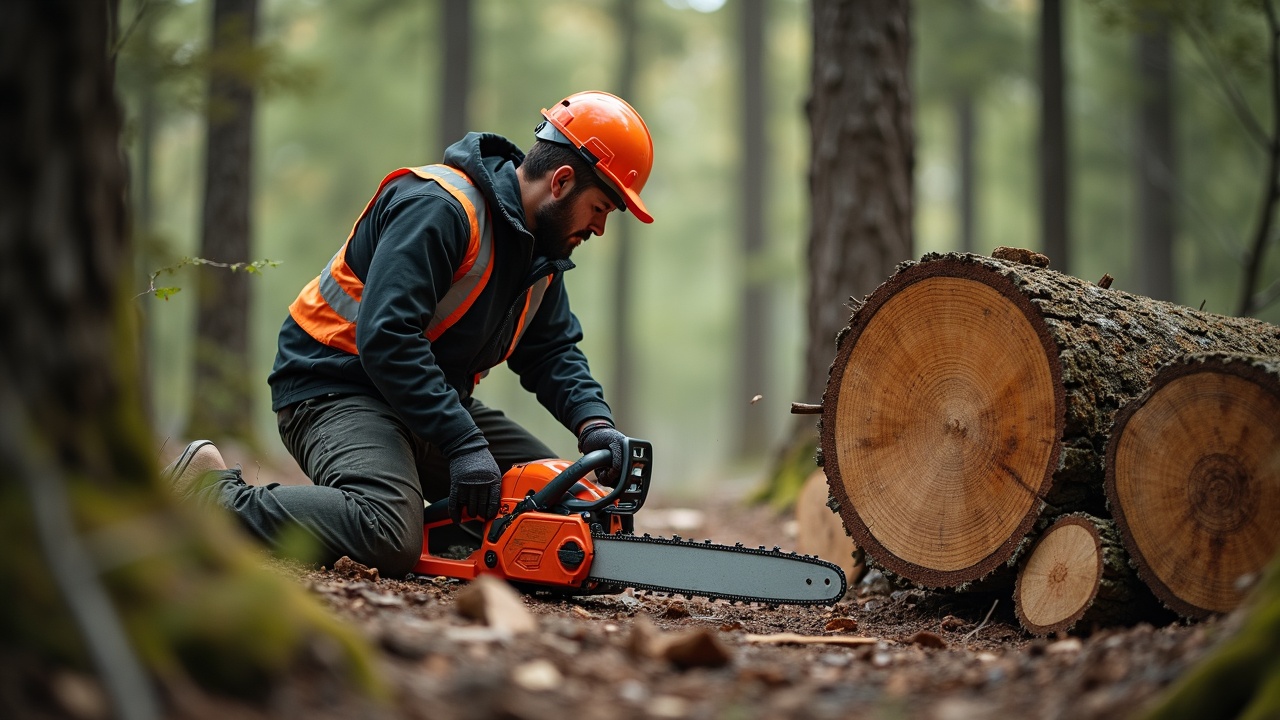
Chainsaw Operation and Maintenance — Complete Guide
Pure Euphoria Botanicals · Nored Farms · Austin, Texas
Tags: [practical-skills] [beginner]
1. Introduction
The chainsaw is the most productive hand tool ever built for processing wood. A competent operator with a sharp chain can fell, limb, and buck a 20-inch hardwood tree into firewood-length rounds in under 15 minutes. No axe, crosscut saw, or bow saw comes close.
It is also the most dangerous hand tool in common use. The U.S. Consumer Product Safety Commission logs over 36,000 chainsaw-related emergency room visits per year. The average injury requires stitches, and severe injuries — deep lacerations to the legs, hands, and face — frequently involve tendon, nerve, or bone damage. Chainsaw lacerations are among the most expensive power tool injuries to treat, averaging over $12,000 per incident when surgery is required.
The danger is not theoretical. A chainsaw chain at full throttle moves at 55–65 mph. Each cutter tooth is a precision chisel. The chain does not care whether it is cutting oak or femur. The physics that make it devastatingly effective at processing wood make it equally effective at processing flesh.
Here is the uncomfortable truth: most serious chainsaw injuries do not happen to beginners. They happen to experienced operators who have grown comfortable enough to skip protective equipment, work while fatigued, or take shortcuts on technique. Complacency kills. The chain does not respect your years of experience.
This guide covers the complete operational knowledge required to run a chainsaw safely and maintain it properly: anatomy, selection, chain types, personal protective equipment, sharpening, felling, limbing, bucking, maintenance, and troubleshooting. Every section exists because the information in it prevents injuries, extends equipment life, or both.
2. Chainsaw Anatomy
Understanding what each component does — and what happens when it fails — is the foundation of safe operation.
Engine
Most professional chainsaws use a single-cylinder, air-cooled, two-stroke engine. Two-stroke engines produce power on every revolution (vs. every other revolution for four-stroke), giving them a superior power-to-weight ratio. Displacement ranges from 25cc (light pruning saws) to 120cc+ (professional felling saws). The engine runs on a pre-mixed fuel-oil blend — typically 50:1 gasoline to two-stroke oil. The oil is critical: it lubricates the piston, cylinder wall, and crankshaft bearings. Running straight gasoline will seize the engine within minutes.
Centrifugal Clutch
The clutch sits between the engine crankshaft and the drive sprocket. At idle RPM, springs hold the clutch shoes inward — the chain does not move. As RPM increases past the engagement threshold (typically 3,500–4,500 RPM), centrifugal force throws the shoes outward against the clutch drum, engaging the sprocket and driving the chain. This is a safety feature: the chain stops when you release the throttle. A worn clutch that engages at idle is dangerous and must be replaced immediately.
Guide Bar
The bar is a flat steel plate with a machined groove around its perimeter. The chain rides in this groove. Bars range from 10 inches (pole saws, small pruning saws) to 60+ inches (large felling bars). The bar tip contains a roller nose sprocket that reduces friction and heat. Bars must be flipped regularly (every 8–10 hours of use) to equalize rail wear. An unevenly worn bar causes the chain to cut crooked.
Chain
The cutting chain is a loop of linked components: drive links (ride in the bar groove and engage the sprocket), cutters (the sharpened teeth that remove wood), and tie straps (connect the assembly). Cutters alternate left and right to produce a kerf wider than the bar body. Chain is specified by three measurements: pitch (distance between drive links), gauge (thickness of drive links), and the number of drive links. All three must match the bar and sprocket.
Drive Sprocket
The sprocket transfers rotational force from the clutch to the chain. Two types exist: spur sprockets (machined directly into the clutch drum — cheaper, must replace the whole drum when worn) and rim sprockets (a replaceable ring that snaps onto the drum — easier and cheaper to replace). Replace the sprocket every two chains, or when tooth wear is visible. A worn sprocket accelerates chain stretch and increases the chance of chain derailment.
Automatic Oiler
The oiler is a small pump — usually worm-gear driven off the crankshaft — that delivers bar and chain oil to the guide bar groove. The oil reduces friction, dissipates heat, and prevents premature wear. Most saws have an adjustable flow rate. If the oiler fails, the bar overheats within minutes, the chain loses temper (hardness), and both are ruined. Check oiler function every time you start the saw: rev the engine and hold the bar tip near a light-colored surface. You should see a fine mist of oil spray from the chain.
Chain Brake
The chain brake is the single most important safety mechanism on a chainsaw. It stops the chain in milliseconds. Two activation methods exist: manual (the operator's wrist pushes the front hand guard forward) and inertial (a weighted mechanism triggers automatically during kickback — the sudden upward rotation of the bar). The chain brake should be engaged any time you carry the saw, walk between cuts, or set the saw down. Test it before every work session: start the saw, engage the brake, and blip the throttle. The chain must not move.
Anti-Vibration System
Prolonged exposure to chainsaw vibration causes Hand-Arm Vibration Syndrome (HAVS) — irreversible nerve and circulatory damage to the hands and fingers. Modern saws isolate the handles from the engine using rubber or spring mounts. Professional saws have multi-point anti-vibration systems rated below 4.0 m/s² weighted acceleration. Cheaper saws vibrate significantly more. If your hands go numb or tingle after running a chainsaw, you are accumulating damage. Limit continuous run time and use the lowest-vibration saw available for extended work.
Decompression Valve
Found on saws above roughly 50cc. Pressing the decomp valve releases compression from the cylinder during the starting pull, reducing the force required to pull the starter cord by approximately 40%. Release is automatic — the valve closes on the first firing stroke. If your saw has a decomp valve and you are not pressing it before pulling, you are working harder than necessary and risking rotator cuff strain on cold starts.
3. Selecting a Chainsaw
The right saw depends on what you are cutting, how often, and for how long.
Displacement vs. Bar Length
Displacement (cc) determines power. A 50cc saw and a 70cc saw can both run a 20-inch bar, but the 70cc saw will pull through hardwood without bogging. Underpowered saws force the operator to push, which increases fatigue and kickback risk. General guideline: match displacement to the wood you cut most, not the largest tree you might encounter once a year.
Bar length determines maximum cut diameter. A single pass with a 20-inch bar cuts a 20-inch diameter log. For trees larger than your bar, bore cuts and quartering techniques extend your range. Most landowners never need more than a 20-inch bar. A 24-inch bar on a 50cc saw is a recipe for bogging, stalling, and frustration.
| Use Case | Recommended Displacement | Recommended Bar Length |
|---|---|---|
| Pruning, light limbing | 25–35cc | 10–14" |
| Firewood, small trees | 35–50cc | 14–18" |
| General ranch/farm use | 50–65cc | 18–20" |
| Large hardwood felling | 65–80cc | 20–24" |
| Professional timber work | 80–120cc | 24–36" |
Professional vs. Homeowner Saws
Homeowner saws (Stihl MS series 100–200 range, Husqvarna 100–200 range, Echo CS series) are designed for intermittent use — a few hours per month. They use consumer-grade components, have shorter service life, and typically lack inertial chain brakes, adjustable oilers, and multi-point anti-vibration systems. Price: $150–$400.
Professional saws (Stihl MS 261–881, Husqvarna 550 XP–3120 XP) are designed for daily use. They feature forged crankshafts, magnesium crankcases, inertial chain brakes, adjustable oilers, decompression valves, and sophisticated anti-vibration systems. They run harder, last longer, and are significantly more pleasant to operate for extended periods. Price: $500–$2,500.
If you use a chainsaw more than 10 hours per month, buy a professional saw. The ergonomics, vibration reduction, and power delivery are not luxuries — they reduce fatigue, which reduces injuries.
Electric vs. Gas
Battery-electric saws (Stihl MSA series, Husqvarna T-series, EGO, Milwaukee) have improved dramatically. Modern 56V–80V saws with 20-inch bars can handle moderate hardwood. Advantages: no fuel mixing, instant start, lower noise, no exhaust. Disadvantages: limited runtime (20–45 minutes per battery), reduced power density compared to equivalent gas displacement, battery cost ($150–$300 each), and cold-weather performance loss.
For occasional light use and suburban properties: battery electric is excellent. For professional forestry, large-scale land clearing, or remote work without charging access: gas remains dominant.
Brand Comparison by Use Case
| Use Case | Top Picks | Why |
|---|---|---|
| Light homeowner (pruning, small firewood) | Stihl MS 170/180, Husqvarna 120 | Reliable, inexpensive, widely serviced |
| General farm/ranch | Stihl MS 261, Husqvarna 550 XP Mark II | Best power-to-weight in the 50cc class, pro-grade durability |
| Heavy felling/milling | Stihl MS 462, Husqvarna 572 XP | 70cc+ with modern weight savings, excellent anti-vibe |
| Arborist/climbing | Stihl MS 201 TC, Husqvarna T540i XP | Top-handle, lightweight, designed for one-hand elevated work |
| Battery electric | Stihl MSA 300, Husqvarna 542i XP | Highest performance battery platforms currently available |
4. Chain Types
The chain is the cutting tool. Selecting the wrong chain for the job wastes time, dulls faster, and increases risk.
Full Chisel
Square-ground cutter teeth. Fastest cutting speed in clean, dry wood. The sharp corners are aggressive but dull quickly in dirty, sandy, or frozen wood. Professional choice for softwood and clean hardwood felling and bucking. Not recommended for cutting near the ground (dirt contact destroys the edge instantly) or in wood with embedded debris.
Semi-Chisel
Round-ground cutter teeth. Slightly slower cutting speed than full chisel, but stays sharp significantly longer in abrasive conditions — dirty wood, frozen wood, wood with bark inclusions. Better for general-purpose work, firewood processing, and any situation where the chain contacts dirt. The default choice for most non-professional users.
Skip Chain
Every other cutter tooth is removed, replaced by a tie strap. This produces wider chip clearance and reduces the number of teeth dragging through the cut. Skip chain is used on long bars (28"+) where a full-complement chain creates too much drag. It cuts rougher but pulls through large-diameter wood with less power demand.
Low-Profile Chain
Reduced cutter height and narrower kerf. Lower kickback risk because the smaller cutters are less likely to catch. Required by many jurisdictions and manufacturers on consumer saws. Trades cutting speed for safety. Appropriate for homeowner saws, occasional users, and anyone not trained in kickback management.
Ripping Chain
Standard cutters re-ground to a 10° top-plate angle (vs. 25–35° for crosscutting). This reduced angle optimizes the tooth for cutting with the grain rather than across it. Ripping chain is essential for chainsaw milling — it reduces the force required to push through a long-grain cut by approximately 40% and produces smoother slab faces. Never use crosscut chain for milling; it tears the grain and overworks the engine.
Gauge and Pitch
Pitch is the distance between three consecutive rivets, divided by two. Common pitches: 1/4" (small saws), 3/8" low profile (consumer saws), .325" (mid-range), 3/8" (professional), .404" (large saws). Pitch must match the bar nose sprocket and drive sprocket.
Gauge is the thickness of the drive link where it rides in the bar groove. Common gauges: .043" (light saws), .050" (most common), .058" (large saws), .063" (professional large saws). Gauge must match the bar groove width exactly. Wrong gauge = chain derailment or binding.
Drive link count is the total number of drive links in the loop. Must match the bar length and sprocket combination. Count them when ordering replacement chain — there is no shortcut.
5. Personal Protective Equipment
Chainsaw chaps are non-negotiable.
This is not a suggestion. This is not optional for experienced operators. This is not something you can skip because you are "just making a quick cut." Chaps are the single most important piece of PPE for chainsaw operation, and the data on this is unambiguous.
How Chainsaw Chaps Work
Chainsaw chaps (also called chainsaw pants or leg protection) contain multiple layers of cut-resistant ballistic fiber — typically Kevlar, Engtex, or polyester/Dyneema blends. The layers are loosely packed between an outer shell and inner lining.
When a moving chain contacts the chap material, the outer shell tears open. The chain teeth catch the ballistic fibers and pull them out of the chap in long strands. These fibers wrap around the drive sprocket and jam it, stopping the chain within a fraction of a second — typically under 0.5 seconds for UL-rated chaps.
The mechanism is sacrificial. The chaps are destroyed in the process. They are designed to be destroyed. A $100 pair of chaps that saves you from a $30,000 surgery and six months of physical therapy is the best equipment investment you will ever make.
Chaps are rated by chain speed class:
- Class A (UL): Stops chains up to 2,750 feet per minute (~31 mph)
- Class B (UL): Stops chains up to 3,250 feet per minute (~37 mph)
- Class C (UL): Stops chains up to 3,750 feet per minute (~43 mph)
Most consumer and mid-range saws are covered by Class A or B. Professional high-speed saws may exceed Class C — know your saw's chain speed and buy chaps rated to match or exceed it.
Chaps protect the front of the legs only. They are designed for the most common laceration zone: a chain dropping or bouncing off the cut and contacting the operator's upper leg. They do not protect the back of the legs, the inner thigh, or the groin. Stance and technique protect those areas.
Helmet System
A proper chainsaw helmet includes three components in one unit:
- Hard hat shell: Protects against falling branches and limbs (the leading cause of fatality in forestry — not the chainsaw, but the tree and its components falling on the operator).
- Face screen/mesh visor: Protects against wood chips, sawdust, and small debris. A chip in the eye at the wrong moment causes flinching, which causes loss of control.
- Hearing protection: Integrated earmuffs rated to NRR 25+ dB. A chainsaw at full throttle produces 100–115 dB — well above the threshold for permanent hearing damage (85 dB sustained). Hearing loss from chainsaw use is cumulative and irreversible.
Stihl, Husqvarna, and Pfanner all make integrated helmet systems. Cost: $40–$150. No excuses.
Boots
Steel-toe or composite-toe boots with cut-resistant uppers. Chainsaw-rated boots (meeting EN ISO 17249 or ASTM F2413 + F2412) contain the same ballistic fiber as chaps in the boot upper, specifically the instep and toe area. Minimum 8-inch shaft height. Logging boots with caulk (spiked) soles provide grip on wet logs and slopes. At minimum, use heavy leather work boots with non-slip soles and steel toes.
Gloves
Cut-resistant gloves protect the left hand — the hand on the front handle, which is closest to the chain and most vulnerable during kickback. The left-hand glove should contain cut-resistant material on the back of the hand. The right-hand glove needs good grip and dexterity for throttle control. Chainsaw-specific gloves from Stihl, Husqvarna, or Pfanner cost $25–$60.
What "Non-Negotiable" Means
Every piece of PPE listed above must be worn for every cut. Not some cuts. Not the big cuts. Not the dangerous cuts. Every cut. The cut that injures you is the one you didn't expect — the limb under tension that whips, the chain that catches a hidden nail, the dead branch that falls while you're focused on the cut. PPE protects against the things you didn't see coming.
The minimum PPE loadout for any chainsaw operation:
- Chainsaw chaps or chainsaw pants
- Helmet with face screen and hearing protection
- Cut-resistant gloves
- Steel-toe boots with non-slip soles
- Close-fitting work clothing (no loose fabric, no jewelry, no open jacket flaps)
If you do not have all five, do not start the saw.
6. Sharpening
A sharp chain cuts fast, clean, and safe. A dull chain forces the operator to push, which increases fatigue and kickback risk. If you are pressing the saw into the wood instead of letting the chain pull itself through, the chain is dull.
When to Sharpen
- Every 2–3 tanks of fuel during normal crosscutting in clean wood.
- Immediately after any contact with dirt, rock, metal, or wire.
- When the saw produces dust instead of chips. A sharp chain throws crescent-shaped wood chips. A dull chain produces fine sawdust.
- When the saw cuts crooked — pulling to one side. This means cutters on one side are duller or shorter than the other.
Round File Sizing
The round file diameter must match the chain pitch. Using the wrong file size changes the cutter geometry and ruins the chain.
| Chain Pitch | Round File Diameter |
|---|---|
| 1/4" | 5/32" (4.0mm) |
| 3/8" Low Profile | 5/32" (4.0mm) |
| .325" | 3/16" (4.8mm) |
| 3/8" | 13/64" (5.2mm) |
| .404" | 7/32" (5.5mm) |
Filing Angle
The top-plate filing angle determines how the cutter attacks the wood. Standard filing angles:
- 25° top-plate angle: Ripping chain for chainsaw milling. Optimized for cutting with the grain.
- 30° top-plate angle: General-purpose crosscutting. The factory standard on most chains. Good balance of speed and durability.
- 35° top-plate angle: Aggressive crosscutting in softwood. Fastest cut but dulls quickest and is most prone to vibration.
Filing technique: Hold the file at the correct angle to the bar (use a file guide until the angle is automatic). Push forward only — files cut on the push stroke. Apply even, consistent pressure. Count strokes per tooth and keep the count equal on both sides. Typically 3–5 strokes per tooth restores a slightly dull edge. If the tooth needs more than 8–10 strokes, the chain has been run too long or hit something hard.
Depth Gauge Setting
The depth gauge (also called a raker) is the rounded bump in front of each cutter tooth. It controls how deep the cutter bites into the wood. As the cutter is filed shorter through repeated sharpening, the depth gauge must also be filed down to maintain the correct offset.
Standard depth gauge offset: 0.025" (0.65mm) for most chains. Some aggressive-cut chains use 0.030".
Use a flat file and a depth gauge tool (a flat plate with a slot). Lay the tool over the chain — if the depth gauge protrudes above the tool, file it flush. File flat, then lightly round the leading edge to prevent the raker from catching.
If depth gauges are too high: The chain won't cut — it just slides over the wood no matter how sharp the cutters are. This is the most common sharpening mistake beginners make (they sharpen the cutters but never touch the depth gauges).
If depth gauges are too low: The cutters bite too deep, causing aggressive grabbing, chain stalling, and increased kickback risk.
When to Replace the Chain
- Cutters are filed back to less than 50% of their original length.
- Multiple cutters have uneven lengths that cannot be corrected.
- Drive links show visible wear or cracking.
- The chain has been stretched beyond the bar tensioner's adjustment range.
- Any cutter has a visible crack or chip in the chrome plating.
A new chain costs $15–$40. Do not run damaged or worn-out chain to save money.
7. Felling
Felling — bringing a standing tree to the ground in a controlled direction — is the most consequential task you will perform with a chainsaw. Errors in felling assessment or technique kill people.
Lean Assessment
Before making any cut, determine where the tree wants to fall. Stand back and assess:
- Natural lean: Look at the trunk from two perpendicular angles (90° apart). Trees that look straight from one angle often lean significantly when viewed from the side.
- Crown weight distribution: Heavy branching on one side pulls the tree that direction. Dead limbs, ivy, and snow load all affect balance.
- Wind: Even moderate wind can override a planned fell direction. Do not fell trees in wind above 15 mph unless you are a professional.
- Root plate condition: Rotten roots on one side create an unpredictable hinge. If you see fungal conks or soft wood at the base, the tree may not hinge cleanly.
- Surroundings: Identify your escape routes (two paths, 45° back from the fell direction, on opposite sides). Clear brush from these paths before you cut. Identify overhead hazards — power lines, dead branches in adjacent trees (widow makers), and other trees the felled tree might strike.
If you cannot determine the lean with confidence, do not fell the tree. Call a professional arborist.
Hinge Mechanics
The hinge is the strip of uncut wood between the notch and the back cut. It is the only thing controlling the tree's fall direction. The hinge must be:
- Uniform thickness across its width (typically 10% of the trunk diameter, or about 1–2 inches for a 12–20" tree).
- Intact — no cracks, rot, or cuts through the hinge wood.
- Level — the notch floor and back cut must be at the same height (with exceptions for Humboldt notch).
The hinge works like a door hinge. The tree rotates on this strip of wood as it falls. If the hinge is thicker on one side, the tree pivots toward the thin side. If the hinge breaks (too thin, rotten, or cut through), the tree falls uncontrolled — this is called a barber chair and it kills loggers.
Notch Types
Conventional Notch (Standard Notch)
- Top cut angled downward at 45°.
- Bottom cut horizontal, meeting the top cut at a line 1/4 to 1/3 into the trunk diameter.
- Produces a 45° wedge opening.
- Hinge controls direction until the notch closes (the top and bottom faces meet). After closing, the hinge snaps and the tree free-falls the remaining distance.
- Best for: General felling of trees with moderate lean in the fell direction.
Humboldt Notch
- Top cut horizontal.
- Bottom cut angled upward at 45° to meet the top cut.
- The wedge opens downward instead of upward.
- Keeps the valuable butt log above the notch cut, reducing wood waste at the base.
- Best for: Timber harvesting where maximizing log value matters. Steeper terrain where you want the butt to stay higher on the stump.
Open-Face Notch
- Top cut angled downward at about 70° from horizontal.
- Bottom cut angled upward at about 20° from horizontal.
- Produces a 70–90° wedge opening.
- The wide opening means the hinge does not close until the tree is nearly on the ground. The hinge controls the fall for a much longer arc.
- Best for: Precision felling. Recommended by most professional felling instructors as the safest notch because it maintains hinge control throughout the fall.
Back Cut
The back cut is made from the opposite side of the tree, approximately 1–2 inches above the notch floor (for conventional and open-face notches). This height difference creates a "step" that prevents the tree from sliding backward off the stump during the fall.
Cut from the back toward the hinge, leaving the hinge at uniform thickness. Stop cutting when the hinge reaches the target thickness. Insert a felling wedge behind the saw if needed to prevent the tree from sitting back on the bar.
Never cut through the hinge. If the tree does not begin to fall when the back cut reaches the hinge, drive a wedge. Do not keep cutting.
Bore Cut
Used for large trees, hazardous leans, or when precise hinge control is critical. The saw is plunged directly into the trunk behind the hinge, cutting from the inside out. This creates the back cut without committing to a single pass from the rear. Bore cutting allows the operator to set the hinge first, then release the holding wood on either side in a controlled sequence.
Bore cutting is an advanced technique. It requires understanding of bar plunge entry (using the lower quadrant of the bar nose to prevent kickback) and is not recommended for operators without training.
8. Limbing and Bucking
More chainsaw injuries occur during limbing and bucking than during felling. The cuts are smaller, the operator feels less at risk, and the reactive forces of wood under tension produce unexpected chain and log movement.
Reactive Forces — Compression vs. Tension Wood
When a tree is on the ground, its branches and trunk sections are under load. Understanding where the forces are is the key to every limbing and bucking cut.
Compression wood is on the side of the log or branch that is being squeezed together. When you cut into compression wood, the kerf closes on the bar and pinches it. The log does not move suddenly, but your saw is stuck.
Tension wood is on the side being pulled apart. When you cut through tension wood, the log or branch releases stored energy — it can spring, whip, or roll. Tension-side releases are the primary cause of impact injuries during limbing and bucking.
The rule: Always identify which side is in compression and which is in tension before cutting. Cut compression side first (partially — to relieve clamping force), then finish from the tension side. Or cut from the tension side first with the saw positioned so the release motion moves away from your body.
Proper Stance
- Stand to the side of the log, never straddle it.
- Keep the log between you and the saw whenever possible.
- Plant your feet on stable ground. If you're on a slope, stand on the uphill side.
- Use the log as a barrier — work from the opposite side of the trunk from where limbs will release.
- Never cut above shoulder height. If a limb is overhead, reposition or use a pole saw.
Bar Pinching Prevention
A pinched bar is the most common operational problem during bucking. Prevention:
- Read the bend. A log supported at both ends sags in the middle — the top is in compression, the bottom is in tension. Cut from the top first (1/3 depth), then finish from the bottom. A log supported in the middle (draped over a stump or rock) has the opposite forces — the top is in tension, the bottom in compression. Cut from the bottom first, then finish from the top.
- Use wedges. For large bucking cuts, drive a plastic wedge into the kerf behind the bar to hold it open.
- Don't cut all the way through from one side on loaded wood. Make a relief cut from the compression side first (1/4 to 1/3 of the diameter), then complete the cut from the tension side.
- Support the off-cut. If the section you are cutting free will drop and close the kerf, support it with a cant hook, peavey, or another log. Or accept the pinch and use a wedge to free the bar afterward — never force a pinched bar with throttle. That breaks chains and throws bars.
9. Maintenance Schedule
A well-maintained chainsaw starts reliably, cuts efficiently, and lasts decades. A neglected chainsaw fails when you need it most — usually in the middle of a job, in the worst possible position.
Daily (Every Use Session)
- Chain tension: Check before starting and every time you refuel. A properly tensioned chain should pull away from the bar slightly (1–2mm gap at the bottom of the bar) and snap back when released. Too loose: chain derails. Too tight: excessive bar and sprocket wear, reduced cutting performance, potential chain breakage.
- Bar flip: Rotate the bar 180° every session (or every 8–10 hours of use). This equalizes rail wear. A bar worn on one side causes the chain to pull in one direction.
- Air filter: Remove, inspect, clean. Foam filters wash in soap and water, re-oil lightly. Felt filters tap clean or replace. A clogged air filter richens the fuel mixture, reducing power and accelerating carbon buildup.
- Chain oil level: Fill the oil tank every time you fill the fuel tank. Run out of oil before fuel and you will overheat the bar.
- Oiler function check: Rev the engine and hold the bar tip near a light surface. Fine oil mist should be visible. No mist = oiler failure. Do not continue cutting.
- Chain sharpness: Inspect cutter edges visually. Touch them. A sharp cutter has a defined edge that catches your fingernail. Sharpen if needed.
- Chain brake function: Engage brake, blip throttle. Chain must not move.
Weekly (or Every 10–15 Hours of Use)
- Spark plug: Remove and inspect. Electrode should be light tan to gray. Black sooty buildup indicates rich fuel mixture or air filter restriction. White/blistered indicates lean mixture (dangerous — can cause seizure). Gap should match manufacturer spec (typically 0.020"–0.025"). Replace annually or when electrode is worn.
- Bar groove cleaning: Remove the chain and bar. Clean sawdust and debris from the bar groove using a groove cleaning tool or the tang of a flat file. Inspect the groove depth — if the chain drive links bottom out in the groove, the bar is worn out.
- Bar rail inspection: Check rails for burrs, mushrooming (metal spreading outward at the rail edges), and uneven wear. Dress burrs with a flat file. If rails are significantly uneven, the bar needs replacement.
- Sprocket inspection: Check for worn, hooked, or thinned teeth. Replace every two chains.
Seasonal (or Every 50–100 Hours)
- Fuel system: Drain old fuel. Inspect the fuel filter (in-tank pickup). Replace the fuel filter annually. Inspect fuel lines for cracking or hardening — ethanol-blended fuel degrades rubber lines. Replace hardened lines immediately.
- Clutch inspection: Remove the clutch cover and inspect clutch shoes and drum. Shoes should have visible lining material and move freely on their pivot points. Glazed, cracked, or worn shoes reduce engagement reliability.
- Sprocket replacement: If you haven't replaced the sprocket in the last two chain replacements, do it now. Worn sprockets eat chains.
- Muffler and spark arrestor: Remove and clean the spark arrestor screen with a wire brush or torch. A clogged arrestor kills engine performance. Inspect the muffler for cracks. A cracked muffler is a fire hazard in dry conditions.
- Starter cord and recoil spring: Inspect the cord for fraying. A cord that breaks during a cold start is infuriating but not dangerous. A cord that breaks in the field means you're walking back without a saw.
- Cooling fins and cylinder: Clean debris from the cylinder cooling fins and fan housing. Overheating from blocked fins is a common cause of piston seizure.
Off-Season Storage
- Run the saw dry or add fuel stabilizer to the tank.
- Remove the chain and bar. Clean both thoroughly. Oil the chain and store it in a case or wrap.
- Oil the bar groove and rails.
- Remove the spark plug and add a few drops of two-stroke oil into the cylinder. Pull the cord slowly twice to distribute oil on the cylinder wall.
- Store in a dry location, off concrete (concrete draws moisture).
10. Troubleshooting
Won't Start
Systematic diagnosis — check in this order:
- Kill switch/choke position. Sounds obvious. It catches experienced operators more often than beginners. Confirm the switch is in the "run" position and the choke is set correctly for cold/warm start.
- Fuel. Is there fuel in the tank? Is it fresh (less than 30 days old for ethanol-blended fuel)? Stale fuel is the number one cause of starting failure in seasonal-use saws.
- Spark plug. Pull it. Is it wet with fuel (flooded)? Dry it, ground the electrode against the cylinder fin, and pull the cord — look for a blue spark. No spark = bad plug, bad ignition module, or broken wire.
- Air filter. A completely clogged filter can prevent starting. Remove it and try starting without it (briefly — do not run without a filter).
- Fuel filter/lines. A clogged in-tank fuel filter or cracked fuel line prevents fuel delivery. Replace both — they are cheap.
- Flooded engine. If you smell fuel and the plug is wet: set the choke to "run" (open), hold the throttle wide open, and pull the cord 10–15 times. This clears excess fuel. Reinstall a dry plug and try again.
- Compression. Pull the cord slowly. You should feel distinct resistance on the compression stroke. No resistance = blown gasket, scored cylinder, or broken reed valve. This requires engine service.
Cuts Crooked
- Uneven cutter lengths: One side's cutters are shorter than the other from uneven sharpening. File all cutters to the same length (match the shortest cutter).
- Uneven filing angles: Inconsistent angle on one side vs. the other. Use a filing guide.
- Worn bar rails: One rail is lower than the other from not flipping the bar. Dress with a flat file or replace the bar.
- Bent bar: Sight down the bar from the tip. If it curves, replace it.
Chain Won't Tighten
- Chain stretched beyond adjustment range: The chain is worn out. Replace it.
- Tensioner mechanism stripped or broken: The adjustment screw turns but doesn't move the bar. Inspect the tensioner pin and bar slot. Replace the tensioner assembly if the pin is worn or the screw threads are stripped.
- Wrong chain length: Too many drive links for the bar. Count the links and match to the bar specification.
Oiler Failure
- No oil on bar: Check oil level first. If tank is full, check the oil port on the bar for blockage (clean with a wire). Inspect the oil pickup filter in the tank. Remove the clutch cover and check if the oiler drive gear is engaging. Worm-gear oilers can wear out or strip — replace the pump assembly.
- Excessive oil on bar: Adjustable oilers turned too high. Reduce the flow. If non-adjustable, the oiler pump is failing internally — replace.
Bogging Under Load
- Dull chain. The number one cause. Sharpen the chain and set the depth gauges.
- Clogged air filter. Restricts airflow, reduces power. Clean or replace.
- Clogged muffler/spark arrestor. Carbon buildup restricts exhaust. Clean or replace the arrestor screen.
- Carburetor adjustment. If the saw runs well at idle but bogs under load, the high-speed mixture may be too lean. Adjust per manufacturer spec — too lean causes overheating and seizure. Too rich causes power loss and carbon buildup. If you are not comfortable adjusting the carburetor, take it to a dealer.
- Worn piston/rings. Low compression from wear reduces power. A compression test will confirm. This requires rebuild or replacement.
11. The 10 Commandments of Chainsaw Safety
These rules are not guidelines. They are not suggestions. Every one exists because someone was maimed or killed by violating it.
1. Wear full PPE for every cut. Chaps, helmet with face screen and hearing protection, gloves, steel-toe boots. Every cut. No exceptions. The cut that injures you is always the one you thought was safe.
2. Never cut alone. Always have a second person within shouting distance who knows your location and can call for help. Chainsaw injuries in remote locations become fatalities when no one is there to control bleeding and call emergency services.
3. Inspect the saw before every use. Chain tension, chain sharpness, bar condition, oiler function, chain brake function, fuel and oil levels. A two-minute inspection prevents the failure that causes the injury.
4. Maintain three points of contact. Both hands on the saw, both feet on solid ground. Never operate a chainsaw one-handed (except top-handle arborist saws by trained arborists in a harness). Never cut from a ladder.
5. Know your escape route before every felling cut. Plan two escape paths, each 45° back from the intended fall direction. Clear them of brush and obstacles before you make the notch.
6. Never cut above shoulder height. The saw is above your center of gravity. You cannot control kickback. You cannot maintain grip. Reposition, use a pole saw, or hire a professional.
7. Engage the chain brake when walking between cuts, setting the saw down, or any time you are not actively cutting. The brake exists to prevent contact injuries during transitions. Use it.
8. Keep bystanders and animals at least two tree-lengths away during felling operations. Trees do not always fall where planned. Branches break and fly. Tops roll downhill. Two tree-lengths is the minimum safe perimeter.
9. Never operate a chainsaw while fatigued, intoxicated, or on medications that impair reflexes. Fatigue degrades reaction time, grip strength, and judgment. When you feel tired, stop. The tree will still be there tomorrow.
10. Respect the chain. It does not care who you are. Fifteen years of experience does not make you cut-proof. The chain moves at 60 mph and does not distinguish between wood and flesh. Treat every interaction with a running chain as the potential injury it is.
12. Sources
- U.S. Consumer Product Safety Commission. National Electronic Injury Surveillance System (NEISS) data on chainsaw injuries. Available at: https://www.cpsc.gov/cgibin/NEISSQuery/
- Centers for Disease Control and Prevention. "Nonfatal, Unintentional, Non-Work-Related Chainsaw Injuries Treated in Emergency Departments — United States, 2009–2013." MMWR Morbidity and Mortality Weekly Report.
- Stihl Inc. Product specifications and owner's manuals for MS series chainsaws. https://www.stihlusa.com/
- Husqvarna AB. Product specifications and owner's manuals. https://www.husqvarna.com/
- Oregon Tool, Inc. "Saw Chain Identification and Selection Guide." Oregon Product Literature.
- UL Standard 2453: Standard for Leg Protective Devices. Underwriters Laboratories.
- ASTM F1897: Standard Specification for Leg Protection for Chain Saw Users.
- U.S. Department of Labor, Occupational Safety and Health Administration. "Logging eTool: Felling." https://www.osha.gov/etools/logging
- USDA Forest Service. "Felling and Bucking Techniques for Woodland Owners." Technology & Development Program.
- Game of Logging (GOL) professional chainsaw training program. Developed by the Northeast Center for Risk Management Education.
- EN ISO 17249: Safety footwear with resistance to chainsaw cutting. International Organization for Standardization.
- Directive 2006/42/EC (Machinery Directive) — chainsaw safety requirements, European Union.
This document is educational reference material. Chainsaw work carries inherent risk of severe injury or death. Formal hands-on training from a qualified instructor — such as a Game of Logging course — is strongly recommended before operating any chainsaw. No written guide substitutes for supervised field training.