Growing
Chamomile (Matricaria chamomilla): Why the World’s Most Popular Herbal Tea Deserves Its Reputation
Complete chamomile cultivation guide covering German chamomile botany, self-seeding strategies, apigenin and bisabolol chemistry.
On this page
Botanical Description
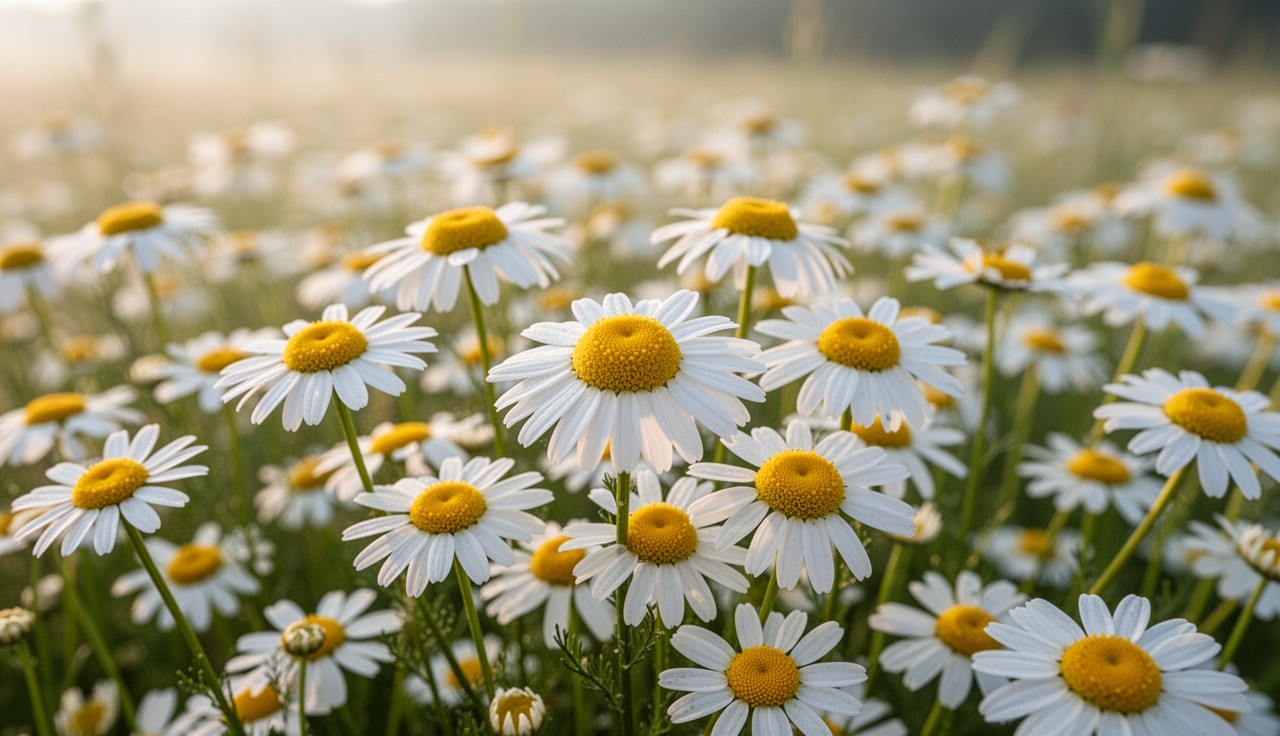
German chamomile (Matricaria chamomilla, syn. M. recutita) is a delicate, aromatic annual in the Asteraceae (daisy) family, native to Europe and Western Asia but now naturalized worldwide. Plants grow 12–24 inches tall with finely divided, feathery leaves and iconic white-petaled, yellow-centered flower heads that emit a distinctive sweet, apple-like fragrance, the name “chamomile” derives from the Greek chamaimelon, meaning “earth apple.”
German chamomile should be distinguished from Roman chamomile (Chamaemelum nobile), a creeping perennial with a somewhat different phytochemical profile. German chamomile is the species used in most clinical research and the source of the characteristic blue essential oil containing chamazulene.
The Self-Seeding Strategy
Chamomile is one of the most effective self-seeding herbs you can grow. A single planting that is allowed to set seed will produce volunteer chamomile for years, creating a naturalized patch that returns reliably each spring. In mild climates, fall-sown chamomile overwinters as rosettes and flowers earlier than spring-sown plants. The key is simply to stop deadheading late in the season and let the final flush of flowers go to seed.
Climate and Cultivation
| Parameter | Range / Tolerance |
|---|---|
| USDA Hardiness Zones | 2–9 (annual; self-seeds in all zones) |
| Light | Full sun to light shade |
| Soil | Average to poor; well-drained; pH 5.6–7.5 |
| Moisture | Low to moderate; drought-tolerant once established |
| Spacing | 6–8 inches; creates a lovely ground-cover effect when dense |
| Germination | 7–14 days; surface sow (needs light); tiny seeds |
Chamomile thrives in lean, well-drained soil and actually produces more essential oil under slightly stressed conditions. Rich, heavily fertilized soil produces tall, leggy plants with fewer flowers and less aromatic potency. This makes chamomile ideal for poor garden spots, pathways, and dry, sunny areas where other plants struggle.
Harvesting
Harvest flower heads when petals are fully open and horizontal (not yet reflexed backward). Morning harvest after dew dries captures peak essential oil content. Chamomile flowers open progressively over several weeks, so regular harvesting (every 2–3 days at peak bloom) is necessary to capture flowers at their best.
A chamomile rake or comb, a simple fork-toothed tool dragged through the plant, dramatically speeds harvest of the tiny flower heads. Hand-picking is meditative but slow. Dry flowers immediately at low temperatures (95–105°F) in single layers. Properly dried chamomile retains its apple-like aroma and maintains potency for 1–2 years.
Phytochemistry
| Compound Class | Key Members |
|---|---|
| Flavonoids | Apigenin (primary bioactive), apigenin-7-glucoside, luteolin, quercetin |
| Terpenoids | Alpha-bisabolol, bisabolol oxides, chamazulene (blue; forms during distillation) |
| Coumarins | Herniarin, umbelliferone |
| Phenolic Acids | Caffeic acid, chlorogenic acid, ferulic acid |
Apigenin is the compound drawing the most clinical attention. It binds to benzodiazepine receptors on GABA-A channels but acts as a partial agonist rather than a full agonist like pharmaceutical benzodiazepines. This may explain why chamomile produces anxiolytic effects without the sedation, dependence risk, or cognitive impairment associated with benzodiazepine drugs.
Traditional and Culinary Uses
- Tea: The most consumed herbal tea globally. An estimated one million cups of chamomile tea are consumed daily worldwide. Traditional preparation uses 1 tablespoon of dried flowers per cup, steeped covered for 5–10 minutes.
- Digestive comfort: Traditional European “after-dinner” tea for bloating, gas, and mild stomach upset. Included in the German Commission E list for gastrointestinal spasms.
- Children’s herb: One of the gentlest medicinal herbs, traditionally considered safe for infants and children for teething pain, colic, and restless sleep.
- Topical: Used in skin creams, eye compresses, and bath preparations for irritation and inflammation.
Clinical Research
Solid Clinical Foundation
Chamomile benefits from an unusually strong clinical evidence base for an herbal medicine, including several large, well-designed RCTs at major academic medical centers, including a pivotal University of Pennsylvania trial on generalized anxiety disorder.
- Generalized anxiety disorder: A landmark 2009 RCT at the University of Pennsylvania found chamomile extract significantly reduced anxiety scores in patients with mild-to-moderate GAD compared to placebo. A 2016 follow-up demonstrated sustained benefit over 8 weeks with good tolerability.
- Sleep quality: Multiple trials report improvements in subjective sleep quality, particularly in elderly and postpartum populations.
- Anti-inflammatory (topical): Clinical evidence supports topical chamomile for mild skin inflammation, eczema, and wound healing.
- Gastrointestinal: Evidence supports use for functional dyspepsia and mild digestive discomfort.
Precautions
- Asteraceae allergy: Cross-reactivity with ragweed, chrysanthemums, and other daisy-family plants. Allergic reactions are uncommon but documented.
- Blood thinners: Coumarin content may theoretically interact with anticoagulants, though clinical significance at tea-drinking doses is uncertain.
- Pregnancy: Culinary tea amounts are generally considered safe; concentrated extracts lack sufficient safety data.
References
- Amsterdam et al., Journal of Clinical Psychopharmacology (2009), GAD RCT
- Mao et al., Phytomedicine (2016), long-term chamomile for GAD
- Srivastava et al., Molecular Medicine Reports (2010), chamomile review
- German Commission E Monograph, Matricaria flowers
- Singh et al., Journal of Advanced Nursing, chamomile and sleep quality
- WHO Monographs on Selected Medicinal Plants, chamomile
Common questions
What is botanical description?
German chamomile ( Matricaria chamomilla , syn. recutita ) is a delicate, aromatic annual in the Asteraceae (daisy) family, native to Europe and Western Asia but now naturalized worldwide. Plants grow 12–24 inches tall with finely divided, feathery leaves and iconic white-petaled, yellow-centered flower heads that emit a distinctive sweet, apple-like fragrance, the name “chamomile” derives from the Greek chamaimelon , meaning “earth apple.”. German chamomile should be distinguished from Roman chamomile ( Chamaemelum nobile ), a creeping perennial with a somewhat different phytochemical profile.
What climate does chamomile tolerate?
USDA Hardiness Zones: 2–9 (annual; self-seeds in all zones). Light: Full sun to light shade. Soil: Average to poor; well-drained; pH 5.6–7.5. Moisture: Low to moderate; drought-tolerant once established. Spacing: 6–8 inches; creates a lovely ground-cover effect when dense.
When should I harvest chamomile?
Harvest flower heads when petals are fully open and horizontal (not yet reflexed backward). Morning harvest after dew dries captures peak essential oil content. Chamomile flowers open progressively over several weeks, so regular harvesting (every 2–3 days at peak bloom) is necessary to capture flowers at their best. A chamomile rake or comb, a simple fork-toothed tool dragged through the plant, dramatically speeds harvest of the tiny flower heads. Hand-picking is meditative but slow.
What can I make from chamomile?
Tea: The most consumed herbal tea globally. An estimated one million cups of chamomile tea are consumed daily worldwide. Traditional preparation uses 1 tablespoon of dried flowers per cup, steeped covered for 5–10 minutes. Digestive comfort: Traditional European “after-dinner” tea for bloating, gas, and mild stomach upset. Included in the German Commission E list for gastrointestinal spasms.
What is clinical research?
Solid Clinical Foundation. Chamomile benefits from an unusually strong clinical evidence base for an herbal medicine, including several large, well-designed RCTs at major academic medical centers, including a pivotal University of Pennsylvania trial on generalized anxiety disorder. Generalized anxiety disorder: A landmark 2009 RCT at the University of Pennsylvania found chamomile extract significantly reduced anxiety scores in patients with mild-to-moderate GAD compared to placebo. A 2016 follow-up demonstrated sustained benefit over 8 weeks with good tolerability.