guides
Dragon Fruit (Hylocereus spp., Selenicereus spp.): Comprehensive Cultivation, Processing, and Use Guide
Complete guide to dragon fruit cultivation covering Hylocereus and Selenicereus species, climate requirements, propagation from cuttings, trellis systems.
Botanical Description and Modern Scientific Context
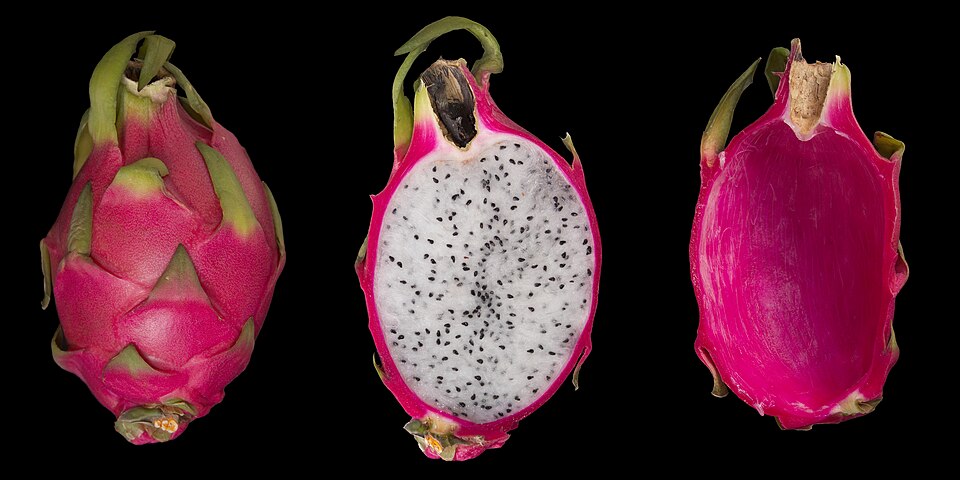
Dragon fruit, commonly referred to as pitaya, is produced by several climbing cactus species within the genera Hylocereus and Selenicereus, most notably Hylocereus undatus (white flesh), Hylocereus costaricensis / Hylocereus polyrhizus (red flesh), and Selenicereus megalanthus (yellow-skinned). These are perennial, epiphytic or lithophytic cacti with triangular, jointed stems, aerial roots, and large nocturnal flowers.
Unlike desert cacti, dragon fruit evolved in tropical and subtropical forests, where it climbs trees or rocks and accesses intermittent moisture. The fruit itself is a berry with a soft pulp embedded with hundreds of small, black, edible seeds rich in lipids and fiber.
In modern food science and nutrition literature, dragon fruit is discussed for its betalains (in red-fleshed types), polyphenols, vitamin C, oligosaccharides, and seed-derived fatty acids. These compounds are studied for their interaction with oxidative stress pathways, gut microbiota fermentation, lipid metabolism signaling, and postprandial glycemic response, consistently framed within whole-food and functional nutrition contexts rather than therapeutic claims.
Compound Context: Whole-Food Research
Dragon fruit compounds—particularly betalains and oligosaccharides—are studied within functional nutrition frameworks. Their interactions with gut microbiota, lipid metabolism, and glycemic response pathways are discussed as food-based phenomena rather than pharmaceutical interventions.
Origin, Domestication, and Historical Use
Dragon fruit is native to Central America and northern South America, where it was traditionally consumed fresh and grown as a semi-wild climbing fruit. From this region, it spread throughout Southeast Asia in the 19th and 20th centuries, where systematic cultivation and cultivar selection accelerated.
In Vietnam, Thailand, Israel, and parts of Australia, dragon fruit became a high-value specialty crop due to its long fruiting season, tolerance for marginal soils, and compatibility with trellised systems.
Historically, the fruit was eaten fresh or lightly chilled, while flowers were consumed as vegetables or dried for teas. Minimal processing was favored due to the fruit’s delicate texture and high water content.
Stem, Flower, and Reproductive Biology
Dragon fruit plants consist of segmented, three-sided succulent stems that store water and perform photosynthesis. Aerial roots emerge from nodes and anchor the plant to supports.
Flowers are among the largest in the cactus family, reaching 20–35 cm (8–14 in) in length. They open only at night and are pollinated by moths, bats, or hand pollination in cultivation.
Some cultivars are self-fertile, while others require cross-pollination. Inadequate pollination leads to misshapen fruit or fruit drop.
Seed vs. Vegetative Propagation
Seeds are viable and germinate readily, but seed propagation produces genetic variability. Commercial and small-farm systems rely almost entirely on vegetative cuttings to maintain cultivar consistency and predictable fruit quality.
Climate Adaptation and Environmental Requirements
Dragon fruit performs best in USDA zones 9–11, though it can be grown in protected structures in cooler regions.
| Parameter | Optimal Range |
|---|---|
| Growing Season Temperature | 18–32°C (65–90°F) |
| Growth Slowdown Threshold | Below 10°C (50°F) |
| Frost Tolerance | Minimal; damage occurs near 0°C (32°F) |
| Sun Exposure | Bright light with partial protection; excessive direct sun causes stem scorch |
| Relative Humidity | 50–80% |
| Annual Rainfall / Irrigation | 600–1,300 mm, well distributed |
Unlike desert cacti, dragon fruit requires consistent moisture but is highly intolerant of waterlogged soils. Good drainage is essential across all growing systems.
Soil Preferences, Fertility, and Root Zone Management
Ideal soils are well-drained sandy loams or loams with high organic matter and a pH range of 5.5–6.8.
Nutrient Demand Overview
| Nutrient | Role | Notes |
|---|---|---|
| Nitrogen (N) | Supports vegetative growth | Excess reduces flowering |
| Phosphorus (P) | Root development and flower formation | Important during establishment |
| Potassium (K) | Fruit set, sugar accumulation, flesh firmness | Critical for fruit quality |
| Calcium & Magnesium | Stem integrity and flower retention | Monitor in acidic soils |
| Iron & Zinc | Metabolic function | Commonly limiting in alkaline soils |
Nutrient demand is moderate overall. Balanced fertility programs that avoid excessive nitrogen produce the best flowering and fruiting results.
Propagation, Cutting Preparation, and Establishment
Dragon fruit is propagated via stem cuttings, which is the standard method for both commercial orchards and home growers.
| Parameter | Specification |
|---|---|
| Cutting Length | 30–60 cm (12–24 in) |
| Curing Period | 5–10 days in shade to allow cut ends to callus |
| Planting Depth | 5–10 cm (2–4 in) |
| Rooting Temperature | Above 20°C (68°F) |
| Time to Flowering | 12–24 months after planting |
Cuttings root readily at warm soil temperatures. Rooting hormones are not required but may speed establishment. Plants typically begin flowering 12–24 months after planting, depending on cultivar and growing conditions.
Growth Habit, Training, and Structural Systems
Dragon fruit requires support to climb and fruit effectively. Stems are trained upward, then allowed to cascade downward, which promotes flowering and fruiting on hanging segments.
Common Support Systems
- Post-and-frame: Concrete or wooden posts with circular top frames—the most widely used commercial system
- Trellised wires: Horizontal wire systems allowing lateral stem spread
- Living supports: Trees used in traditional agroforestry systems
Pruning is used to manage airflow, light penetration, and disease pressure. Regular removal of dead or overcrowded stems improves fruit size and reduces fungal risk.
Flowering, Fruit Set, and Yield Dynamics
Flowering occurs in multiple flushes during warm months, often from late spring through early fall. Fruit develops 30–50 days after successful pollination.
Mature plants commonly produce 20–60 fruits annually per plant under favorable conditions. Yield is strongly influenced by pollination success, cultivar selection, and nutrient management.
Pollination Considerations
Night flowering necessitates pollinator presence or manual pollination in enclosed systems. Some cultivars are self-fertile, but cross-pollination between different cultivars generally improves fruit set, size, and seed development.
Harvest Timing and Quality Indicators
Fruit is harvested when skin color is fully developed and bracts begin to wither slightly. Dragon fruit does not ripen significantly after harvest and is therefore picked at near-peak maturity.
| Quality Indicator | Target |
|---|---|
| Soluble Solids | 12–18 °Brix depending on cultivar |
| Firmness | Slight give under pressure |
| Color | Uniform, vivid pigmentation |
| Bracts | Beginning to wither slightly |
Post-Harvest Handling and Storage
Dragon fruit is highly perishable due to high water content. Proper post-harvest management is critical for maintaining quality and extending shelf life.
| Parameter | Specification | Notes |
|---|---|---|
| Storage Temperature | 7–10°C (45–50°F) | Optimal range for shelf life |
| Relative Humidity | 85–90% | Prevents moisture loss |
| Shelf Life | 2–4 weeks | Under ideal conditions |
Chilling Injury Warning
Chilling injury occurs below 5°C (41°F), causing pitting and discoloration. Higher temperatures accelerate decay. Maintaining the 7–10°C range is critical for balancing quality retention and shelf life.
Processing, Preservation, and Transformation
Dragon fruit is primarily consumed fresh, but several processing methods extend its utility and shelf life.
| Method | Application | Notes |
|---|---|---|
| Fresh Consumption | Primary use | Minimal processing preserves texture and flavor |
| Refrigeration | Short-term storage | Whole fruit at 7–10°C |
| Freezing | Smoothies and desserts | Texture softens upon thawing |
| Drying | Powders and slices | Low-temperature dehydration; aroma is mild |
| Juicing / Pureeing | Beverages and frozen products | Versatile base for mixed preparations |
| Fermentation | Wines, vinegars, cultured drinks | Particularly suited to red-fleshed cultivars |
Betalains in red-fleshed dragon fruit are sensitive to prolonged heat but relatively stable under acidic conditions. Processing methods that minimize heat exposure and maintain low pH preserve pigment integrity most effectively.
Culinary Use, Intake Forms, and Integration
Dragon fruit is consumed raw, chilled, blended, or lightly processed. Its mild sweetness and low acidity make it compatible with both sweet and savory preparations.
Common Culinary Uses
- Fresh slices eaten plain or lightly chilled
- Smoothies and frozen desserts
- Fruit salads and salsas
- Purees for beverages and sauces
- Dehydrated powders for natural coloring
Typical servings range from 100–300 g fresh pulp. Seeds contribute dietary fat and fiber and are consumed whole. Pairing with acids (lime, citrus) enhances flavor, while lipid-containing preparations improve mouthfeel.
Extraction, Functional Compounds, and Uses
Target compounds include betalains (red-fleshed types), vitamin C, phenolics, oligosaccharides, and seed-derived fatty acids.
Extraction Approaches by Scale
- Industrial scale: Focuses on natural colorants and juice concentrates, using membrane filtration and spray drying
- Small scale: Functional use is achieved through fresh consumption, pureeing, drying, or fermentation rather than isolated compound extraction
- Seed oil extraction: Cold pressing yields fatty acid–rich oil used in cosmetic and nutritional applications
Betalain Stability
Betalains—the red-violet pigments in red-fleshed cultivars—are heat-sensitive but acid-stable. Low-temperature processing and acidic environments preserve their color and functional properties most effectively.
System Integration and Additional Considerations
Dragon fruit is well suited to small farms and home systems due to high yield per plant and long productive lifespan of 10–20 years.
- Night flowering necessitates pollinator presence or manual pollination in enclosed systems
- Cultivar selection strongly influences sweetness, color stability, and self-fertility
- Trellis investment is a primary capital cost but supports decades of production
- Compatibility with intercropping and agroforestry systems increases land-use efficiency
Scientific and Authoritative References
This article is informed by data and conclusions drawn from, but not limited to:
- Nerd et al., Horticultural Reviews
- Mizrahi et al., New Crops
- Hoa et al., Postharvest Biology and Technology
- USDA Crop Profiles: Dragon Fruit
- Ariffin et al., Food Chemistry
- Wybraniec et al., Journal of Agricultural and Food Chemistry
- Le Bellec et al., Fruits
- EFSA reports on betalains
- Esquivel & Araya, Food Research International
- Zee et al., Acta Horticulturae