Growing
Elderberry (Sambucus nigra, S. canadensis): Comprehensive Cultivation, Processing, and Use Guide
Complete guide to elderberry cultivation covering Sambucus nigra and canadensis, growing parameters, propagation, harvest optimization.
On this page
Botanical Description and Modern Scientific Context
Elderberry refers primarily to Sambucus nigra (European elderberry) and Sambucus canadensis (American elderberry), deciduous perennial shrubs that typically reach 6–12 feet (1.8–3.7 m) in height, occasionally exceeding this under high-fertility conditions. The plants exhibit hollow, pith-filled stems, opposite pinnately compound leaves with 5–9 serrated leaflets, and large, flat-topped inflorescences (corymbs) composed of dozens to hundreds of small, cream-colored flowers.
In contemporary scientific literature, elderberry is valued for its unusually high concentration of anthocyanins, flavonols, phenolic acids, and complex polysaccharides. The dominant pigments, cyanidin-3-glucoside and cyanidin-3-sambubioside, are widely studied for their roles in oxidative signaling pathways, endothelial function, and modulation of inflammatory mediators, particularly through indirect interaction with cytokine cascades and gut-derived metabolites.
Compound Behavior In Vivo
Research consistently notes that elderberry compounds do not act as isolated agents in the body; rather, they interact with digestive enzymes, intestinal microbiota, and cellular redox systems. These interactions are discussed in the context of immune signaling, mitochondrial stress response, and metabolic regulation, within the framework of food-based and botanical research rather than pharmaceutical intervention.
Geographic Origin, Ecology, and Ethnobotanical Use
Elderberry is native to temperate regions of Europe, North America, and western Asia, where it naturally colonizes forest margins, riparian corridors, hedgerows, and disturbed soils. Sambucus canadensis is indigenous to eastern and central North America, while Sambucus nigra has a long cultivation history across Europe and the Mediterranean basin.
Historical records from Greco-Roman texts, medieval European herbals, and Indigenous North American traditions describe elderberry as a foundational seasonal plant. Flowers were commonly infused or fermented, berries were cooked into syrups and preserves, and woody tissues were used for tools and instruments.
Safety Note: Raw Consumption
A consistent theme across cultures is that elderberry fruit was rarely consumed raw. Traditional processing methods, boiling, fermentation, drying, were employed to improve digestibility and safety, practices later supported by chemical analysis identifying heat-labile cyanogenic glycosides in raw tissues.
Fruit, Seed Morphology, and Reproductive Biology
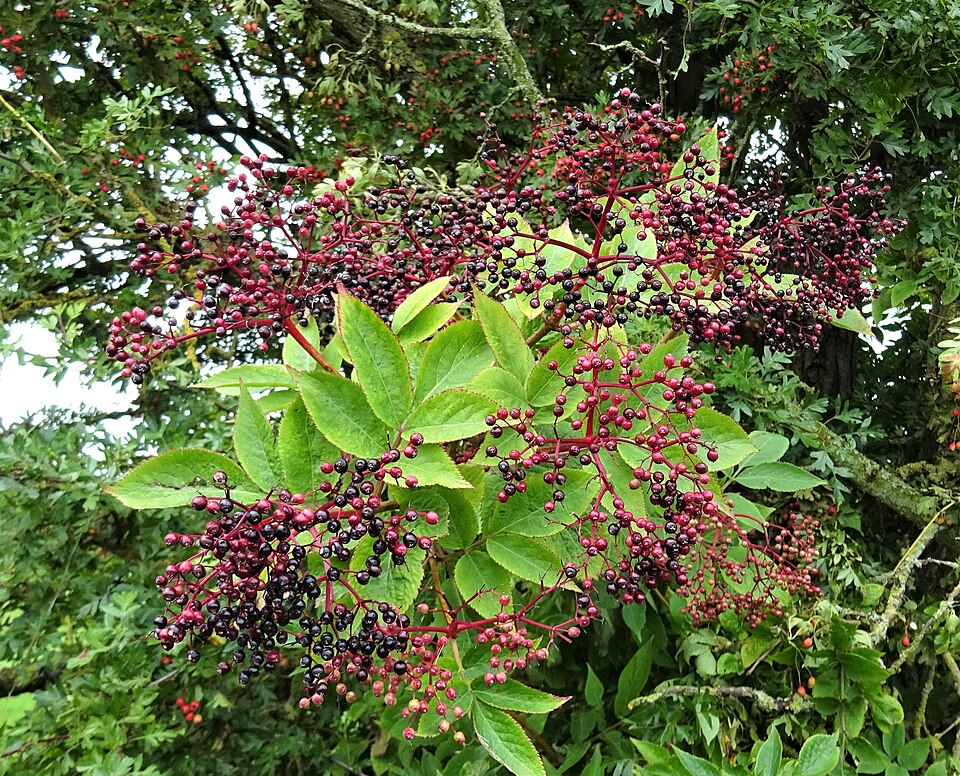
Elderberry fruits are small drupes measuring approximately 4–6 mm in diameter, produced in large, pendulous clusters that can weigh 1–4 kg per plant under optimal conditions. Each berry contains 3–5 flattened, tan-to-light-brown seeds surrounded by deeply pigmented pulp.
During development, berries transition from green to red and finally to dark purple-black as anthocyanin synthesis accelerates. Full physiological ripeness is indicated by uniform coloration, peak sugar accumulation, and maximum pigment density.
Seed Propagation and Dormancy
Seeds exhibit physiological dormancy and require cold stratification for reliable germination. Stratification periods of 60–90 days at 1–4°C (34–39°F) are commonly reported. Due to genetic variability and delayed fruiting, seed propagation is generally reserved for breeding and conservation rather than production.
Climate Requirements and Environmental Parameters
Elderberry is well adapted to USDA hardiness zones 3–9, tolerating winter temperatures below -30°C (-22°F) while maintaining strong regrowth capacity in spring.
| Parameter | Optimal Range |
|---|---|
| Growing Season Temperature | 18–30°C (65–86°F) |
| Winter Chilling Requirement | 800–1,200 hours below 7°C (45°F) |
| Sun Exposure | Full sun to light shade (full sun maximizes yield) |
| Relative Humidity | 50–80% |
| Annual Water | 25–40 in (635–1,000 mm) with consistent soil moisture |
| Cold Hardiness | Below -30°C (-22°F) |
Elderberry demonstrates higher tolerance for saturated soils and periodic flooding than most fruiting shrubs, reflecting its natural association with riparian ecosystems.
Soil Characteristics and Nutrient Demands
Elderberry performs best in deep, fertile loam or silty loam soils with high organic matter content and a pH range of 5.5–6.5, though it tolerates up to pH 7.5 with adequate micronutrient availability.
Annual Nutrient Requirements (Per Acre)
| Nutrient | Rate | Notes |
|---|---|---|
| Nitrogen (N) | 60–120 lb/acre | Supports shoot development and canopy renewal |
| Phosphorus (P) | Moderate | Primarily during root establishment and flowering |
| Potassium (K) | High demand | Directly influences berry size and anthocyanin concentration |
What that pH range is actually about
The number itself does nothing to the plant. What pH controls is which nutrients stay dissolved and available in the soil water, and iron is the one that decides whether elderberry thrives. Above about pH 7 iron drops out of solution as insoluble hydroxides, and manganese, zinc and boron follow it down. The ground can be full of iron and the plant still starve.
You see it before a soil test tells you. The youngest leaves at the tips of new shoots turn pale yellow while their veins stay green, which is called interveinal chlorosis. Older leaves lower down stay green longer, because iron does not move around inside the plant once it has been laid down. Left alone the leaf margins scorch brown and the shoot stops extending, and a first-year planting can simply sit still for a season.
Growing elderberry on alkaline Hill Country ground
This matters here more than the ideal range suggests. Much of the Texas Hill Country sits on limestone, so the soils weathered from it are alkaline, often pH 7.5 to 8.2, and frequently shallow over a caliche layer. That is a full point or more above elderberry's optimum, and it is the single most likely reason a planting struggles in this part of the state while the same cultivar does well in Missouri. Four things move the needle, in the order they are worth doing:
- Chelated iron in the EDDHA form. The cheap EDTA chelates fall apart above pH 7 and put you back where you started. EDDHA holds iron soluble past pH 8, which is exactly the range that needs it. It costs more per bag and less per living plant.
- Organic matter, heavily and repeatedly. Compost does two jobs on this ground: it holds water in a thin soil, and as it decomposes it produces organic acids that free up iron and manganese locally around the roots. It will not shift the pH of a limestone soil in any lasting way, and expecting it to is the common disappointment.
- Elemental sulfur, with realistic expectations. Soil bacteria oxidise it to sulfuric acid, which lowers pH slowly over months. On a soil with free limestone in it the carbonate keeps buffering the change back, so treat it as a way to hold a planting hole slightly lower, not a way to change a field.
- Test the irrigation water, not only the soil. Hill Country well water is typically hard and carries dissolved bicarbonate. Watering with it steadily pushes the root zone alkaline again, which quietly undoes the amendments. A water test costs very little and explains a lot of otherwise baffling plantings.
Raised berms are worth the effort where the caliche is close to the surface. They give the shallow feeder-root plate somewhere to run, and they let you build the soil you want rather than argue with the one you have.
Why the potassium demand is high
Potassium does not end up in the fruit as a flavour or a pigment. It runs the plant's water and sugar logistics: it maintains cell turgor, and it drives the phloem loading that carries sugar from leaf to berry. Berry size is mostly water held under turgor, and the sugar that arrives behind it is the raw material anthocyanin synthesis is built from. Short the potassium and you get smaller fruit with less colour in it, which is why the table above calls the demand high while phosphorus sits at moderate.
Nitrogen timing matters more than nitrogen rate
Elderberry answers nitrogen with fast, soft cane growth, which is welcome in spring because next year's fruit rides on this year's canes. Late in the season it becomes a liability. Canes still growing softly in autumn have not hardened off when the first hard freeze arrives, and they die back, so the nitrogen that felt generous in August costs fruiting wood in February. Split the annual rate, put most of it on at bud break and the rest by early summer, and put none of it on after midsummer.
Micronutrients, iron and boron above all, are limiting far more often than the big three on sandy or alkaline ground. Compost and targeted mineral inputs answer them, and a soil test is what tells you which one you actually have rather than which one you guessed.
Which Cultivar to Plant
Cultivar decides more about a planting than any other single choice, and most of what is written about it online is repeated without a trial behind it. The table below carries only what named field trials actually reported. Everything except Bob Gordon is from the literature and has not been grown here, which is marked on every row so a reader can tell our ground truth from somebody else's.
| Cultivar | Species | What the trials found | Grown here? |
|---|---|---|---|
| Bob Gordon | S. canadensis | The cultivar we grow, and the only row here backed by our own ground rather than a trial elsewhere. | Yes, all of ours |
| Johns | S. canadensis | One of four American genotypes planted at every site in the three-location Missouri and Oregon trial, so its behaviour is described across environments rather than at one farm. | Not grown here yet |
| Adams II | S. canadensis | Also common to all three sites in the same trial. Site, genotype and season each moved pH, sugar, acidity, total phenolics and anthocyanin independently. | Not grown here yet |
| Netzer | S. canadensis | The fourth genotype grown at all three sites, giving it the same multi-site record. | Not grown here yet |
| Sampo | S. nigra | In a six-year Danish trial, gave high yield, medium umbel size, high anthocyanin and medium soluble solids. Selected as a juice-concentrate cultivar. | Not grown here yet |
| Samdal | S. nigra | Released alongside Sampo from the same trial and on the same criteria: yield and umbel weight first, then anthocyanin and sugar. | Not grown here yet |
| Korsor | S. nigra | Significantly lower yield, umbel weight and anthocyanin than Sampo and Samdal, but high soluble solids. | Not grown here yet |
| Allesoe | S. nigra | Lower on all three of yield, umbel weight and anthocyanin, and low in soluble solids as well. | Not grown here yet |
Two things in that table matter more than any single row. First, the European S. nigra cultivars were not winter-hardy in Missouri and had to be trialled in Oregon, so a Danish yield figure is not a promise anywhere with a real winter. Second, the American trial found that location, genotype and growing season each changed fruit chemistry on their own, and berries grown in Oregon ran consistently more acidic than the same genotypes in Missouri. A cultivar's numbers travel less well than its name does.
Sources for this table: Evaluation of American and European Elderberry Genotypes Grown in Diverse Environments, 2008; A comparison of fruit characteristics among diverse elderberry genotypes grown in Missouri and Oregon, 2013; Sampo and Samdal, Elderberry Cultivars for Juice Concentrates, 1997.
Propagation Methods and Establishment
Elderberry is most commonly propagated through hardwood or softwood cuttings to maintain cultivar consistency and reduce time to first harvest.
| Parameter | Specification |
|---|---|
| Cutting Length | 20–25 cm (8–10 in) |
| Root Zone Temperature | 20–24°C (68–75°F) |
| Relative Humidity | 70–90% |
| Root Initiation Time | 10–21 days |
Adventitious rooting is generally reliable without hormone application, though low-concentration auxin treatments are sometimes used to synchronize rooting in nursery systems.
Growth Habit, Pruning, and Structural Management
Elderberry produces fruit on second-year and older canes. Productivity is highest when vigorous new canes are continuously renewed through annual or biennial pruning.
Plants are commonly managed as multi-cane shrubs or hedgerows spaced 6–10 feet (1.8–3 m) apart, allowing efficient light penetration and airflow. Structural supports are rarely required; however, bird exclusion netting is frequently employed due to heavy wildlife pressure on ripening fruit.
Harvest Timing and Quality Indicators
Harvest occurs when berry clusters are uniformly dark purple-black and soluble solids measure approximately 10–14 °Brix, depending on cultivar and growing conditions.
Why colour alone will cost you a crop
Skin colour and sugar do not finish together. Anthocyanin builds in the skin first, so a cluster looks black several days before the pulp has finished loading sugar. Picking on colour alone gives you fruit that is thin in the mouth and thin in pigment, and the loss is not recoverable later in the pot. The berries keep gaining Brix while they already look ready.
Brix is a refractometer reading of dissolved solids, which in a ripe berry is mostly sugar. Two drops of juice on the glass answers a question that looking cannot. Take berries from the outside and the inside of the cluster and from two or three plants, because a single berry off a sunny shoulder will read high and tell you nothing about the block. Ten to fourteen is the working range, and the low end of it is closer to the day the birds arrive than the high end.
Cut clusters, never strip berries
An elderberry is 4 to 6 mm across on a thin stalk, and its skin is where nearly all the colour sits. Pulling berries off in the field ruptures a share of them. A ruptured skin puts the cell contents, the enzymes and the air together, and the browning starts in the bucket before anything reaches a kitchen. Cut the whole cyme with secateurs, lay it in a shallow tray rather than a deep one, and get it into shade within minutes.
Destem cold. Clusters that have been through a freezer overnight give up their berries with a light rake of a fork or a rub across a coarse rack, and frozen berries do not burst. Doing the same job on fresh warm fruit costs both time and pigment.
What to leave behind
Ripening is uneven inside one cluster and across one bush. Green and red berries on an otherwise black cyme are not merely unripe: they carry more of the cyanogenic glycosides than the ripe fruit beside them, and so do the green stems they sit on. Sort them out at destemming rather than trusting the pot to fix it.
- Pigment density peaks at full ripeness, and a cluster picked early never catches up
- Whole clusters come off the plant, never individual berries
- Green fruit and green stems are sorted out, not cooked in
- Check a cluster daily once colour starts. The window from ready to gone is measured in days, and birds close it early
Post-Harvest Handling and Preservation
Fresh elderberries are highly perishable and are generally processed within 24–48 hours of harvest.
| Method | Conditions | Notes |
|---|---|---|
| Freezing | Whole clusters at -18°C (0°F) | Preserves anthocyanins well |
| Drying | ≤45°C (113°F) | Low-temperature dehydration |
| Juicing | Heat-assisted extraction | Denatures cyanogenic compounds |
| Fermentation | Yeast or lactic cultures | Beverage and vinegar production |
Important: Heat Processing Required
Raw berries are not consumed due to cyanogenic glycosides. Heat processing volatilizes hydrogen cyanide and renders the fruit suitable for food use.
What a plant actually yields you
Fresh weight is the number growers quote and the least useful one to plan with, because almost all of it is water and stem. The table below carries a mature plant's 1 to 4 kg of fresh clusters through each step, so you can work backwards from the jars you want to the plants you need to put in. Every row is a proportion of the row above it, and each is a range because cultivar, season and how hard you press all move it.
| Stage | From 1 kg of fresh clusters | What moves the number |
|---|---|---|
| Destemmed berries | 750–900 g | Stem is 10 to 25% of cluster weight. Heavier on big open cymes |
| Juice, cooked and pressed | 500–650 ml | Pressing hard raises volume and drags in more solids and tannin |
| Finished syrup, 1:1 with sugar | 900 ml–1.2 L | The sugar is most of the final volume. Reducing first cuts it |
| Dried berries | 130–190 g | Ripe fruit is roughly 80% water. Dry to leathery, not brittle |
| Tincture at 1:5 in 40% ethanol | 650–950 ml | Calculated on the DRIED weight above, not the fresh weight |
Two places people go wrong on this arithmetic. The first is planning a tincture from fresh weight: a 1:5 ratio means one part dried plant to five parts menstruum, and using fresh berries at that ratio makes something roughly five times weaker than intended, with the fruit's own water diluting the alcohol below where it will keep. The second is assuming syrup yield scales with fruit; past a point it scales with sugar, so two plants of fruit and a heavy hand with sugar makes a lot of thin syrup rather than a little good one.
Extraction Methods and Target Compounds
Elderberry extracts focus primarily on anthocyanins, flavonols, phenolic acids, and polysaccharides, concentrated in the berry skin and pulp.
Home and Small-Scale Methods
- Hot-water decoction: 80–90°C for 30–60 minutes, standard for syrup production
- Ethanol extraction: 30–60% ethanol over 2–6 weeks, broader compound spectrum
- Glycerin extraction: extended-duration, non-alcoholic preparations
Industrial extraction methods may include membrane filtration, spray drying, and supercritical fluid processing, which allow compound fractionation but are typically inaccessible outside commercial facilities.
Culinary Use, Storage, and Integration
Elderberries go into syrups, reduced juices, fermented drinks, jams and baked goods. Cooking is not a matter of preference in any of them. It is the step that makes the fruit safe, and it is the same step that pulls the pigment out of the skin, so one pot does both jobs.
Why heat is the step nobody skips
Raw elderberry tissue carries cyanogenic glycosides, sambunigrin chief among them. Sitting in an intact cell they do nothing. The plant keeps the glycoside in one compartment and keeps the enzyme that opens it, a beta-glucosidase, in another. Crushing or chewing the tissue breaks that separation. The enzyme reaches the glycoside, strips the sugar off it, and what remains falls apart and releases hydrogen cyanide. That two-compartment arrangement is how this whole class of compounds works across the plant kingdom, and it is the reason every traditional instruction says to boil the fruit (Plant cyanogenic glycosides: from structure to properties and potential applications, 2025).
Heat shuts down both halves of that reaction at once. It denatures the enzyme, so nothing is left to cleave anything, and hydrogen cyanide boils at 26°C (78°F), so whatever has already formed leaves an open pot as vapour long before a syrup is finished. A rolling simmer for 20 to 30 minutes with the lid off covers both. A cold-pressed raw juice does neither, which is why it is the one preparation to leave alone.
The amount is not the same everywhere in the plant. Stems, leaves and unripe green berries carry far more than ripe fruit, which is why stripping the stems matters and why a cluster is picked when it has coloured all the way through rather than when the first berries turn. These compounds have now been measured in American elderberry with a method built specifically to tell them apart, so the old advice has real numbers behind it (Isomeric Separation and Quantitative Determination of Cyanogenic Glycosides in American Elderberry, 2024).
Why acid keeps the colour
Anthocyanins are pH indicators, so the colour of a finished syrup is a direct reading of its acidity. Below about pH 3 the pigment sits as the flavylium cation, which is the deep red-purple of a syrup made properly. As the pH climbs toward 4 and 5, the same molecule takes on a water molecule and turns into a colourless form. Higher again it shifts blue, then a dull green.
A syrup that has gone brown or grey has not simply faded. Its pigment has changed shape, and a good deal of it changes back when the acidity is restored. The lemon juice or the splash of cider vinegar in an old syrup recipe is doing chemistry, not seasoning. Keep a finished syrup under about pH 3.5, which a paper strip from a hardware store reads accurately enough to work with.
Storage, in the order that actually destroys a batch
Four things degrade these pigments, and they do not matter equally. Heat comes first: the rate roughly doubles for every 10°C, so a bottle on a warm shelf loses colour several times faster than the same bottle in a refrigerator. Oxygen is second, which is why a half-empty bottle deteriorates faster than a full one. Light is third, and amber glass answers it. Dissolved iron and copper are fourth, so an unlined iron or copper pan is worth avoiding for a long simmer.
Sugar helps, by lowering water activity and slowing every reaction that needs free water to proceed. A syrup at roughly 60% sugar and pH 3.2, bottled full in amber glass and kept cold, holds its colour for months. The same syrup in a clear, part-filled bottle in a warm kitchen is visibly duller within weeks.
One limit has nothing to do with elderberry and is worth stating plainly, because elderberry syrup is so often made with honey: never give a honey-based preparation to a child under twelve months old. Honey can carry Clostridium botulinum spores, and an infant gut cannot yet outcompete them.
Scientific and Authoritative References
Two claims on this page carry a study directly, linked where they are made: the compartment mechanism behind the cyanogenic glycosides, and the measurement of those compounds in American elderberry specifically. The reading list at the foot of the page is peer-reviewed work on elderberry generally, so you can read the originals rather than take our word for anything here.
For the regulatory position on elderberry fruit as a herbal medicine in Europe, including the accepted preparations and the stated safety limits, the primary document is the European Medicines Agency herbal monograph on Sambuci fructus.
The growing figures on this page, spacing, chilling hours, nutrient rates and cutting parameters, are horticultural practice rather than clinical findings, and they vary by cultivar and by site. Treat them as a starting point to test against your own ground and your own soil report, not as settings that transfer unchanged.
Research on elderberry
Peer reviewed studies about elderberry, listed so you can read the original rather than take our word for it. They are background on the subject, not a source for any one sentence above.
- The elderberry (Sambucus nigra L.) bark lectin recognizes the Neu5Ac(alpha 2-6)Gal/GalNAc sequence. (1987). doi:10.1016/s0021-9258(19)75677-4
- Absorption and Metabolism of Anthocyanins in Elderly Women after Consumption of Elderberry or Blueberry (2002). doi:10.1093/jn/132.7.1865
- Elderberry flavonoids bind to and prevent H1N1 infection in vitro (2009). doi:10.1016/j.phytochem.2009.06.003
- Anthocyanins and other polyphenolics in American elderberry (Sambucus canadensis) and European elderberry (S. nigra) cultivars (2007). doi:10.1002/jsfa.3029
- Incorporation of the elderberry anthocyanins by endothelial cells increases protection against oxidative stress (2000). doi:10.1016/s0891-5849(00)00329-4
- Sambucus racemosa, red elderberry (2008). doi:10.2737/feis-species-review-samrac
Common questions
What has elderberry traditionally been used for?
Elderberry is native to temperate regions of Europe, North America, and western Asia, where it naturally colonizes forest margins, riparian corridors, hedgerows, and disturbed soils. Sambucus canadensis is indigenous to eastern and central North America, while Sambucus nigra has a long cultivation history across Europe and the Mediterranean basin. Historical records from Greco-Roman texts, medieval European herbals, and Indigenous North American traditions describe elderberry as a foundational seasonal plant.
How do I propagate elderberry?
Elderberry fruits are small drupes measuring approximately 4–6 mm in diameter, produced in large, pendulous clusters that can weigh 1–4 kg per plant under optimal conditions. Each berry contains 3–5 flattened, tan-to-light-brown seeds surrounded by deeply pigmented pulp. During development, berries transition from green to red and finally to dark purple-black as anthocyanin synthesis accelerates. Full physiological ripeness is indicated by uniform coloration, peak sugar accumulation, and maximum pigment density. Seed Propagation and Dormancy.
What climate does elderberry tolerate?
Elderberry is well adapted to USDA hardiness zones 3–9, tolerating winter temperatures below -30°C (-22°F) while maintaining strong regrowth capacity in spring. Elderberry demonstrates higher tolerance for saturated soils and periodic flooding than most fruiting shrubs, reflecting its natural association with riparian ecosystems.
What soil does elderberry need?
Elderberry performs best in deep, fertile loam or silty loam soils with high organic matter content and a pH range of 5.5–6.5, though it tolerates up to pH 7.5 with adequate micronutrient availability. Annual Nutrient Requirements (Per Acre). Nitrogen (N) (60–120 lb/acre): Supports shoot development and canopy renewal. Phosphorus (P) (Moderate): Primarily during root establishment and flowering. Potassium (K) (High demand): Directly influences berry size and anthocyanin concentration.
How do I grow elderberry?
Elderberry produces fruit on second-year and older canes. Productivity is highest when vigorous new canes are continuously renewed through annual or biennial pruning. Plants are commonly managed as multi-cane shrubs or hedgerows spaced 6–10 feet (1.8–3 m) apart, allowing efficient light penetration and airflow. Structural supports are rarely required; however, bird exclusion netting is frequently employed due to heavy wildlife pressure on ripening fruit.
When should I harvest elderberry?
Harvest occurs when berry clusters are uniformly dark purple-black and soluble solids measure approximately 10–14 °Brix, depending on cultivar and growing conditions. Anthocyanin concentration peaks at full ripeness. Premature harvest significantly reduces pigment density and extract quality. Entire clusters are removed to minimize berry damage and oxidative degradation.
How do I extract elderberry?
Elderberry extracts focus primarily on anthocyanins, flavonols, phenolic acids, and polysaccharides, concentrated in the berry skin and pulp. Home and Small-Scale Methods. Hot-water decoction: 80–90°C for 30–60 minutes, standard for syrup production. Ethanol extraction: 30–60% ethanol over 2–6 weeks, broader compound spectrum. Glycerin extraction: extended-duration, non-alcoholic preparations.
What can I make from elderberry?
Elderberries are commonly incorporated into syrups, reduced juices, fermented beverages, jams, and baked goods, with cooking improving both safety and compound availability. Finished preparations are best stored below 20°C (68°F), protected from light and oxygen to preserve anthocyanin stability. Acidic, lipid-containing, or fermented matrices are frequently used to improve shelf life and sensory qualities.