plants
Electric Fence Systems: Design, Installation, and Troubleshooting
Design and install electric fence: how it works, energizer selection, proper grounding, wire and post types, and troubleshooting.
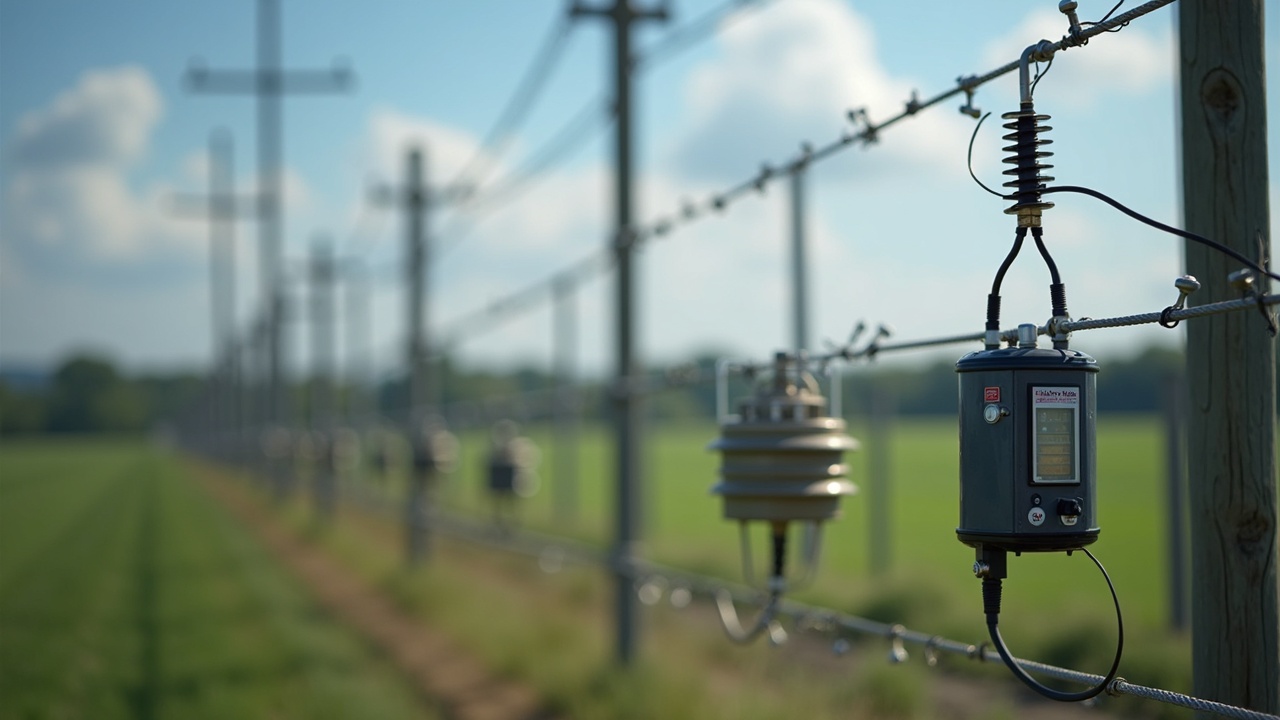
**Content Extraction Summary:** Electric fencing operates as a psychological barrier, not a physical one — a single pulse of high-voltage, low-amperage current trains animals to avoid contact. Ninety percent of electric fence failures trace back to inadequate grounding systems, not wire type, energizer choice, or post spacing. This guide covers energizer selection and sizing, grounding rod installation and testing, wire and post types for different applications, corner brace construction, multi-species configurations (cattle, horses, sheep/goats, poultry, predator exclusion), systematic troubleshooting with a digital voltmeter, and rotational grazing integration with portable paddock systems.
1. Introduction
Most people think of a fence as something an animal cannot physically cross. Electric fence works the opposite way. The wire itself stops nothing — a 900-pound cow could walk through polywire without slowing down. What stops her is memory. One or two painful-but-harmless shocks, and the animal avoids the fence entirely.
This distinction matters because it changes every design decision. A barbed wire fence needs massive corner posts, heavy wire, and close post spacing because it must physically restrain livestock. An electric fence needs proper voltage at the wire, which means it needs a correctly sized energizer and — above everything else — a functional grounding system.
The voltage on the wire is what creates the deterrent. Minimum effective voltage depends on the species: cattle require at least 3,000 volts, horses respond at 2,000–3,000 volts, sheep and goats need 4,000–5,000 volts because of their insulating wool and hair, and predators like coyotes require 4,000+ volts. Below these thresholds, animals learn to push through. Above them, the fence becomes a reliable psychological boundary that costs a fraction of physical alternatives.
**The single most important concept:** An electric fence is a circuit. Current flows from the energizer, through the fence wire, through the animal, through the soil, back through the ground rods, and returns to the energizer. If any part of that circuit fails — particularly the ground return — the fence does not work. This is why 90% of electric fence problems are grounding problems.
2. How It Works
The Pulse
A fence energizer converts input power (AC wall current, 12V battery, or solar panel) into a high-voltage, low-amperage pulse. A typical modern energizer produces 5,000–10,000 volts at extremely low current (measured in milliamps) for a very short duration — approximately 1/300th of a second. The pulse repeats roughly once per second.
This combination is what makes electric fencing safe. High voltage pushes current through skin and hair (overcoming resistance), but the low amperage and short duration prevent cardiac disruption. The sensation is painful but not dangerous to humans or animals. The human pain threshold for electric shock is approximately 1 milliamp — fence energizers are designed to deliver enough current to cause discomfort but remain well below lethal thresholds even in worst-case contact scenarios.
Modern energizers are "low-impedance" designs, meaning they can push voltage through partial shorts like wet vegetation touching the wire. Older "high-impedance" or "weed-burner" energizers delivered continuous current and were both less effective and more dangerous — they could start grass fires. Any energizer sold in the last 20 years should be low-impedance, but verify before buying used equipment.
The Circuit
The complete electric fence circuit:
1. **Energizer** sends a pulse down the fence wire 2. **Fence wire** carries the pulse along the entire fence line 3. **Animal** contacts the wire and becomes the conductor between fence and ground 4. **Soil** carries the current from the animal's hooves back toward the ground rods 5. **Ground rods** collect the current from the soil and return it to the energizer's ground terminal
If any link fails, the animal feels nothing. The most common failure point is the ground return (steps 4 and 5). In dry, sandy, or frozen soil, the earth's conductivity drops and the circuit cannot complete. This is why grounding deserves more attention than any other component.
Why Grounding Is 90% of the Problem
A poorly grounded fence can have a perfect energizer and flawless wire, and still deliver zero shock. The ground return path must have low enough resistance to complete the circuit. Three 6-foot ground rods in moist clay soil work well. One 3-foot rod in dry sand is nearly useless.
Think of it like a garden hose. The energizer is the pump, the fence wire is the hose to the sprinkler, and the ground system is the return hose. Pinch the return hose and no water flows, no matter how powerful the pump. Same principle — a weak ground system chokes the circuit regardless of energizer output.
3. Energizer Selection
Joule Ratings
Energizer output is measured in joules — a unit of energy per pulse. There are two ratings to understand:
- **Stored joules:** Total energy the capacitor holds before discharge
- **Output joules:** Energy actually delivered to the fence wire
Output joules is the number that matters. Stored joules is always higher because of internal losses. A 6-stored-joule energizer might deliver 4 output joules. Compare output joules between models.
**Sizing guidelines:**
| Fence Scenario | Minimum Output Joules | |---|---| | 1–5 acres, clean fence, cattle | 0.5–1.0 | | 5–20 acres, moderate vegetation | 1.0–3.0 | | 20–50 acres, some brush contact | 3.0–6.0 | | 50+ acres, heavy vegetation load | 6.0–15.0 | | Predator exclusion (any size) | 1.0+ per mile of fence |
These are minimums. Vegetation load matters more than fence length alone. A 10-acre paddock surrounded by tall grass touching the wire needs more power than a 40-acre pasture with clean, mowed fence lines.
Power Source Types
**AC-powered (plug-in):** Most powerful per dollar. Run on 110/120V household current. Best choice when a power outlet is within practical wiring distance of the fence. No batteries to maintain, no panels to keep clean. Typical range: 0.5–20+ output joules. The only limitation is getting power to the energizer location.
**Battery (DC):** Run on 12V deep-cycle batteries (marine or solar-specific batteries, not car batteries). Useful for remote fence lines with no grid power. Battery life depends on energizer draw and battery capacity — a 1-joule energizer on a 100Ah deep-cycle battery can run 2–3 weeks between charges. Higher-joule models drain faster. Must monitor battery voltage; output drops as battery drains.
**Solar:** A battery energizer with an integrated or external solar panel. The panel charges the battery during daylight. Properly sized systems run indefinitely without manual charging. Sizing rule: the solar panel must produce enough daily watt-hours to replace what the energizer draws in 24 hours, with margin for cloudy days. For a 1-joule energizer drawing about 200mA, a 10–20W panel is adequate. For a 6-joule unit, 30–50W or more. Panels must face south (in the Northern Hemisphere) and stay clean.
**Recommendation:** If you have grid power within 500 feet of your fence, use AC. It is simpler, cheaper, and more powerful. Solar is the right choice for remote pastures with no grid access. Avoid battery-only setups unless the fence is temporary (days to weeks).
4. Grounding
This section is the most important in this entire document. A $500 energizer on a single 3-foot ground rod will perform worse than a $100 energizer on a proper 3-rod grounding system.
Ground Rod Installation
**Minimum configuration:** Three galvanized steel ground rods, each 6–8 feet long, driven vertically into the earth, spaced 10 feet apart, connected in series with galvanized or insulated 12.5-gauge wire using proper ground rod clamps.
**Steps:**
1. Select a location near the energizer — ideally in soil that stays moist year-round (low spots, near water hydrants, north side of buildings where shade reduces evaporation). 2. Drive the first rod using a manual post driver, sledgehammer, or electric jackhammer with a ground rod driver bit. Leave 2–3 inches above the surface. 3. Measure 10 feet and drive the second rod. Repeat for the third. 4. Connect all three rods in series using continuous wire and ground rod clamps. Use galvanized clamps — not copper. Copper in contact with galvanized steel causes galvanic corrosion that degrades the connection within 1–2 seasons. 5. Run a wire from the last rod back to the energizer's ground terminal.
**Why 10 feet apart?** Each ground rod creates a "sphere of influence" in the soil around it — an electrical field roughly 5 feet in radius. If rods are closer than 10 feet, these fields overlap and you lose effective ground contact area. Ten feet apart gives each rod its own collection zone.
Soil Conductivity
Soil type directly affects grounding effectiveness:
| Soil Type | Conductivity | Notes | |---|---|---| | Clay (moist) | Excellent | Best natural ground | | Loam (moist) | Good | Common and adequate | | Sandy soil | Poor | May need 6+ rods | | Rocky/gravel | Very poor | Consider ground return wire system | | Frozen soil | Nearly zero | Winter failure point in northern climates |
In dry or sandy soils, you have two options: add more ground rods (6–10 rods in poor soil), or install a ground return wire system. A ground return wire runs alongside the fence as a separate, non-electrified wire connected to the energizer's ground terminal. The animal must touch both the hot wire and the ground wire simultaneously to complete the circuit, bypassing the soil entirely.
Testing the Ground System
**Equipment needed:** A digital voltmeter capable of reading 0–10,000V DC. Digital fence voltmeters cost $30–80 and are the single most useful tool for fence maintenance. Do not use neon testers — they give rough indications at best and are dangerously misleading at worst.
**Test procedure:**
1. With the energizer running, short the fence to ground by laying several steel rods or T-posts across the hot wire(s) so they contact both the wire and the soil, approximately 300 feet from the energizer. 2. Measure voltage between the last ground rod and a separate test rod driven 3 feet into the soil, 15 feet from the grounding system. 3. If reading is below 400 volts: ground system is adequate. 4. If reading is 400–1,000 volts: ground system is marginal. Add 1–2 more rods. 5. If reading is above 1,000 volts: ground system is failing. Add 3+ rods, improve soil moisture, or switch to a ground return wire system.
Test annually in mid-summer when soil is driest. A system that tests fine in spring may fail in August.
5. Wire Types
High-Tensile Smooth Wire
**What it is:** 12.5-gauge galvanized steel wire designed to be stretched to 200–250 pounds of tension and maintained at that tension year-round using in-line tensioners or springs.
**Best for:** Permanent perimeter fences. Long runs (1,000+ feet). Areas where appearance matters less than longevity. Cattle and horse fences where wire visibility is supplemented with training.
**Advantages:** Longest lifespan (20–40 years with good galvanization), lowest cost per foot, carries voltage the longest distances with least resistance, handles ice and tree limb loading without permanent deformation.
**Disadvantages:** Nearly invisible to animals before training (especially horses). Requires specialized tensioning tools and knowledge. Fixed installation — not portable.
Polywire / Polytape / Polyrope
**Polywire:** Lightweight plastic filaments interwoven with thin stainless steel or tinned copper conductors. Available in various conductor counts (3, 6, 9 strand). More conductors = lower resistance = better voltage over distance.
**Polytape:** Flat ribbon (0.5–1.5 inches wide) with conductors woven in. Highly visible to animals. Best for horses and temporary subdivision fences where animals need to see the barrier.
**Polyrope:** Braided rope (typically 6mm diameter) with conductors. More durable than polywire, better hand-grip for moving, moderate visibility.
**Best for:** Temporary paddock division, rotational grazing, horse fences (tape especially), any situation where fences move regularly.
**Disadvantages:** Higher resistance than smooth wire — voltage drops over distance. Typical polywire has 10–50x the resistance of 12.5-gauge smooth wire per foot. Not suitable for runs over 1,500–2,000 feet without significant voltage loss. UV degradation limits lifespan to 3–7 years depending on quality and sun exposure.
Aluminum Wire
**What it is:** 14-gauge or 12.5-gauge aluminum wire. Conducts electricity 4x better than steel of the same gauge.
**Best for:** Long fence runs where voltage drop is a concern. Ground return wires. Any situation where conductivity matters more than tensile strength.
**Disadvantages:** Lower tensile strength than steel — cannot be stretched as tight. More expensive per foot. Soft metal — easier to nick and break during installation.
Steel Wire (Non-High-Tensile)
**What it is:** Standard soft galvanized wire, often 14-gauge or 16-gauge.
**Best for:** Short runs, garden fences, temporary setups.
**Disadvantages:** Stretches permanently under tension. Sags over time in permanent installations. Corrodes faster than high-tensile galvanized wire.
6. Post Types
Wood Posts
**Corner/end posts:** Minimum 5-inch diameter (6–8 inches preferred), set 3.5–4 feet deep. Black locust and Osage orange are the most rot-resistant native species — expected lifespan 25–40 years without treatment. Cedar lasts 15–25 years. Treated pine is common but introduces chemicals into the soil.
**Line posts:** 3–4 inch diameter, set 2–2.5 feet deep. Used where the fence changes direction slightly or where extra support is needed. Spacing: every 50–80 feet in permanent high-tensile fences, every 30–50 feet in standard wire.
**Stays (battens):** Lightweight sticks or fiberglass rods clipped between wires to maintain wire spacing between posts. Used every 10–15 feet in high-tensile fences. They do not touch the ground and support no load — they simply keep wires from spreading apart or tangling.
T-Posts (Steel)
Driven into the ground with a T-post driver. Fastest to install. Standard line post for most permanent electric fences. Spacing: 30–50 feet for high-tensile, 15–25 feet for standard wire. Require insulator clips to isolate wire from the grounded steel post. A wire touching an uninsulated T-post shorts the entire fence to ground.
Fiberglass Posts
Non-conductive — no insulator needed, the wire clips directly to the post. Common in semi-permanent applications. Less durable than T-posts in hard soil (they can shatter on rocky ground). Good choice for subdivision fences within a perimeter.
Plastic Step-In Posts
Designed for temporary fences. Push into the ground by foot. Non-conductive. Light enough to carry in quantity. Used with polywire, polytape, or polyrope for rotational grazing subdivision. Lifespan: 2–5 seasons depending on UV exposure and soil conditions.
**Spacing by application:**
| Application | Post Type | Spacing | |---|---|---| | Permanent perimeter (high-tensile) | Wood corners, T-post line | 40–60 ft | | Permanent perimeter (standard) | Wood corners, T-post line | 20–40 ft | | Semi-permanent subdivision | Fiberglass or T-post | 30–50 ft | | Temporary grazing paddock | Plastic step-in | 20–40 ft | | Electrified netting | Built-in posts | N/A (netting is self-supporting) |
7. Corner and End Assemblies
Corners fail more often than any other fence component. Every wire under tension exerts a pulling force on the corner post. A three-wire high-tensile fence at 250 pounds tension per wire puts 750 pounds of horizontal load on each corner. Without proper bracing, the post leans and the fence goes slack.
H-Brace
The standard corner assembly for electric fencing. Components:
- **Two vertical posts:** 6–8 inch diameter, set 4 feet deep, spaced 8 feet apart (2.5x the height of the fence)
- **Horizontal brace rail:** 4–5 inch diameter timber, fitted into notches or pinned through holes in the vertical posts at approximately 2/3 of fence height
- **Diagonal brace wire:** 12.5-gauge smooth wire running from the top of the corner post to the base of the second post, twisted tight with a twitch stick or inline strainer. This wire converts the horizontal pull into a downward force on the brace post.
The brace wire is critical. Without it, the horizontal rail alone cannot resist the pull — it would simply push the second post out of the ground. The diagonal wire anchors the system.
N-Brace (Double H-Brace)
For fence lines over 660 feet (1/8 mile) or where wire tension exceeds 250 pounds per wire, use a double H-brace. This adds a third post and second horizontal rail, creating two bracing bays in series. Same principles, doubled strength.
Floating Diagonal Brace
An alternative for lighter-duty fences or where the soil is too poor to anchor a full H-brace. Uses a single corner post with a diagonal timber running from near the top of the corner post down to a pad or deadman anchor at ground level, angled back along the fence line at approximately 45 degrees. Simpler to build but less strong than an H-brace.
Why Corners Fail
Common failure modes:
1. **Posts set too shallow.** A corner post needs 40% of its length in the ground minimum. A 10-foot post should be buried 4 feet. 2. **No brace wire.** The horizontal rail alone is not sufficient. 3. **Brace wire in the wrong direction.** The wire must run from the TOP of the corner post to the BASE of the brace post, not the other way around. Reversed, it pulls the brace post out of the ground instead of pushing it down. 4. **Undersized posts.** Corner posts under 5 inches will flex and eventually crack under sustained load. 5. **Rotten wood.** Use naturally rot-resistant species or treated lumber for any post that contacts soil.
8. Multi-Species Fencing
Different species require different fence configurations because of their size, behavior, and physical characteristics.
Cattle (1–3 Wires)
Cattle are large, slow, and relatively easy to contain once trained. Most operations use 1–3 hot wires:
- **Single wire at 30–36 inches:** Adequate for trained cattle on internal paddock divisions. Not suitable for perimeter fences or untrained animals.
- **Two wires at 22 and 40 inches:** Standard for most cattle operations. The low wire discourages calves and head-duckers, the high wire stops adults.
- **Three wires at 22, 36, and 50 inches:** Maximum security for bulls, perimeter fences, or areas where cattle pressure is high (near feeding areas, water access).
Minimum voltage: 3,000V at the wire. Target: 4,000–5,000V.
Horses (High-Visibility Wire)
Horses are flight animals. A horse that does not see a fence wire will run through it at speed, causing injury to the animal and destruction of the fence. Visibility is the primary design requirement.
- **Polytape or polyrope** is strongly preferred over smooth wire. The broad surface is visible from a distance.
- **Minimum 2 wires** at 24 and 48 inches. Three wires at 18, 36, and 54 inches is better.
- Wire height must account for breed — draft horses and warmbloods may need the top wire at 58–60 inches.
- **Coated high-tensile wire** (white or yellow coating) is an alternative for permanent fences — combines visibility with conductivity.
Minimum voltage: 2,000–3,000V. Horses are sensitive and learn quickly.
**Never use barbed wire or high-tensile smooth wire alone for horses.** Horses that cannot see the barrier will collide with it. Barbed wire causes lacerations. Smooth high-tensile wire can amputate tendons.
Sheep and Goats (5+ Wires or Netting)
Sheep and goats are the most difficult livestock to fence with electric wire. Goats will test fences constantly. Sheep have insulating wool that reduces shock transmission (dry wool is an effective electrical insulator).
- **Wire configuration:** Minimum 5 wires, alternating hot and ground. Spacing from bottom: 6, 12, 18, 26, 36 inches (adjust top wire to 42 inches for goats). The alternating hot/ground pattern ensures the animal contacts both regardless of soil moisture.
- **Electrified netting:** The most reliable option for sheep and goats. Pre-built mesh with hot horizontal wires and vertical stays, 42–48 inches tall. Available in rolls of 82–164 feet. Each section is self-supporting with built-in step-in posts. Highly effective but expensive ($1.50–3.00 per linear foot).
Minimum voltage: 4,000–5,000V. Higher is better for wool sheep.
Poultry (Electrified Netting)
Standard wire fences do not work for poultry — chickens walk through wire spacing, and aerial predators are not deterred by any fence. Electrified netting is the standard solution for pastured poultry:
- **Height:** 42–48 inch netting for chickens. Taller (48+) for turkeys and larger fowl.
- **Mesh size:** Small enough to prevent chick escape (2–3 inch openings at the base).
- **Purpose is dual:** Keep poultry in AND keep ground predators out (raccoons, foxes, opossums).
- **Must be moved regularly** to prevent vegetation from growing through the mesh and shorting the fence.
Predator Exclusion
Fencing to exclude coyotes, wolves, bears, or feral dogs requires higher voltage and tighter wire spacing than livestock containment:
- **Minimum 5 hot wires** from 6 inches to 48 inches.
- Bottom wire at 6 inches is critical — predators probe under fences before trying to go over.
- **Voltage: 4,000V minimum,** 5,000+ recommended. Predators encounter the fence infrequently, so each contact must be memorable.
- **Electrified netting** works well against canine predators but is less effective against bears (they may power through on sheer mass).
- **For bears:** An offset electric wire at nose height (18–24 inches) outside the main fence is the most effective deterrent. Bears explore with their noses — a shock to the nose is far more memorable than a shock to thick-furred shoulders.
9. Troubleshooting
Equipment
**A digital fence voltmeter is not optional.** It is the only way to diagnose fence problems systematically. Cost: $30–80. The device reads voltage anywhere on the fence line and some models also read amperage (current direction), which is essential for fault finding.
Do not use neon indicator testers. They glow if voltage is present but tell you nothing about the actual voltage level. A fence reading 1,500V will make a neon tester glow — but 1,500V will not stop a goat.
Voltage Testing Procedure
1. **At the energizer:** Disconnect the fence wire from the energizer output terminal. Measure voltage between the output terminal and the ground terminal. This is your energizer's open-circuit voltage — should be 6,000–10,000V for most modern units. If low, the energizer is faulty or the battery is dead. 2. **Reconnect the fence.** Measure voltage at the energizer output terminal with the fence connected. Some drop is normal (500–1,500V depending on fence length and load). If it drops to under 2,000V, there is a significant fault on the line. 3. **Walk the fence line** with the voltmeter, testing every 500 feet. Voltage should be relatively consistent. A sudden drop between two test points indicates a fault in that section.
Finding Faults — The Current Direction Method
Advanced digital voltmeters with a current-reading feature can indicate which direction current is flowing at any test point. Current flows toward a fault. Test at a midpoint on the fence: if current flows left, the fault is to the left. Walk that direction, testing periodically. The fault is between the last reading and the point where voltage drops to zero (or near zero).
Common Fault Types
**Vegetation shorts:** The most frequent ongoing problem. Grass, weeds, vines, and tree branches touching the hot wire drain voltage to ground. A single green weed touching the wire can drop voltage by 500–1,000V. Multiple vegetation contacts along a fence line can reduce a 7,000V fence to 1,500V.
Solutions:
- Mow or spray fence lines regularly (2–4 week cycle during growing season)
- Use a higher-output energizer that can push through moderate vegetation load
- Raise the lowest wire to 12+ inches if vegetation contact is primarily at ground level
- Clear brush and overhanging branches during installation
**Insulator failure:** Cracked, broken, or UV-degraded insulators allow wire to contact grounded posts. Every wire-to-post contact is a direct short. Inspect insulators annually, replace any that are cracked, discolored, or brittle. Black insulators generally resist UV degradation better than clear or yellow ones.
**Broken wire:** A complete break stops voltage from reaching everything beyond the break. This is usually obvious — the fence is dead past a certain point and hot before it. Repair with a proper wire splice (crimp sleeve or split bolt connector), not twisted wire. Twisted splices corrode and create high-resistance connections that degrade over time.
**Corroded connections:** Any connection exposed to weather will corrode. Check jumper wires, ground rod clamps, and energizer terminals annually. Clean with a wire brush or sandpaper. Replace any clamp that is more rust than metal.
**Faulty ground system:** If voltage at the fence is low but the energizer tests fine in open-circuit, suspect the ground. Run the ground test described in Section 4. This is the most commonly overlooked failure mode. It bears repeating: 90% of electric fence problems are grounding problems.
10. Rotational Grazing Integration
Electric fencing is what made rotational grazing practical. Before lightweight portable electric fencing, subdividing pastures required permanent physical fences — expensive and inflexible. Portable electric systems let a rancher divide a 100-acre pasture into 20 five-acre paddocks using step-in posts and polywire, and reconfigure the layout any time conditions change.
Principles
Rotational grazing moves livestock through a series of small paddocks, allowing each paddock to rest and regrow after grazing. Benefits documented in peer-reviewed literature include: 20–60% increase in forage production over continuous grazing (Teague et al., 2011, Journal of Soil and Water Conservation), improved soil organic matter, better water infiltration, and more uniform manure distribution.
The key parameters are:
- **Stock density:** More animals on less ground for shorter periods
- **Rest period:** 30–90 days depending on season, species, and climate
- **Graze period:** 1–7 days per paddock, ideally 1–3 days
Portable Paddock Division
**Equipment for a basic rotational system:**
- Permanent perimeter fence (high-tensile or equivalent)
- Portable subdivision fencing: polywire or polytape on reels, step-in posts
- One or two additional energizers or connection to the perimeter energizer via insulated lead-out wire
**Layout:** The perimeter carries the permanent hot wire. Interior paddock divisions connect to the perimeter with jumper clips. Using polywire on reels, a single person can set up or move a paddock division in 15–30 minutes.
**Tip:** Run a permanent "laneway" — two parallel hot wires 12–16 feet apart — down the center of the pasture, connected to the energizer. Paddocks open onto the laneway. This gives livestock a permanent path to water and handling facilities without crossing live wires.
Water Access Planning
Every paddock must have water access. Options:
1. **Central laneway with shared water point:** Livestock walk the laneway to a central trough. Simple but adds walking distance for far paddocks, which reduces grazing time. 2. **Portable troughs with long hose:** A float-valve trough moved with the herd. Requires long hose runs from the water source. 3. **Permanent pipeline with hydrants:** Buried water line with frost-free hydrants at each paddock location. Highest cost, least daily labor. Worth the investment on operations running 20+ paddocks. 4. **Gravity-fed from pond or spring:** If terrain allows, pipe water downhill to troughs. No pumping cost. Must protect the source from livestock contamination with fenced exclusion zones.
**Critical rule:** Never plan paddock layout without first solving the water problem. A paddock with no water access is unusable regardless of fence quality.
Seasonal Adjustments
- **Spring flush:** Paddocks can be smaller and rotation faster — grass grows fast, animals move every 1–2 days.
- **Summer stress:** Extend rest periods to 60–90 days. Larger paddocks or slower rotation to avoid overgrazing stressed plants.
- **Fall stockpiling:** Close some paddocks entirely in September/October. Let grass grow tall. Graze these stockpiled paddocks in winter when nothing else is growing.
- **Winter:** In regions with frozen ground, ground return fencing may fail (frozen soil does not conduct). Options: switch to ground return wire system, rely on trained animals' memory of fence locations, or use physical barriers for winter containment.
11. Sources
- Gallagher Animal Management. *Electric Fencing Handbook.* Gallagher Group Ltd.
- Gerrish, Jim. *Management-Intensive Grazing: The Grassland Alternative.* Green Park Press, 2004.
- Grandin, Temple. "Livestock Handling and Transport." CABI, 4th Edition, 2014.
- Teague, W.R., et al. "Multi-paddock grazing on rangelands: why the perceptual dichotomy between research results and rancher experience?" *Journal of Environmental Management* 128 (2013): 699–717.
- Teague, W.R., et al. "Grazing management impacts on vegetation, soil biota and soil chemical, physical and hydrological properties in tall grass prairie." *Agriculture, Ecosystems & Environment* 141 (2011): 310–322.
- USDA Natural Resources Conservation Service. *Electric Fencing for Serious Graziers.* Grazing Lands Technology Institute.
- Zareba Systems. *Electric Fence Installation Guide.* Woodstream Corp.
- Premier 1 Supplies. *Fencing Energizers: A Buyer's Guide.* premierfencing.com.
`[practical-skills]` `[facility-design]` `[beginner]`