Extraction
Supercritical CO2 Extraction: The Science of Solvent-Free Botanical Extracts
Deep dive into supercritical CO2 extraction: phase diagrams, pressure and temperature parameters, equipment, plant applications, product characteristics.
On this page
What Makes CO2 "Supercritical"
Every substance has a phase diagram, a map of its behavior under different pressures and temperatures. For carbon dioxide, there is a special point called the critical point: 31.1°C (88°F) and 73.8 bar (1,071 psi). Above both of these thresholds simultaneously, CO2 enters a supercritical state where it is neither a true liquid nor a true gas. It possesses the density of a liquid (which gives it dissolving power) and the viscosity of a gas (which allows it to penetrate plant material efficiently).
This dual nature makes supercritical CO2 an exceptionally effective extraction solvent. It flows through packed plant material like a gas, penetrating deep into cell structures, while dissolving target compounds like a liquid. When the pressure is released, the CO2 reverts to gas and evaporates completely, leaving behind a pure extract with zero solvent residue.
The Tunability Advantage
Unlike fixed solvents like ethanol or hexane, supercritical CO2 can be "tuned" by adjusting pressure and temperature. Higher pressures increase the solvent's density and dissolving power, allowing operators to selectively extract different compound classes. This tunability is what makes CO2 extraction capable of producing both targeted isolates and full-spectrum extracts from the same plant material.
How the Process Works
A supercritical CO2 extraction system operates in a continuous loop. The process follows these stages:
- Pressurization: Liquid CO2 from a storage tank is pumped through a heat exchanger and brought above its critical point. Industrial systems typically operate between 100–600 bar (1,450–8,700 psi) and 31–80°C (88–176°F), depending on the target compounds.
- Extraction: The supercritical CO2 flows through an extraction vessel packed with dried, ground plant material. The fluid dissolves lipophilic and semi-polar compounds as it passes through the biomass. Contact time ranges from 30 minutes to several hours depending on the material and target.
- Separation: The CO2-extract mixture passes into a separator vessel where pressure is reduced. As the CO2 loses density, it can no longer hold the dissolved compounds, which precipitate out and collect at the bottom of the separator.
- Recirculation: The now-gaseous CO2 is recondensed, repressurized, and cycled back through the extraction vessel. Most commercial systems reclaim 95–99% of the CO2 used.
- Collection: The crude extract is collected from the separator. Depending on the parameters used, it may be a golden oil, a thick resin, or a waxy solid.
Equipment and Infrastructure
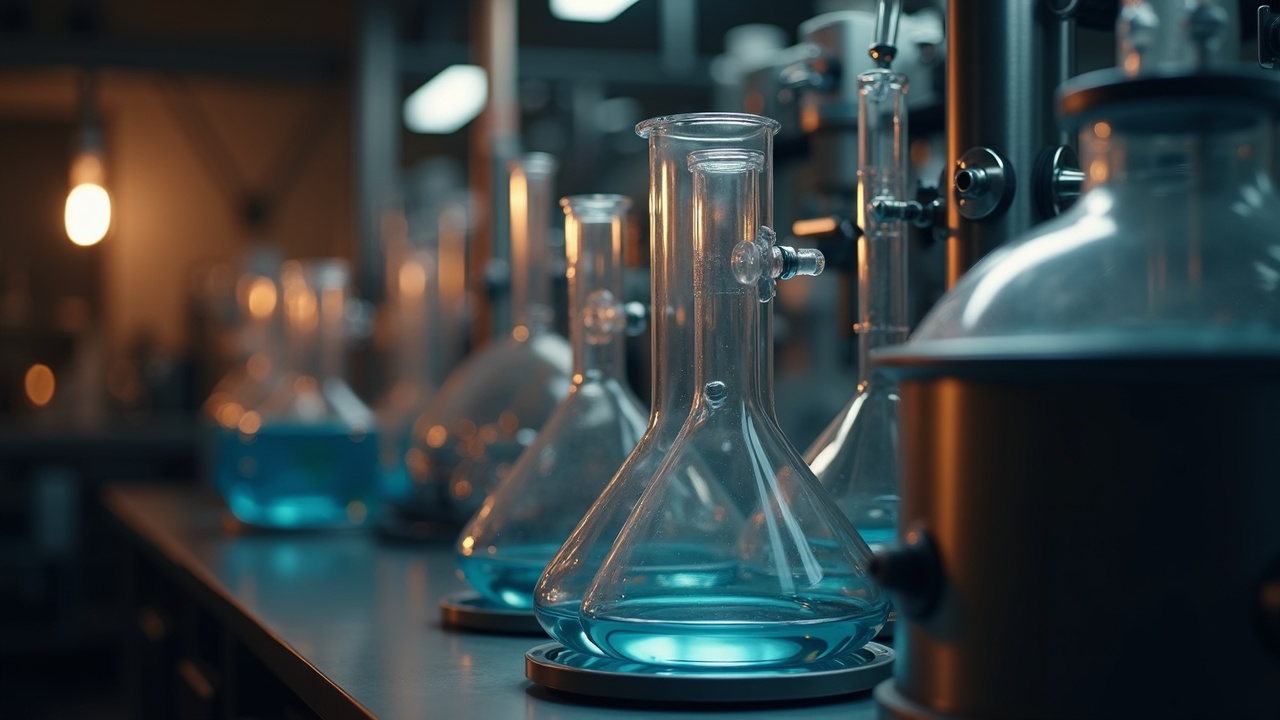
Supercritical CO2 extraction requires specialized, high-pressure industrial equipment. A typical production system includes:
| Component | Function |
|---|---|
| CO2 Supply Tank | Stores liquid CO2 at low pressure; food-grade or beverage-grade CO2 is standard |
| High-Pressure Pump | Compresses CO2 to supercritical pressures (100–600+ bar) |
| Heat Exchangers | Control temperature at each stage; critical for reaching and maintaining supercritical conditions |
| Extraction Vessel | High-pressure chamber holding the plant material; typically 1–500 liters for commercial systems |
| Separator Vessels | One or more vessels where pressure drops cause extract to precipitate; multiple separators enable fractionation |
| Back-Pressure Regulator | Controls pressure drop between extraction and separation stages |
| Recirculation System | Recondenses and recycles CO2 for continuous operation |
Entry-level laboratory systems start around $30,000–50,000 for a 1–5 liter extraction vessel. Commercial production systems with 20–100 liter vessels typically cost $150,000–500,000. Large industrial systems with automated controls and multiple extraction vessels can exceed $1 million. These costs limit CO2 extraction primarily to established manufacturers and well-funded operations.
Which Plants and Compounds
Supercritical CO2 extraction excels with lipophilic (fat-soluble) and semi-polar compounds. It is the preferred method for:
Hops (Humulus lupulus)
The brewing industry was one of the earliest adopters of CO2 extraction for producing hop extracts. Alpha acids and essential oils are extracted with minimal thermal degradation, producing concentrated hop oils used in brewing and increasingly in herbal supplements for their calming properties.
Spices and Flavors
Vanilla, ginger, turmeric, black pepper, and many other spices are commercially extracted using CO2 to produce clean, concentrated flavor compounds for the food industry. The absence of solvent residue is a significant advantage for food-grade applications.
Other Applications
Supercritical CO2 is also used for decaffeinating coffee and tea, extracting essential oils from herbs like rosemary and oregano, producing concentrated botanical oils from sea buckthorn and evening primrose, and extracting bioactive compounds from medicinal mushrooms.
Finished Product Characteristics
CO2 extracts have distinct characteristics that differentiate them from other extraction products:
- Full-spectrum oils: At moderate pressures, CO2 extracts a broad range of compounds including terpenes, flavonoids, and primary bioactives. These retain the plant's natural chemical complexity and may benefit from the "entourage effect" where compounds work synergistically.
- Select-spectrum extracts: By adjusting pressure parameters, specific compound classes can be targeted. Lower pressures favor lighter, more volatile compounds; higher pressures pull heavier molecules including waxes and lipids.
- Isolates: With additional post-processing (winterization, chromatography), CO2 crude extracts can be refined into pure compound isolates, single-molecule products with precise dosing potential.
- Appearance: CO2 extracts range from clear golden oils to thick amber resins depending on the plant material and extraction parameters. They typically have rich, true-to-plant aromas because volatile terpenes are well-preserved.
What Conditions and Symptoms These Products Address
The applications of CO2-extracted products span a wide range depending on the source plant:
- Pain and inflammation: Turmeric and ginger CO2 extracts concentrate anti-inflammatory compounds (curcuminoids, gingerols) that are used to address chronic pain, joint stiffness, and inflammatory conditions.
- Digestive health: Peppermint, ginger, and fennel CO2 extracts concentrate volatile compounds used to support digestive comfort.
- Immune support: Medicinal mushroom and elderberry CO2 extracts concentrate polysaccharides and flavonoids associated with immune function.
Important Disclaimer
These applications reflect traditional and emerging uses documented in the literature. They are not medical claims. Consult a qualified healthcare provider before using any botanical extract to address specific health conditions.
Advantages and Limitations
Key Advantages
- Zero solvent residue: CO2 evaporates completely when pressure is released, leaving no trace in the final product. No residual solvent testing required.
- Tunability: Pressure and temperature adjustments allow selective extraction of specific compounds or compound classes.
- Low-temperature operation: Most extractions occur below 80°C, preserving heat-sensitive compounds like terpenes and certain alkaloids.
- Environmentally friendly: CO2 is non-toxic, non-flammable, and 95–99% recyclable within the system. No hazardous waste is generated.
- Consistent results: Computer-controlled systems produce highly reproducible extracts batch after batch.
- GRAS status: CO2 is Generally Recognized as Safe by the FDA for food processing applications.
Key Limitations
- Capital cost: Equipment is expensive, making CO2 extraction impractical for small-scale or hobbyist operations.
- Technical complexity: Operators need training in high-pressure systems, thermodynamics, and extraction science. Improper operation can damage equipment or produce poor extracts.
- Polar compound limitations: Supercritical CO2 alone is a poor solvent for highly polar molecules like sugars, amino acids, and some glycosides. Co-solvents (typically small amounts of ethanol) can be added to extend polarity range, but this introduces some of the limitations of solvent extraction.
- Batch processing: Most systems operate in batch mode, requiring downtime between runs for loading, unloading, and cleaning. Continuous-flow systems exist but are even more expensive.
- Plant preparation: Material must be properly dried and ground to a consistent particle size. Moisture content above 10–12% significantly reduces extraction efficiency.
Safety Considerations
CO2 extraction operates at very high pressures. While the solvent itself is non-toxic and non-flammable, a significant safety advantage over hydrocarbon extraction, the pressure levels require proper engineering controls:
- All pressure vessels must be rated for the maximum operating pressure with appropriate safety margins (typically 1.5–2x the operating pressure).
- Pressure relief valves and burst discs protect against over-pressurization.
- CO2 is an asphyxiant in high concentrations. Extraction rooms require ventilation and CO2 monitoring with alarms.
- Operators need training in high-pressure safety, emergency procedures, and equipment maintenance.
- Regular inspections and certification of pressure vessels are typically required by industrial safety regulations.
When properly engineered and operated, supercritical CO2 extraction is one of the safest industrial extraction methods available. The absence of flammable solvents eliminates fire and explosion risks that are present with ethanol and hydrocarbon extraction.
Research on extraction co2 supercritical
Peer reviewed studies about extraction co2 supercritical, listed so you can read the original rather than take our word for it. They are background on the subject, not a source for any one sentence above.
- Application of supercritical CO2 in lipid extraction - A review (2009). doi:10.1016/j.jfoodeng.2009.06.026
- Rate of the vegetable oil extraction with supercritical CO2-I. Modelling of extraction curves (1994). doi:10.1016/0009-2509(94)87012-8
- Rate of the vegetable oil extraction with supercritical CO2-II. Extraction of grape oil (1994). doi:10.1016/0009-2509(94)87013-6
- Modeling and simulation of the supercritical CO2 extraction of vegetable oils (2001). doi:10.1016/s0896-8446(00)00093-0
- Production of biodiesel from macroalgae by supercritical CO2 extraction and thermochemical liquefaction (2005). doi:10.1007/s10311-005-0020-3
Common questions
How does the process work?
A supercritical CO2 extraction system operates in a continuous loop. The process follows these stages:. Pressurization: Liquid CO2 from a storage tank is pumped through a heat exchanger and brought above its critical point. Industrial systems typically operate between 100–600 bar (1,450–8,700 psi) and 31–80°C (88–176°F), depending on the target compounds. Extraction: The supercritical CO2 flows through an extraction vessel packed with dried, ground plant material.
What equipment does extraction co2 supercritical need?
Supercritical CO2 extraction requires specialized, high-pressure industrial equipment. A typical production system includes:. CO2 Supply Tank: Stores liquid CO2 at low pressure; food-grade or beverage-grade CO2 is standard. High-Pressure Pump: Compresses CO2 to supercritical pressures (100–600+ bar). Heat Exchangers: Control temperature at each stage; critical for reaching and maintaining supercritical conditions.
What is happening chemically in extraction co2 supercritical?
Supercritical CO2 extraction excels with lipophilic (fat-soluble) and semi-polar compounds. It is the preferred method for:. The brewing industry was one of the earliest adopters of CO2 extraction for producing hop extracts. Alpha acids and essential oils are extracted with minimal thermal degradation, producing concentrated hop oils used in brewing and increasingly in herbal supplements for their calming properties. Vanilla, ginger, turmeric, black pepper, and many other spices are commercially extracted using CO2 to produce clean, concentrated flavor compounds for the food industry.
What are finished product characteristics?
CO2 extracts have distinct characteristics that differentiate them from other extraction products:. Full-spectrum oils: At moderate pressures, CO2 extracts a broad range of compounds including terpenes, flavonoids, and primary bioactives. These retain the plant's natural chemical complexity and may benefit from the "entourage effect" where compounds work synergistically. Select-spectrum extracts: By adjusting pressure parameters, specific compound classes can be targeted. Lower pressures favor lighter, more volatile compounds; higher pressures pull heavier molecules including waxes and lipids.
Is extraction co2 supercritical safe?
CO2 extraction operates at very high pressures. While the solvent itself is non-toxic and non-flammable, a significant safety advantage over hydrocarbon extraction, the pressure levels require proper engineering controls:. All pressure vessels must be rated for the maximum operating pressure with appropriate safety margins (typically 1.5–2x the operating pressure). Pressure relief valves and burst discs protect against over-pressurization. CO2 is an asphyxiant in high concentrations.