Growing
Holy Basil / Tulsi (Ocimum tenuiflorum): Sacred Herb, Potent Adaptogen, and a Plant That Grows Itself
Complete holy basil (tulsi) cultivation guide covering Ocimum tenuiflorum varieties, warm-season growing, sacred cultural context, eugenol chemistry.
On this page
Botanical Description and Varieties
Holy basil (Ocimum tenuiflorum, syn. Ocimum sanctum) is an aromatic, short-lived perennial or annual in the Lamiaceae family, native to the Indian subcontinent and Southeast Asia. While closely related to culinary sweet basil (O. basilicum), holy basil has a distinctly different flavor profile, spicy, clove-like, and peppery rather than sweet and anise-scented, and a very different cultural significance.
Three primary varieties are cultivated, each with distinct characteristics:
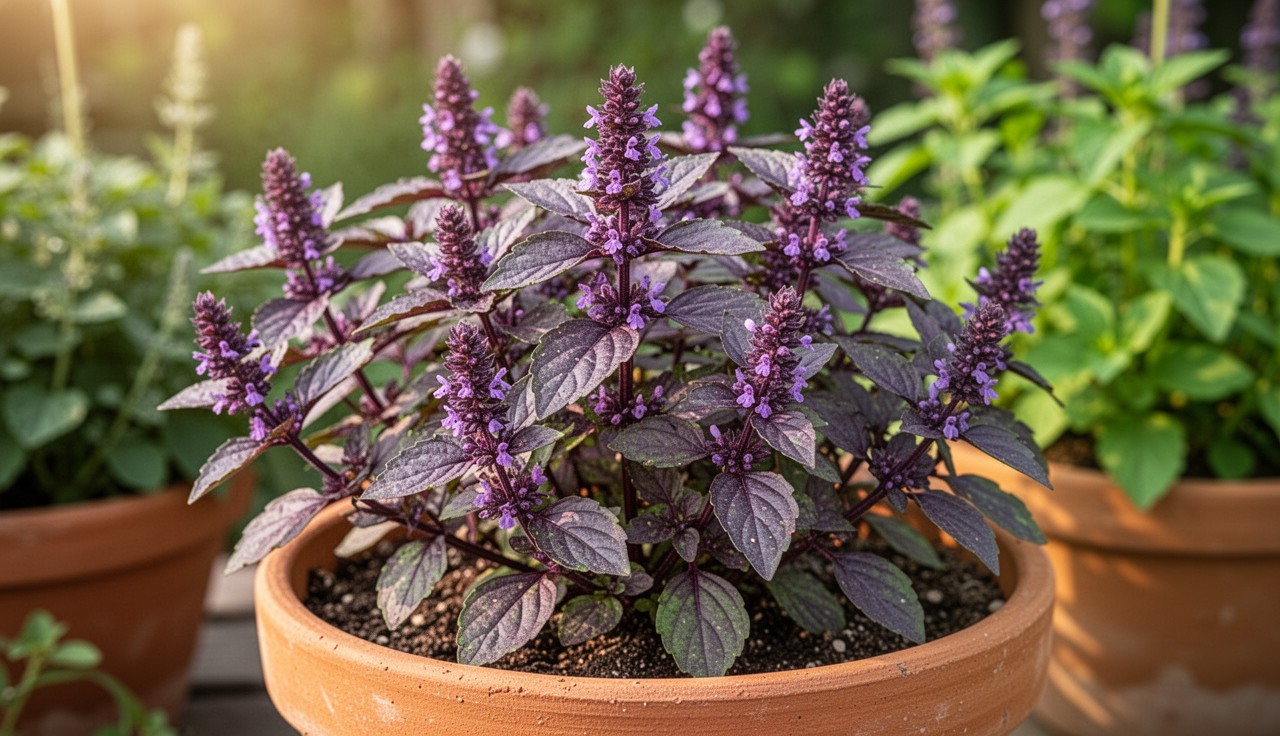
- Krishna Tulsi (Purple): Dark purple stems and leaves with a strong, peppery, clove-forward aroma. Considered the most medicinally potent variety. More cold-sensitive than other types.
- Rama Tulsi (Green): Green leaves with lighter stems and a milder, more cooling flavor. The most commonly cultivated variety for commercial tea production.
- Vana Tulsi (Wild): Larger, more vigorous plants with bright green leaves and a citrusy, almost lemongrass-like flavor. The most cold-hardy variety and the easiest to grow in temperate climates.
Sacred Status in Hindu Culture
Tulsi is not merely a medicinal plant in Hindu tradition, it is considered a living goddess, an earthly manifestation of Lakshmi (or Vrinda, consort of Vishnu). Millions of Hindu households maintain a tulsi plant on a dedicated pedestal (tulsi vrindavan) in the courtyard, performing daily worship rituals. The plant is so revered that it is considered inauspicious to pluck leaves on certain days of the week. This deep cultural embedding has ensured holy basil’s continuous cultivation for at least 3,000 years.
Climate and Growing Requirements
Holy basil is a tropical plant that thrives in heat and humidity, conditions that challenge most temperate herb gardens. It is one of the few adaptogenic herbs that actually performs better in hot, humid summer conditions than in dry, mild ones.
| Parameter | Range / Tolerance |
|---|---|
| USDA Hardiness Zones | 10–12 (perennial); grown as annual in zones 4–9 |
| Optimal Temperature | 75–95°F; growth slows below 60°F |
| Light | Full sun (6+ hours); tolerates light afternoon shade |
| Moisture | Moderate to high; prefers humid conditions |
| Frost Tolerance | None; killed by first frost |
| Heat Tolerance | Excellent; one of few herbs that thrives above 95°F |
In Central Texas, holy basil is one of the most productive summer herbs, continuing to grow vigorously through July and August when lettuce bolts and cilantro dies. Direct sow after soil temperatures consistently exceed 65°F, or transplant seedlings started indoors 6–8 weeks before last frost.
Cultivation Details
| Factor | Details |
|---|---|
| Soil | Well-drained, moderately fertile; pH 6.0–7.5 |
| Propagation | Seed (surface sow, needs light; 7–14 days germination) or stem cuttings |
| Spacing | 12–18 inches; plants become bushy and substantial |
| Fertilization | Light to moderate; too much nitrogen reduces essential oil density |
| Pinching | Pinch flower buds regularly to extend leaf harvest season and promote bushiness |
| Self-Seeding | Prolific; allow some flowers to mature for next year’s volunteers |
Holy basil is remarkably pest- and disease-resistant compared to sweet basil. It rarely suffers from downy mildew, fusarium wilt, or Japanese beetle damage that plague O. basilicum cultivars. The high eugenol content in the leaves appears to deter many common garden pests.
Harvesting and Processing
Leaf Harvest
Harvest individual leaves or cut entire stems back to a leaf pair throughout the growing season. Morning harvest after dew dries captures peak essential oil content. Regular harvesting (every 2–3 weeks) stimulates bushy regrowth and delays flowering.
Tea Preparation
Tulsi tea is the primary form of consumption worldwide. Fresh leaves can be steeped (5–7 leaves per cup, 5 minutes in hot water) or dried leaves used at a rate of 1–2 teaspoons per cup. The dried herb retains its clove-like character well, making it one of the better herbs for tea blending.
Preservation
Dry quickly at low temperatures (95–105°F) in single layers. The dried leaf should retain its color and aroma. Store in airtight containers away from light. Fresh holy basil can also be frozen in ice cube trays or made into tinctures and oxymel preparations.
Phytochemical Profile
| Compound Class | Key Members |
|---|---|
| Phenylpropanoids | Eugenol (primary; responsible for clove-like aroma), methyl eugenol |
| Monoterpenes | Rosmarinic acid, ocimene, linalool, camphor (proportions vary by variety) |
| Sesquiterpenes | Beta-caryophyllene, germacrene D |
| Flavonoids | Orientin, vicenin, apigenin, luteolin |
| Triterpenes | Ursolic acid, oleanolic acid |
| Fixed Oils | Linolenic acid, stearic acid (in seeds) |
The essential oil composition varies dramatically between varieties. Krishna tulsi is eugenol-dominant (up to 70% of volatile fraction), while Vana tulsi is higher in citral and limonene. This chemical diversity means different varieties may have somewhat different functional properties, though all three are used interchangeably in traditional Ayurvedic practice.
Traditional and Functional Uses
- Adaptogenic support: Classified as a rasayana in Ayurveda, tulsi is taken daily to enhance resilience, support immune function, and promote balanced stress responses. Unlike ashwagandha (which is calming), tulsi is considered an energizing adaptogen.
- Respiratory health: One of the most established traditional uses. Tulsi tea with honey and ginger is a standard home remedy for coughs, congestion, and upper respiratory discomfort across South Asia.
- Digestive support: Used for bloating, nausea, and stress-related digestive complaints.
- Oral health: Tulsi leaf is traditionally chewed for dental hygiene. Eugenol is a well-established dental analgesic (used in clove oil for toothache relief).
- Insect repellent: The plant itself repels mosquitoes, and dried tulsi leaves are placed in grain stores to deter insects in traditional Indian households.
Clinical Research
Growing Evidence Base
Holy basil has accumulated a meaningful body of human clinical evidence, though many studies were conducted in India with moderate sample sizes and variable methodological rigor. A 2017 systematic review in the Journal of Ayurveda and Integrative Medicine identified 24 clinical studies and concluded that tulsi demonstrates promising effects across multiple domains, while calling for larger, more rigorous confirmatory trials.
- Stress and cortisol: Multiple clinical studies demonstrate reductions in stress symptoms, anxiety scores, and cortisol levels in adults taking daily tulsi supplements or tea over 4–8 week periods.
- Metabolic parameters: Several RCTs report modest improvements in fasting blood glucose, blood lipid profiles, and blood pressure in metabolically challenged populations.
- Immune modulation: Studies show increases in natural killer cell activity and immunoglobulin levels, suggesting immune-enhancing properties that align with traditional claims.
- Cognitive function: Preliminary evidence of improved reaction time and reduced cognitive fatigue in healthy adults, though the evidence base is smaller than for stress-related outcomes.
Precautions
- Blood thinning: Eugenol may slow blood clotting. Discontinue supplemental doses 2 weeks before surgery.
- Fertility: Animal studies suggest possible anti-fertility effects at very high doses. Avoid during pregnancy and if actively trying to conceive.
- Drug metabolism: May affect cytochrome P450 enzyme activity, potentially altering the metabolism of certain pharmaceuticals.
- Hypoglycemia: May lower blood sugar; individuals on diabetes medications should monitor glucose levels.
Ecological Value
Holy basil is an excellent companion plant that attracts pollinators (particularly small native bees and hoverflies) while repelling mosquitoes, aphids, and whiteflies. Its strong aroma can mask the scent of susceptible crops from pest insects. In permaculture design, it serves as both a beneficial insectary plant and a productive harvest crop, a rare dual-purpose combination.
References
- Jamshidi & Cohen, Journal of Ayurveda and Integrative Medicine (2017), systematic review of 24 clinical studies
- Cohen, Evidence-Based Complementary and Alternative Medicine (2014), tulsi as adaptogen review
- Saxena et al., Indian Journal of Clinical Biochemistry (2012), metabolic parameters RCT
- Mondal et al., Journal of Ethnopharmacology, immunomodulatory clinical study
- Pattanayak et al., Pharmacognosy Reviews, phytochemistry and pharmacology review
- Indian Medicinal Plants Database, traditional monograph
Common questions
What climate does holy basil tolerate?
Holy basil is a tropical plant that thrives in heat and humidity, conditions that challenge most temperate herb gardens. It is one of the few adaptogenic herbs that actually performs better in hot, humid summer conditions than in dry, mild ones. USDA Hardiness Zones: 10–12 (perennial); grown as annual in zones 4–9. Optimal Temperature: 75–95°F; growth slows below 60°F. Light: Full sun (6+ hours); tolerates light afternoon shade.
How do I grow holy basil?
Soil: Well-drained, moderately fertile; pH 6.0–7.5. Propagation: Seed (surface sow, needs light; 7–14 days germination) or stem cuttings. Spacing: 12–18 inches; plants become bushy and substantial. Fertilization: Light to moderate; too much nitrogen reduces essential oil density. Pinching: Pinch flower buds regularly to extend leaf harvest season and promote bushiness.
What can I make from holy basil?
Harvest individual leaves or cut entire stems back to a leaf pair throughout the growing season. Morning harvest after dew dries captures peak essential oil content. Regular harvesting (every 2–3 weeks) stimulates bushy regrowth and delays flowering. Tulsi tea is the primary form of consumption worldwide. Fresh leaves can be steeped (5–7 leaves per cup, 5 minutes in hot water) or dried leaves used at a rate of 1–2 teaspoons per cup.
What is phytochemical profile?
Phenylpropanoids: Eugenol (primary; responsible for clove-like aroma), methyl eugenol. Monoterpenes: Rosmarinic acid, ocimene, linalool, camphor (proportions vary by variety). Sesquiterpenes: Beta-caryophyllene, germacrene D. Flavonoids: Orientin, vicenin, apigenin, luteolin. Triterpenes: Ursolic acid, oleanolic acid.
What has holy basil traditionally been used for?
Adaptogenic support: Classified as a rasayana in Ayurveda, tulsi is taken daily to enhance resilience, support immune function, and promote balanced stress responses. Unlike ashwagandha (which is calming), tulsi is considered an energizing adaptogen. Respiratory health: One of the most established traditional uses. Tulsi tea with honey and ginger is a standard home remedy for coughs, congestion, and upper respiratory discomfort across South Asia. Digestive support: Used for bloating, nausea, and stress-related digestive complaints.
What is clinical research?
Holy basil has accumulated a meaningful body of human clinical evidence, though many studies were conducted in India with moderate sample sizes and variable methodological rigor. A 2017 systematic review in the Journal of Ayurveda and Integrative Medicine identified 24 clinical studies and concluded that tulsi demonstrates promising effects across multiple domains, while calling for larger, more rigorous confirmatory trials.
What is ecological value?
Holy basil is an excellent companion plant that attracts pollinators (particularly small native bees and hoverflies) while repelling mosquitoes, aphids, and whiteflies. Its strong aroma can mask the scent of susceptible crops from pest insects. In permaculture design, it serves as both a beneficial insectary plant and a productive harvest crop, a rare dual-purpose combination.