guides
Kanna (Sceletium tortuosum): Comprehensive Cultivation, Processing, and Use Guide
Complete guide to kanna cultivation covering Sceletium tortuosum botany, mesembrine alkaloids, arid-climate growing parameters, propagation.
Botanical Description and Modern Scientific Context
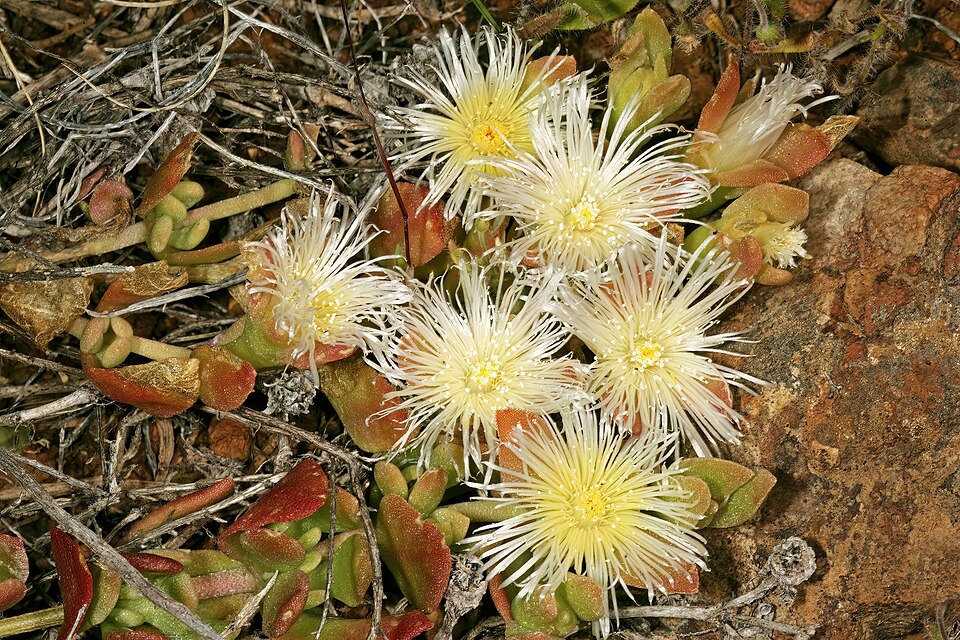
Kanna, Sceletium tortuosum, is a low-growing, perennial, succulent plant native to arid and semi-arid regions of southern Africa. It belongs to the Aizoaceae family and forms prostrate to gently spreading mats with fleshy, opposite leaves that are narrow, flattened to slightly triangular, and often marked with translucent “window” cells adapted for water conservation.
The plant produces small, daisy-like flowers ranging from white to pale yellow, followed by distinctive hygrochastic seed capsules that open when wet and close when dry. Growth is slow to moderate, with most biomass concentrated close to the soil surface.
In modern scientific literature, kanna is discussed primarily for its mesembrine-type alkaloids—including mesembrine, mesembrenone, mesembrenol, and tortuosamine—which are studied for their interaction with serotonergic signaling, phosphodiesterase-4 (PDE4) inhibition, monoamine modulation, and stress-response pathways. These discussions are consistently framed within ethnopharmacology, neurochemistry, and functional botanical research rather than approved medical use.
Origin, Ecology, and Historical Context
Kanna is indigenous to South Africa, particularly the Western Cape, Eastern Cape, and Namaqualand regions, where it evolved in nutrient-poor, sandy, well-drained soils under conditions of intense sun, seasonal rainfall, and prolonged drought.
The plant is most famously associated with the Khoisan peoples, including the San and Khoikhoi, who developed sophisticated methods for harvesting, processing, and using kanna long before colonial contact.
Historical accounts from early European explorers and ethnographers document kanna as a culturally significant plant used for social bonding, stress reduction, hunger suppression, and ritual or recreational purposes. It was valued not as an intoxicant in the conventional sense, but as a mood-modulating and endurance-supporting plant integrated into daily life.
Plant Morphology, Seeds, and Reproductive Biology
Kanna grows from a shallow, fibrous root system and produces multiple stems from a central crown. Leaves are succulent and store water, allowing the plant to survive extended dry periods.
Flowers are self-fertile but benefit from insect pollination. Seed capsules contain numerous tiny brown to black seeds, typically less than 1 mm in size.
Seeds exhibit no deep dormancy but germinate best under warm conditions with intermittent moisture, mimicking seasonal rains in their native habitat.
Climate Adaptation and Environmental Requirements
Kanna is best suited to USDA zones 9–11, though it can be grown as a container plant indoors or in greenhouses in cooler regions.
| Parameter | Optimal Range |
|---|---|
| Temperature | 18–30°C (65–86°F) |
| Cold Tolerance | Minimal; damage occurs below ~5°C (41°F) |
| Sunlight | Full sun to bright filtered light |
| Relative Humidity | Low to moderate (30–60%) |
| Rainfall / Irrigation | Low; prefers infrequent but deep watering |
Excess humidity, poor airflow, or prolonged moisture rapidly lead to rot and fungal pressure.
Soil Preferences and Root Zone Management
Kanna requires excellent drainage and performs best in sandy or gritty soils with minimal organic matter.
| Parameter | Specification |
|---|---|
| pH | 6.0–7.5 |
| Texture | Sandy loam, decomposed granite, or cactus-style mixes |
| Drainage | Immediate; standing water is fatal |
Fertility requirements are low. Excess nitrogen promotes soft growth and reduces alkaloid concentration.
Propagation, Establishment, and Growing Systems
Seed Propagation
Seeds are surface-sown or lightly pressed into substrate.
| Parameter | Specification |
|---|---|
| Germination Temperature | 20–28°C (68–82°F) |
| Time to Emergence | 7–21 days |
Seedlings are slow-growing initially and require careful moisture management.
Vegetative Propagation
- Stem cuttings root readily when allowed to callus for several days
- Cuttings are placed into dry-to-slightly-moist substrate and watered sparingly until established
Growing Systems
Kanna is commonly grown in the following settings:
- In containers
- In raised beds with excellent drainage
- In arid or Mediterranean-style gardens
Growth Cycle, Harvest Timing, and Biomass Use
Plants reach harvestable size within 6–12 months depending on conditions. Traditionally, the entire aboveground plant is harvested, including leaves and stems, as alkaloids are distributed throughout aerial tissues.
Harvest typically occurs during dry periods when alkaloid concentration is reported to be highest.
Post-Harvest Handling and Traditional Processing
Freshly harvested plant material is fermented, a step considered essential in traditional use.
Traditional Fermentation Process (Non-Instructional Context)
The traditional method involves crushing or bruising the plant material, packing it tightly and keeping it warm for several days, allowing it to oxidize and enzymatically transform, and then drying it thoroughly after fermentation. Modern chemical analysis shows fermentation alters the alkaloid profile, increasing bioavailability and reducing harsh or undesirable effects.
Fermentation Steps (Historical Record)
- Plant material is crushed or bruised
- Packed tightly and kept warm for several days
- Allowed to oxidize and enzymatically transform
- Dried thoroughly after fermentation
Drying, Storage, and Preservation
| Parameter | Specification |
|---|---|
| Storage Temperature | <20°C (68°F) |
| Container | Airtight, light-protected |
| Moisture Content | <10% |
Properly processed material has a tan to brown-green color and a slightly aromatic, hay-like scent.
Psychoactive Effects and Neurochemical Context
Kanna is described in ethnobotanical and neuropharmacological literature as psychoactive but non-hallucinogenic, with effects centered on mood, emotional tone, stress perception, and social engagement.
Psychoactive Context
Effects are described as clear-headed and grounding rather than intoxicating, with minimal impairment of motor function when used traditionally. This section presents ethnobotanical and neurochemical research context and does not constitute medical or dosing advice.
Primary Mechanisms Discussed in Research
- Serotonin reuptake inhibition (SRI): Particularly attributed to mesembrine
- PDE4 inhibition: Associated with mesembrenone, influencing intracellular signaling
- Monoamine modulation: Affecting dopamine and norepinephrine indirectly
Reported Effects in Historical, Observational, and Research Contexts
- Mood elevation
- Reduced anxiety and stress reactivity
- Increased sociability and openness
- Enhanced sensory appreciation
- Reduced hunger and thirst perception
Dosage Context (Historical and Observational)
Ethnographic and contemporary botanical literature reports wide variability in effective amounts depending on preparation, plant potency, and individual sensitivity.
Historically Documented Ranges (Contextual, Non-Prescriptive)
| Preparation | Historical Range |
|---|---|
| Fermented, dried plant material | A few hundred milligrams to a couple of grams per use |
| Concentrated extracts | Much lower quantities due to alkaloid concentration |
Traditional use emphasized low to moderate amounts, often chewed or taken socially rather than repeatedly or compulsively.
Modern research consistently emphasizes variability and cautions against extrapolating standardized dosing from traditional contexts.
History of Recreational and Social Use
Among Khoisan groups, kanna was chewed communally during long hunts, negotiations, storytelling, and rituals. Its role was social and functional rather than escapist.
Early European settlers and travelers recorded kanna use as early as the 1600s, noting its calming and mood-lifting properties.
In the 20th and 21st centuries, kanna gained renewed attention globally as an ethnobotanical curiosity and functional botanical, appearing in South Africa, Europe, and North America in both traditional and modernized forms.
Despite modern interest, kanna remains deeply rooted in African cultural history, and many traditional knowledge holders emphasize respectful, moderate use.
Culinary, Infusion, and Use Forms
Kanna is not a conventional food plant. Common historical and modern forms include:
- Chewed fermented plant material
- Powdered preparations
- Aqueous or alcohol-based infusions
- Snuff-like preparations in some traditions
Leaves and stems are the primary usable parts; roots are generally not emphasized.
Potentiation and Synergistic Context
Ethnobotanical and pharmacological literature notes that kanna may interact additively or synergistically with other substances acting on serotonergic or dopaminergic systems.
Observational contexts discuss:
- Enhanced calming effects when combined with other relaxing botanicals
- Amplification of mood effects when paired with certain psychoactive plants
- Potential interactions with modern serotonergic agents, warranting caution
Safety Note: Serotonergic Interactions
These discussions remain theoretical and observational, emphasizing variability and conservative use rather than endorsement. Individuals using serotonergic medications (SSRIs, SNRIs, MAOIs) should exercise particular caution due to the potential for additive effects on serotonin pathways.
System Integration and Additional Considerations
- Kanna integrates well into xeriscaping, medicinal gardens, and arid-climate permaculture systems
- Its low water requirement and shallow root system make it suitable for container cultivation
- Overharvesting wild populations has occurred historically; cultivation is preferred for sustainability
Scientific and Authoritative References
This article is informed by data and conclusions drawn from, but not limited to:
- Smith et al., Journal of Ethnopharmacology
- Gericke & Viljoen, Journal of Ethnopharmacology
- Harvey et al., Journal of Psychopharmacology
- Sceletium Tortuosum Monographs, South African Medical Research Council
- Rätsch, The Encyclopedia of Psychoactive Plants
- Dimpfel et al., Phytomedicine
- Patnala & Kanfer, Journal of Pharmacy and Pharmacology
- Van Wyk et al., Medicinal Plants of South Africa
- Albrecht et al., Neuropharmacology
- EFSA botanical safety assessments on mesembrine alkaloids