guides
Little Bluestem (Schizachyrium scoparium): Comprehensive Cultivation, Forage, and Regenerative Land-Use Guide
Complete guide to little bluestem cultivation covering Schizachyrium scoparium ecology, prairie restoration, grazing management, fire ecology.
Botanical Description and Modern Scientific Context
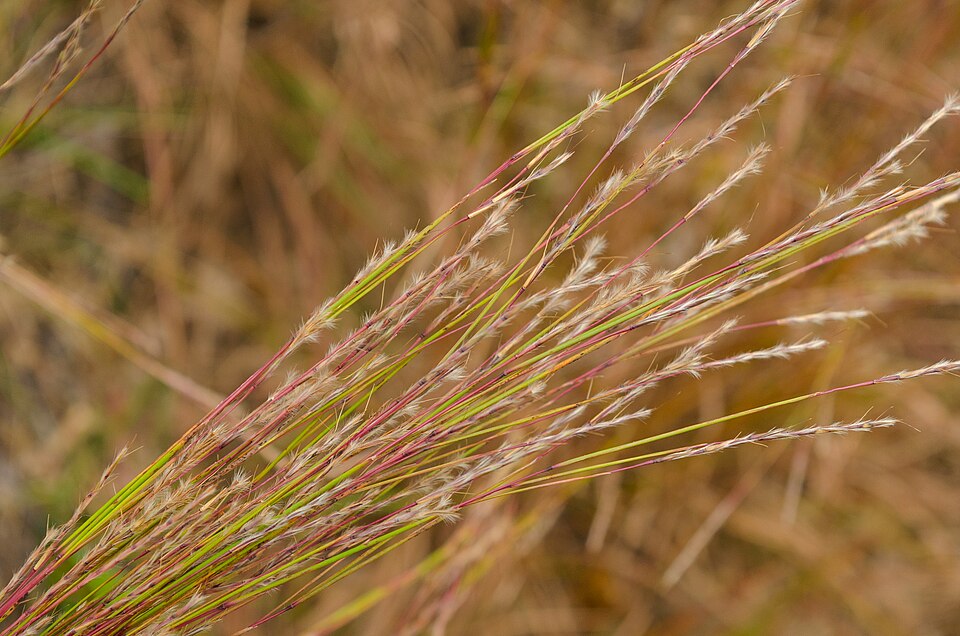
Little bluestem, botanically Schizachyrium scoparium, is a warm-season, perennial C4 bunchgrass native to North America. It forms upright to arching clumps typically 2–4 feet (0.6–1.2 m) tall, with narrow blue-green leaves that turn coppery red, orange, and burgundy in fall. The seed heads are slender, silvery, and softly pubescent, giving mature stands a luminous appearance.
As a C4 grass, little bluestem exhibits high water-use efficiency, strong heat tolerance, and excellent performance on low-fertility soils. In modern ecology, rangeland science, and restoration literature, it is valued less for maximum biomass and more for persistence, soil stabilization, biodiversity support, and resilience under stress.
Chemically and structurally, the plant is characterized by moderate lignin, silica-rich leaves, deep fibrous roots, and slow decomposition rates—traits that influence grazing behavior, fire ecology, and soil carbon dynamics.
C4 Photosynthesis Advantage
As a C4 grass, little bluestem uses a specialized photosynthetic pathway that concentrates carbon dioxide around the enzyme RuBisCO. This adaptation grants superior water-use efficiency and heat tolerance, allowing the plant to thrive in conditions where cool-season (C3) grasses struggle—particularly during the hottest months and on droughty, low-fertility soils.
Origin, Ecology, and Prairie History
Little bluestem is native to most of the continental United States, historically forming a major component of tallgrass and mixed-grass prairies alongside big bluestem, Indian grass, and switchgrass.
It evolved under periodic fire, drought, and grazing by bison, developing a growth form that tolerates defoliation while protecting its crown and root reserves.
Due to its adaptability, it became one of the most widely used grasses in prairie restoration, erosion control, and native landscaping after large-scale prairie loss in the 19th–20th centuries.
Growth Habit, Root Architecture, and Longevity
Little bluestem is a true bunchgrass (non-rhizomatous), forming discrete clumps rather than spreading mats.
Root systems commonly extend 5–8 feet (1.5–2.4 m) deep, providing significant ecological benefits:
- Enhancing drought resistance
- Improving soil aggregation
- Stabilizing slopes and disturbed soils
- Contributing to long-term carbon storage
Individual plants can persist 20–40+ years under proper management.
Deep Root Investment
With roots reaching 5–8 feet deep, little bluestem invests heavily in belowground biomass. This root architecture is the foundation of its drought tolerance, soil-building capacity, and long-term persistence—making it one of the most durable perennial grasses available for low-input land management systems.
Climate Adaptation and Environmental Requirements
Little bluestem performs well across USDA zones 3–10, one of the widest ranges among native warm-season grasses. Growth initiates later in spring than cool-season grasses, reducing competition pressure.
| Parameter | Optimal Range |
|---|---|
| Temperature (Active Growth) | 22–35°C (72–95°F) |
| Cold Tolerance | Excellent; dormant crowns survive extreme winters |
| Sunlight | Full sun (critical for vigor) |
| Humidity | Low to moderate |
| Water Needs | Low to moderate; drought tolerant once established |
| USDA Hardiness Zones | 3–10 |
Soil Preferences and Fertility Dynamics
Little bluestem thrives in low-fertility, well-drained soils, including sites unsuitable for high-input crops.
| Parameter | Specification |
|---|---|
| Texture | Sandy loam, loam, gravelly, or rocky soils |
| pH | 5.0–7.5 (tolerates acidity better than many grasses) |
| Drainage | Good to excellent |
Fertility Response
- Excess nitrogen reduces stand longevity and encourages lodging
- Performs best with minimal fertility inputs
- Competes well where nutrient availability is low
Low-Input Advantage
Unlike many cultivated grasses, little bluestem actually performs worse under high-nitrogen conditions. Excess fertility encourages lodging and reduces stand longevity. This makes it an ideal candidate for low-input, regenerative systems where minimal external inputs are a design goal.
Propagation, Establishment, and Seeding Systems
Little bluestem is established from seed, not vegetative propagation. Seeds are small, lightweight, and often fluffy due to awns and hairs, requiring good seed-to-soil contact for successful germination.
| Parameter | Specification |
|---|---|
| Planting Depth | Surface to ¼ inch (≤0.6 cm) |
| Seeding Rate | 6–10 lb pure live seed/acre (drilled) |
| Soil Temperature | ≥15°C (59°F) |
| Establishment Speed | Slow first year |
Growing Systems
- Prairie restorations
- Native pastures
- Pollinator plantings
- Silvopasture understories
- Erosion-prone slopes and roadways
Growth Cycle, Biomass Production, and Stand Development
Little bluestem follows a predictable multi-year establishment pattern before reaching full productive capacity.
| Year | Development Stage |
|---|---|
| Year 1 | Root establishment, minimal top growth |
| Year 2 | Moderate clump expansion |
| Year 3+ | Full expression and stability |
Typical dry matter yields range from 1.5–4 tons/acre/year, depending on rainfall and soil. Biomass is lower than switchgrass but far more persistent under stress.
Forage Quality and Livestock Use
Little bluestem is palatable when young and declines in quality as stems lignify.
| Parameter | Value |
|---|---|
| Crude Protein (Early) | ~10–14% |
| Crude Protein (Mature) | <7% |
| Digestibility | Moderate when vegetative |
| Fiber | Increases rapidly after heading |
Best Livestock Use
- Cattle, bison, horses
- Early-season grazing
- Mixed native pasture systems
- Deferred or rotational grazing
Little bluestem is not suited for continuous heavy grazing.
Grazing Management and Persistence
Proper grazing management is essential for maintaining healthy, long-lived stands of little bluestem. Overgrazing weakens crowns and reduces longevity.
- Avoid grazing below 4–6 inches (10–15 cm)
- Allow full regrowth between grazing events
- Use rotational or patch grazing
- Rest stands periodically, especially during drought
Grazing Height Rule
Maintaining a minimum stubble height of 4–6 inches (10–15 cm) protects the basal crown and root reserves. Plants grazed below this threshold lose vigor progressively and may fail to recover, particularly under drought stress or consecutive seasons of overuse.
Weed Suppression and Competition Dynamics
Once established, little bluestem is a strong competitor against invasive and annual weeds:
- Competes strongly against annual weeds
- Resists invasion due to dense basal clumps
- Leaves little bare soil between crowns
During establishment, weed control is critical due to slow early growth. First-year stands are vulnerable and may require mowing or targeted weed management to prevent suppression by aggressive annuals.
Fire Ecology and Biomass Management
Fire is a natural companion to little bluestem, and the species evolved under periodic burning regimes in its native prairie habitat.
- Removes accumulated litter
- Stimulates vigorous regrowth
- Reduces woody encroachment
- Improves forage quality temporarily
Prescribed fire every 3–5 years is common in native systems and is one of the most effective management tools for maintaining stand health and composition.
Fire as a Management Tool
Prescribed burning mimics the historical fire regime under which little bluestem evolved. Fire removes accumulated dead material, recycles nutrients, suppresses woody competitors, and triggers a flush of vigorous new growth. Where burning is not feasible, mechanical litter removal can provide partial benefits.
Processing, Harvesting, and Non-Forage Uses
Hay and Bedding
Little bluestem can be cut for hay when young, though it is more commonly used as:
- Livestock bedding
- Mulch
- Wildlife cover
Biomass and Soil Applications
Standing dead material serves multiple ecological functions:
- Protects soil from erosion and compaction
- Traps snow for moisture retention
- Adds slow-decomposing organic matter to the soil profile
Little bluestem is excellent for long-term soil carbon building rather than rapid nutrient cycling.
Wildlife Habitat and Ecological Value
Little bluestem provides critical habitat for a wide range of wildlife species, making it one of the most ecologically valuable grasses in prairie ecosystems.
- Ground-nesting birds: Dense clumps provide nesting cover and protection from predators
- Pollinators: Supports diverse pollinator communities when integrated with native forbs
- Small mammals: Offers shelter and foraging habitat
- Insects: Supports species dependent on native grasses for their life cycle
Seed heads are an important winter food source for birds, and the standing biomass provides thermal cover during cold months.
Carbon Sequestration and Soil Health
The deep root system and slow decomposition rate of little bluestem make it a valuable species for soil carbon accumulation and long-term soil health improvement.
- Increases stable soil carbon
- Improves aggregate stability
- Enhances water infiltration
- Reduces erosion
Carbon gains occur primarily below ground, making it valuable even with modest aboveground biomass yields. This belowground investment is a distinguishing feature of native bunchgrasses compared to annual crops or introduced pasture species.
Belowground Carbon Storage
Unlike many agricultural systems where carbon is concentrated in aboveground biomass, little bluestem stores the majority of its carbon in deep root networks. This belowground carbon is more stable and persistent than surface organic matter, making it a significant contributor to long-term soil carbon sequestration in grassland systems.
Seed Production and Genetic Diversity
Seed matures in late summer to fall. Local ecotypes perform best, as regional adaptation is strong across the species’ wide geographic range.
Genetic diversity improves resilience to drought, pests, and climate variability. When sourcing seed for restoration or establishment, selecting locally adapted ecotypes is strongly recommended to ensure optimal performance and long-term stand persistence.
System Integration and Regenerative Use
Little bluestem excels in multiple regenerative and conservation roles:
- A foundation species in native pastures
- A soil-stabilizing grass on degraded land
- A low-input perennial for long-term systems
- A biodiversity anchor in regenerative landscapes
Companion Species
It pairs well with:
- Native legumes (for nitrogen fixation)
- Forbs (for pollinator support and diversity)
- Other warm-season grasses (for structural complexity)
Safety, Use Boundaries, and Considerations
- Not a human food crop
- Mature forage is low in protein and should not be the sole feed source for livestock
- Fire risk exists where large amounts of standing dead biomass accumulate without management
Cultural and Educational Importance
Little bluestem is a keystone species for understanding:
- Prairie ecology
- Native grassland restoration
- Fire–grazing interactions
- Long-term land resilience
Its success demonstrates how persistence and function can outweigh yield in sustainable systems. In an era focused on regenerative agriculture and ecological restoration, little bluestem stands as a model for how native perennials can anchor productive, resilient landscapes with minimal external inputs.
Scientific and Authoritative References
This article is informed by data and conclusions drawn from, but not limited to:
- Weaver, North American Prairie
- USDA NRCS Plant Guide: Schizachyrium scoparium
- Tilman et al., Science (prairie biodiversity & function)
- FAO Grassland and Rangeland Manuals
- Casler et al., Crop Science
- Sanderson & Adler, Agronomy Journal
- Knapp et al., BioScience
- Liebig et al., Soil Science Society of America Journal
- Packard & Mutel, The Tallgrass Restoration Handbook
- Missouri Botanical Garden Native Plant Profiles