Maca (Lepidium meyenii): The Andean Root Grown at 14,000 Feet That Conquistadors Fed to Their Horses
Complete maca cultivation guide covering Lepidium meyenii extreme-altitude botany, the challenge of lowland growing, glucosinolate and macamide chemistry.
NFNored Farms
5 min read
On this page
Botanical Description
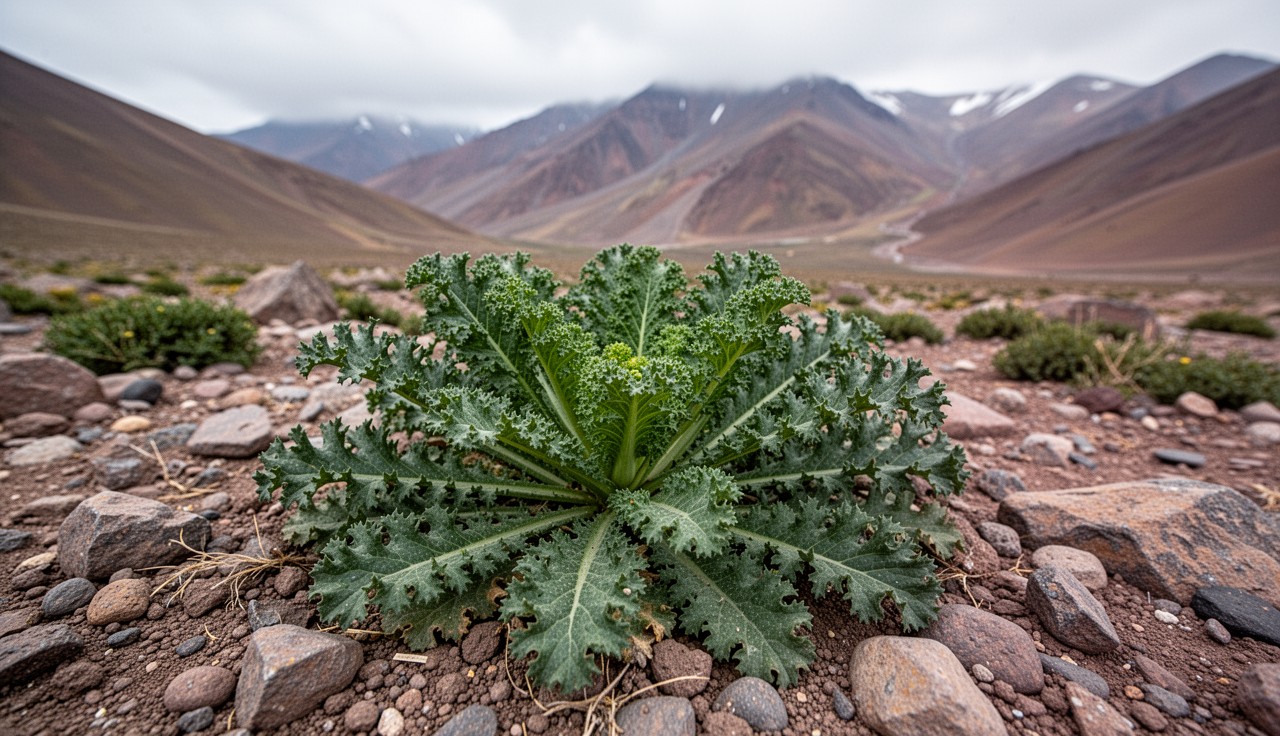
Maca (Lepidium meyenii) is a compact, low-growing biennial in the Brassicaceae (mustard/crucifer) family, endemic to the high-altitude puna grasslands of the Peruvian and Bolivian Andes at elevations of 11,000–14,500 feet. The plant forms a rosette of frilly, turnip-like leaves close to the ground, with the prized part being the swollen hypocotyl (storage root) that develops underground, a bulbous, radish-shaped organ 3–5 inches across that comes in multiple color ecotypes: cream/yellow, red/pink, purple/black, and mixed.
Maca occupies one of the most extreme agricultural niches on Earth: the Junin plateau of central Peru, where temperatures fluctuate between 60°F by day and below freezing at night, winds are constant, UV radiation is intense, and oxygen is thin. No other food crop is commercially cultivated at these altitudes, making maca a uniquely adapted organism with biochemistry shaped by extreme environmental stress.
The Altitude Problem for Growers Maca’s extreme-altitude adaptation makes it one of the most challenging plants in this guide to grow at normal elevations. At sea level or low altitudes, maca tends to bolt prematurely, produce thin roots, and generate fewer bioactive compounds. Success has been reported in cool-climate mountain regions (Appalachian highlands, Pacific Northwest mountains) and in controlled environments with cool temperatures and intense lighting. Most home growers will find it more practical to source maca as a dried powder rather than attempting cultivation.
Growing Attempts at Low Altitude
Parameter
Range / Tolerance
Native Altitude
11,000–14,500 feet elevation
Temperature
Cool: 40–65°F optimal; stunts in sustained heat above 75°F
For adventurous growers in cool-climate zones (5–7), fall sowing with winter root development may be possible. Treat it as an experiment. Sow seeds in late summer, allow the rosettes to establish in fall, and let roots develop through a cool winter. Harvest before summer heat arrives.
The numbers at a glance The same numbers the table beside this gives, drawn on their real scales so the band each one sits in is visible rather than read. Nothing here is added to the guide: it is what the guide already says.
Color Ecotypes
Different maca colors are not merely cosmetic, they contain different ratios of bioactive compounds and are used for different purposes in traditional Andean practice:
Yellow/cream: Most common (~60% of harvest); general energy and vitality; the most studied in clinical trials.
Red/pink: Traditionally used for female hormonal balance, bone density, and prostate health. Higher glucosinolate content.
Black/purple: Rarest and most prized; traditionally used for male fertility, memory, and physical endurance. Highest concentration of macamides.
Phytochemistry
Compound Class
Key Members
Macamides
Unique N-benzylamide compounds found only in maca; structurally similar to the body's own fatty-acid neurotransmitters
Macaenes
Unsaturated fatty acids unique to maca
Glucosinolates
Benzyl glucosinolate (primary), similar to those in broccoli and cabbage
Alkaloids
Macaridine, lepidiline A and B (imidazole alkaloids unique to maca)
Sterols
Beta-sitosterol, campesterol, ergosterol
Nutrients
High protein (10–14%), iron, calcium, copper, zinc, essential amino acids
The Macamide Discovery Macamides are perhaps the most scientifically interesting compounds in maca. These N-benzylated fatty acid amides are structurally similar to anandamide, one of the body's own signalling lipids, and interact with the same receptor system, a mechanism that could explain maca’s effects on mood, energy, and libido without involving hormonal pathways. This discovery has shifted the scientific understanding of how maca works away from the earlier (and incorrect) assumption that it functioned as a phytoestrogen.
The chemistry, grouped The guide's own compound table, drawn as groups rather than listed, so the shape of what this plant carries is visible before any of the names are read. Nothing is added to what the table already says.
Clinical Research
Sexual desire: Multiple RCTs demonstrate increased sexual desire in both men and women after 6–12 weeks of maca supplementation. Notably, these effects occur without changes in serum sex hormone levels, ruling out a direct hormonal mechanism.
Male fertility: Clinical studies show improvements in semen quality (volume, count, motility) in men taking maca for 4–12 weeks. Black maca shows the strongest effect in comparative studies.
Menopausal symptoms: Several RCTs report reductions in menopausal symptoms (hot flashes, mood disturbances, sleep disruption) without altering estrogen levels, a significant finding for women who cannot use hormone replacement therapy.
Energy and mood: Clinical evidence for reduced fatigue, improved mood scores, and enhanced well-being, particularly in chronically fatigued and postmenopausal populations.
Traditional Processing
In Peru, maca roots are traditionally sun-dried for 10–30 days on the high-altitude plateau, where intense UV and freeze-thaw cycles transform the raw root into a dried, hard product that can be stored for years. The dried root is then reconstituted into porridge (mazamorra), fermented into a mild alcoholic drink (maca chicha), or ground into powder for use in baking, soups, and beverages. Gelatinized maca (pre-cooked to remove starch) is the form preferred in supplements for improved digestibility.
Precautions
Thyroid: Glucosinolate content may affect thyroid function in iodine-deficient individuals. Ensure adequate iodine intake if using maca regularly.
Hormone-sensitive conditions: While maca does not appear to directly affect sex hormones, caution is advised in hormone-sensitive cancers until more data is available.
Digestive sensitivity: Raw maca can cause bloating and gas; gelatinized forms are better tolerated.
Generally well-tolerated: Clinical trials consistently report excellent safety profiles at standard doses (1.5–3g daily).
References
Gonzales et al., Evidence-Based Complementary and Alternative Medicine (2012), maca ethnobotany and clinical review
Shin et al., BMC Complementary and Alternative Medicine (2010), sexual desire meta-analysis
Gonzales et al., Asian Journal of Andrology (2002), semen quality study
Meissner et al., International Journal of Biomedical Science (2006), menopausal symptoms
McCollom et al., Phytochemistry (2005), macamide identification and characterization
Common questions
What is botanical description?
Maca ( Lepidium meyenii ) is a compact, low-growing biennial in the Brassicaceae (mustard/crucifer) family, endemic to the high-altitude puna grasslands of the Peruvian and Bolivian Andes at elevations of 11,000–14,500 feet. The plant forms a rosette of frilly, turnip-like leaves close to the ground, with the prized part being the swollen hypocotyl (storage root) that develops underground, a bulbous, radish-shaped organ 3–5 inches across that comes in multiple color ecotypes: cream/yellow, red/pink, purple/black, and mixed.
How do I grow maca?
Native Altitude: 11,000–14,500 feet elevation. Temperature: Cool: 40–65°F optimal; stunts in sustained heat above 75°F. Light: Full sun with high UV exposure (native habitat). Soil: Rocky, mineral-rich, well-drained; volcanic soils ideal; pH 5.0–7.0. Moisture: Moderate; consistent but not waterlogged.
What are color ecotypes?
Different maca colors are not merely cosmetic, they contain different ratios of bioactive compounds and are used for different purposes in traditional Andean practice:. Yellow/cream: Most common (~60% of harvest); general energy and vitality; the most studied in clinical trials. Red/pink: Traditionally used for female hormonal balance, bone density, and prostate health. Higher glucosinolate content. Black/purple: Rarest and most prized; traditionally used for male fertility, memory, and physical endurance.
What is clinical research?
Sexual desire: Multiple RCTs demonstrate increased sexual desire in both men and women after 6–12 weeks of maca supplementation. Notably, these effects occur without changes in serum sex hormone levels, ruling out a direct hormonal mechanism. Male fertility: Clinical studies show improvements in semen quality (volume, count, motility) in men taking maca for 4–12 weeks. Black maca shows the strongest effect in comparative studies.
What can I make from maca?
In Peru, maca roots are traditionally sun-dried for 10–30 days on the high-altitude plateau, where intense UV and freeze-thaw cycles transform the raw root into a dried, hard product that can be stored for years. The dried root is then reconstituted into porridge ( mazamorra ), fermented into a mild alcoholic drink ( maca chicha ), or ground into powder for use in baking, soups, and beverages. Gelatinized maca (pre-cooked to remove starch) is the form preferred in supplements for improved digestibility.