Growing
Milk Thistle (Silybum marianum): The Liver’s Bodyguard and a Drought-Proof Garden Sculpture
Complete milk thistle cultivation guide covering Silybum marianum botany, drought-tolerant growing, silymarin and silibinin chemistry.
On this page
Botanical Description
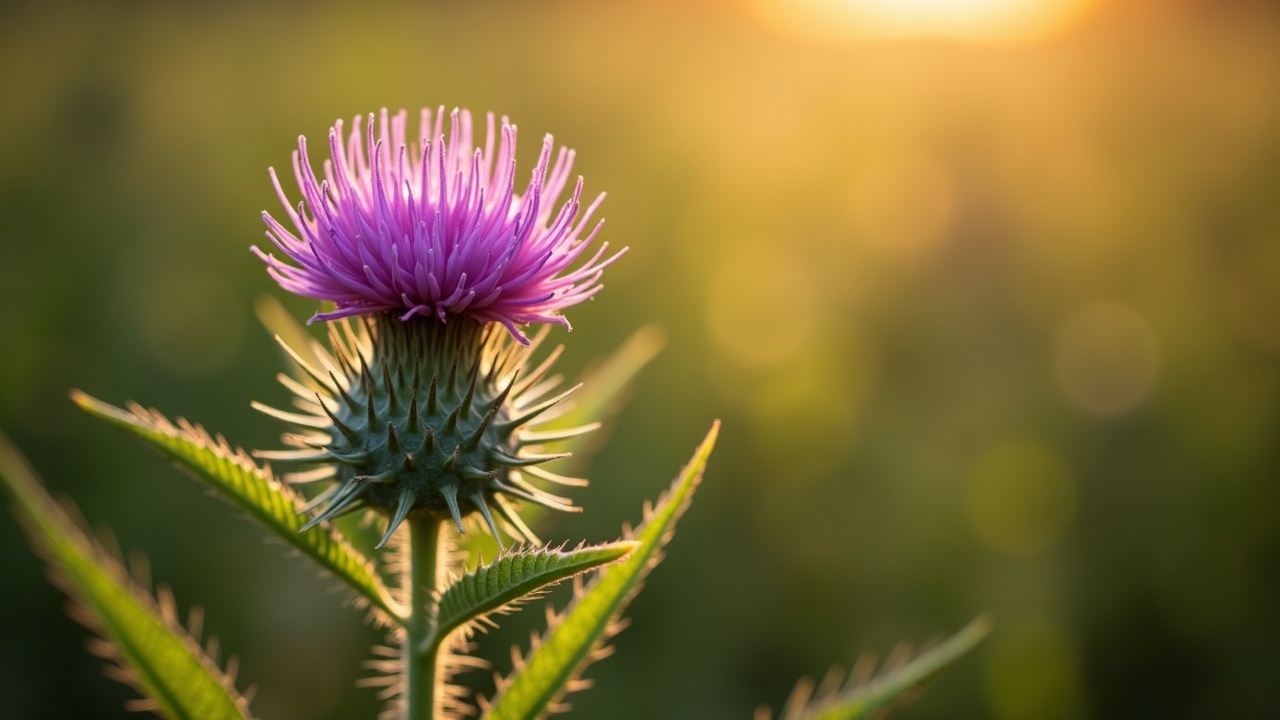
Milk thistle (Silybum marianum) is a large, striking biennial or annual in the Asteraceae family, native to the Mediterranean basin. Plants grow 3–6 feet tall with enormous, deeply lobed, glossy green leaves marked with dramatic white veins, a marbling pattern that medieval herbalists believed represented the Virgin Mary’s milk (hence the common name). The leaves are edged with sharp, stiff spines. Large, purple-pink thistle flower heads appear in summer, followed by seeds (achenes) topped with a silky pappus.
The seeds are the medicinal part, containing the flavonolignan complex known collectively as silymarin. The plant itself is impressively architectural and makes a dramatic garden specimen, though its vigorous self-seeding and sharp spines require management.
Emergency Room Medicine
Milk thistle holds a unique position in herbal medicine: silibinin (the most active component of silymarin) is used as an injectable, FDA-approved pharmaceutical for Amanita mushroom poisoning, the leading cause of fatal mushroom ingestion worldwide. Intravenous silibinin administered within 24–48 hours of death cap mushroom ingestion significantly improves survival rates. This represents one of the few cases where a plant compound is used as an emergency medicine in hospital settings.
Growing Requirements
| Parameter | Range / Tolerance |
|---|---|
| USDA Hardiness Zones | 5–10 (biennial in most zones; annual where winters are mild) |
| Light | Full sun |
| Soil | Any well-drained soil; excels in poor, rocky, alkaline conditions |
| Moisture | Very low; extremely drought-tolerant |
| Propagation | Direct sow in spring or fall; large seeds, easy handling |
| Spacing | 24–36 inches; plants become very large |
Milk thistle is superbly adapted to the Texas climate. It handles full sun, alkaline limestone soil, extreme heat, and drought with ease. In fact, it has naturalized across Texas roadsides and pastures. For medicinal seed harvest, the main cultivation consideration is providing enough space, mature plants are substantial and need room.
Seed Harvest
Seeds are ready when the flower heads dry and the pappus (silky tufts) begins to release. Cut entire flower heads into a paper bag and allow to finish drying indoors. Thresh by rubbing dried heads between gloved hands (the spines persist on the bracts), then winnow to separate seeds from chaff. Seeds store well for 2–3 years in cool, dry conditions.
Phytochemistry
| Compound | Notes |
|---|---|
| Silymarin (complex) | 4–6% of seed weight; mixture of flavonolignans |
| Silibinin (silybin A+B) | Major component (~50–70% of silymarin); most active compound |
| Silychristin | ~20% of silymarin complex |
| Silydianin | ~10% of silymarin complex |
| Isosilybin A+B | Minor components with distinct biological activity |
| Fatty acids | High linoleic acid content in seed oil (~60%) |
Clinical Research
- Liver protection: The core traditional and clinical use. Silymarin protects liver cells through multiple mechanisms: antioxidant activity, membrane stabilization, stimulation of ribosomal RNA synthesis (promoting liver cell regeneration), and anti-inflammatory effects.
- Mushroom poisoning: IV silibinin is an established treatment for Amanita phalloides (death cap) poisoning in European hospitals, with survival rates improving significantly compared to supportive care alone.
- Alcoholic liver disease: Clinical trials show mixed but generally positive results for improving liver function markers in alcoholic liver disease, with the strongest evidence for reducing mortality in cirrhosis.
- Hepatitis C: Intravenous silibinin has shown antiviral activity in hepatitis C patients who did not respond to standard interferon therapy, though oral silymarin shows less consistent results.
- Metabolic syndrome: Emerging clinical evidence for improvements in insulin resistance, blood lipids, and inflammatory markers in metabolic syndrome and type 2 diabetes.
Precautions
- Generally very safe: Milk thistle has an excellent safety record in clinical trials, with side effects similar to placebo. GI upset is the most common complaint.
- Drug metabolism: Some evidence that silymarin inhibits CYP2C9 and CYP3A4 at high doses, potentially affecting the metabolism of certain medications.
- Estrogenic activity: Theoretical concern based on in vitro data; clinical significance uncertain. Caution advised in hormone-sensitive conditions.
- Asteraceae allergy: Standard cross-reactivity warnings.
References
- Saller et al., Drugs (2001), silymarin clinical pharmacology review
- Ferenci et al., Journal of Hepatology (2008), IV silibinin for hepatitis C
- Rambaldi et al., Cochrane Database of Systematic Reviews, milk thistle for alcoholic liver disease
- Voroneanu et al., Journal of Gastrointestinal and Liver Diseases, Amanita poisoning treatment
- European Medicines Agency, Herbal Monograph on Silybum marianum
Common questions
What is botanical description?
Milk thistle ( Silybum marianum ) is a large, striking biennial or annual in the Asteraceae family, native to the Mediterranean basin. Plants grow 3–6 feet tall with enormous, deeply lobed, glossy green leaves marked with dramatic white veins, a marbling pattern that medieval herbalists believed represented the Virgin Mary’s milk (hence the common name). The leaves are edged with sharp, stiff spines. Large, purple-pink thistle flower heads appear in summer, followed by seeds (achenes) topped with a silky pappus. The seeds are the medicinal part, containing the flavonolignan complex known collectively as silymarin.
How do I grow milk thistle?
USDA Hardiness Zones: 5–10 (biennial in most zones; annual where winters are mild). Soil: Any well-drained soil; excels in poor, rocky, alkaline conditions. Moisture: Very low; extremely drought-tolerant. Propagation: Direct sow in spring or fall; large seeds, easy handling. Spacing: 24–36 inches; plants become very large.
When should I harvest milk thistle?
Seeds are ready when the flower heads dry and the pappus (silky tufts) begins to release. Cut entire flower heads into a paper bag and allow to finish drying indoors. Thresh by rubbing dried heads between gloved hands (the spines persist on the bracts), then winnow to separate seeds from chaff. Seeds store well for 2–3 years in cool, dry conditions.
What is clinical research?
Liver protection: The core traditional and clinical use. Silymarin protects liver cells through multiple mechanisms: antioxidant activity, membrane stabilization, stimulation of ribosomal RNA synthesis (promoting liver cell regeneration), and anti-inflammatory effects. Mushroom poisoning: IV silibinin is an established treatment for Amanita phalloides (death cap) poisoning in European hospitals, with survival rates improving significantly compared to supportive care alone.