Plants
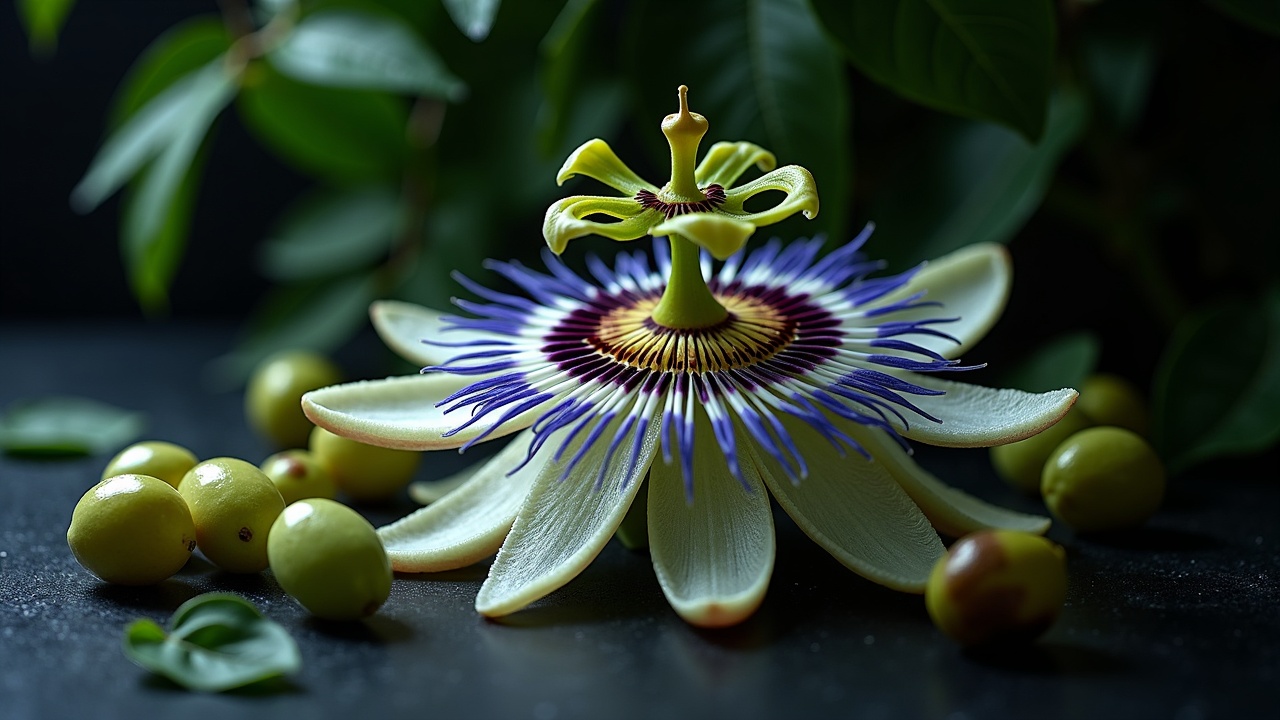
Passionflower
Complete passionflower (Passiflora incarnata) monograph: origin and history, active compounds, cultivation, harvest and processing, and extraction.
On this page
Passiflora incarnata, A Complete Grower's and Herbalist's Monograph
Pure Euphoria Botanicals • Nored Farms • Austin, Texas
Quick Reference
| Common Names | Passionflower, Maypop, Wild Passion Vine, Apricot Vine |
| Botanical Name | Passiflora incarnata L. (Family: Passifloraceae) |
| Native Range | Eastern and central United States; Virginia and Kansas south to Florida and Texas |
| Plant Type | Perennial herbaceous vine; vigorous resprout from deep roots each spring; dies to ground in winter |
| USDA Hardiness | Zones 5–9; remarkable cold-hardiness for a plant with tropical-looking flowers |
| Active Compounds | Chrysin, vitexin, isovitexin, orientin, harmane alkaloids at trace levels, passiflorine |
| Primary Actions | GABAergic anxiolytic; sleep aid; antispasmodic; mild sedative; clinical evidence for anxiety reduction |
| Best Extraction Method | Fresh plant Everclear tincture (1:2, 190-proof) at harvest; maximum flavonoid potency |
| Harvest Part | Aerial parts at or just before peak flower; leaves, stems, and flowers all harvested together |
| Native to Texas | Yes, grows wild throughout the state including throughout the Hill Country |
| Legal Status | Fully legal; EMA issued a positive opinion for mild anxiety and sleep disorders |
| Fruit | Maypop fruit (egg-sized yellow berry) is edible with a tropical passionfruit-like flavor |
Origin and History
Passiflora incarnata is one of the few truly cold-hardy members of a genus that is otherwise predominantly tropical. It grows wild from Virginia and Kansas south through the entire American Southeast and into Texas, colonizing disturbed roadsides, fence lines, and open woodland edges throughout a substantial portion of the country. This wide native distribution and extreme adaptability make it the most accessible native medicinal vine for American growers, and particularly for Hill Country growers where it thrives in disturbed soils along rural roads, fence lines, and creek margins without any cultivation.
Multiple Indigenous North American nations documented medicinal use of passionflower before European contact. The Cherokee used the root as a tonic and the leaves as a poultice; the Houma used leaf tea for nervousness; the Natchez used it for sleeplessness; the Delaware used the root for treating ear complaints and the leaf as a liver tonic. These uses were systematic parts of established botanical medicine traditions documented across a wide geographic range before and during European contact.
Spanish missionaries in South America encountered related tropical Passiflora species in the 16th century and gave the flower its common name based on their interpretation of the flower's complex anatomy as representing the Passion of Christ. European colonists in North America adopted P. incarnata into domestic practice within a generation of settlement, and the plant entered European herbal commerce in the 17th century. It appeared in the U.S. National Formulary from 1916 to 1936, a period of mainstream medical acceptance. Its removal corresponded with the rise of synthetic sedative drugs rather than with any finding of inefficacy.
The European Medicines Agency community herbal monograph, issued after review of multiple clinical trials, recognizes passionflower for mild symptoms of mental stress and to aid sleep, regulatory recognition based on a substantial evidence base that distinguishes it from many botanical claims.
Active Compounds: What They Do in the Human Body
Chrysin: GABA-A Benzodiazepine Site Partial Agonist
Chrysin binds to the benzodiazepine binding site on GABA-A receptors, the same site where pharmaceutical benzodiazepines like diazepam and alprazolam bind. The critical pharmacological distinction is that chrysin is a partial agonist rather than a full agonist. A full agonist binds the receptor and fully activates it, producing the profound CNS depression, amnesia, and respiratory effects of pharmaceutical benzodiazepines. A partial agonist binds the same site but only partially activates the receptor, increasing its sensitivity to GABA without the full receptor activation that drives sedation and dependence.
In the brain, GABA is the primary inhibitory neurotransmitter. When it binds to GABA-A receptors, it opens chloride ion channels, hyperpolarizing neurons and reducing their firing rate. When chrysin and the other passionflower flavonoids increase GABAergic sensitivity, the amygdala's threat-detection activity is moderated, producing the subjective sensation of reduced anxiety and worry without the impaired coordination and cognitive blunting of full benzodiazepine agonism.
Why whole plant works better than isolated chrysin: Isolated chrysin supplements perform poorly in clinical trials despite clear in vitro activity at GABA-A receptors. The reason is bioavailability: chrysin alone is poorly absorbed from the gastrointestinal tract. In the whole plant extract, the other flavonoids and phenolic compounds inhibit intestinal P-glycoprotein efflux pumps and CYP450 enzymes that normally limit chrysin absorption, improving uptake substantially. The whole plant consistently outperforms the isolated primary compound, a textbook example of the phytochemical entourage effect.
Vitexin, Isovitexin, Orientin, and Trace Alkaloids
These C-glycosyl flavones contribute additional GABAergic modulation through slightly different receptor binding profiles, producing a more complete and longer-lasting effect than chrysin alone. The trace beta-carboline alkaloids (harmane, harmine) have mild monoamine oxidase inhibitory (MAOI) activity, which slows the breakdown of serotonin, dopamine, and norepinephrine. At the concentrations found in standard passionflower preparations, this MAOI activity is mild and contributes a subtle mood-brightening quality to the overall experience while representing the drug interaction concern with pharmaceutical MAOIs.
Compound Reference Table
| Compound | GABA-A Mechanism | Additional Activity | Effect in Body |
|---|---|---|---|
| Chrysin | Benzodiazepine site partial agonist | Aromatase inhibitor; antioxidant | Primary anxiolytic; moderate sedation; no dependence potential |
| Vitexin | GABA-A modulation | Antioxidant; anti-inflammatory; glutamatergic effects | Supporting anxiolytic; antispasmodic |
| Isovitexin | GABA-A modulation | Anti-inflammatory | Supporting anxiolytic and anti-inflammatory |
| Orientin | GABA-A modulation | Antioxidant; cardioprotective | Supporting relaxant; antioxidant protection |
| Harmane alkaloids (trace) | Indirect (MAOI-mediated monoamine elevation) | Mild MAO inhibition; mood brightening | Subtle mood elevation; represents drug interaction concern |
Cultivation: Full Growing Guide
Passionflower is one of the most rewarding and lowest-maintenance medicinal vines a Hill Country grower can establish. It already grows wild across the region, which tells you everything about how well-adapted it is to local conditions. Unlike most medicinal plants that require ongoing attention and care, passionflower once established essentially manages itself: it survives drought, tolerates alkaline limestone soils without amendment, regrows from deep roots after winter die-back, and produces its spectacular flowers on new growth each year.
Understanding the Native Ecology
Passiflora incarnata is a plant of disturbed woodland edges, roadsides, fence lines, and the margins between cultivated and uncultivated land. In the wild, it grows in full sun to partial shade in well-drained soils ranging from sandy loam to rocky clay. It tolerates drought, poor nutrition, and competition from surrounding vegetation once established. It spreads aggressively through underground runners, colonizing available space and often appearing in new locations from root fragments disturbed by soil movement.
The medicinal quality of wild passionflower is generally comparable to cultivated plants because the stress conditions of the wild environment, competition, drought, nutrient limitation, are associated with higher secondary metabolite production.
Site Selection
- Sun: Full sun is preferred; 6–8 hours of direct sun produces the most flowers and highest flavonoid concentration; partial shade is tolerated and may reduce heat stress on the foliage in Zone 8 peak summer
- Drainage: Critical; passionflower does not survive in poorly drained or waterlogged soil; even temporary flooding kills established plants; any slope, raised area, or naturally well-drained position works well
- Soil pH: Highly adaptable; grows in acidic soils in the eastern United States and in the alkaline limestone soils of central Texas without amendment; this wide pH tolerance makes it unusually adaptable for a native medicinal plant
- Wind: Tolerates moderate to strong wind; the vine structure can support itself against fence posts and trellises through significant wind
- Proximity to structures and fences: Fence lines are excellent and historically traditional growing locations; the fence provides the climbing structure, the fence posts act as anchors, and the vine spreads along the full fence length over several seasons
Soil Preparation
In most Hill Country locations, no soil preparation is required before planting passionflower. The existing limestone-derived soil is well within the range passionflower tolerates. The most common mistake in preparing a site for passionflower is over-improving the soil with compost, fertilizer, and amendments. This pushes the plant toward lush vegetative growth with reduced flavonoid concentration.
- Standard Hill Country soil: Plant directly without amendment; the limestone-derived soil is appropriate without modification
- Sandy or very fast-draining soils: Add a small amount (1–2 lbs per 10 square feet) of finished compost worked into the top 6 inches; this improves water retention just enough to support establishment without creating rich conditions
- Heavy clay soils: Work in coarse sand or decomposed granite at 1 part amendment to 2 parts native soil to the top 12 inches of the planting hole
- pH: No adjustment needed in the Hill Country; do not add sulfur or lime; the existing alkaline soil is appropriate
Planting
From Transplants:
- Dig a planting hole twice the width and the same depth as the root ball
- Remove the transplant from its container without disturbing the root ball
- Set the transplant in the hole at the same depth it was growing in the container; do not plant deeper
- Backfill with the removed native soil; do not add compost or fertilizer to the backfill
- Water thoroughly at planting to settle the soil and eliminate air pockets
- Apply 2–3 inches of wood chip mulch over the root zone extending 18 inches from the stem; keep mulch 3 inches away from the stem itself
- Water again 3 days after planting; then allow to dry down before next watering
Plant after the last frost date when soil temperatures have warmed above 60°F. In the Hill Country, this is typically late March to early April.
From Seed:
Passionflower seeds require cold stratification to germinate reliably. Sow seeds in fall for natural winter stratification and spring germination, or cold-stratify seeds in the refrigerator for 60–90 days before sowing in spring. Germination rate is 30–60 percent even with proper stratification, so sow 2–3 seeds per intended plant location.
- Cold stratify: Place seeds in damp paper towel in a sealed plastic bag; refrigerate at 34–40°F for 60–90 days
- After stratification, sow 1/4 inch deep in seed-starting mix at room temperature
- Germination occurs in 10–20 days at 70–75°F
- Transplant seedlings to the final location when they have 4–6 true leaves and the last frost has passed
From Root Divisions and Runner Control:
Established passionflower plants spread by underground runners (stolons) that can travel several feet from the parent plant. New shoots emerging from runners can be dug and transplanted as divisions. Divide in early spring before significant new growth begins.
Climbing Structure
Passionflower uses tendrils to climb, wiry extensions from the leaf axils that wrap around any available support within reach. This means it can climb wire fences, wooden trellises, chain link, or any structure with an element small enough to be grasped by the coiling tendrils. Large smooth surfaces like fence boards that the tendrils cannot wrap around do not work.
- Wire fences: Ideal and traditional; a 5–6 foot fence supports a productive vine
- Wooden trellis: Works well if the wood is no larger than 1 inch in diameter; larger posts require adding wire or twine for the tendrils to grip
- Chain link fence: Excellent; the links provide abundant attachment points
- Cattle panels: Very good; the wire grid provides regular anchor points and the galvanized steel is durable
- Structure height: Passionflower vines grow 6–20 feet per season; provide a minimum 5–6 foot tall structure; taller structures produce more total vine and aerial part yield for harvest
Watering
Once established after the first growing season, passionflower is remarkably drought-tolerant and rarely needs supplemental irrigation in the Hill Country during normal rainfall years.
- Establishment year watering: Water once per week for the first month after planting; then every 10–14 days through the first season; allow the top 2 inches of soil to dry between waterings
- Established plant watering: In normal rainfall years, no supplemental irrigation is needed in the Hill Country; during extended droughts of 3–4 weeks without meaningful rain, provide one deep watering per week
- Signs of drought stress: Wilting of vine tips in the afternoon heat is normal and does not indicate the plant needs water; wilting that persists into the cool morning hours is a genuine stress signal
- Signs of overwatering: Root rot; sudden collapse of established plants; typically only a problem in sites with poor drainage
Nutrition and Fertilization
Passionflower does not need or benefit from fertilization in most soils. Like many native medicinals, it evolved in moderate to poor soil conditions and produces its most concentrated medicinal compounds under mild nutritional stress.
- Standard Hill Country limestone soil: No fertilization needed
- Sandy or nutrient-poor soils: A single application of a balanced slow-release fertilizer (10-10-10 or similar) at the beginning of the growing season is sufficient
- Never fertilize with: High-nitrogen fertilizers, fresh manure, or high-nitrogen liquid feeds; these actively reduce medicinal quality
Seasonal Management and Winter Dormancy
Spring: Passionflower is one of the last plants to emerge in spring, often causing concern among growers who expect it to follow the schedule of other perennials. Do not cut back what appears to be dead vine stems until new growth has confirmed which portions of the vine are alive. In Zone 8, new growth typically appears in late March to April. The new growth emerges rapidly once it starts, often producing several feet of new vine in a week under good conditions.
Summer Growing Season: Peak growth occurs from April through August in Zone 8. Flowers appear from June through August, and sometimes into September. Flowering is triggered primarily by day length and temperature. The vine can produce 10–20 feet of new growth per season under good conditions, completely covering a fence section or trellis by midsummer.
Fall Harvest Season: September through early October is the peak harvest window in Zone 8, catching the plant at peak flower and before frost forces die-back. After harvest, allow some growth to remain on the vine to produce and ripen the maypop fruits if desired. The fruits turn from green to yellow when ripe (typically September through October) and are edible raw or used in jams and drinks.
Winter Die-Back: After the first hard frost, the aerial vine dies back completely to the soil surface. Do not cut back the dead stems until spring; they provide some insulation for the crown and serve as a marker of the plant's location. The root system survives temperatures well below zero in Zone 5, making winter dieback followed by vigorous spring regrowth the expected and normal growth pattern.
Containment Management
Passionflower spreads aggressively by underground runners, and in a garden setting this can create management challenges as the vine appears several feet from its original planting location.
- Mowing borders: Maintaining a regularly mowed perimeter around passionflower plantings cuts runners as they emerge; runners cannot establish beyond the mowed boundary
- Root barriers: Burying a plastic root barrier 18–24 inches deep around the planting perimeter physically prevents runner spread
- Contained planting: Growing passionflower in a large container (15–25 gallons) eliminates runner spread entirely; the plant produces a contained and productive vine in a large container with regular watering
- Annual runner management: In spring, before runners advance too far, dig out any unwanted shoots while the soil is soft; a single morning of runner removal in early April prevents a summer of containment problems
Pest and Disease
Fritillary Butterfly Caterpillars: Passionflower is the exclusive larval host plant for multiple species of Fritillary butterflies, including the Gulf Fritillary, Zebra Longwing, and Variegated Fritillary. For growers raising passionflower for medicinal harvest, the caterpillars are a significant issue that can strip the vine rapidly during active infestation periods.
- Management for medicinal production: Handpick caterpillars daily during peak infestation periods (typically June through September)
- Biological control: Bacillus thuringiensis var. kurstaki (Btk) applied as a spray to the foliage kills caterpillars within a few days without harming other insects; reapply after rain; safe for organic production
- Coexistence: Growing additional passionflower vines specifically for butterflies while harvesting medicinal material from designated production vines is a workable approach for growers who want both outcomes
Fungal Diseases: Generally resistant when grown in well-drained soils with good air circulation. Botrytis gray mold and fungal leaf spots can occur in dense plantings with high humidity and poor air circulation. Maintain adequate spacing between vines and avoid overhead irrigation.
Spider Mites: Check the undersides of leaves for fine webbing and stippled discoloration. Treat with insecticidal soap or a strong water spray from the hose directed at the leaf undersides.
Yield Expectations
| Plant Stage | Expected Aerial Parts Yield per Season | Flower Yield | Notes |
|---|---|---|---|
| First year from transplant | 0.25–0.5 lb fresh; 25–50g dried | Minimal; few flowers in year 1 | Energy goes to root establishment; harvest lightly or not at all |
| Second year established | 0.5–1.5 lb fresh; 50–150g dried | Moderate flowering begins | First full harvest year; plant is beginning to reach productive size |
| Third year and beyond | 1–3+ lb fresh per vine per season; 100–300g dried | Heavy flowering June, August | Full production; deep root system enables vigorous seasonal growth |
| Multiple vine production fence | 3–10 lb fresh per 10 feet of fence; 300g–1kg dried | Abundant flowers throughout vine length | Commercial-scale yield from established fence plantings |
Harvest and Post-Harvest Processing
Harvest Timing
The highest flavonoid concentration in passionflower aerial parts occurs at and just before peak flowering. As the plant sets seed and moves into late-season decline, flavonoid content drops.
- Primary harvest window: June through August during peak flowering
- Secondary harvest: September is acceptable; flavonoid concentration is declining but still significant
- Avoid late-season harvest: October and later; the plant is senescing; alkaloid and flavonoid content is at seasonal low
- Time of day: Harvest in the morning after any dew has dried; aromatic compounds are most concentrated in morning hours before midday heat drives volatilization
Harvest Method
Harvest the aerial parts by cutting stems to within 6–8 inches of the base of the vine, retaining at least several leaf pairs on the remaining lower stem from which regrowth will emerge. The entire cut aerial portions, leaves, stems, and any flowers present, are all medicinal and all harvested together.
- Use clean sharp scissors or pruning shears; sanitize blades with isopropyl alcohol between plants
- Cut stems with flowers and leaves attached at 6–8 inch lengths; do not cut any individual section shorter than 4 inches
- Collect all cut material in a clean container; avoid pressing or crushing the plant material during collection as this initiates enzymatic degradation
- Weigh fresh material immediately for yield records; passionflower wilts quickly and fresh weight measured after any delay is inaccurate
- Process fresh material within 4 hours of harvest for optimal tincture quality; begin drying immediately for dried preparations
Processing
Fresh Plant Tincture Is Superior. Clinical trials showing anxiolytic efficacy used fresh plant tincture preparations. Some of the flavonoid glycosides in passionflower are more bioavailable and complete in fresh plant form than in dried material where glycoside transformation occurs during drying. If you are growing your own passionflower, prioritize fresh plant tincture production at harvest over drying.
Drying for Dried Herb Preparations:
- Air drying: Hang bundles of 4–6 stems in a warm (70–85°F) location with good air circulation; drying complete in 4–7 days
- Rack drying: Spread cut material in a single layer on mesh drying racks; drying complete in 4–6 days
- Temperature limit: Do not exceed 95°F during drying; higher temperatures degrade flavonoid content; food dehydrators should be set at the lowest available setting and verified with a thermometer
- Completeness: Properly dried passionflower stems snap cleanly when bent; leaves crumble readily; any flexibility indicates residual moisture
- Storage: Amber glass jars with airtight lids; dark cool location; maintain potency for 12–18 months
Extraction Methods: Home Production Guide
Method 1: Fresh Plant Everclear Tincture (Best Method)
Fresh aerial parts tinctured in 190-proof Everclear at 1:2 ratio immediately after harvest produces the most complete and potent passionflower preparation. The clinical trial confirming non-inferiority to oxazepam for generalized anxiety used a preparation equivalent to this. Do not wait, begin tincturing within 2–4 hours of harvest.
- Harvest aerial parts at peak flower; process within 2–4 hours while still fresh
- Coarsely chop leaves, stems, and flowers together; no need to separate by plant part
- Weigh fresh chopped material
- Place in clean amber glass jar; cover with Everclear 190-proof at 2mL per 1 gram fresh plant weight (1:2 ratio)
- Seal and macerate 4–6 weeks in cool dark location; shake daily for 30–60 seconds
- Strain through cheesecloth; press firmly to extract all tincture from the marc; filter through coffee filter for clarity
- Transfer to amber dropper bottles; label with plant name, ratio, date, harvest stage
- Dose: 1–3mL for anxiolytic effect; 3–5mL 30–60 minutes before bed for sleep support
Method 2: Dried Herb Water Tea
- Use 1–2 grams dried passionflower aerial parts per 8 ounces of water
- Bring water to 180–190°F, just below boiling; boiling temperature drives off some volatile compounds
- Pour over plant material in a covered vessel; steep 10–15 minutes covered
- Strain and consume; the tea has a pleasant mild grassy flavor
- For sleep support: 2–4 grams steeped 15 minutes; 30–60 minutes before bed; combine with valerian and lemon balm for stronger effect
Method 3: Dried Herb 60% Ethanol Tincture
When fresh plant material is not available, a 1:5 dried herb tincture in 60% ethanol (dilute Everclear with distilled water) macerated 4–6 weeks produces a good year-round preparation. Less potent than fresh plant tincture. Dose: 2–4mL for anxiolytic effect; 4–6mL for sleep.
Method 4: Glycerin Extract
Passionflower flavonoid glycosides have reasonable glycerin solubility. Warm maceration of dried passionflower in vegetable glycerin at 140°F for 72 hours produces a moderate alcohol-free preparation appropriate for children or alcohol-sensitive users. Dose at 2–3 times the tincture volume.
Extraction Method Comparison
| Method | Menstruum | Flavonoid Extraction | Best Use | Dose |
|---|---|---|---|---|
| Fresh plant Everclear (1:2) | 190-proof ethanol | Excellent; full fresh-plant spectrum | Primary production when growing your own; most potent | 1–5mL |
| Dried herb water tea | Water at 180–190°F | Good; glycosides well-extracted | Daily mild use; before-bed tea | 1–4g dried herb per cup |
| Dried herb tincture (1:5, 60%) | 60% ethanol | Good; better than water | Year-round when fresh unavailable | 2–6mL |
| Glycerin extract (1:8) | Food-grade glycerin | Moderate; glycosides primary | Alcohol-free; children; sensitive users | 2–3x tincture dose |
Safety and Dosage
Safety Profile: Well-tolerated with excellent clinical trial safety record spanning multiple controlled trials. Additive sedation with alcohol, benzodiazepines, and other CNS depressants; do not drive or operate machinery. Beta-carboline alkaloids have mild MAOI activity; exercise caution with foods or medications requiring MAOI restriction, though the clinical significance at typical doses is low. Avoid during pregnancy; uterine stimulant activity documented in animal studies. May potentiate other sedative herbs.
Dosage Reference Table
| Preparation | Anxiolytic Dose | Sleep Support Dose | Notes |
|---|---|---|---|
| Fresh plant tincture (1:2) | 1–3mL as needed | 3–5mL 30–60 min before bed | Most potent; best for home growers |
| Dried herb water tea | 1–2g per cup as needed | 2–4g 30–60 min before bed | Combine with valerian for sleep |
| Dried herb tincture (1:5, 60%) | 2–4mL as needed | 4–6mL before bed | Year-round option |
| Standardized extract (3.5% vitexin) | 100–200mg | 200–400mg | Most studied form in clinical trials |
Scientific and Technical References
Clinical Trials, Anxiolytic and Sleep Effects
- [Akhondzadeh S, Naghavi HR, Vazirian M, Shayeganpour A, Rashidi H, Khani M. 2001. Passionflower in the treatment of generalized anxiety: a pilot double-blind randomized controlled trial with oxazepam. Journal of Clinical Pharmacy and Therapeutics. 26(5):363–367. doi:10.1046/j.1365-2710.2001.00367.x]
- [Ngan A, Conduit R. 2011. A double-blind, placebo-controlled investigation of the effects of Passiflora incarnata (passionflower) herbal tea on subjective sleep quality. Phytotherapy Research. 25(8):1153–1159. doi:10.1002/ptr.3400]
- [Nassiri-Asl M, Shariati-Rad S, Zamansoltani F. 2007. Anticonvulsive effects of aerial parts of Passiflora incarnata extract in mice: involvement of benzodiazepine and opioid receptors. BMC Complementary and Alternative Medicine. 7:26. doi:10.1186/1472-6882-7-26]
- [Miyasaka LS, Atallah AN, Soares BG. 2007. Passiflora for anxiety disorder. Cochrane Database of Systematic Reviews. (1):CD004518. doi:10.1002/14651858.CD004518.pub2]
Phytochemistry, Flavonoids, Vitexin, Chrysin
- [Dhawan K, Dhawan S, Sharma A. 2004. Passiflora: a review update. Journal of Ethnopharmacology. 94(1):1–23. doi:10.1016/j.jep.2004.02.023]
- [Miroddi M, Calapai G, Navarra M, Minciullo PL, Gangemi S. 2013. Passiflora incarnata L.: ethnopharmacology, clinical application, safety and evaluation of clinical trials. Journal of Ethnopharmacology. 150(3):791–804. doi:10.1016/j.jep.2013.09.047]
- [CITATION NEEDED: chrysin GABA-A receptor binding affinity functional activity + search: "chrysin GABA-A receptor benzodiazepine binding site affinity in vitro"]
Regulatory Monographs
- [European Medicines Agency. 2014. Community Herbal Monograph on Passiflora incarnata L., Herba. EMA/HMPC/669738/2013.]
Ethnobotanical and Botanical Reference
- [Moerman DE. 1998. Native American Ethnobotany. Timber Press, Portland. (Passiflora section)]
- [Texas Native Plant Society, Passiflora incarnata: Native Range, Ecology, and Wildlife Value. texasnativeplants.org]
"It grows where others give up, flowers extravagantly, and asks for nothing but a wall to climb."
Tags
- topic: plant-monograph, passionflower, passiflora, chrysin, GABA, anxiolytic, extraction, growing
- type: monograph, growing-guide, extraction-reference, ancestral
- audience: home-growers, herbalists, advanced
- plant-species: Passiflora incarnata (passionflower, maypop, wild passion vine)
- zone: zone-5-9; native to Texas and Hill Country
- product-ref: tincture, dried-herb, tea, glycerin-extract
Research on passionflower
Peer reviewed studies about passionflower, listed so you can read the original rather than take our word for it. They are background on the subject, not a source for any one sentence above.
- Passiflora: passionflowers of the world (2005). doi:10.5860/choice.42-3420
- Passionflower in the treatment of generalized anxiety: a pilot double-blind randomized controlled trial with oxazepam (2001). doi:10.1046/j.1365-2710.2001.00367.x
- Pharmacognosy and Chemotypes of Passionflower (Passiflora incarnata L.) (2010). doi:10.1248/bpb.33.1015
- Escape from extreme specialization: passionflowers, bats and the sword-billed hummingbird (2014). doi:10.1098/rspb.2014.0888
- Passionflower in the treatment of opiates withdrawal: a double-blind randomized controlled trial (2001). doi:10.1046/j.1365-2710.2001.00366.x
Common questions
What has passionflower traditionally been used for?
Passiflora incarnata is one of the few truly cold-hardy members of a genus that is otherwise predominantly tropical. It grows wild from Virginia and Kansas south through the entire American Southeast and into Texas, colonizing disturbed roadsides, fence lines, and open woodland edges throughout a substantial portion of the country. This wide native distribution and extreme adaptability make it the most accessible native medicinal vine for American growers, and particularly for Hill Country growers where it thrives in disturbed soils along rural roads, fence lines, and creek margins without any cultivation.
What is the active compound in passionflower?
Chrysin: GABA-A Benzodiazepine Site Partial Agonist. Chrysin binds to the benzodiazepine binding site on GABA-A receptors, the same site where pharmaceutical benzodiazepines like diazepam and alprazolam bind. The critical pharmacological distinction is that chrysin is a partial agonist rather than a full agonist. A full agonist binds the receptor and fully activates it, producing the profound CNS depression, amnesia, and respiratory effects of pharmaceutical benzodiazepines.
How do I grow passionflower?
Passionflower is one of the most rewarding and lowest-maintenance medicinal vines a Hill Country grower can establish. It already grows wild across the region, which tells you everything about how well-adapted it is to local conditions. Unlike most medicinal plants that require ongoing attention and care, passionflower once established essentially manages itself: it survives drought, tolerates alkaline limestone soils without amendment, regrows from deep roots after winter die-back, and produces its spectacular flowers on new growth each year. Understanding the Native Ecology.
When should I harvest passionflower?
The highest flavonoid concentration in passionflower aerial parts occurs at and just before peak flowering. As the plant sets seed and moves into late-season decline, flavonoid content drops. Primary harvest window: June through August during peak flowering. Secondary harvest: September is acceptable; flavonoid concentration is declining but still significant. Avoid late-season harvest: October and later; the plant is senescing; alkaloid and flavonoid content is at seasonal low.
What can I make from passionflower?
Method 1: Fresh Plant Everclear Tincture (Best Method). Fresh aerial parts tinctured in 190-proof Everclear at 1:2 ratio immediately after harvest produces the most complete and potent passionflower preparation. The clinical trial confirming non-inferiority to oxazepam for generalized anxiety used a preparation equivalent to this. Do not wait, begin tincturing within 2–4 hours of harvest. Harvest aerial parts at peak flower; process within 2–4 hours while still fresh.
How much passionflower is used?
Safety Profile: Well-tolerated with excellent clinical trial safety record spanning multiple controlled trials. Additive sedation with alcohol, benzodiazepines, and other CNS depressants; do not drive or operate machinery. Beta-carboline alkaloids have mild MAOI activity; exercise caution with foods or medications requiring MAOI restriction, though the clinical significance at typical doses is low. Avoid during pregnancy; uterine stimulant activity documented in animal studies. May potentiate other sedative herbs.