guides
Redbor Kale (Brassica oleracea var. acephala ‘Redbor’): Comprehensive Cultivation, Processing, and Use Guide
Complete guide to Redbor kale cultivation covering climate requirements, soil management, planting systems, harvest optimization, anthocyanin-rich processing, extraction methods, and culinary integration.
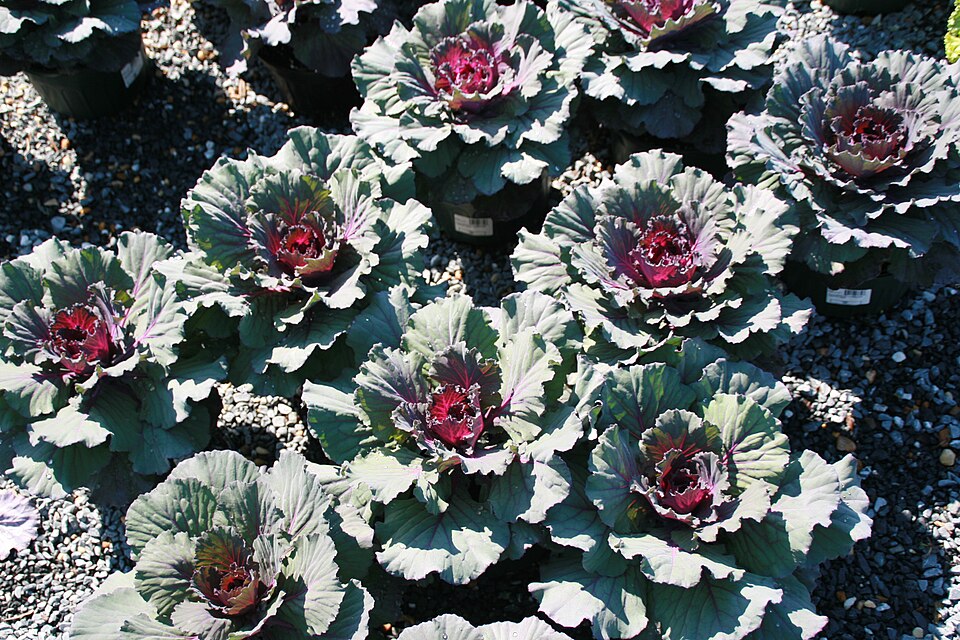
Botanical Description and Modern Scientific Context
Redbor kale is a highly ornamental and nutritionally dense cultivar of Brassica oleracea var. acephala, characterized by deeply curled, finely serrated leaves with intense burgundy to deep purple coloration. Plants typically reach 18–36 inches (45–90 cm) in height, forming upright rosettes with strong central stems and robust leaf petioles.
The purple-red pigmentation is driven primarily by anthocyanins layered over a chlorophyll base, with color intensity increasing under cool temperatures and high light conditions. Like other kales, Redbor is rich in glucosinolates (notably glucobrassicin), flavonoids, carotenoids, vitamins A, C, and K, and sulfur-containing compounds.
In modern scientific literature, kale is discussed for its interaction with detoxification enzyme pathways (phase I and phase II enzymes), antioxidant signaling, nitric oxide modulation, and gut microbiome activity. Anthocyanins and glucosinolate-derived compounds are studied for their roles in cellular stress response, inflammation signaling, and metabolic regulation—always within the framework of whole-food dietary intake rather than isolated pharmacological action.
Whole-Food Context
Kale compounds interact with digestive enzymes, intestinal microbiota, and cellular redox systems. Research on glucosinolate metabolism, anthocyanin bioavailability, and carotenoid absorption consistently emphasizes that these processes are modulated by the full food matrix—including fiber, lipids, and co-occurring phytochemicals—rather than by isolated compounds.
Origin, Breeding History, and Traditional Use
Kale is among the oldest cultivated forms of Brassica oleracea, originating along the Mediterranean coast thousands of years ago. Unlike heading cabbages, kale was selected for open-leaf growth and cold tolerance.
Redbor kale is a modern European-bred cultivar developed for enhanced cold hardiness, ornamental appeal, and concentrated pigment expression, while retaining the traditional nutritional profile of leaf kales.
Historically, kale functioned as a winter survival crop across Europe due to its ability to withstand frost and continue producing edible leaves when other vegetables failed. Leaves were eaten fresh, cooked, fermented, or dried, and were often harvested repeatedly from the same plant.
Cultural Significance
In northern European food traditions, kale was one of the most reliable sources of fresh nutrition during winter months. The practice of repeated leaf harvest from a single plant—sometimes spanning several months—reflects an early understanding of sustainable, cut-and-come-again cropping that remains central to modern home and market garden production.
Seed Characteristics and Reproductive Biology
Redbor kale is a biennial grown as an annual. In its first year, it produces vegetative growth; if overwintered, it bolts in the second year, producing tall flowering stalks with yellow cruciferous flowers.
Seeds are small, round, dark brown to black, approximately 1.5–2 mm in diameter. Seed viability is typically 3–5 years when stored dry at 4–10°C (39–50°F).
| Parameter | Specification |
|---|---|
| Life Cycle | Biennial (grown as annual) |
| Seed Size | 1.5–2 mm diameter |
| Seed Color | Dark brown to black |
| Seed Viability | 3–5 years (stored at 4–10°C / 39–50°F) |
| Vernalization Requirement | 0–7°C (32–45°F) for several weeks |
| Pollination | Insect-pollinated cross-pollination |
Seed production requires vernalization (exposure to cold temperatures between 0–7°C / 32–45°F for several weeks), after which plants flower and cross-pollinate via insects.
Climate Adaptation and Environmental Requirements
Redbor kale performs optimally in USDA zones 3–9, exhibiting exceptional cold tolerance and improved flavor after frost exposure.
| Parameter | Optimal Range |
|---|---|
| Growth Temperature | 10–20°C (50–68°F) |
| Cold Tolerance | Down to -10°C (14°F) |
| Sun Exposure | Full sun to partial shade (full sun enhances pigmentation) |
| Relative Humidity | 40–70% |
| Water | Consistent moisture; drought stress increases bitterness |
| Season | Cool-season crop; spring and fall plantings preferred |
| Bolting Threshold | Heat above 27°C (80°F) accelerates bolting |
Frost and Flavor
Cold exposure triggers a natural response in kale where starches are converted to sugars as a frost-protection mechanism. This process concentrates anthocyanins and sweetens the leaves, making post-frost harvests noticeably superior in both color and taste compared to warm-weather growth.
Soil Preferences, Fertility, and Root Zone Management
Redbor kale prefers well-drained loam or sandy loam soils with high organic matter and a pH range of 6.0–7.2.
Nutrient Requirements
| Nutrient | Priority | Notes |
|---|---|---|
| Nitrogen (N) | High | Drives leaf expansion and color intensity |
| Phosphorus (P) | Moderate | Supports root development and early vigor |
| Potassium (K) | Moderate–High | Enhances cold tolerance and leaf thickness |
| Sulfur (S) | Critical | Directly influences glucosinolate synthesis |
| Calcium (Ca) | Moderate | Supports cell wall strength and reduces tip burn |
Sulfur availability is particularly important, as it directly influences glucosinolate synthesis. Calcium supports cell wall strength and reduces tip burn. Nutrient demands remain moderate to high due to continuous leaf harvest throughout the growing season.
Planting, Establishment, and Growing Systems
Seeds are direct-sown or transplanted, with transplanting being the preferred method for most production systems to improve stand uniformity and reduce time to first harvest.
Planting Parameters
| Parameter | Specification |
|---|---|
| Germination Temperature | 7–24°C (45–75°F) |
| Sowing Depth | 0.6–1.2 cm (¼–½ in) |
| Plant Spacing | 12–18 inches (30–45 cm) |
| Transplant Timing | 3–4 weeks after germination |
Suitable Growing Systems
- In-ground beds: Traditional row or block planting with mulch
- Raised beds: Improved drainage and soil temperature control
- Containers: Minimum 5-gallon volume per plant
- High tunnels: Extended winter production with frost protection
Growth Habit, Canopy Management, and Yield
Redbor kale produces new leaves continuously from the center, allowing repeated harvest over several months. Lower leaves are harvested first, leaving the growing point intact to sustain ongoing production.
Plants may yield 1–2 lb (0.45–0.9 kg) of leaves over a full season depending on fertility and spacing. Cold exposure increases anthocyanin concentration and sugar content, improving both color and flavor.
Cut-and-Come-Again Harvest
The cut-and-come-again method—removing outer leaves while preserving the central growing point—extends the productive life of each plant significantly. Under favorable conditions, a single Redbor kale plant can produce harvestable leaves for 3–5 months or longer.
Harvest Timing and Quality Optimization
Leaves are harvested when 6–10 inches (15–25 cm) long for optimal tenderness. Peak nutritional density occurs during cool weather, especially after light frost events.
- Harvest in the morning to preserve turgor and reduce post-harvest wilting
- Select leaves that are firm, deeply colored, and free of yellowing or insect damage
- Avoid harvesting more than one-third of the plant at a time to maintain vigor
- Anthocyanin and glucosinolate concentrations peak during cool-season growth
Post-Harvest Handling and Storage
Fresh kale is highly perishable and should be cooled quickly after harvest. Leaves should not be washed until just before use to reduce spoilage.
| Parameter | Optimal Condition |
|---|---|
| Storage Temperature | 0–2°C (32–36°F) |
| Relative Humidity | 95–100% |
| Shelf Life | 1–2 weeks under ideal conditions |
| Pre-Storage Washing | Not recommended; wash before use only |
Processing, Preservation, and Transformation
Heat and mechanical processing influence glucosinolate breakdown into isothiocyanates, altering both flavor and biochemical activity. The choice of processing method directly affects which compounds are preserved and how they are transformed.
| Method | Conditions | Notes |
|---|---|---|
| Cooking | Light steaming, sautéing, or blanching | Reduces bitterness; retains most nutrients |
| Freezing | Blanch 2–3 minutes before freezing | Preserves color and texture |
| Drying | ≤45°C (113°F) | Produces kale chips or powder |
| Fermentation | Lacto-fermentation with salt brine | Converts sugars to organic acids; improves digestibility |
| Juicing | Blended with fruits or fats | Balances bitterness; enhances nutrient absorption |
Glucosinolate Activation
Raw kale contains intact glucosinolates, which are converted to biologically active isothiocyanates (such as sulforaphane) by the enzyme myrosinase upon tissue damage (chopping, chewing). Cooking deactivates myrosinase, reducing isothiocyanate formation but improving digestibility. A practical approach is to chop kale and allow it to sit for 5–10 minutes before cooking, enabling partial myrosinase activity before heat inactivation.
Culinary Use, Intake Forms, and Integration
Redbor kale is consumed raw, cooked, fermented, dried, or powdered. Its deeply curled texture holds sauces well and maintains structure when cooked, making it versatile across a wide range of preparations.
Common Culinary Uses
- Raw salads: Finely chopped or massaged with oil and acid to tenderize
- Sautéed greens: Quick-cooked with oils, garlic, or acids
- Soups and stews: Added late in cooking to preserve color and texture
- Fermented greens: Lacto-fermented with salt for probiotic-rich preparations
- Dehydrated chips and powders: Low-temperature drying for shelf-stable forms
Typical servings range from 50–150 g fresh leaves per meal. Pairing with fats enhances absorption of fat-soluble carotenoids (beta-carotene, lutein, zeaxanthin) and improves palatability.
Extraction, Functional Compounds, and Use Forms
Target compounds in Redbor kale include glucosinolates, anthocyanins, flavonoids, carotenoids, and fiber-bound polyphenols. Extraction methods vary depending on the target compound class and intended use.
Home and Small-Scale Methods
- Cold-press juicing: Preserves heat-sensitive enzymes and maximizes anthocyanin extraction
- Hot-water infusion: 70–85°C for 15–30 minutes — extracts water-soluble flavonoids and minerals
- Ethanol tincture: 40–60% ethanol over 2–4 weeks — broader polyphenol extraction
- Powder preparation: Low-temperature dehydration followed by milling — concentrates nutrients for supplemental use
Industrial Methods
Commercial processing may include freeze-drying, spray-drying, supercritical CO2 extraction, and enzymatic hydrolysis. These methods enable compound fractionation and standardized extract production but are typically inaccessible outside commercial facilities.
Extraction and Compound Stability
Anthocyanins in Redbor kale are sensitive to pH, heat, and light. Acidic extraction conditions (pH 2–4) help stabilize anthocyanin pigments. Glucosinolates require careful processing to avoid premature hydrolysis, while carotenoid extraction benefits from the presence of dietary fats or oils as co-solvents.
Pest and Disease Management
As a member of the Brassicaceae family, Redbor kale is susceptible to common brassica pests and diseases. Integrated pest management (IPM) strategies are strongly recommended.
Common Pests
- Cabbage worms and loopers: Hand removal, Bacillus thuringiensis (Bt) applications, or row covers
- Aphids: Insecticidal soap, neem oil, or beneficial insect release (ladybugs, lacewings)
- Flea beetles: Row covers during early growth; kaolin clay barriers
- Whiteflies: Yellow sticky traps; reflective mulch
Common Diseases
- Downy mildew: Improve air circulation; avoid overhead watering
- Black rot (Xanthomonas campestris): Use disease-free seed; practice crop rotation
- Clubroot (Plasmodiophora brassicae): Maintain soil pH above 7.0; avoid waterlogging
- Alternaria leaf spot: Remove infected debris; ensure adequate spacing
Crop Rotation
Rotate Redbor kale with non-brassica crops on a 3–4 year cycle to reduce soilborne disease pressure, particularly clubroot and black rot. Avoid following other brassicas (broccoli, cabbage, cauliflower, Brussels sprouts) in the rotation sequence.
Companion Planting and Garden Integration
Redbor kale’s striking purple foliage makes it an excellent dual-purpose plant for both edible and ornamental garden design. Its upright growth habit and bold color contrast well with lighter-colored plants.
Beneficial Companions
- Alliums (onion, garlic, chives): Deter aphids and cabbage worms
- Herbs (dill, cilantro, chamomile): Attract beneficial predatory insects
- Legumes (beans, peas): Fix nitrogen and improve soil fertility
- Root vegetables (beets, carrots): Occupy different soil zones without competition
Plants to Avoid
- Other brassicas: Share pests and diseases; intensify pest pressure
- Strawberries: May compete for nutrients and harbor shared pests
Scientific and Authoritative References
This article is informed by data and conclusions drawn from, but not limited to:
- Cartea, M.E. et al., Phytochemistry – Glucosinolates in Brassica and their role in plant defense and human health
- Verkerk, R. et al., Molecular Nutrition & Food Research – Glucosinolate degradation and bioavailability
- Podsedek, A., LWT – Food Science and Technology – Anthocyanin content in Brassica vegetables
- USDA Plant Guide: Brassica oleracea var. acephala
- Jeffery, E.H. & Araya, M., Journal of Food Composition and Analysis – Physiological effects of broccoli and kale consumption
- Kopsell, D.A. et al., HortScience – Carotenoid and chlorophyll pigments in kale cultivars
- Vallejo, F. et al., Journal of Agricultural and Food Chemistry – Effects of cooking on glucosinolate content
- Olsen, H. et al., Food Chemistry – Anthocyanin composition in curly and ornamental kale varieties
- Manchali, S. et al., Molecules – Cruciferous vegetable phytochemicals and human health
- Neugart, S. et al., Food Research International – Flavonoid glycosides in kale leaves under variable growing conditions