guides
Rope Making and Essential Knots
A comprehensive guide covering Rope Making and Essential Knots.
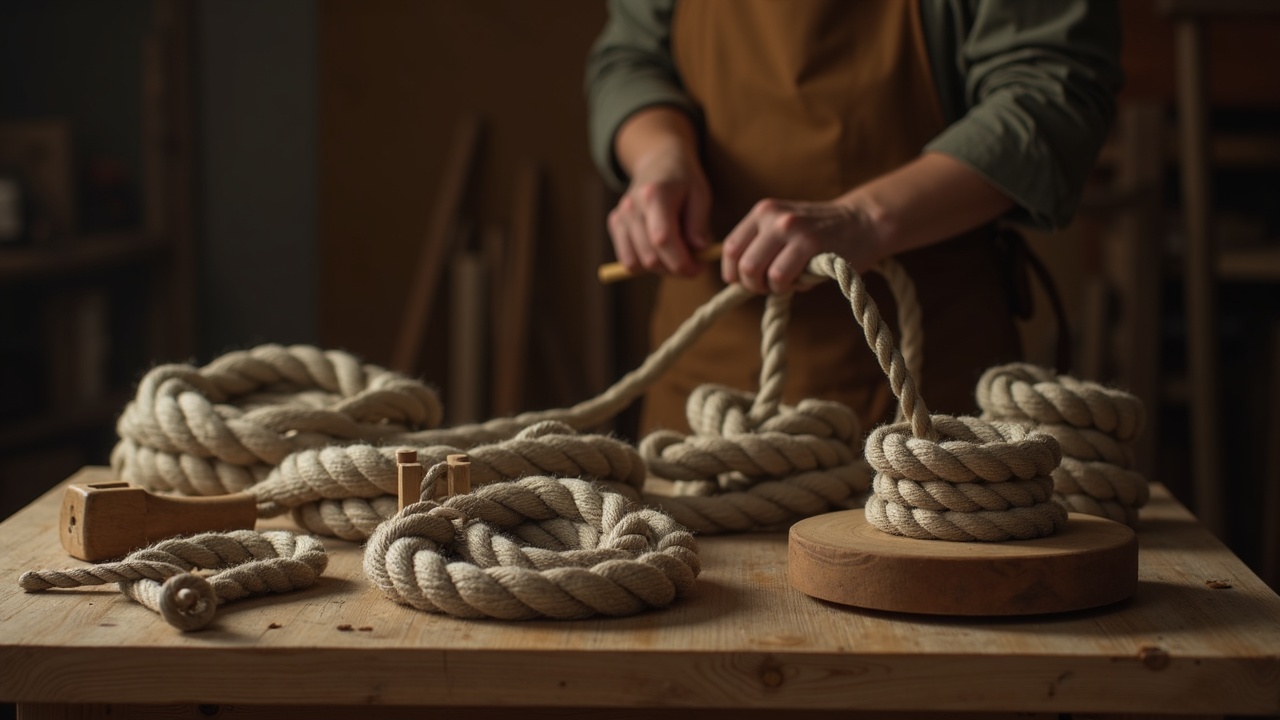
A Complete Field Reference for Cordage, Rigging, and Practical Ropework
Nored Farms · Austin, Texas
1. Introduction — The Most Underrated Tool in Self-Reliance
Every emergency kit, every homestead, every truck, every workshop, every boat has rope. Almost none of them have enough of it, and almost nobody carrying it knows more than two knots.
This is a problem. Rope is not a consumable or an accessory. It is a force multiplier. A person with 50 feet of rope and the right knots can build a shelter, haul a load up a slope with 3:1 mechanical advantage, rescue someone from a crevice, secure cargo in wind, set a ridgeline, rig a block and tackle, splint a broken limb, or lash together a raft. Without rope or with rope and no knot knowledge, those same tasks range from difficult to impossible.
Rope is the oldest engineered material still in continuous use. Twisted plant fiber cordage has been recovered from archaeological sites dating to 28,000 BCE. The fundamental physics have not changed. Short, weak fibers twisted against each other so that tension increases friction rather than separating them. The materials have gotten better. The principle is identical.
This guide covers materials, construction types, DIY cordage from wild fibers, fifteen essential knots with specific use cases, four lashing patterns, basic splicing, and rope maintenance. A person who works through this entire document will know more about practical ropework than 95% of the people who use rope professionally.
2. Rope Materials — Natural and Synthetic
Natural Fibers
Manila (Abaca palm, Musa textilis). The traditional benchmark for working rope. Excellent grip, moderate stretch, good UV resistance for a natural fiber. Swells when wet, which tightens knots — useful in marine applications but makes knots difficult to untie after loading wet. Breaking strength roughly 1/5 that of nylon at equivalent diameter. Rots if stored wet. Used for dock lines, hay baling, decorative applications, and anywhere a non-slip grip matters more than strength.
Sisal (Agave sisalana). Cheaper than manila, rougher on hands, lower strength. Degrades faster in UV and moisture. Primary use today is baling twine and light-duty bundling. Not recommended for life-safety or heavy rigging applications.
Cotton. Soft, easy to handle, zero skin abrasion. Low strength compared to all other options. Rots readily when wet. Used for clotheslines, sash cord, decorative ropework, and light-duty tying where comfort matters more than load capacity.
Hemp (Cannabis sativa). Historically the dominant rope fiber worldwide from roughly 500 BCE through the 1930s. The word "canvas" derives from "cannabis" — that is how integral hemp was to sailing and rigging. Strong, resistant to saltwater degradation, moderate stretch. Modern hemp rope is available but expensive compared to synthetics. Primary advantage today is sustainability and biodegradability for applications where the rope will be left in place (garden trellising, erosion control, livestock fencing).
Synthetic Fibers
Nylon (Polyamide). The workhorse. Highest elongation of any common synthetic — stretches 15-28% before breaking, which absorbs shock loads that would snap a low-stretch line. This makes nylon the default for anchor lines, tow ropes, climbing ropes, and any application where sudden loads occur. Degrades under UV exposure — loses up to 40% of tensile strength after 12 months of continuous outdoor sun. Absorbs water (up to 7% by weight), which reduces strength by 10-15% when wet. Melts at approximately 220°C (428°F).
Polyester (Dacron, PET). Lower stretch than nylon (3-5%), superior UV resistance, does not absorb water. Breaking strength slightly lower than nylon at equivalent diameter but maintains that strength wet or dry. The standard for sailboat running rigging, outdoor clotheslines, flag halyards, and any application requiring low stretch and UV durability. Does not absorb shock loads as well as nylon.
Polypropylene. Floats. That is its defining feature — the only common rope material with a specific gravity below 1.0. Used for water rescue throw bags, ski tow ropes, pool lane dividers, and any application where the rope must not sink. Weakest common synthetic. Severe UV degradation. Slippery surface makes knots prone to slipping. Melts at 160°C (320°F). Not for life-safety applications.
Dyneema / Spectra (UHMWPE — Ultra-High-Molecular-Weight Polyethylene). Strength-to-weight ratio 15 times that of steel. Nearly zero stretch. Floats. Does not absorb water. Exceptional abrasion resistance. Used in high-performance sailing, arborist rigging, industrial slings, and anywhere maximum strength at minimum weight matters. Weaknesses: melts at a low 144°C (291°F), very slippery surface makes knot holding difficult (spliced terminations preferred), and creep under sustained load means it slowly elongates permanently when loaded near capacity for extended periods. Expensive — roughly 5-10x the cost of nylon at equivalent strength.
Properties Comparison Table
| Property | Manila | Sisal | Cotton | Hemp | Nylon | Polyester | Polypro | Dyneema |
|---|---|---|---|---|---|---|---|---|
| Relative Strength | Low | Low | Very Low | Moderate | High | High | Moderate | Very High |
| Stretch at Break | 10-12% | 10-14% | 3-7% | 8-10% | 15-28% | 3-5% | 10-20% | 3-4% |
| UV Resistance | Moderate | Poor | Poor | Moderate | Poor | Excellent | Poor | Good |
| Water Absorption | High | High | Very High | Moderate | 7% | None | None | None |
| Floats | No | No | No | No | No | No | Yes | Yes |
| Rot Resistance | Poor | Poor | Poor | Moderate | Excellent | Excellent | Excellent | Excellent |
| Melting Point | Burns | Burns | Burns | Burns | 220°C | 260°C | 160°C | 144°C |
| Grip / Knot Holding | Excellent | Good | Excellent | Good | Good | Moderate | Poor | Poor |
| Relative Cost | $$ | $ | $ | $$$ | $$ | $$ | $ | $$$$$ |
| Best For | Dock lines, general | Baling, bundling | Clothesline, sash | Garden, marine heritage | Anchor, tow, climbing | Sailing, outdoor fixed | Water rescue, floats | High-performance rigging |
3. Rope Construction — Twisted, Braided, and Kernmantle
Twisted / Laid Rope
Three strands twisted together in a right-hand (Z-twist) lay, with each strand composed of yarns twisted in left-hand (S-twist) lay. The opposing twist directions create the self-locking friction that gives rope its strength. This is the oldest construction and still the most common for general-purpose work.
Advantages: Easy to splice. Easy to inspect — you can see the condition of individual strands by untwisting slightly. Moderate stretch and good shock absorption. Least expensive construction method.
Disadvantages: Tends to kink and hockle (form tight loops that permanently damage fibers) if twist is allowed to accumulate. Rotates under load — a hanging load on three-strand rope will spin. Not ideal for running through pulleys under heavy load because the twist creates friction.
When it matters: General rigging, anchor lines, dock lines, towing, lashing, any application where spliceability and cost matter more than smoothness.
Braided Rope
Multiple strands interwoven in patterns rather than twisted. Several sub-types exist:
Solid braid: Single layer of interlocked strands. Smooth, round, does not kink. Cannot be spliced easily. Common in clotheslines and light-duty applications.
Double braid: A braided core inside a braided cover. High strength, smooth handling, runs cleanly through blocks and hardware. The standard for sailboat running rigging and high-end arborist rope. Both core and cover carry load. Can be spliced but requires specialized technique (Brummel splice or locked bury splice).
Hollow braid: Single braid with a hollow center. Lightweight, easy to splice (the rope threads through itself), but lower strength than double braid. Good for light-duty applications and dinghy sailing.
Advantages: No kinking or rotation under load. Smooth surface runs well through hardware. Distributes load across more fibers than twisted construction.
Disadvantages: Harder to inspect for internal damage. More expensive than twisted construction. Splicing is more complex.
When it matters: Sailing, technical arborist work, any application involving blocks/pulleys/fairleads, or anywhere kink-free handling is critical.
Kernmantle
A load-bearing core (kern) surrounded by a protective sheath (mantle). The core carries the load. The sheath protects against abrasion, UV, and handling damage.
Dynamic kernmantle: Core is twisted or braided with intentional elasticity. Designed to absorb the energy of a fall. This is climbing rope — UIAA-rated, with controlled elongation to reduce peak force on the climber and anchor during a fall. Not for static rigging.
Static kernmantle: Minimal stretch core. Used for rappelling, rescue hauling, caving, and industrial rope access where stretch is undesirable. Also used for prusik cord and accessory cord.
Advantages: Highest strength-to-diameter ratio. Sheath protects core from abrasion. Dynamic versions absorb fall energy in ways no other construction can.
Disadvantages: Cannot be spliced. Core damage is invisible from outside — a kernmantle rope that looks fine externally may have a severed core from a sharp edge impact. Must be retired on schedule, not on visual inspection alone.
When it matters: Climbing, rescue, rappelling, caving, industrial rope access — any application where human life depends on the rope.
4. DIY Rope Making — Cordage from Natural Fibers
Source Materials
Almost any plant with long, tough fibers can be made into functional cordage. The best wild-harvested materials:
- Dogbane (Apocynum cannabinum) — the strongest wild cordage fiber in North America. Harvest dead stalks in fall/winter. Crush and peel the outer bark, then separate fibers.
- Stinging nettle (Urtica dioica) — long, strong bast fibers. Harvest dead stalks after first hard frost when stinging compounds have degraded. Process like dogbane.
- Milkweed (Asclepias syriaca) — moderate strength, widely available. Process dead stalks same as dogbane.
- Cattail leaves (Typha spp.) — abundant, easy to process. Dry leaves slightly then twist. Lower strength than bast fibers but available in quantity.
- Yucca (Yucca spp.) — extremely strong fibers. Pound fresh leaves, then scrape away pulp to isolate fibers. Common in desert and prairie regions.
- Grass — any tall, tough grass works for light-duty cordage. Not as strong as bast fibers but available everywhere. Dried grass is easier to work than fresh.
The Reverse Wrap Technique
This is the fundamental cordage-making method. It appears independently in every documented rope-making culture worldwide because it is the mechanically optimal way to convert short fibers into continuous cord by hand.
Step 1 — Prepare fibers. Gather a bundle of fibers roughly pencil-thick. If using bast fibers (dogbane, nettle, milkweed), they should be dry and separated into individual fibers. If using grass or cattail, slightly wilted (not brittle dry) works best.
Step 2 — Start the twist. Take the bundle and find the midpoint. Pinch the bundle at a point roughly 1/3 from one end (not the center — offset gives you staggered splicing points later). Twist the fiber bundle at the pinch point until it kinks and folds over on itself, creating two legs of roughly equal thickness.
Step 3 — The reverse wrap. Hold the kinked fold between your thumb and index finger (this is your "pinch point"). You now have two legs hanging down. Take the leg closest to you (the "front" leg). Twist it away from you (clockwise if you are right-handed) between your thumb and finger — 3 to 5 twists. Then wrap that twisted leg away from you, over the back leg, so it becomes the back leg. The former back leg is now in front. Repeat: twist the front leg away from you, wrap it over the back leg. Each cycle advances the cordage by about an inch.
Step 4 — Adding fiber (splicing in). When one leg gets thin (about 3 inches from its end), lay a new bundle of fibers alongside the thinning leg with a 3-inch overlap. Twist and wrap them together. The friction of the twist locks the new fibers in place. Stagger your additions — never add fiber to both legs at the same point, or the splice will be weak.
Step 5 — Finishing. When the cord is the desired length, twist both legs tightly, then tie an overhand knot at the end to prevent unraveling. For rope rather than cordage, take three finished cords and reverse-wrap them together in the opposite twist direction (if you twisted individual cords clockwise, twist the three together counterclockwise).
Practiced hands can produce 6-8 feet of functional two-ply cordage per hour. The resulting cord from good dogbane or yucca fibers can hold 150-200+ lbs depending on diameter.
Rope Machine from a Hand Drill
For making longer and more consistent rope, a simple rope machine saves enormous time.
Materials: A cordless hand drill, a cup hook or bent nail chucked into the drill, three cup hooks screwed into a board (the "header board"), and a swivel hook at the far end.
Process: Anchor three individual yarns or cords between the drill hook and the header board hooks. Attach the swivel at the header board. Run the drill at low speed — all three yarns twist simultaneously. When the yarns are tight enough that they start to kink when tension is relaxed, walk the header board toward the drill while maintaining tension. The three twisted yarns will wrap around each other in the opposite direction (the swivel allows this). The result is three-strand laid rope, identical in construction to commercial twisted rope.
This method can produce 50 feet of three-strand rope in 15-20 minutes once the yarns are prepared.
5. Essential Knots — Fifteen Knots Every Person Should Know
Knot Terminology
- Standing end: The long, unused portion of the rope.
- Working end: The short end you are actively tying with.
- Bight: A U-shaped bend in the rope without crossing itself.
- Loop: The rope crosses over itself.
- Dress: Arranging a knot so all parts lie correctly without twists or overlap. An undressed knot is a weak knot.
- Set: Tightening a dressed knot under load.
1. Bowline — The King of Knots
Use case: Creating a fixed loop that will not slip, tighten, or jam under load. Rescue loops, mooring, attaching rope to a fixed point.
Why it matters: The bowline holds under enormous load and unties easily after loading. This alone makes it the most important single knot to learn. Every sailor, climber, arborist, and rigger ties bowlines.
How to tie: Form a small loop in the standing part (the "rabbit hole"). Pass the working end up through the loop (rabbit comes out of the hole), around behind the standing end (around the tree), and back down through the same small loop (back down the hole). Dress by pulling the working end and the loop simultaneously while holding the standing end.
Strength retention: 60-75% of rope breaking strength.
Caution: Can work loose if not loaded or in stiff/slippery rope. Add a stopper knot (half hitch or figure-8) below the bowline in life-safety applications.
2. Clove Hitch — The Adjustable Post Attachment
Use case: Attaching rope to a post, pole, or ring when you need quick attachment and adjustment. Starting and finishing lashings. Temporary moorings.
How to tie: Make two identical loops in the rope (both loops with the working end crossing over the standing part in the same direction). Stack the second loop on top of the first. Drop both loops over the post. Pull tight.
Strength retention: Approximately 60-65%.
Caution: Slips under intermittent loading on smooth poles. Best used under constant tension or as a starting point for lashings, not as a sole attachment for critical loads.
3. Taut-Line Hitch — The Adjustable Grip
Use case: Creating tension on a line that you need to adjust — tent guylines, clotheslines, ridgelines, any application where you want to slide the knot to increase or decrease tension but have it grip when loaded.
How to tie: Pass the working end around the anchor. Bring it back toward the standing end. Make two wraps around the standing end inside the loop (between the anchor and where the standing end exits). Then make one wrap around the standing end outside the loop. Pull the knot tight.
How it works: The internal wraps create friction that grips the standing end under load. Slide the knot along the standing end to adjust tension. Load locks it in place.
4. Trucker's Hitch — The Mechanical Advantage Tensioner
Use case: Creating extremely tight lashings for cargo tie-down, ridgelines, clotheslines, or any line that needs to be tensioned well beyond what hand-pulling achieves.
How to tie: Secure one end of the rope to a fixed anchor (bowline or clove hitch). At the midpoint, form a directional loop in the standing part (a slip knot or alpine butterfly loop works). Run the working end around the far anchor point and back up through the loop. Pull down — you now have a 3:1 mechanical advantage. Secure with two half hitches around the standing part.
Why it matters: This is the single most useful knot combination for practical field work. It multiplies your pulling force by 3x, letting you tension lines tighter than any other hand method. Every trucker, every person who ties down cargo, every person who sets a ridgeline should know this.
5. Sheet Bend — Joining Two Ropes
Use case: Connecting two ropes, especially ropes of different diameters. The primary rope-joining knot.
How to tie: Form a bight in the thicker rope (or the stiffer rope). Pass the working end of the thinner rope up through the bight from behind. Wrap around both legs of the bight, then tuck under itself (under the thinner rope's own standing part). Both free ends should exit on the same side of the knot.
Double sheet bend: Make a second wrap around the bight before tucking. More secure in ropes of very different diameters or in slippery materials.
Strength retention: Approximately 55%.
6. Timber Hitch — Dragging and Hoisting Logs
Use case: Attaching rope to a cylindrical object — logs, poles, pipes — for dragging or hoisting. Self-tightens under load, releases instantly when unloaded.
How to tie: Pass the working end around the log. Bring it around the standing end, then twist the working end around itself three or more times. Pull the standing end to tighten. The wraps dig into the log surface and grip harder as load increases.
For dragging: Add a half hitch several feet ahead of the timber hitch along the log. This keeps the log aligned with the direction of pull and prevents spinning.
7. Figure-Eight Knot — The Stopper and the Loop
Use case (stopper): Preventing a rope end from pulling through a block, grommet, or hole. Larger and easier to untie than an overhand knot.
Use case (figure-eight on a bight): Creating a fixed loop that is stronger and more secure than a bowline. The standard tie-in knot for rock climbing.
How to tie (stopper): Make a loop with the working end crossing over the standing part. Bring the working end under the standing part and back up through the loop.
How to tie (on a bight): Double the rope back on itself to create a bight. Tie a figure-eight with the doubled rope as if it were a single strand. Result: a figure-eight with a loop at the end.
Strength retention: 75-80% — stronger than a bowline at the knot.
8. Prusik Knot — Ascending a Rope
Use case: Creating a friction hitch on a standing rope that grips when loaded but slides freely when unloaded. Used to ascend a fixed rope, create a backup on a rappel line, or build a tensioning system.
How to tie: Use a loop of smaller-diameter cord (accessory cord, 5-7mm). Wrap the loop around the standing rope three times, passing the loop through itself each time (girth hitch with extra wraps). Dress neatly — all wraps must lie flat without crossing.
Critical detail: The prusik cord must be smaller diameter than the rope it grips. A 6mm cord on an 11mm rope works. A 6mm cord on a 6mm rope does not grip reliably.
9. Cleat Hitch — Securing to a Cleat
Use case: Securing a line to a horn cleat — the standard mooring attachment on docks, boats, and flag poles.
How to tie: Take one full wrap around the base of the cleat (around both horns). Then make alternating figure-eight wraps over the top of the cleat. Finish with a locking hitch: flip the final loop over so it locks under itself on the horn.
Common mistake: Stacking wraps without alternating direction. This jams under load and becomes impossible to release. Proper figure-eight pattern releases cleanly.
10. Rolling Hitch — Loading a Line Already Under Tension
Use case: Attaching to a rope or pole that is already under tension — pulling sideways on a taut line, relieving load to free a jammed knot, or adding a tensioning line.
How to tie: Make two wraps around the loaded line in the direction of the pull. Then make one wrap on the other side and tuck the working end under it. The double wraps grip in the direction of load.
Key distinction from a clove hitch: The rolling hitch has two wraps on the loaded side, one on the unloaded side. A clove hitch has equal wraps on both sides. The asymmetry is what makes the rolling hitch grip on a loaded line where a clove hitch would slip.
11. Constrictor Knot — The Permanent Binding
Use case: Binding a bundle, clamping a hose, whipping a rope end, temporary clamp on anything cylindrical. Grips so tightly it often must be cut off.
How to tie: Make a clove hitch. Before setting it, tuck the working end under the first wrap (the crossover becomes a riding turn). Pull both ends tight. The riding turn locks the knot into a self-tightening grip that will not release without cutting.
Practical application: Superior to zip ties for clamping garden hose to a fitting. Holds indefinitely, does not crack in UV, and costs nothing. Also excellent for whipping a rope end to prevent unraveling.
12. Square Knot (Reef Knot) — Flat Binding
Use case: Binding two ends of the same line around an object — reefing a sail, tying a bandage, wrapping a parcel. Not for joining two separate ropes under load.
How to tie: Right over left, then left over right (or vice versa, as long as the sequence alternates). Both free ends exit on the same side of the knot.
Critical warning: This is not a reliable bend for joining two ropes. It capsizes (flips into a slip knot) under unequal loading and spills. Use a sheet bend to join two separate ropes. The square knot is a binding knot only.
13. Alpine Butterfly — The Midline Loop
Use case: Creating a fixed loop in the middle of a rope without access to either end. Used to isolate a damaged section of rope, clip into a midpoint on a climbing rope, create an attachment point on a ridgeline.
How to tie: Wrap the rope around your hand three times. Take the center wrap and pull it over the other two wraps, then pull it through the gap between the first wrap and your palm. Dress and set.
Why it matters: The only common knot that creates a secure loop in the middle of a loaded line while loading equally in both directions. The bowline requires a free end. The alpine butterfly does not.
Strength retention: Approximately 70-75%.
14. Taut-Line Hitch (Midshipman's Variant)
Use case: Identical to the standard taut-line hitch (#3 above) but with a more secure finishing wrap. The midshipman's hitch adds a half hitch with the working end around the standing part after the two internal wraps, rather than a single external wrap. This variation holds better on slippery synthetic rope.
When to choose this over the standard: When using polyester or polypropylene rope, or any rope with a slick sheath. The additional friction of the half hitch prevents the gradual creep that can occur with the standard version on modern synthetics.
15. Water Knot (Ring Bend / Tape Knot)
Use case: Joining two ends of flat webbing or tape. The only reliable knot for flat materials. Used for making slings from tubular webbing in climbing and rescue work.
How to tie: Tie a simple overhand knot in one end of the webbing. Thread the second piece of webbing through the first knot in reverse (following the path of the first knot backward, entering where the first exits). Dress carefully so both layers of webbing lie flat without twists.
Critical detail: Leave at least 3 inches of tail on both sides. The water knot can creep (slowly work loose) under repeated loading and unloading cycles. Check tail length before every use in life-safety applications. Some climbers mark the tails with a pen at the knot exit so any creep is immediately visible.
6. Lashing — Structural Connections with Rope
Lashing turns rope and poles into structures — shelters, tables, bridges, towers, drying racks, fence gates. Four lashing patterns cover essentially every structural joint.
Square Lashing — Right-Angle Joints
Use case: Binding two poles at 90 degrees — the most common structural lashing.
Process: Start with a clove hitch on one pole (typically the vertical one), below the joint. Wrap the rope over the horizontal pole, behind the vertical pole, under the horizontal pole, and in front of the vertical pole — completing one full square wrap. Make three to four complete wraps, keeping them tight and parallel. Then make two to three frapping turns (wrapping between the poles, around the wraps themselves, squeezing them together). Finish with a clove hitch on the opposite pole.
Key to strength: Frapping turns. The wrapping wraps hold the poles in position. The frapping turns cinch the wrapping wraps tight. Without frapping, the lashing loosens as wood dries and shrinks.
Diagonal Lashing — Poles That Don't Touch
Use case: Binding two poles that cross at an angle where they don't naturally rest against each other — typically a diagonal brace on a frame.
Process: Start with a timber hitch around both poles at their crossing point. Wrap diagonally across the joint in one direction for three to four turns. Then wrap diagonally in the other direction (perpendicular to the first set) for three to four turns. Frap between the poles for two to three turns. Finish with a clove hitch.
Difference from square lashing: Square lashing works when poles are in contact. Diagonal lashing pulls poles into contact when they start with a gap.
Shear Lashing — Parallel Poles
Use case: Binding two parallel poles together — extending pole length, creating A-frames, or making shear legs for hoisting.
Process: Start with a clove hitch on one pole. Wrap around both poles together for eight to ten turns (loosely — these wraps need room to spread). Frap between the poles for three to four turns, pulling the wraps tight. Finish with a clove hitch on the opposite pole. Open the poles at the untied end to form an A-frame or shear legs.
Tripod Lashing — Three-Legged Structures
Use case: Binding three poles into a tripod for hoisting, cooking, hanging, or as the structural base for a larger shelter frame.
Process: Lay three poles side by side. Start with a clove hitch on one outer pole. Wrap loosely around all three poles for six to eight turns, weaving over and under alternating poles. Frap between each pair of poles (between 1 and 2, then between 2 and 3). Finish with a clove hitch. Stand the tripod up and spread the legs.
Alternate method: For a stronger tripod, lash two poles together with a shear lashing. Then lash the third pole to the bundle with a separate shear lashing at a slight angle. This creates a stiffer joint than the woven method.
7. Splicing — Eye Splice in Three-Strand Rope
Splicing is threading the strands of a rope back into itself to create a permanent, smooth termination. A properly made splice retains 90-95% of the rope's breaking strength — far more than any knot.
Eye Splice — Three-Strand Twisted Rope
Materials needed: The rope, a Swedish fid or marlinspike (a pointed tool for opening the lay of the rope), tape or whipping twine for the strand ends.
Step 1 — Prepare. Determine the size of the eye (loop). Mark the rope at the point where the splice will begin (called the "throat"). Unlay the three strands back from the end about 6-8 inches. Tape the end of each strand to prevent fraying. Label them 1, 2, and 3 (left, center, right when the rope hangs naturally).
Step 2 — Tuck strand 2 (center). Curve the rope to form the eye, bringing the unlaid strands alongside the standing part. Using the fid, open the lay of the standing part at the throat mark and tuck strand 2 under one strand of the standing part, against the lay (opposite direction to the twist). Pull through.
Step 3 — Tuck strand 1. Take the strand to the left of the one you just tucked. Tuck it under the next strand of the standing part (the one above the strand that strand 2 went under). Over one, under one, always against the lay.
Step 4 — Tuck strand 3. Flip the rope over. Tuck the remaining strand under the remaining untucked strand of the standing part.
Step 5 — Complete the splice. Continue the over-one-under-one pattern for a minimum of three full tucks per strand (five tucks for synthetic rope, which is more slippery). Each tuck goes against the lay, over one strand, under the next.
Step 6 — Finish. For a tapered splice (stronger and neater), cut half the yarns from each strand after the third tuck, then make two more tucks with the reduced strands. Cut the remaining tails close to the surface. Roll the splice under your boot to fair it smooth.
Verification: The completed splice should have three strands emerging at even intervals around the circumference. No two tucks should exit at the same point. The splice should be smooth without lumps. Pull-test it to working load before trusting it.
8. Rope Care and Inspection — UV, Load Limits, and When to Retire
Storage
- Store rope loosely coiled in a dry, shaded location. UV and moisture are the two primary degradation factors.
- Hang coils off the ground — contact with concrete wicks moisture and exposes rope to alkaline chemical degradation.
- Never store rope near chemicals, solvents, batteries (acid fumes), or exhaust.
- Nylon rope should be dried before coiling if used wet. Cotton and natural fiber ropes must be dried completely or they will rot.
UV Degradation
Ultraviolet light breaks polymer chains in synthetic rope. Nylon is the most susceptible — a nylon rope left in continuous sun for 12 months can lose 40% or more of its tensile strength with no visible change. Polyester is the most UV-resistant common synthetic. Polypropylene degrades rapidly and becomes brittle.
Practical rule: If a synthetic rope has spent more than 6 months in continuous outdoor sun exposure, derate it by at least 30% for load calculations. Replace permanently deployed outdoor ropes annually if they are load-bearing.
Inspection Protocol
Inspect rope before every use in load-bearing applications:
- Visual check: Look for cuts, abrasion wear (fuzzy surface), discoloration, melted spots, chemical stains, and inconsistent diameter (a thinner spot indicates broken internal fibers).
- Flex test: Bend the rope sharply in multiple locations. Damaged rope will have stiff spots, crunchy spots (broken fibers inside), or visible separation of strands.
- Twist test (three-strand): Open the lay slightly and inspect the interior fibers. Powdery residue, broken yarns, or discoloration inside indicate degradation invisible from outside.
- Load history: A rope that has held a shock load near its working limit should be retired immediately. Even if it looks fine, internal fibers may have failed.
When to Retire
Retire rope immediately if any of the following are present:
- Any visible cut deeper than 10% of the rope diameter
- Melted, fused, or glazed areas from friction or heat exposure
- Chemical exposure (solvents, acids, fuels, battery acid)
- Flat spots or inconsistent diameter indicating broken internal strands
- Known shock load exceeding 50% of rated breaking strength
- Stiffness or brittleness that was not present when new
- For life-safety rope: when in doubt, retire it. Rope is cheaper than a funeral.
Working Load Limits
The breaking strength is the load at which a new rope fails in a laboratory straight pull test. The working load limit (WLL) is the maximum load the rope should see in service. These are not the same number.
Standard safety factors:
- General use: WLL = Breaking strength / 5 (5:1 safety factor)
- Overhead lifting of objects: WLL = Breaking strength / 8
- Life safety: WLL = Breaking strength / 10 (minimum)
- Dynamic shock loads: WLL = Breaking strength / 15
A 1/2-inch three-strand nylon rope has a breaking strength of approximately 5,750 lbs. Its working load limit for general use is 1,150 lbs. For life safety, it is 575 lbs. Every knot reduces these numbers further — multiply by the knot's retention percentage to get the actual capacity at the connection point.
9. Sources
- Ashley, Clifford W. The Ashley Book of Knots. Doubleday, 1944.
- Budworth, Geoffrey. The Complete Book of Knots. Lyons Press, 1997.
- Richards, Dave. The Knotting & Splicing Bible. Adlard Coles, 2008.
- McKenna, H.A., Hearle, J.W.S., and O'Hear, N. Handbook of Fibre Rope Technology. Woodhead Publishing, 2004.
- Hearle, J.W.S. High-Performance Fibres. Woodhead Publishing, 2001.
- Adovasio, James M. Basketry Technology: A Guide to Identification and Analysis. Aldine, 1977.
- Hardy, B.L., Moncel, M.-H., et al. "Direct evidence of Neanderthal fibre technology and its cognitive and behavioral implications." Scientific Reports 10, 4889, 2020.
- Moyer, Tom. "Knot Break Strength vs. Rope Break Strength." Rescue Response Gear Technical Reports, 2010.
- Cordage Institute. Technical Guidelines for Fiber Rope: Safe Use, Inspection, and Retirement Criteria. CI-1303, 2001.
- Bar-Yosef, O., and Nadel, D. "The Ohalo II Site: A Prehistoric Camp on the Shore of the Sea of Galilee." Journal of the Israel Prehistoric Society, 2004.
- DSM Dyneema. Dyneema in ropes: Technical specifications and product data. Royal DSM, 2022.
- American Boat and Yacht Council. Standard E-11: AC and DC Electrical Systems on Boats. ABYC, 2022.
[practical-skills] [beginner]