guides
San Pedro Cactus (Echinopsis pachanoi / Trichocereus pachanoi): Comprehensive Cultivation, History, and Use Guide
Complete guide to San Pedro cactus cultivation covering Echinopsis pachanoi botany, Andean cultural history, climate adaptation, propagation methods.
Botanical Description and Modern Scientific Context
San Pedro cactus is a fast-growing, columnar cactus native to the Andean regions of South America. Botanically classified as Echinopsis pachanoi (formerly Trichocereus pachanoi), it forms upright green stems 2–6 m (6–20 ft) tall in habitat, with multiple ribs (typically 6–8), rounded areoles, and short to moderate spines. The epidermis is blue-green to bright green, rich in chlorophyll and waxes that protect against intense sun and temperature swings.
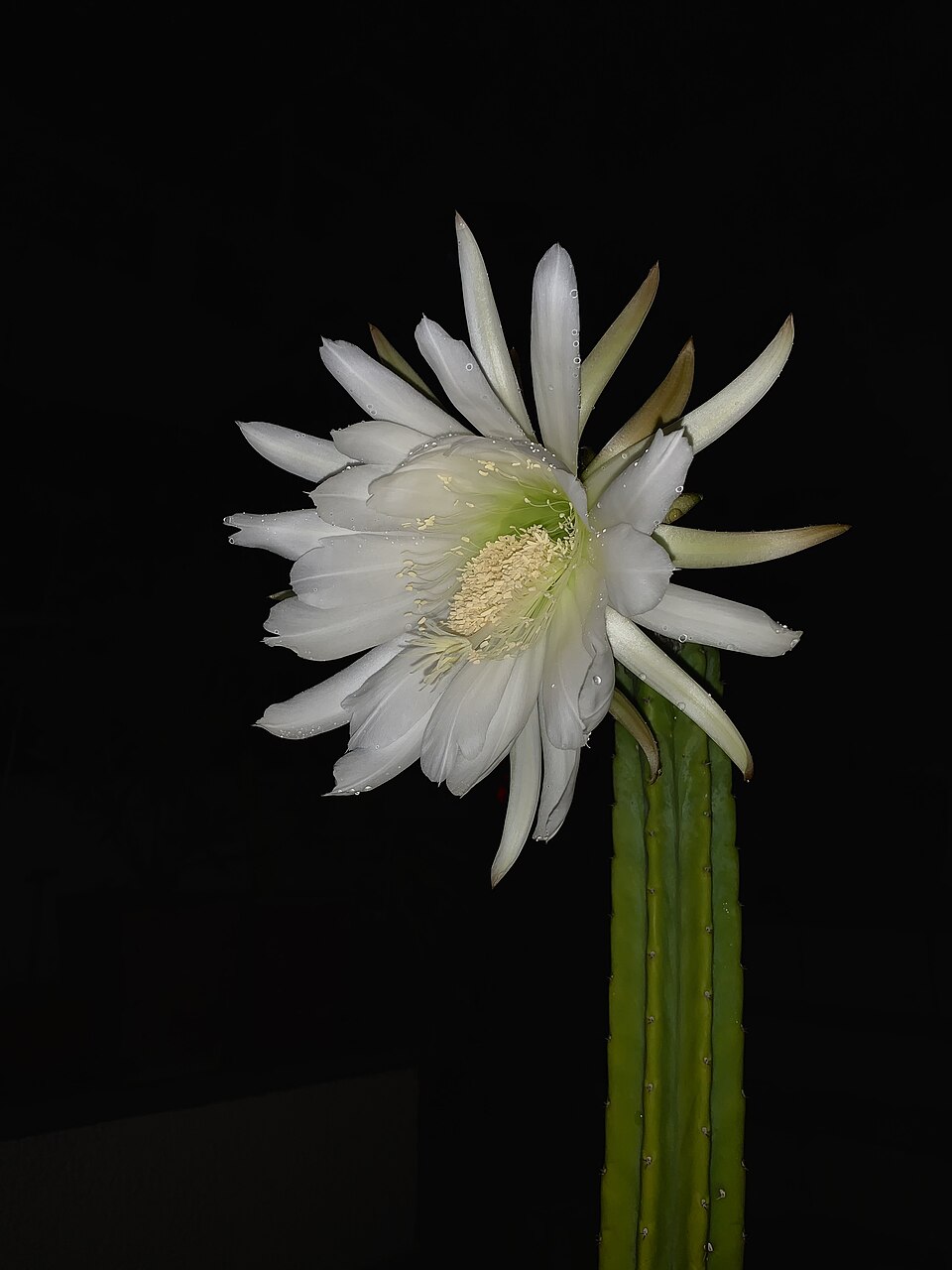
Large, fragrant, white flowers emerge from mature growth, opening at night and pollinated by moths and bats. Fruits are green, fleshy, and contain numerous black seeds. In cultivation, flowering is less common unless plants reach maturity and experience seasonal cues.
Alkaloid Context
In modern scientific literature, San Pedro is discussed for its phenethylamine alkaloids, most notably mescaline, along with related compounds (tyramine derivatives, trace beta-carbolines). Research frames these compounds within ethnobotany, neurochemistry, and cultural anthropology—not approved medical use.
Origin, Ecology, and Andean Cultural History
San Pedro is native to the Andes of Peru, Ecuador, and northern Bolivia, where it grows at elevations of approximately 2,000–3,000 m (6,500–10,000 ft). It thrives in rocky, well-drained soils with strong sun, cool nights, and seasonal rainfall.
Archaeological evidence indicates San Pedro use for at least 2,000–3,000 years, appearing in Chavín-era stone carvings, ceramics, and ritual iconography. The cactus was associated with healing, divination, and spiritual cosmology, often used in communal ceremonies led by trained practitioners.
Spanish colonial records describe continued ceremonial use despite suppression, and San Pedro remains part of traditional Andean practices today, framed as a sacramental and diagnostic plant rather than a recreational substance.
Plant Morphology, Growth Habit, and Reproductive Biology
San Pedro grows as a multi-stemmed clump when mature, producing basal pups after stress or cutting. This vegetative habit allows a single specimen to expand into a broad cluster over time, occupying considerable space in the landscape.
- Flowers are self-incompatible; cross-pollination improves seed set
- Seeds are small, black, and long-lived when kept dry
- Vegetative propagation is common and preserves genetic traits
- Seed propagation increases diversity and variability
Climate Adaptation and Environmental Requirements
San Pedro is best suited to USDA hardiness zones 9–11, though it tolerates brief light frosts when dry. Cool nights and seasonal stress contribute to robust growth and flowering potential.
| Parameter | Optimal Range |
|---|---|
| Temperature | 15–30°C (59–86°F) |
| Cold Tolerance | Short exposures near 0°C (32°F) if dry |
| Sunlight | Full sun to bright filtered light |
| Humidity | Low to moderate |
| Rainfall / Irrigation | Low to moderate; prefers infrequent deep watering |
Soil Preferences and Root Zone Management
Excellent drainage is the single most important soil characteristic for San Pedro cultivation. Root rot is the primary cultivation risk, and overly rich or water-retentive soils reduce vigor and increase disease pressure.
| Parameter | Specification |
|---|---|
| Texture | Gritty, mineral-rich cactus mix (sand, pumice, gravel) |
| pH | 6.0–7.5 |
| Organic Matter | Low to moderate |
Root Rot Prevention
Root rot is the leading cause of San Pedro loss in cultivation. Ensure containers and beds offer rapid drainage, avoid compacted clay substrates, and reduce watering frequency during cool or dormant periods.
Propagation, Establishment, and Growing Systems
Vegetative Propagation (Cuttings)
- Mature stems are segmented and allowed to callus before rooting
- Rooting occurs in warm, dry conditions
- Produces genetically identical plants
Seed Propagation
- Seeds germinate under warm, humid conditions
- Slower initial growth but greater genetic diversity
Common Growing Systems
- In-ground desert or Mediterranean gardens
- Large containers with mineral substrates
- Greenhouses in cooler climates
Growth Cycle, Canopy Management, and Longevity
San Pedro is relatively fast-growing for a cactus, adding 15–30 cm (6–12 in) per year under good conditions. Plants can live multiple decades, forming large clumps over time. Pruning and pup removal are used to shape plants and manage space.
Harvest Timing and Tissue Characteristics
Ethnobotanical literature notes that older, mature tissue contains different alkaloid profiles than young growth, and that environmental stress influences chemistry. Traditional Andean practitioners emphasize plant age, seasonality, and ritual context rather than standardized measures.
Descriptive Context Only
Modern discussion treats these observations descriptively rather than as actionable guidance. The information presented here reflects academic and ethnobotanical documentation, not preparation instructions.
Processing and Preparation Context (Historical & Cultural)
Historically, San Pedro was prepared through slow, communal processes led by specialists, often involving extended ceremonies rather than individual use. Preparation methods varied regionally and seasonally and were embedded in cultural safeguards, fasting practices, and social structure.
Contemporary academic sources describe these methods to document tradition, not to instruct replication.
Psychoactive and Neurochemical Context (Academic Framing)
Mescaline is a phenethylamine alkaloid that interacts primarily with serotonin (5-HT2A) receptors, influencing perception, cognition, and emotional processing. Research describes effects such as altered sensory perception, introspection, and changes in time awareness, alongside physiological effects including nausea and vasoconstriction.
Variability is high due to genetics, environment, and individual sensitivity. Modern literature emphasizes risk awareness and non-standardization.
Legal and Safety Boundaries
Legal status of San Pedro varies by country and jurisdiction, often distinguishing between ornamental cultivation and internal use. Many regions allow ornamental growing while restricting preparation or ingestion.
Important: Legal & Safety Considerations
Safety considerations discussed in the literature include cardiovascular stress, gastrointestinal distress, psychological risk, and unpredictable potency. Academic and horticultural discussion emphasizes ornamental, cultural, and educational contexts. Always consult local regulations before cultivating or handling this species.
| Safety Concern | Description |
|---|---|
| Cardiovascular Stress | Alkaloid compounds may affect heart rate and blood pressure |
| Gastrointestinal Distress | Nausea and digestive discomfort are commonly reported in literature |
| Psychological Risk | Altered perception may produce distressing experiences in susceptible individuals |
| Unpredictable Potency | Alkaloid concentration varies widely by genetics, age, and environment |
Culinary and Practical Use Context
San Pedro has no culinary role. Its modern uses are centered on ornamental, educational, and research contexts.
- Ornamental cactus cultivation
- Ethnobotanical education
- Cultural preservation
- Botanical and chemical research
Ecological and System Integration
In suitable climates, San Pedro functions as a versatile and low-maintenance landscape element. It pairs well with other xerophytic plants and benefits from seasonal dry periods.
- A drought-tolerant landscape plant
- An erosion-resistant perennial
- A low-input ornamental for arid systems
Cultural and Educational Importance
San Pedro is a cornerstone species for understanding the intersection of plant chemistry, spirituality, and law across time. It exemplifies how indigenous knowledge systems, botanical science, and modern regulation interact in complex ways.
- Andean ethnobotany
- Studies of ritual plant use
- Discussions on indigenous knowledge systems
- Ethics of sacred plants and modern regulation
Scientific and Authoritative References
This article is informed by data and conclusions drawn from, but not limited to:
- Schultes & Hofmann, Plants of the Gods
- Rätsch, The Encyclopedia of Psychoactive Plants
- Sharon, Wizard of the Four Winds (Andean cultural context)
- Duke, Handbook of Medicinal Herbs
- EMA & EFSA discussions on phenethylamine alkaloids
- Nichols, Pharmacology & Therapeutics (mescaline receptor studies)
- Torres & Repke, Anadenanthera (comparative alkaloid context)
- USDA & Kew botanical records on Echinopsis spp.
- Dobkin de Rios, Visionary Vine (anthropological framing)
- Labate & Cavnar, Plant Medicines, Healing and Psychedelic Science