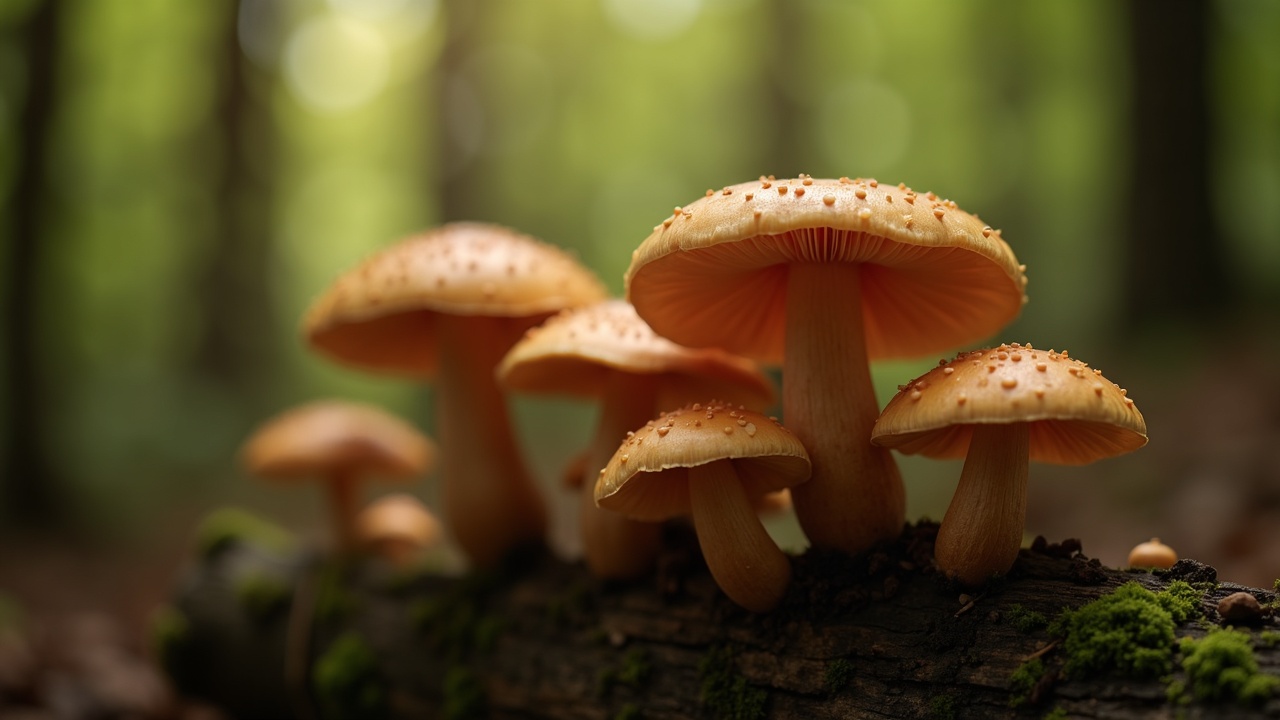
Shiitake (Lentinula edodes) is a wood-decomposing saprophytic fungus native to the warm-temperate forests of East Asia, where it grows naturally on fallen hardwood logs, particularly oaks, chinquapins, and beeches. The name “shiitake” comes from the Japanese words shii (a species of chinquapin oak) and take (mushroom). The brown-capped fruiting bodies, 2–5 inches across with white gills and a slightly curled margin, are among the most recognizable edible mushrooms worldwide.
Shiitake is the most extensively cultivated specialty mushroom globally, with annual production exceeding 10 million metric tons, primarily in China, which accounts for ~90% of world supply. Japan pioneered the cultivation technique around 1000 CE, making shiitake arguably the oldest intentionally cultivated mushroom, predating European button mushroom cultivation by nearly 700 years.
The Log Cultivation Legacy Traditional Japanese shiitake cultivation (genboku saibai) involves cutting fresh oak logs in winter, drilling holes, inserting wooden dowel spawn, and stacking the logs in shaded forest environments for 6–18 months while the mycelium colonizes the wood. This method produces fewer mushrooms than modern indoor cultivation but yields superior flavor, texture, and bioactive compound concentration. In Japan, log-grown shiitake (genboku) commands 3–5x the price of sawdust-block shiitake, and many Japanese chefs consider them a fundamentally different ingredient.
Method 1: Log Cultivation (Outdoor)
Parameter
Details
Log Species
White oak, red oak, sweetgum, ironwood, alder, sugar maple (hardwoods with intact bark)
Log Size
3–8 inches diameter, 36–42 inches long; cut while dormant (winter)
Rest Period
2–4 weeks after cutting before inoculation (allows natural anti-fungal compounds to dissipate)
Inoculation
Drill 5/16" holes in diamond pattern, 6" spacing; insert spawn dowels or sawdust spawn; seal with cheese wax
Colonization
6–18 months in shaded, humid location; stack in lean-to or crib configuration
Fruiting Trigger
Soak logs in cold water for 24 hours (“force fruiting”); natural fruiting occurs after rain in spring/fall
Harvest Window
5–7 days after pins appear; harvest when caps are 70–80% open
Log Lifespan
3–6 years of production depending on log diameter and wood density
The Umami Science Dried shiitake mushrooms are one of the “holy trinity” of umami ingredients (alongside kombu seaweed and katsuobushi bonito flakes) that form the foundation of Japanese dashi stock. The drying process dramatically increases free glutamate and guanylate concentrations through enzymatic breakdown, dried shiitake contain roughly 10x the umami compounds of fresh ones. When combined with the glutamate in kombu, a synergistic effect multiplies perceived umami intensity by up to 8x, a phenomenon that Japanese cooks have exploited for centuries without knowing the underlying chemistry.
The chemistry, grouped The guide's own compound table, drawn as groups rather than listed, so the shape of what this plant carries is visible before any of the names are read. Nothing is added to what the table already says.
Clinical Research
Cancer immunotherapy: Injectable lentinan is approved in Japan as an adjunct therapy for gastric cancer, extending survival when combined with chemotherapy. Multiple Phase II and III trials support this use. Oral lentinan has weaker but measurable immune effects.
Immune enhancement: A 2015 University of Florida RCT showed that consuming 5–10g dried shiitake daily for 4 weeks improved markers of immune function (increased gamma-delta T cells, improved cytokine patterns) in healthy adults.
Cholesterol: Eritadenine significantly reduces serum cholesterol in animal studies. Human studies are limited but supportive of moderate cholesterol-lowering effects.
Vitamin D: UV-exposed shiitake can contain over 1,000 IU vitamin D2 per serving, making them one of the few non-animal dietary sources of significant vitamin D.
Precautions
Shiitake dermatitis: Consuming raw or undercooked shiitake can cause a distinctive flagellate (whip-like) skin rash in ~2% of people, caused by lentinan reacting with the immune system. Thorough cooking eliminates this risk entirely.
Immune conditions: Potent immune modulation may be contraindicated in autoimmune diseases or post-transplant immunosuppression.
Blood thinning: Lentinan may have mild anticoagulant properties; exercise caution with blood-thinning medications.
Always cook thoroughly: Never eat raw shiitake. Cooking denatures the lentinan that causes dermatitis and improves digestibility.
References
Dai et al., Trends in Food Science & Technology (2015), shiitake compounds and health effects review
Cardwell et al., University of Florida (2015), immune function RCT in healthy adults
Oba et al., Hepato-Gastroenterology (2009), lentinan meta-analysis in gastric cancer
Yamasaki et al., Bioscience, Biotechnology, and Biochemistry, eritadenine cholesterol mechanism
Stamets, Growing Gourmet and Medicinal Mushrooms, cultivation reference
Common questions
What is botanical context?
Shiitake ( Lentinula edodes ) is a wood-decomposing saprophytic fungus native to the warm-temperate forests of East Asia, where it grows naturally on fallen hardwood logs, particularly oaks, chinquapins, and beeches. The name “shiitake” comes from the Japanese words shii (a species of chinquapin oak) and take (mushroom). The brown-capped fruiting bodies, 2–5 inches across with white gills and a slightly curled margin, are among the most recognizable edible mushrooms worldwide.
How do I grow shiitake mushroom?
Log Species: White oak, red oak, sweetgum, ironwood, alder, sugar maple (hardwoods with intact bark). Log Size: 3–8 inches diameter, 36–42 inches long; cut while dormant (winter). Rest Period: 2–4 weeks after cutting before inoculation (allows natural anti-fungal compounds to dissipate). Inoculation: Drill 5/16" holes in diamond pattern, 6" spacing; insert spawn dowels or sawdust spawn; seal with cheese wax. Colonization: 6–18 months in shaded, humid location; stack in lean-to or crib configuration.
What is method 2: supplemented sawdust blocks (indoor)?
Substrate: Hardwood sawdust (oak preferred) + wheat bran (10–20%) + gypsum (2%); ~65% moisture. Container: Autoclavable bags with filter patches (5–10 lb blocks). Sterilization: Autoclave at 15 PSI for 2.5 hours; strict sterile technique for inoculation. Colonization: 70–75°F in darkness; 8–12 weeks; block surface turns brown when mature. Browning Phase: Critical: allow 2–4 additional weeks after full colonization for brown popcorn-like surface to develop.
What can I make from shiitake mushroom?
Lentinan: Beta-1,3-glucan with beta-1,6 branches; approved in Japan as adjunct cancer immunotherapy since 1985; stimulates T-cells, NK cells, macrophages. AHCC (Active Hexose Correlated Compound): Alpha-glucan-rich extract produced from shiitake mycelium; widely used in Japanese integrative oncology. Eritadenine: Unique nucleoside; lowers cholesterol in animal and human studies by altering phospholipid metabolism. Lentinacin (Lenthionine): Cyclic polysulfide; responsible for the distinctive shiitake aroma; forms when dried shiitake are rehydrated.
What is clinical research?
Cancer immunotherapy: Injectable lentinan is approved in Japan as an adjunct therapy for gastric cancer, extending survival when combined with chemotherapy. Multiple Phase II and III trials support this use. Oral lentinan has weaker but measurable immune effects. Immune enhancement: A 2015 University of Florida RCT showed that consuming 5–10g dried shiitake daily for 4 weeks improved markers of immune function (increased gamma-delta T cells, improved cytokine patterns) in healthy adults. Cholesterol: Eritadenine significantly reduces serum cholesterol in animal studies.