guides
Sideoats Grama (Bouteloua curtipendula): Comprehensive Cultivation, Forage, and Soil-Restoration Guide
Complete guide to sideoats grama cultivation covering Bouteloua curtipendula, climate adaptation, seeding systems, forage quality, grazing management.
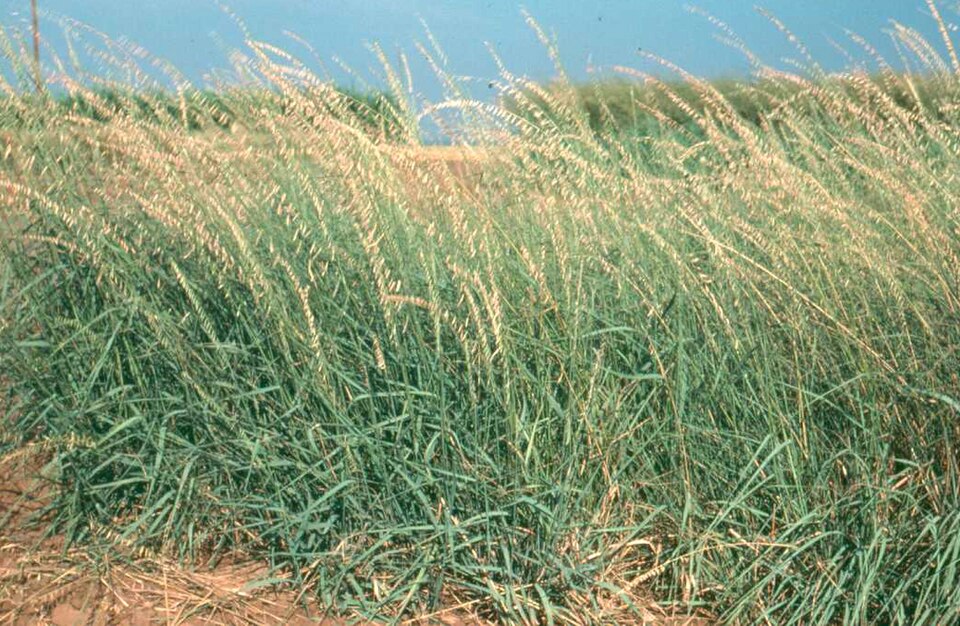
Botanical Description and Modern Scientific Context
Sideoats grama, botanically Bouteloua curtipendula, is a warm-season, perennial C4 bunchgrass native to North America and instantly recognizable by its distinctive, oat-like spikelets that hang along one side of the flowering stem. Plants typically reach 1.5–3 feet (45–90 cm) tall, forming tight, upright clumps with narrow gray-green leaves and a refined, architectural habit.
As a C4 grass, sideoats grama exhibits high photosynthetic efficiency under heat and drought, strong nitrogen-use efficiency, and resilience on low-fertility soils. In rangeland science and restoration ecology, it is valued as a mid-successional to climax grass that balances forage utility with long-term persistence.
Structurally, the species has moderate lignin, relatively low silica compared to some prairie grasses, and a fibrous root system that supports both grazing and soil stabilization without the aggressive spread of rhizomatous species.
C4 Photosynthetic Advantage
C4 grasses like sideoats grama concentrate carbon dioxide around the enzyme RuBisCO, allowing them to photosynthesize more efficiently under high temperatures, intense sunlight, and water-limited conditions—traits that make them exceptionally well suited to Texas and the southern Great Plains.
Origin, Ecology, and Grassland History
Sideoats grama is native to most of the central and western United States, extending into Mexico and parts of Canada. It is the state grass of Texas, reflecting its ecological importance across limestone hills, prairies, open woodlands, and semi-arid rangelands.
Historically, it evolved under periodic fire, drought, and grazing by bison and other herbivores, developing a growth form that tolerates defoliation while maintaining basal crown protection.
In modern systems, it is a foundational species in native pasture mixes, prairie restorations, erosion control projects, and wildlife plantings.
Texas State Grass
Designated as the official state grass of Texas, sideoats grama represents the deep connection between native grasslands and the ecological and agricultural identity of the state. Its presence is an indicator of healthy, well-managed rangeland.
Growth Habit, Root Architecture, and Longevity
Sideoats grama is a true bunchgrass, forming discrete clumps rather than spreading laterally. This growth habit makes it well suited for mixed plantings where interspecies diversity is desired.
Root systems typically extend 4–7 feet (1.2–2.1 m) deep, allowing:
- Efficient water extraction from deep soil layers
- Strong anchorage on slopes
- Improved soil aggregation and infiltration
- Moderate but stable soil carbon accumulation
Individual plants commonly persist 20–30+ years under appropriate management, making sideoats grama one of the more long-lived native grasses in mixed prairie systems.
Climate Adaptation and Environmental Requirements
Sideoats grama performs reliably across USDA hardiness zones 4–10, making it one of the most broadly adapted native warm-season grasses. Growth initiates later in spring than cool-season grasses, reducing early competition.
| Parameter | Optimal Range |
|---|---|
| Temperature (Active Growth) | 22–35°C (72–95°F) |
| Cold Tolerance | High; dormant crowns withstand severe winters |
| Sunlight | Full sun preferred |
| Humidity | Low to moderate |
| Water Requirement | Low to moderate; drought tolerant once established |
| USDA Hardiness Zones | 4–10 |
Soil Preferences and Fertility Dynamics
Sideoats grama excels on well-drained, low-to-moderate fertility soils, including calcareous and rocky sites. It demonstrates excellent alkaline tolerance, performing well where other grasses may struggle.
| Parameter | Specification |
|---|---|
| Soil Texture | Sandy loam, loam, gravelly or shallow soils |
| Soil pH | 6.0–8.0 (excellent alkaline tolerance) |
| Drainage | Good to excellent |
Fertility Response
- Responds modestly to nitrogen but does not require it
- Excess nitrogen favors competing grasses and reduces stand longevity
- Performs best where fertility is restrained
Low-Input Fertility Strategy
Unlike many cultivated forages, sideoats grama thrives under minimal fertilization. Excessive nitrogen inputs can shift competitive dynamics in favor of aggressive grasses and weeds, undermining the stand over time. A low-input approach aligns with both the species' biology and regenerative land management principles.
Propagation, Establishment, and Seeding Systems
Sideoats grama is established from seed. Seeds are lightweight with short awns, exhibit moderate dormancy depending on ecotype, and require firm seed-to-soil contact for successful germination.
| Parameter | Specification |
|---|---|
| Planting Depth | Surface to ¼ inch (≤0.6 cm) |
| Seeding Rate | 5–8 lb pure live seed/acre (drilled) |
| Soil Temperature | ≥15°C (59°F) |
| Establishment Speed | Moderate; faster than little bluestem, slower than annuals |
Common Growing Systems
- Native and improved rangelands
- Mixed native pastures
- Prairie restoration
- Roadside and slope stabilization
- Silvopasture understories
Growth Cycle, Biomass Production, and Stand Development
Sideoats grama follows a predictable multi-year development trajectory as stands mature and stabilize.
| Stage | Description |
|---|---|
| Year 1 | Establishment with moderate top growth |
| Year 2 | Strong clump expansion |
| Year 3+ | Stable, productive stands |
Typical dry matter yields range from 2–4 tons/acre/year, depending on rainfall and soil conditions. Biomass is moderate, but forage quality remains usable longer into the season than many native grasses.
Forage Quality and Livestock Use
Sideoats grama is regarded as one of the higher-quality native warm-season grasses, maintaining palatability later into summer compared to many prairie grasses.
| Parameter | Value |
|---|---|
| Crude Protein (Early Season) | ~12–16% |
| Crude Protein (At Maturity) | ~8% |
| Digestibility | Moderate to good when vegetative |
| Palatability | High for cattle, sheep, goats, and wildlife |
Best Livestock Use
- Cow–calf systems
- Native rangeland grazing
- Mixed grass pastures
- Deferred-rotation grazing systems
Grazing Management and Persistence
Proper grazing management is essential for maintaining healthy, productive sideoats grama stands over the long term. Overgrazing weakens crowns and reduces longevity, though sideoats grama tolerates grazing better than many bunchgrasses.
Key Management Principles
- Begin grazing when plants reach 8–10 inches (20–25 cm)
- Maintain a residual height of 4 inches (10 cm)
- Rotate grazing to allow full regrowth
- Rest during drought or extended heat stress
Grazing Height Rule
The “take half, leave half” principle applies well to sideoats grama. Grazing down to a 4-inch residual protects the basal crown, preserves root energy reserves, and ensures rapid regrowth when moisture returns.
Weed Suppression and Competitive Behavior
Once established, sideoats grama demonstrates effective competitive behavior against invasive species, particularly on the dry, low-fertility sites where it is best adapted.
- Competes effectively with annual weeds
- Resists invasion on dry, low-fertility sites
- Leaves limited bare ground between crowns
Early weed control during establishment remains important, as seedlings are not competitive against aggressive annuals during the first growing season.
Fire Ecology and Biomass Management
Fire plays a beneficial role in maintaining sideoats grama stands and the broader prairie ecosystem. Prescribed burns every 3–5 years are common in native systems.
- Removes accumulated litter
- Stimulates uniform regrowth
- Improves forage quality temporarily
- Suppresses woody encroachment
Fire and Prairie Health
Sideoats grama evolved under a fire-adapted regime. Periodic burning mimics the natural disturbance patterns that shaped the Great Plains, recycling nutrients, reducing thatch buildup, and favoring warm-season grasses over cool-season competitors and invading woody species.
Processing, Harvesting, and Non-Forage Uses
Hay and Biomass
- Can be cut for hay when young
- More commonly grazed in place
- Mature material suitable for mulch, wildlife cover, and soil surface protection
Soil and Water Conservation
The dense clumps and fibrous root system of sideoats grama provide substantial soil and water conservation benefits:
- Reduce erosion on slopes and exposed soils
- Stabilize slopes and embankments
- Improve water infiltration and reduce runoff
Wildlife Habitat and Ecological Value
Sideoats grama is one of the most wildlife-compatible forage grasses in mixed native plantings, providing critical structural and nutritional resources across multiple trophic levels.
- Nesting cover for ground-nesting birds
- Seed for songbirds
- Forage for deer and pronghorn
- Structural diversity in prairie systems
Carbon Sequestration and Soil Health
Sideoats grama contributes meaningfully to soil health and long-term carbon storage through its deep, fibrous root system.
- Deep root turnover provides continuous organic matter inputs
- Stable organic matter inputs build lasting soil carbon reserves
- Improved soil aggregation enhances water-holding capacity
Carbon accumulation is slower than tall biomass grasses but highly stable, reflecting the species' emphasis on below-ground investment over rapid above-ground production.
Seed Production and Genetic Considerations
Seed matures mid- to late summer, and timing of harvest is critical for maximizing viability and germination rates.
- Local ecotypes outperform distant sources in establishment and persistence
- Genetic diversity improves drought and disease resilience
- Source-identified seed from regional collections is preferred for restoration projects
Local Ecotype Advantage
When sourcing sideoats grama seed, locally adapted ecotypes consistently outperform commercially bred or geographically distant varieties. Local seed carries genetic adaptations to regional soils, rainfall patterns, and temperature extremes that improve survival and long-term stand performance.
System Integration and Regenerative Use
Sideoats grama excels in a wide range of regenerative and production systems, serving as both a forage resource and an ecological anchor species.
Primary Roles
- A core species in native pastures
- A forage–conservation bridge grass
- A soil-stabilizing perennial for degraded land
- A long-term, low-input grazing component
Companion Species
Sideoats grama pairs well with a range of complementary native species:
- Little bluestem (Schizachyrium scoparium)
- Buffalograss (Bouteloua dactyloides)
- Native legumes and forbs
- Switchgrass (Panicum virgatum) in deeper soils
Safety, Use Boundaries, and Considerations
- Not used as a human food crop
- Mature forage is fibrous and should be supplemented with higher-protein feeds if used alone
- Performs poorly under continuous heavy grazing
Cultural and Educational Importance
Sideoats grama is a keystone species for teaching native rangeland management, prairie resilience, grazing–fire interactions, and low-input forage systems.
Its balance of forage value, persistence, and ecological function makes it a model species for regenerative land use—demonstrating that productive agriculture and ecological health are not mutually exclusive goals.
Scientific and Authoritative References
This article is informed by data and conclusions drawn from, but not limited to:
- USDA NRCS Plant Guide: Bouteloua curtipendula
- Weaver, North American Prairie
- FAO Grassland and Rangeland Manuals
- Sanderson et al., Agronomy Journal
- Casler et al., Crop Science
- Knapp et al., BioScience
- Texas A&M AgriLife Native Rangeland Resources
- Packard & Mutel, The Tallgrass Restoration Handbook
- Liebig et al., Soil Science Society of America Journal
- Missouri Botanical Garden & Lady Bird Johnson Wildflower Center Profiles