garden-design
Smokehouse Design and Construction
A comprehensive guide covering ---.
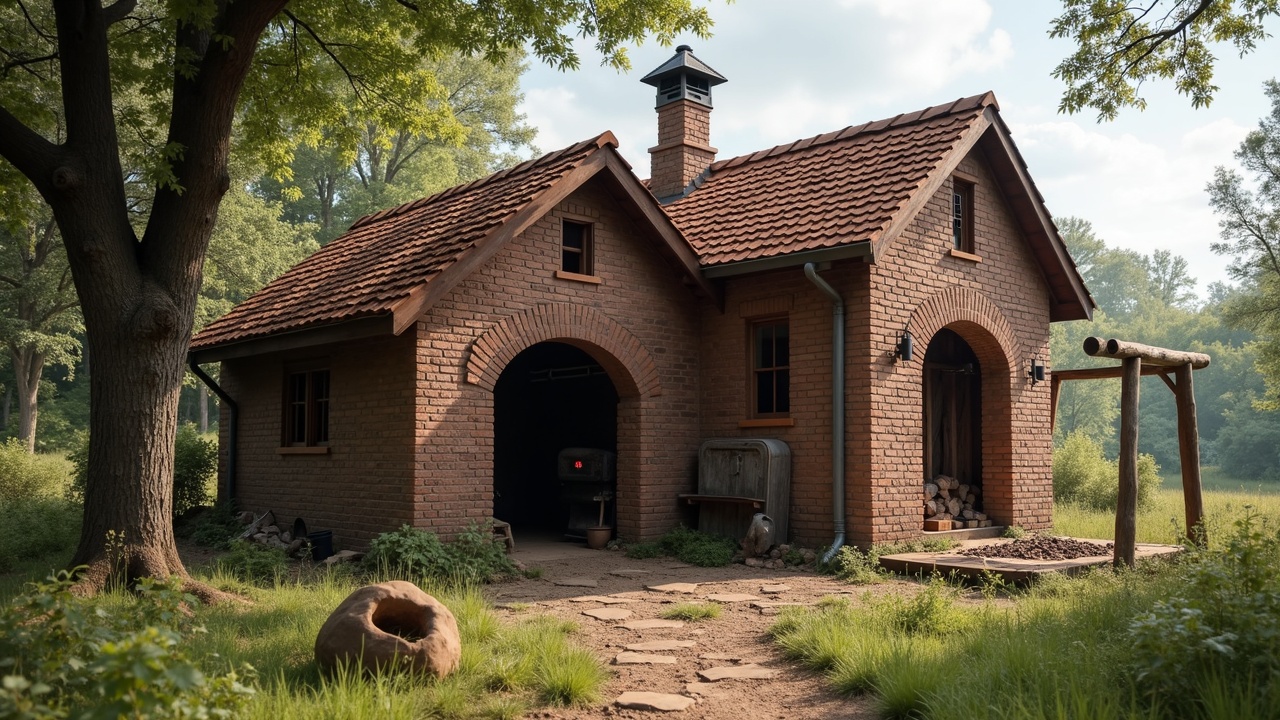
1. Introduction — What Smoke Actually Does to Meat
Smoke is not a flavoring agent that happens to preserve. It is a chemical preservation system that happens to taste good. The distinction matters because it determines how you design, build, and operate a smokehouse.
Wood combustion at 570–750°F produces an aerosol of over 200 identified chemical compounds (Maga, 1987). Three categories do the preservation work:
Phenols — guaiacol, syringol, cresol, and related compounds — are the primary antimicrobials. They are bacteriostatic at surface concentrations as low as 10 ppm (Sunen et al., 2001), meaning they inhibit bacterial reproduction without necessarily killing existing organisms. Hardwoods produce higher phenol concentrations than softwoods because their lignin contains more syringyl units — this is the chemical reason hickory outperforms pine, not just tradition.
Carbonyls — formaldehyde, acetaldehyde, furfural, and other aldehydes and ketones — react with amino acids on the meat surface through Maillard reactions, producing the characteristic brown-mahogany color of smoked product (Toth & Potthast, 1984). These reactions also create a surface "skin" called the pellicle that slows moisture loss and provides a matrix for phenol deposition.
Organic acids — acetic acid, formic acid, propionic acid — lower the surface pH of the meat to 5.0–5.5, which inhibits the growth of Clostridium botulinum (optimal growth pH 6.0–7.0) and most spoilage bacteria. Combined with the salt from curing, this pH shift is a critical part of the preservation equation.
These three compound classes work synergistically. Remove any one leg and the preservation system weakens. This is why "liquid smoke" (a phenol extract) applied to uncured meat does not produce shelf-stable product — it delivers phenols without the acid and carbonyl contributions of actual smoke exposure.
Cold smoking versus hot smoking. These are separate processes with separate chemistry, separate equipment requirements, and separate safety profiles. Conflating them is the single most common error in smokehouse design.
Cold smoking exposes cured meat to smoke at temperatures below 90°F — typically 70–85°F at the meat surface. At these temperatures, the meat does not cook. Surface proteins remain intact, allowing maximum absorption of smoke compounds over 12–72 hours of exposure. The meat must be pre-cured with salt (minimum 3% salt phase) and sodium nitrite (typically 156 ppm) before cold smoking, because the temperature range of 40–90°F is ideal for bacterial growth. Without proper curing, cold smoking creates perfect conditions for Clostridium botulinum — an anaerobic environment at incubation temperature with available moisture.
Hot smoking exposes meat to smoke at 225–275°F, cooking it to safe internal temperatures (145°F minimum for whole muscle, 165°F for poultry per USDA FSIS guidelines) while simultaneously depositing smoke compounds. Hot smoking can be applied to uncured meat because thermal destruction of pathogens replaces the antimicrobial role of the cure. Total smoking time is typically 4–12 hours depending on product thickness and target temperature.
Your smokehouse design must serve the process you intend to run. A hot smoker built for cold smoking will kill someone. A cold smoker used for hot smoking will produce undercooked meat. Build for your purpose.
2. Design Types
Four common designs cover the practical range from temporary to permanent, budget to investment. Each has legitimate use cases. None is universally "best."
Converted Refrigerator Smoker
An old household refrigerator with the compressor, coolant lines, and plastic interior liners removed. A single-burner electric hot plate sits on the bottom with a cast-iron pan of wood chips on top. Racks at multiple heights hold the product.
Advantages: Cheap ($50–100 if you own a hot plate), insulated, airtight door seal, ready-made racks, easy to relocate. Limitations: Cannot cold smoke (hot plate keeps interior above 100°F), limited airflow control, enamel interior may off-gas at high temperatures. Strip all plastic and rubber components — burning plastic produces hydrogen cyanide and hydrochloric acid. Use only a refrigerator with a porcelain-enamel steel interior, not plastic-lined models.
Effective for hot smoking small batches of fish, jerky, sausage, and cheese.
Plywood Box Smoker
A simple rectangular box built from 3/4-inch untreated plywood, typically 3 feet wide by 3 feet deep by 6 feet tall. A firebox or hot plate sits at the bottom, product hangs from dowel rods or sits on wire racks above. A stovepipe chimney exits the top.
Advantages: Cheap ($100–200 in materials), fast to build (one afternoon), customizable dimensions, portable. Limitations: Fire hazard if used for hot smoking above 250°F, plywood delaminates after 2–3 seasons of use, difficult to seal against air leaks, cannot cold smoke without an external firebox addition.
Acceptable for low-temperature hot smoking (under 250°F) and as a temporary structure while building a permanent unit.
Permanent Masonry Smokehouse
A structure built from concrete block, brick, or stone with a firebrick-lined firebox chamber. Interior walls are unfinished masonry — no paint, no sealant, no mortar coatings. Dimensions typically 4x4 feet interior by 7 feet tall with a reinforced concrete or stone slab roof.
Advantages: Lasts indefinitely, fireproof, excellent thermal mass (stabilizes temperature), can serve both cold and hot smoking with proper firebox design, the only option for serious year-round production. Limitations: Permanent installation, requires foundation, $800–1500 in materials, 3–5 days to build.
This is the design covered in detail in Section 6.
Offset Firebox Smoker
A horizontal cooking chamber (often a repurposed steel tank or fabricated from plate steel) with a smaller firebox attached at one end and slightly lower. Heat and smoke flow from firebox through the cooking chamber and exit a chimney stack at the opposite end.
Advantages: Excellent for hot smoking, precise temperature control through firebox management, high capacity, visible fire management. Limitations: Cannot cold smoke (firebox too close to product), steel construction requires welding skills and equipment, prone to rust without maintenance, difficult to achieve uniform temperature across the full cooking chamber length.
The offset firebox is a cooker, not a traditional smokehouse. It excels at barbecue-style hot smoking (225–275°F) but is not designed for long-duration cold smoking or preservation-grade smoke exposure.
3. Materials — What Goes Into a Smokehouse and What Does Not
Structural Materials
Concrete masonry units (CMU): Standard 8x8x16-inch blocks. Use standard weight, not lightweight — thermal mass matters for temperature stability. Lay with Type S mortar (high-strength, weather-resistant).
Firebrick: Required for the firebox floor and walls up to 24 inches above the fire. Standard red brick cracks under direct flame contact. Firebrick (also called refractory brick) is rated for sustained temperatures above 2000°F. Lay firebrick with refractory morite or firecite, not standard mortar — portland cement morite fails above 500°F.
Natural stone: Fieldstone, limestone, or sandstone work for the exterior shell. Do not use natural stone for the firebox liner — most natural stone contains trapped moisture that causes spalling (explosive fracture) when heated rapidly.
Concrete slab foundation: 4-inch minimum thickness, reinforced with 6x6 W2.9/W2.9 welded wire mesh. Pour on a 4-inch compacted gravel base. Extend the slab 12 inches beyond the smokehouse footprint in all directions.
Materials to Avoid Completely
Pressure-treated lumber. Contains copper, chromium, and arsenic (CCA) or copper and quaternary ammonium compounds (ACQ). Both produce toxic fumes when heated. Treated wood is never acceptable anywhere in a smokehouse structure — not for framing, not for shelving, not for the door.
Galvanized steel. Zinc coating vaporizes at 787°F and produces zinc oxide fumes that cause metal fume fever — flu-like symptoms including fever, chills, and muscle pain. Use black iron pipe for smoke stacks and dampers, never galvanized.
Painted or coated surfaces. No paint, stain, varnish, or sealant on any interior surface. Many coatings release volatile organic compounds when heated. Interior masonry stays bare.
Softwood construction near the firebox. Pine, spruce, fir, and cedar ignite at lower temperatures than hardwood and produce flammable resin vapors. Use hardwood or masonry exclusively within 24 inches of the fire.
Ventilation Stack
Every smokehouse needs a chimney or vent stack at the top to create draft and allow smoke to exit after passing over the product. The stack must be:
- Black iron pipe or stovepipe, minimum 6-inch diameter for structures under 50 square feet.
- Equipped with a damper — a butterfly valve or sliding plate that controls the volume of air exiting the stack. Closing the damper reduces draft, slows the fire, and increases smoke density. Opening it increases draft, raises temperature, and thins smoke.
- Minimum height of 2 feet above the roofline to ensure adequate draft. Taller stacks produce stronger draft — add height if your fire draws poorly.
- Capped with a rain cap or spark arrestor to prevent rain entry, bird nesting, and ember escape.
An intake vent at the base of the structure — opposite the chimney — is equally important. Without intake air, the fire suffocates and produces thick, acrid, creosote-laden smoke. A 4x8-inch adjustable intake vent with a sliding cover gives sufficient control for a 4x4-foot smokehouse.
4. Cold Smoke Design — External Firebox and Smoke Tunnel
Cold smoking demands that smoke reach the product at or below 90°F. Since wood combustion occurs at 570°F+, the smoke must travel far enough to cool before entering the smoking chamber. This is the fundamental design constraint.
External Firebox
The firebox is a separate structure located 6–12 feet from the smokehouse, connected by an underground or above-grade tunnel. Build it from CMU or firebrick, minimum 2x2 feet interior, with a grated floor for ash management and a hinged steel door for fuel loading.
Position the firebox at a lower elevation than the smoking chamber floor — even 6 inches lower is sufficient. Heat rises. Smoke with any residual warmth will naturally draft uphill from firebox through tunnel into the chamber and out the chimney. This passive draft eliminates the need for fans or blowers.
Smoke Tunnel
The tunnel is the cooling mechanism. Length directly determines the temperature drop.
- 6-foot tunnel: Adequate in cool weather (ambient below 60°F). Smoke arrives at approximately 85–95°F.
- 8-foot tunnel: Functional in moderate weather (ambient 60–80°F). Smoke arrives at approximately 75–90°F.
- 10–12-foot tunnel: Required for hot-weather cold smoking (ambient above 80°F). Smoke arrives at approximately 70–85°F.
Construction options:
- Underground trench: Dig a trench 12 inches wide by 12 inches deep. Line with CMU blocks or firebrick laid flat. Cover with sheet metal or concrete pavers. Backfill over the cover. The underground path uses earth's thermal mass to cool the smoke — most effective in moderate climates.
- Above-grade pipe: Use 8–10-inch diameter black iron stovepipe or unlined terracotta flue tile laid on grade. Above-grade tunnels cool less efficiently than buried ones — add 50% to the tunnel length if building above grade.
- CMU block channel: Build a low CMU wall channel roofed with flat steel or stone. Functional, durable, and easy to clean. Most expensive option.
Temperature Control
Mount a dial thermometer at the smoke inlet (where the tunnel enters the smoking chamber) and another at the highest product rack. If inlet temperature exceeds 90°F:
- Reduce fire size — smaller fire, fewer coals, less heat.
- Open the firebox door slightly to reduce smoke density and lower combustion temperature.
- In extreme heat, place a pan of ice in the tunnel midpoint to cool the smoke stream.
Cold smoking is a weather-dependent operation. The best results come in fall and spring when ambient temperatures are 40–60°F. Summer cold smoking in climates above 90°F ambient is impractical without mechanical refrigeration in the tunnel — at that point, you are engineering around the climate rather than working with it.
5. Hot Smoke Design — Integrated Firebox
Hot smoking is simpler to build for because the firebox can sit directly below or adjacent to the smoking chamber. No tunnel is required — the heat is the point.
Integrated Firebox Configuration
The firebox occupies the bottom 18–24 inches of the smoking chamber, separated from the product zone by a steel baffle plate or a grated shelf. The baffle disperses heat and prevents direct flame contact with the product, which causes case hardening — a condition where the outer surface dries and seals before the interior reaches safe temperature, trapping moisture and bacteria inside.
A steel baffle plate (1/4-inch minimum thickness, mild steel or stainless) mounted 18 inches above the fire, with 2-inch gaps at each side for smoke passage, distributes heat evenly across the chamber cross-section.
Temperature Zones in a Hot Smoker
Vertical temperature gradient is unavoidable. The bottom rack nearest the fire will be 30–50°F hotter than the top rack. Manage this by:
- Rotating product from top to bottom racks halfway through the smoking cycle.
- Using the temperature at the coldest point (top rack) as your reference — if the top rack is at 225°F, the bottom rack is at 255–275°F.
- Mounting thermometers at both the lowest and highest product positions.
Damper Management
Two dampers control a hot smoker: the intake vent (base) and the exhaust stack (top).
| Condition | Intake | Exhaust | Result |
|---|---|---|---|
| Temperature too low | Open wide | Open 3/4 | More oxygen, hotter fire, good draft |
| Temperature too high | Close to 1/4 | Open full | Less oxygen, fire slows, heat exits |
| Thin blue smoke desired | Open 1/2 | Open 1/2 | Moderate fire, clean combustion |
| Dense white smoke (undesirable) | Open wide | Open wide | Increase airflow to complete combustion |
Dense white smoke indicates incomplete combustion — heavy tar compounds, creosote precursors, and bitter-tasting volatiles. The goal is thin blue smoke or nearly invisible smoke. If you can't see through the smoke, there is too much of it.
Target Temperatures by Product
| Product | Chamber Temperature | Internal Temp (Minimum) | Approximate Time |
|---|---|---|---|
| Pork shoulder | 225–250°F | 195–205°F (pulled) | 12–16 hours |
| Brisket | 225–250°F | 195–205°F | 10–14 hours |
| Whole chicken | 250–275°F | 165°F (breast) | 3–4 hours |
| Pork ribs | 225–250°F | 190–200°F | 5–6 hours |
| Salmon fillet | 200–225°F | 145°F | 2–3 hours |
| Sausage links | 225°F | 160°F | 2–3 hours |
| Jerky (strips) | 160–180°F | 160°F | 4–6 hours |
| Cheese (cold) | 70–85°F | N/A | 2–4 hours |
6. Construction Steps — Permanent Masonry Smokehouse
This section covers a 4x4-foot interior, 7-foot-tall masonry smokehouse with an external firebox for cold smoking capability and an integrated grate position for hot smoking. Total materials cost: $800–1500.
Materials List
- 200 standard CMU blocks (8x8x16-inch)
- 40 firebrick for firebox lining
- 25 bags Type S mortar mix
- 1 bag refractory mortar (for firebrick)
- 6-inch black iron stovepipe, 4 feet + rain cap
- 1 butterfly damper (6-inch)
- Steel baffle plate: 46x46 inches, 1/4-inch mild steel
- Steel door frame and door (or build from 1/4-inch plate + piano hinge)
- 4 steel angle iron rack supports (1.5x1.5-inch, 48-inch lengths)
- Stainless steel or chrome-plated wire racks (4 units)
- 8-inch diameter stovepipe or terracotta tile for smoke tunnel, 8–10 feet
- Dial thermometers with 6-inch stems (3 units)
- Welded wire mesh for slab reinforcement
- Concrete, gravel, and rebar for foundation
Step 1: Foundation
Excavate a 6x6-foot area to 8 inches depth. Compact the subgrade. Lay 4 inches of compacted gravel. Place welded wire mesh on 2-inch chairs. Pour a 4-inch concrete slab. Level and float. The slab extends 12 inches beyond the smokehouse walls on all sides, providing a clean working apron and preventing water from pooling against the base.
If building an external firebox for cold smoking, pour a separate 3x3-foot slab for the firebox at the same time, positioned 8–10 feet from the smokehouse slab and 6–8 inches lower in elevation.
Allow 48 hours minimum cure time before building on the slab.
Step 2: Smoke Tunnel (Cold Smoke Capability)
Dig a trench 12 inches wide by 12 inches deep connecting the firebox slab to the smokehouse slab. Line with CMU half-blocks laid flat on the sides and bottom, creating a rectangular channel approximately 8x8 inches interior. Cover with flat steel plate or concrete pavers. Backfill with soil and compact.
At the smokehouse end, the tunnel enters through the base of the wall — leave a block-sized opening in the first course. At the firebox end, the tunnel connects to the firebox interior through a similar opening.
Step 3: First Course and Door Frame
Lay the first course of CMU blocks in a 4x4-foot square (exterior dimension approximately 4 feet 8 inches including block width). Set the steel door frame into the front wall during the first course — do not try to install it after the walls are up. The door opening should be 24–30 inches wide and 60–66 inches tall (framed through courses 1–8).
Use a level on every course. CMU walls that lean become CMU walls that fall.
Step 4: Wall Construction
Build the walls up 10 courses (approximately 80 inches or 6 feet 8 inches). Standard running bond pattern — each course offset by half a block from the one below it. Fill the block cores with mortar every third course for structural reinforcement, or fill all cores if your area experiences high winds or seismic activity.
Install four steel angle-iron rack supports embedded in the mortar joints at courses 4, 5, 7, and 8 (approximately 32, 40, 56, and 64 inches above the floor). These support the wire racks where product sits or hangs.
At the top of the back wall, leave a block opening for the chimney stack connection.
Step 5: Firebox Area (Hot Smoking)
For hot smoking capability, the bottom 24 inches of the smokehouse interior needs a fire-safe zone. Line the interior floor and the first three courses of interior wall with firebrick, laid flat against the CMU with refractory mortar. This protects the CMU from direct heat during hot-smoke operations when you build a fire on the floor of the smokehouse itself.
Install a steel grate (fireplace grate works well) at floor level for the fire, and mount the steel baffle plate on supports at 18 inches above the grate. The baffle disperses heat and prevents direct radiation from reaching the lowest product rack.
Step 6: Roof
Options in order of durability:
- Poured concrete slab: Build a temporary plywood form across the top course. Lay rebar in a grid on 6-inch centers. Pour 3 inches of concrete. Strip forms after 48 hours. Most durable — this roof will outlast everything else on the property.
- Steel plate: Weld or bolt a 1/4-inch steel plate across the top course. Seal edges with high-temperature silicone.
- Stone slab: Lay flat stone slabs across the top course, mortared in place.
Leave the chimney opening clear during roof construction.
Step 7: Chimney and Damper
Set the 6-inch black iron chimney pipe into the opening at the top rear of the structure. Seal around the pipe with refractory mortar. Install the butterfly damper 12 inches above the roofline for easy access. Add the rain cap at the top.
The chimney should extend minimum 24 inches above the highest point of the roof.
Step 8: Door
A solid-core wood door (hardwood only — oak, maple, or similar) or a fabricated steel door. The door must seal reasonably well — it does not need to be airtight, but gaps larger than 1/4 inch will cause uncontrolled draft and uneven smoke distribution. A simple latch or barrel bolt holds it closed.
Do not use a glass window in the door. Tempered glass can handle the temperature, but you do not need to see the product during smoking — opening the door to check is preferable to creating a permanent thermal weak point.
Step 9: Cure the Smokehouse
Before using it for food, build three consecutive small fires in the smokehouse, each burning for 4–6 hours. This cures the mortar (driving out residual moisture that would otherwise steam and crack under operating temperature) and seasons the interior walls. The first fire should be small — barely enough to produce visible smoke. Each subsequent fire can be larger.
After three cure fires, the interior walls will have a light soot coating. This is correct and desirable. Do not clean it off.
7. Wood Selection — Flavor Profiles and Safety
Wood species selection is the primary flavor variable in smoking. The smoke compound profile varies significantly by species because lignin composition, extractive content, and combustion temperature differ across wood types.
Recommended Woods
Hickory. The benchmark American smoking wood. Strong, assertive smoke flavor with high phenol content. Dominant flavor compounds: guaiacol and 4-methylguaiacol. Best with red meats, pork, and game. Caution: overexposure produces bitter, acrid flavor — use shorter smoke times or blend with a milder wood for extended smokes.
Apple. Mild, slightly sweet smoke. Lower phenol concentration than hickory. Excellent with poultry, pork, and fish. Fruit woods generally burn cooler and slower than hardwoods, producing lighter smoke. Well-suited to cold smoking.
Cherry. Moderate intensity, slightly sweet with a distinct reddish color contribution to the meat surface. Good all-purpose wood that blends well with stronger species. The color effect comes from higher anthocyanin content in the bark — leave bark on for maximum color.
Mesquite. The strongest common smoking wood. Very high lignin content produces intense, earthy smoke with pronounced guaiacol and syringol levels. Burns extremely hot. Best used in small quantities, blended with milder wood, or for short-duration high-heat grilling. Extended mesquite smoke at low temperatures tends toward bitterness.
Oak (white or red). Medium intensity, consistent, and versatile. The most commonly used commercial smoking wood worldwide. White oak produces a cleaner, lighter smoke than red oak. Whiskey barrel staves (white oak, previously saturated with bourbon) produce an exceptional smoke with vanilla and caramel undertones from the residual whiskey compounds.
Pecan. Closely related to hickory (both are Carya species) but milder and slightly nuttier. Excellent substitute when hickory is too aggressive.
Maple. Mild, slightly sweet. Good with poultry and pork. Sugar maple produces a subtly sweeter smoke than red maple.
Woods to Never Use
Pine, spruce, fir, cedar, and all other resinous softwoods. High resin content produces thick, sooty smoke loaded with terpenes and creosote precursors. The resulting deposits on food are bitter, potentially toxic (high PAH content), and leave an acrid resinous taste. The only exception: cedar planks used as a cooking surface in direct-heat grilling are a distinct technique — the wood smolders rather than combusting — and do not apply to smokehouse use.
Treated, painted, stained, or composite wood. Produces toxic fumes including arsenic, chromium, formaldehyde, and various volatile organics. No exceptions.
Plywood, particleboard, MDF. Glue binders (urea-formaldehyde, phenol-formaldehyde) produce toxic combustion products.
Green (unseasoned) wood. Excessive moisture content (above 20%) produces steam, drops combustion temperature, and increases creosote formation. All smoking wood should be seasoned 6–12 months to a moisture content of 15–20%. Split the wood and let it air-dry under cover.
Wood Form
Chunks (fist-sized pieces) are best for long smokes — they smolder for hours and produce consistent smoke volume. Chips (coin-sized) ignite quickly and burn out in 20–30 minutes, useful for short-duration hot smokes. Logs (4–6 inches diameter, split) are for full-size fireboxes in permanent smokehouses. Sawdust produces dense cold smoke when smoldered in a maze-type smoke generator — effective for cheese, salt, and cold-smoked fish.
8. Operation — Fire Management, Smoke Density, and Timing
Fire Management
The goal is never a roaring fire. A smokehouse fire should be a controlled smolder — enough combustion to produce smoke and heat, not enough to produce flame. Flame means high temperature, low smoke output, and potential for flare-ups that damage product.
Starting the fire: Light a small kindling fire in the firebox. Once a coal bed is established (15–20 minutes), add your first smoking wood. Place chunks or splits directly on the coal bed. Resist the urge to add too much wood at once — two to three fist-sized chunks will produce adequate smoke for 45–60 minutes.
Maintaining the fire: Add wood in small amounts at regular intervals rather than large amounts infrequently. A single chunk every 30–45 minutes produces more consistent smoke than four chunks every two hours. Each large addition temporarily drops combustion temperature, producing a burst of heavy white smoke followed by a period of thin smoke as the wood catches.
Clean smoke versus dirty smoke: Thin blue-gray smoke that you can almost see through is clean smoke — high in volatile phenols, low in tars and particulates. Thick white or yellow smoke is dirty — heavy with creosote precursors, incompletely combusted tars, and condensable heavy compounds that deposit bitter, acrid flavors on the product. If your smoke is dirty, increase airflow (open both dampers), reduce fuel load, or switch to drier wood.
Smoke Density Targets
There is no instrument for measuring smoke density in a home smokehouse. Visual assessment is the practical standard:
- Cold smoking: Smoke should be visible but translucent — you should be able to see the opposite wall of the smokehouse through the smoke. Continuous, thin smoke for 12–72 hours depending on product.
- Hot smoking: Smoke should be barely visible — a faint blue haze. If you can't see the product through the smoke, you have too much. Heavy smoke at high temperatures accelerates creosote deposition.
Timing by Product (Cold Smoking)
Cold smoking times vary by product thickness, salt concentration, target flavor intensity, and ambient humidity. These are starting-point ranges for properly cured products:
| Product | Cure Method | Smoke Time | Notes |
|---|---|---|---|
| Bacon (pork belly) | Dry cure, 7 days | 8–12 hours | Rest 24 hours uncovered in refrigerator before slicing |
| Country ham | Salt-box cure, 30+ days | 2–5 days intermittent | Traditional method: smoke 6–8 hours/day for 2–5 days |
| Salmon (cold) | Dry cure, 12–24 hours | 12–24 hours | Pellicle must form before smoking — air-dry 4–8 hours |
| Sausage (dry-cured) | Cure with nitrate, stuff | 12–48 hours | Weight loss target: 30% for shelf stability |
| Cheese | None | 2–4 hours | Use ice in chamber to keep temp below 80°F |
| Salt | None | 4–8 hours | Spread 1/4 inch deep on sheet pans |
9. Safety
Carbon Monoxide
Wood combustion produces carbon monoxide (CO). In a well-ventilated smokehouse with a functioning chimney draft, CO exits through the stack and disperses outdoors. In a poorly ventilated smokehouse — blocked chimney, closed dampers, no intake vent — CO accumulates to dangerous concentrations within minutes.
CO at 50 ppm causes headache and dizziness after prolonged exposure. At 200 ppm, headache develops within 2–3 hours. At 400 ppm, life-threatening exposure occurs within 3 hours (NIOSH, 2007). A smoldering wood fire in an enclosed 4x4x7-foot space can produce 400+ ppm if the exhaust is blocked.
Rules:
- Never enter a smokehouse during operation or within 30 minutes of the fire being extinguished.
- Never sleep near an operating smokehouse with the door or windows of your house open to it.
- A CO detector rated for industrial use (not a household model) mounted outside the smokehouse door provides early warning of stack blockage or backdraft.
- If the chimney stops drawing and smoke backs up into the firebox, extinguish the fire before investigating.
Creosote Avoidance
Creosote is the tar-like condensation of heavy smoke compounds, particularly polycyclic aromatic hydrocarbons (PAHs). Several PAHs (benzo[a]pyrene, benz[a]anthracene) are classified as probable human carcinogens by IARC. Creosote deposits on smoked food as a dark, sticky, bitter-tasting residue.
Creosote forms when:
- Smoke temperature drops below 250°F (for hot smoking) — heavy compounds condense instead of remaining in the vapor phase.
- Smoke is too dense — excess particulate matter settles on surfaces.
- Wood is too wet — moisture drops combustion temperature and increases incomplete combustion products.
- Airflow is insufficient — oxygen-starved fires produce disproportionate amounts of heavy tars.
- Smoke contact time is excessive relative to temperature (cold smoking for too long with dense smoke).
Prevention: use dry, seasoned wood; maintain adequate draft and airflow; keep smoke thin and translucent; clean the chimney annually to prevent buildup and chimney fires.
Food Safety Temperatures
Hot-smoked products must reach minimum internal temperatures to ensure pathogen destruction. Use a calibrated instant-read thermometer inserted into the thickest part of the product, not touching bone.
| Product | USDA Minimum Internal Temp | Hold Time at Minimum |
|---|---|---|
| Whole poultry | 165°F | Instantaneous |
| Ground meat (beef, pork) | 160°F | Instantaneous |
| Whole muscle beef, pork, lamb | 145°F | 3 minutes rest |
| Fish | 145°F | Instantaneous |
| Sausage (fresh) | 160°F | Instantaneous |
Cold-smoked products are not cooked to these temperatures. Their safety depends entirely on proper curing — adequate salt concentration (minimum 3.5% water-phase salt), nitrite (120–200 ppm), and controlled water activity (a_w below 0.91 for shelf stability). Cold smoking without proper curing is unsafe regardless of smoke duration.
Botulism risk. Clostridium botulinum is the primary pathogen of concern in smoked meats. It is anaerobic (thrives without oxygen), heat-resistant in spore form (survives 212°F for hours), and produces a neurotoxin lethal at microgram doses. The combination of low-oxygen environment (inside a dense meat mass), moderate temperature (40–120°F), and available water that exists in improperly cured cold-smoked meat is ideal for C. botulinum growth. Sodium nitrite in the cure formula is the primary chemical barrier — it directly inhibits C. botulinum toxin production even in otherwise favorable conditions.
10. Sources
- Maga, J.A. (1987). Smoke in Food Processing. CRC Press, Boca Raton, FL.
- Sunen, E., Fernandez-Galian, B., & Aristimuno, C. (2001). Antibacterial activity of smoke wood condensates against Aeromonas hydrophila, Yersinia enterocolitica, and Listeria monocytogenes at low temperature. Food Microbiology, 18(4), 387–393.
- Toth, L., & Potthast, K. (1984). Chemical aspects of the smoking of meat and meat products. Advances in Food Research, 29, 87–158.
- Leroi, F., Joffraud, J.J., Chevalier, F., & Cardinal, M. (1998). Study of the microbial ecology of cold-smoked salmon during storage at 8°C. International Journal of Food Microbiology, 39(1-2), 111–121.
- Lustre, A.O., & Issenberg, P. (1969). Phenolic components of smoked meat products. Journal of Agricultural and Food Chemistry, 17(6), 1387–1393.
- Marsh, H., & Rodriguez-Reinoso, F. (2006). Activated Carbon. Elsevier Science, Oxford, UK.
- USDA Food Safety and Inspection Service. (2021). Smoking Meat and Poultry. USDA FSIS Food Safety Guidelines.
- NIOSH. (2007). NIOSH Pocket Guide to Chemical Hazards. DHHS (NIOSH) Publication No. 2005-149.
- International Agency for Research on Cancer. (2010). Some non-heterocyclic polycyclic aromatic hydrocarbons and some related exposures. IARC Monographs on the Evaluation of Carcinogenic Risks to Humans, 92.
- Sikorski, Z.E., & Kolakowski, E. (2010). Smoking. In Handbook of Meat Processing (ed. F. Toldra), Wiley-Blackwell, pp. 231–245.
- Horner, W.F.A. (1997). Preservation of fish by curing (drying, salting and smoking). In Fish Processing Technology (ed. G.M. Hall), Springer, pp. 32–73.
- Stumpe-Viksna, I., Bartkevics, V., Kukare, A., & Morozovs, A. (2008). Polycyclic aromatic hydrocarbons in meat smoked with different types of wood. Food Chemistry, 110(3), 794–797.