Plants
Spanish Pineapple
Grow Spanish pineapple: botany and cultivar context, origin and history, flowering and reproduction, climate needs, and cultivation to harvest.
On this page
Botanical Description and Cultivar Context
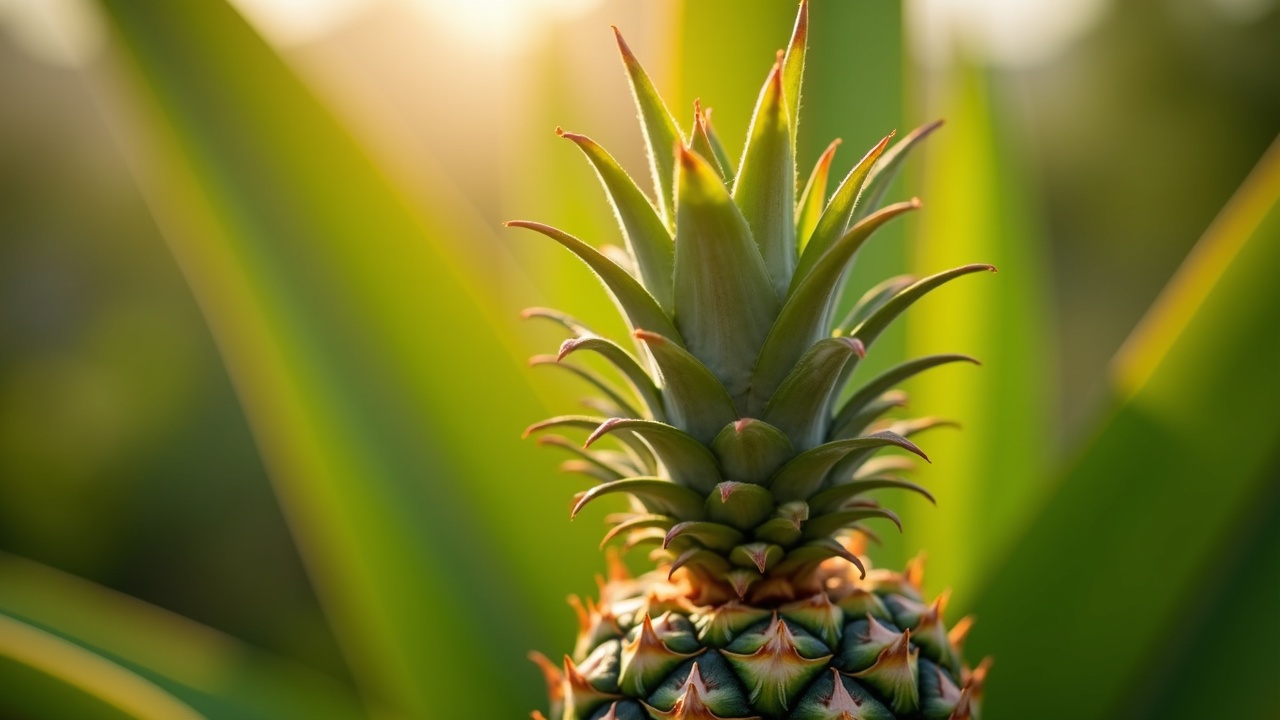
The Red Spanish, type pineapple belongs to the Spanish group of Ananas comosus, an older cultivar class distinct from modern Smooth Cayenne, derived commercial pineapples. Plants are vigorous and medium to tall with long, stiff, spiny leaves that often show reddish or purplish pigmentation near the base and margins, especially under high light or stress conditions.
Fruits are typically smaller to medium-sized (1–2.5 kg / 2–5 lb), conical to cylindrical, with prominent, angular eyes and reddish to bronze exterior coloration during development. Flesh is pale yellow to deep gold, more fibrous, and less watery than modern dessert varieties.
In modern agricultural and food science literature, Red Spanish, type pineapples are classified as dual-use pineapples: valued for fresh eating in local markets, but historically favored for processing, fermentation, and enzyme extraction due to firmer texture, higher acidity, and structural integrity.
Origin, Domestication, and Historical Use
Spanish-group pineapples trace their lineage to early Caribbean and Central American landraces, representing some of the first pineapple types encountered and spread globally during early European contact. These pineapples were widely grown throughout the Caribbean, Central America, parts of South America, and later Africa and Southeast Asia. They were preferred in traditional systems because they were more disease resistant, better adapted to low-input soils, and less prone to fruit collapse during heat and transport.
Historically, Red Spanish, type pineapples were eaten fresh, fermented into beverages, cooked with meats, dried, or used as a fiber and enzyme source, long before modern shipping-focused cultivars dominated global markets.
Plant Morphology, Flowering, and Reproductive Biology
Pineapple is a terrestrial bromeliad forming a tight basal rosette of leaves around a short central stem. After sufficient vegetative growth (usually 12–24 months), the plant produces a single terminal inflorescence. Individual flowers fuse into a multiple fruit (syncarp) without requiring fertilization.
Spanish-group pineapples rarely produce viable seed, even when flowers are pollinated. Listings that sell "pineapple seeds" typically refer to seeds from rare pollinated fruit, misidentified material, or novelty offerings with low germination reliability. True propagation is vegetative only, using crowns (fruit tops), slips (shoots below the fruit), or suckers (basal shoots).
Climate Adaptation and Environmental Requirements
Red Spanish, type pineapples thrive in USDA zones 10–12, with limited success in warm microclimates of zone 9 when frost protection is used. Optimal temperature is 22–32°C (72–90°F). Cold damage begins below approximately 10°C (50°F). The plant requires full sun (6–10+ hours), 60–85% relative humidity, and 1,000–1,500 mm of annual rainfall or irrigation, well distributed through the season.
| Parameter | Optimal Range |
|---|---|
| Growing Temperature | 22–32°C (72–90°F) |
| Cold Damage Threshold | Below ~10°C (50°F) |
| USDA Hardiness Zone | 10–12 |
| Sunlight | Full sun (6–10+ hours) |
| Soil pH | 4.5–6.5 |
| Relative Humidity | 60–85% |
| Rainfall / Irrigation | 1,000–1,500 mm annually, well distributed |
These pineapples tolerate heat and drought better than Smooth Cayenne types but are extremely intolerant of waterlogged soils.
Soil Preferences, Fertility, and Root Zone Management
Preferred soils are well-drained sandy loams or volcanic soils with high aeration. Target pH is 4.5–6.5. Excellent drainage is essential; raised beds are recommended in heavy soils. Organic matter should be moderate.
Nitrogen requirements are moderate, excess reduces sugar concentration. Potassium is critical for fruit firmness and acidity balance. Phosphorus supports early root development. Magnesium and iron are important in sandy or alkaline soils. Spanish types often outperform modern cultivars in low-fertility systems.

Propagation, Establishment, and Planting Systems
Propagules are cured (air-dried) for 2–5 days before planting to reduce rot. Plant shallow, with the base just covered. In-plant spacing is 60–90 cm (2–3 ft) with row spacing of 90–120 cm (3–4 ft). Suitable systems include in-ground tropical beds, raised beds, large containers (15–25 gallons), and agroforestry understories with high light.
Growth Cycle, Flower Induction, and Yield
Vegetative growth lasts 12–24 months. Flowering occurs naturally once sufficient carbohydrate reserves accumulate or in response to stress cues. Fruit development takes 5–6 months. Each plant produces one primary fruit, followed by multiple ratoon crops from suckers over several years.
Harvest Timing and Quality Indicators
Red Spanish pineapples do not ripen after harvest. Harvest when exterior color shifts to bronze or reddish-yellow, the aroma is strong at the fruit base, and eyes are flattened. Soluble solids typically run 12–16 °Brix, with higher acidity than dessert cultivars. These fruits are often harvested riper for local use due to their firmness.
Post-Harvest Handling and Storage
Store at 7–10°C (45–50°F) with 85–90% relative humidity. Shelf life is 1–2 weeks. Spanish-type pineapples resist bruising better than Smooth Cayenne but remain chilling-sensitive.
Processing, Preservation, and Transformation
Fresh consumption highlights the firmer texture and tangier flavor. Juicing yields high-acid, enzyme-rich juice. The fruit ferments well for tepache-style drinks, wines, and vinegars. Drying produces chewy, aromatic dried fruit. Cooking softens fibers and reduces acidity. Freezing preserves flavor but softens texture.
Spanish-group pineapples are historically preferred for bromelain extraction due to higher enzyme stability.

Culinary Use and Integration
The flavor profile is less sweet, more complex, and brighter in acidity than modern dessert types. Common uses include fresh slices with salt or spices, savory cooking with meats, fermented beverages, dried fruit, and syrups and reductions. Typical servings are 100–250 g of fresh fruit. Raw pineapple interferes with gelatin setting due to bromelain activity.
Enzymatic and Functional Compound Context
Bromelain is concentrated in the core and stem and active in raw fruit. Organic acid content is higher than dessert types. Phenolics and vitamin C contribute to oxidative stability. Heat above approximately 60°C (140°F) deactivates enzymes.
Fiber, Leaves, and Secondary Uses
Leaves are exceptionally fibrous and were historically used for cordage and textiles. Post-harvest residues provide mulch and erosion control. Spanish-group pineapples were historically valued as whole-plant utility crops, not just fruit producers.
System Integration
Red Spanish, type pineapples excel in low-input, regenerative tropical systems. They show better resistance to fruit collapse, nematodes, and disease than many modern cultivars. Seed-based listings are not a reliable propagation method for maintaining this type; vegetative material is required for true Red Spanish genetics.
References
Bromelain, Proteolytic Activity and Applications
- [Taussig SJ, Batkin S. 1988. Bromelain, the enzyme complex of pineapple (Ananas comosus) and its clinical application. An update. Journal of Ethnopharmacology. 22(2):191–203. doi:10.1016/0378-8741(88)90127-4]
- [Kelly GS. 1996. Bromelain: a literature review and discussion of its therapeutic applications. Alternative Medicine Review. 1(4):243–257. PMID:9238167]
- [Pavan R, Jain S, Shraddha, Kumar A. 2012. Properties and therapeutic application of bromelain: a review. Biotechnology Research International. 2012:976203. doi:10.1155/2012/976203]
Manganese and Nutritional Composition
- [USDA Agricultural Research Service. FoodData Central. Pineapple, raw, all varieties. FDC ID: 169124. fdc.nal.usda.gov]
- [Bartholomew DP, Paull RE, Rohrbach KG, eds. 2003. The Pineapple: Botany, Production and Uses. CABI.]
Anti-Inflammatory Properties
- [Hale LP, Greer PK, Trinh CT, James CL. 2005. Proteinase activity and stability of natural bromelain preparations. International Immunopharmacology. 5(4):783–793. doi:10.1016/j.intimp.2004.12.007]
- [CITATION NEEDED: pineapple bromelain anti-inflammatory human clinical trial systemic absorption + search: "bromelain anti-inflammatory systemic absorption human clinical trial edema"]
Pineapple Cultivation
- [Morton JF. 1987. Fruits of Warm Climates. Creative Resources Systems, Miami. pp. 18–28.]
- [FAO. 2004. Pineapple. In: Agriculture and Consumer Protection. FAO Crop and Grassland Service.]
Tags
- topic: tropical-fruit, pineapple, bromelain, ananas, food-forest, subtropical
- type: cultivation-guide, educational
- audience: home-growers, market-gardeners
- plant-species: Ananas comosus var. Spanish group (Red Spanish pineapple)
- zone: zones-10-12; zone-9-container
Research on spanish pineapple
Peer reviewed studies about spanish pineapple, listed so you can read the original rather than take our word for it. They are background on the subject, not a source for any one sentence above.
- Pineapple fruit: morphological characteristics, chemical composition and sensory analysis of red Spanish and Smooth Cayenne cultivars (1995). doi:10.1016/0308-8146(95)95790-d
- Decrowning and deslipping of the Singapore Spanish pineapple. (1970). read the study
- FIELD RESPONSE OF RED-SPANISH PINEAPPLES TO NITROGEN, CALCIUM, IRON AND SOIL pH (1949). doi:10.46429/jaupr.v33i1.14301
Common questions
What has spanish pineapple traditionally been used for?
Spanish-group pineapples trace their lineage to early Caribbean and Central American landraces, representing some of the first pineapple types encountered and spread globally during early European contact. These pineapples were widely grown throughout the Caribbean, Central America, parts of South America, and later Africa and Southeast Asia. They were preferred in traditional systems because they were more disease resistant, better adapted to low-input soils, and less prone to fruit collapse during heat and transport.
What climate does spanish pineapple tolerate?
Red Spanish, type pineapples thrive in USDA zones 10–12, with limited success in warm microclimates of zone 9 when frost protection is used. Optimal temperature is 22–32°C (72–90°F). Cold damage begins below approximately 10°C (50°F). The plant requires full sun (6–10+ hours), 60–85% relative humidity, and 1,000–1,500 mm of annual rainfall or irrigation, well distributed through the season. These pineapples tolerate heat and drought better than Smooth Cayenne types but are extremely intolerant of waterlogged soils.
What soil does spanish pineapple need?
Preferred soils are well-drained sandy loams or volcanic soils with high aeration. Excellent drainage is essential; raised beds are recommended in heavy soils. Organic matter should be moderate. Nitrogen requirements are moderate, excess reduces sugar concentration. Potassium is critical for fruit firmness and acidity balance.
How do I propagate spanish pineapple?
Propagules are cured (air-dried) for 2–5 days before planting to reduce rot. Plant shallow, with the base just covered. In-plant spacing is 60–90 cm (2–3 ft) with row spacing of 90–120 cm (3–4 ft). Suitable systems include in-ground tropical beds, raised beds, large containers (15–25 gallons), and agroforestry understories with high light.
How do I grow spanish pineapple?
Vegetative growth lasts 12–24 months. Flowering occurs naturally once sufficient carbohydrate reserves accumulate or in response to stress cues. Fruit development takes 5–6 months. Each plant produces one primary fruit, followed by multiple ratoon crops from suckers over several years.
When should I harvest spanish pineapple?
Red Spanish pineapples do not ripen after harvest. Harvest when exterior color shifts to bronze or reddish-yellow, the aroma is strong at the fruit base, and eyes are flattened. Soluble solids typically run 12–16 °Brix, with higher acidity than dessert cultivars. These fruits are often harvested riper for local use due to their firmness.
What can I make from spanish pineapple?
Fresh consumption highlights the firmer texture and tangier flavor. Juicing yields high-acid, enzyme-rich juice. The fruit ferments well for tepache-style drinks, wines, and vinegars. Drying produces chewy, aromatic dried fruit. Cooking softens fibers and reduces acidity.
What is the active compound in spanish pineapple?
Bromelain is concentrated in the core and stem and active in raw fruit. Organic acid content is higher than dessert types. Phenolics and vitamin C contribute to oxidative stability. Heat above approximately 60°C (140°F) deactivates enzymes.
What is system integration?
Red Spanish, type pineapples excel in low-input, regenerative tropical systems. They show better resistance to fruit collapse, nematodes, and disease than many modern cultivars. Seed-based listings are not a reliable propagation method for maintaining this type; vegetative material is required for true Red Spanish genetics.