Plants
Stinging Nettle (Urtica dioica)
Grow and use stinging nettle (Urtica dioica): botany, origin and history, plant morphology, climate and soil needs, and harvesting.
On this page
Botanical Description
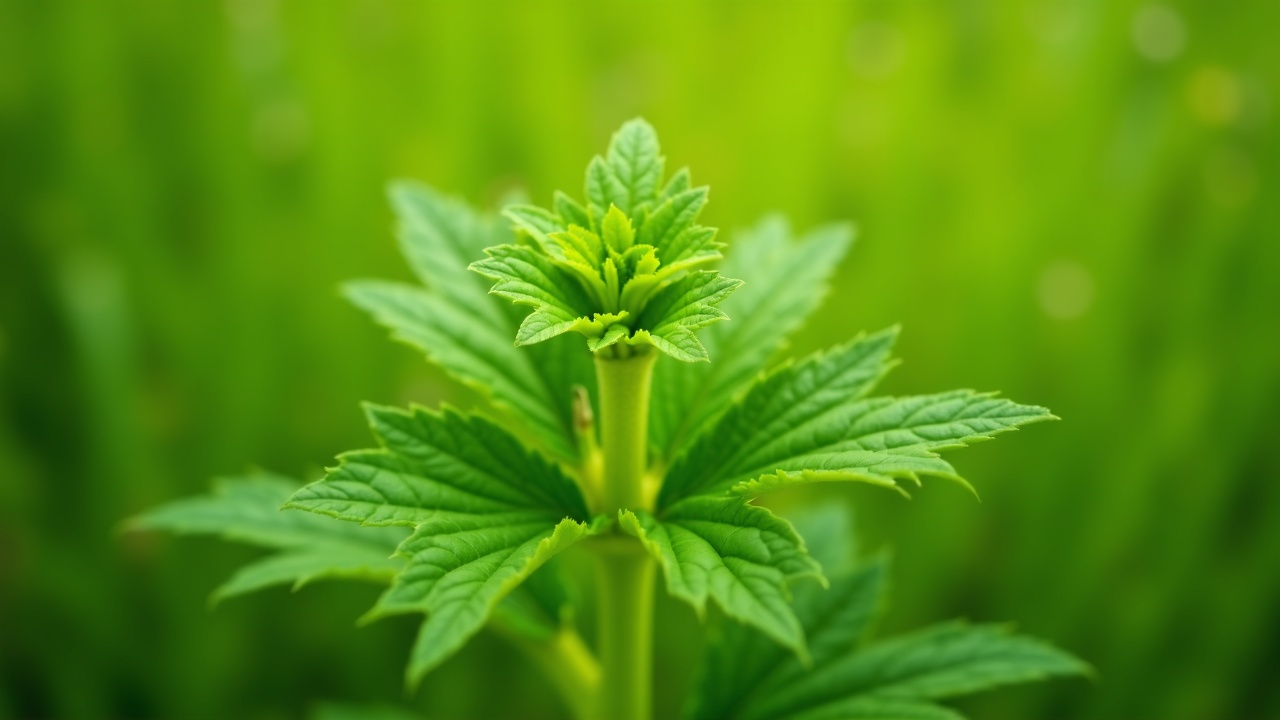
Urtica dioica is a perennial herbaceous plant in the family Urticaceae. It grows 1-2 meters tall from aggressive rhizomatous roots. The entire aerial structure is covered in two types of hairs: stinging trichomes (larger, hollow, silica-tipped) and non-stinging pubescence. Leaves are opposite, cordate to lanceolate, 3-15 cm long, with deeply serrated margins. Flowers are small, green, wind-pollinated, and arranged in axillary racemes. The species is dioecious. Male and female flowers occur on separate plants, though monoecious populations exist.
Origin and History
Native range spans Europe, Asia, and North Africa. Naturalized across North America, where it now grows in every U.S. state and Canadian province. Archaeological evidence from Bronze Age Denmark confirms nettle fiber in woven textiles dating to roughly 3000 BCE. Roman soldiers reportedly planted nettle along roads in Britain to rub on their legs during cold marches, deliberate urtication for warmth and circulation. Throughout medieval Europe, nettle was a famine food, a fiber crop, and a primary medicinal plant. During both World Wars, Germany and Austria used nettle fiber as a cotton substitute for military uniforms when supply lines failed.
Plant Morphology
Root system: Dense, bright-yellow rhizomes spread laterally up to a meter per season. This is the source of root-specific compounds used for prostate support, entirely different chemistry from the leaf.
Stems: Square in cross-section, hollow, fibrous. The bast fiber in the outer stem wall is the textile-grade material. Fiber extraction requires retting, similar to flax processing.
Leaves: Opposite pairs, each leaf 3-15 cm with a pointed tip and coarse serrations. Dense stinging trichomes concentrate on the underside and along the petiole.
Trichomes: Hollow, single-celled hairs with a bulbous base containing the chemical payload. The tip is pure silica, essentially a glass needle. Contact fractures the tip at a predetermined weak point, and the broken edge is sharp enough to penetrate skin. Capillary action delivers the contents: histamine (causes local inflammation), serotonin (amplifies pain signaling), acetylcholine (triggers nerve response), and formic acid (produces burning sensation).
Flowers: Tiny, greenish, in drooping catkin-like clusters. Male flowers release clouds of pollen. Female flowers develop small achene fruits, each containing one seed.
Climate Requirements
Hardiness zones 3-10. Nettle tolerates a remarkable range. It grows from subarctic Scandinavia to Mediterranean lowlands. Optimal growth occurs in temperate climates with consistent moisture. Full sun to partial shade, in hot climates (zones 8-10), afternoon shade prevents leaf scorch and extends the harvest window. Cold-hardy to -35C once established. Goes fully dormant in winter, with rhizomes surviving well below the frost line.
| Parameter | Range / Tolerance |
|---|---|
| USDA Hardiness Zones | 3–10 |
| Light | Full sun to partial shade |
| Soil | Rich, moist, well-drained loam; pH 5.5–7.5 |
| Moisture | Consistent; tolerates clay, sand, and rocky ground given adequate water |
Soil and Fertility
Nettle is a nitrogen indicator species. Where it grows wild, soil nitrogen levels are high, often near old farmsteads, compost piles, animal bedding areas, or floodplains. This preference is the key to cultivating it intentionally.
Ideal soil: Rich, moist, well-drained loam. pH 5.5-7.5. High organic matter content.
Fertility: Heavy nitrogen feeder. Responds strongly to compost, aged manure, and fish emulsion. In a managed bed, top-dress with 2-3 inches of compost annually. Nettle grown in nitrogen-poor soil produces smaller plants with lower mineral content, the soil quality directly determines the nutritional value of the harvest.
Moisture: Consistent moisture is more important than soil type. Nettle tolerates clay, sand, and rocky ground as long as water is available. It thrives along stream banks and irrigation ditches.
Propagation
Seed: Cold stratify for 2-4 weeks before sowing. Surface-sow on moist medium. Seeds need light to germinate. Germination is slow and erratic, typically 10-21 days at 15-20C. Seedlings are small and fragile for the first month. Transplant after the second true leaf pair.
Root division: Faster and more reliable. Divide established clumps in early spring or late fall. Each rhizome section with a growth node will produce a new plant. Space divisions 30-45 cm apart. This is the preferred commercial propagation method.
Containment: Once established, nettle spreads aggressively by rhizome. Manage with buried root barriers (30 cm deep minimum), dedicated raised beds, or regular edge cutting. Removing flower heads before seed set prevents volunteer spread.
Growth Cycle and Harvest
Spring (March-April): New shoots emerge from rhizomes. This is the prime harvest window. The top 10-15 cm of growth is most tender and highest in mineral content. Cut or pinch above a leaf node to encourage branching.
Early summer (May-June): Rapid vertical growth. Plants reach full height. Harvest becomes coarser but still usable. Once flower buds appear, leaf quality declines, the plant shifts resources to reproduction. Leaves develop cystoliths (calcium carbonate crystite structures) that can irritate kidneys if consumed in large quantity after flowering.
Mid-summer cut-back: Cut entire plants to 10 cm above ground. This forces a second flush of tender growth in 3-4 weeks, effectively a second spring harvest. In long-season climates, a third cut is possible.
Fall: Final light harvest. Allow some plants to go to seed if you want natural reseeding. Aerial parts die back after hard frost.
Yield: A well-managed bed produces 3-4 harvests per season. Expect 500-800 g of fresh greens per square meter per cutting.
Wear thick gloves and long sleeves during harvest. Leather or rubber-coated gloves defeat the trichomes. Thin fabric does not.
Post-Harvest Handling
The sting neutralizes completely through heat or drying. No residual sting remains after processing.
Blanching: Submerge in boiling water for 60 seconds. Ice bath immediately. This preserves color and nutrient density while fully deactivating trichomes. Squeeze out excess water. Use immediately or freeze in portions.
Drying: Hang bundles upside down in a warm, dry, dark space with good airflow. Alternatively, use a dehydrator at 35-40C. Drying takes 2-5 days depending on humidity. Properly dried nettle is deep green, not brown. Crumble and store in airtight glass jars away from light. Shelf life: 12-18 months.
Freezing: Blanch first, then freeze flat on trays before bagging. Maintains near-fresh quality for 6-8 months.
Processing and Preservation
Nettle tea (infusion): Use 1 tablespoon dried leaf per cup. Steep in just-boiled water for 10-15 minutes. For maximum mineral extraction, make an overnight infusion: 30 g dried nettle in 1 liter of boiled water, sealed, steeped 4-8 hours, then strained. The overnight method extracts significantly more calcium, iron, and silica.
Tincture (leaf): Fresh plant tincture at 1:2 ratio in 40-50% ethanol. Or dried plant at 1:5 in 40% ethanol. Macerate 4-6 weeks, shaking daily. Strain and bottle. Leaf tincture is used for seasonal allergy support and as a mineral-rich tonic.
Tincture (root): Dried root at 1:5 in 50-60% ethanol. Root requires higher alcohol content for proper extraction of lipophilic compounds. This is the preparation used for prostate support. Do not substitute leaf.
Powder: Dry thoroughly, then grind in a blender or spice grinder. Sieve out any stem fragments. Add to smoothies, soups, or encapsulate. Store sealed and away from moisture.
Culinary Use
Nettle substitutes directly for spinach in any cooked application. It cannot be eaten raw. The sting must be neutralized by heat or thorough drying first.
Classic preparations: Nettle soup (potato-nettle is traditional across Northern Europe), nettle pesto (substitute for basil), nettle spanakopita, nettle frittata, nettle pasta (blend into dough for green pasta).
Flavor profile: Green, mineral-rich, slightly earthy. More complex than spinach. Pairs well with eggs, cheese, potatoes, garlic, lemon.
Nutritional density: Per 100 g of blanched nettle, approximately 2.5 mg iron, 481 mg calcium, 71 mg magnesium, and significant silica content. Protein content reaches 25% by dry weight, unusually high for a leafy green (Rutto et al., 2013).
Functional Compounds
Leaf compounds: Chlorophyll, carotenoids, flavonoids (quercetin, kaempferol), phenolic acids, vitamins A, C, and K, and a dense mineral profile including iron, calcium, magnesium, silica, potassium, and manganese. Quercetin content is relevant to the allergy-support mechanism, it stabilizes mast cells and reduces histamine release (Roschek et al., 2009).
Root compounds: Lectins (Urtica dioica agglutinin), lignans, sterols (beta-sitosterol), and scopoletin. These interact with sex hormone-binding globulin (SHBG) and inhibit 5-alpha-reductase and aromatase enzymes. This is the pharmacological basis for BPH support, the root reduces DHT and estrogen activity in prostate tissue through a different mechanism than the leaf's mineral and flavonoid profile (Nahata & Dixit, 2012).
Critical distinction: Leaf and root are not interchangeable. Leaf is a mineral tonic, allergy support, and food. Root is specifically for prostate and hormonal applications. Using the wrong part for the wrong purpose is ineffective.
Cycling: Do not use concentrated nettle extracts (tincture, capsules) daily long-term. Cycle 5 days on, 2 days off, or 3 weeks on, 1 week off. Culinary use as a food is not subject to cycling concerns.
Safety and Use Boundaries
Sting first aid: Dock leaf (Rumex spp.) often grows near nettle and has been traditionally used as a topical counterirritant. Washing the area with soap and water, then applying a baking soda paste, is more reliably effective. The sting resolves within 2-12 hours without treatment.
Drug interactions: Nettle may potentiate blood-thinning medications (due to vitamin K content in leaf). Root preparations may interact with medications for BPH, diabetes, or blood pressure. Consult a healthcare provider if taking prescription medications.
Contraindications: Avoid nettle root during pregnancy, potential uterine stimulant effects. Leaf tea in moderate culinary amounts is generally considered safe during pregnancy, but concentrated preparations should be avoided without practitioner guidance.
Kidney considerations: Post-flowering leaves contain higher cystolith concentrations. Harvest before flowering for food use. People with kidney disease should consult a provider before regular use.
Allergy: Rare but documented. Individuals allergic to nettle pollen may react to ingested nettle.
Ecological and System Integration
Fertilizer tea: Steep fresh nettle (1 kg plant material per 10 liters water) for 2-3 weeks, stirring daily. The resulting liquid fertilizer provides NPK ratios comparable to comfrey tea, with additional silica and iron. Dilute 1:10 before applying as a foliar spray or soil drench. Excellent for tomatoes, peppers, and heavy-feeding crops.
Compost activator: High nitrogen content accelerates decomposition. Add chopped nettle as a green layer in compost piles.
Companion planting: Nettle planted near aromatic herbs reportedly increases essential oil production, likely related to the high nutrient availability nettle creates in surrounding soil. It also hosts beneficial insects, particularly ladybugs and lacewings.
Habitat value: Larval food plant for several butterfly species, including red admirals and painted ladies. Dense nettle patches provide shelter for ground-nesting insects and small mammals.
Fiber potential: For small-scale textile experimentation, harvest mature stems in late summer after flowering. Ret in water for 1-2 weeks, then separate bast fiber from the woody core. The fiber is finer than flax and stronger than cotton by weight. Historical production scaled to industrial levels during wartime material shortages.
Livestock feed: Dried nettle is a high-protein feed supplement for poultry, goats, and cattle. Drying eliminates the sting. Egg producers report improved yolk color and shell strength from nettle supplementation.
References
1. Nahata, A., & Dixit, V.K. (2012). Ameliorative effects of stinging nettle (Urtica dioica) on testosterone-induced prostatic hyperplasia in rats. Andrologia, 44(Suppl 1), 396-409. doi:10.1111/j.1439-0272.2011.01197.x
2. Rutto, L.K., Xu, Y., Ramirez, E., & Brandt, M. (2013). Mineral properties and dietary value of raw and processed stinging nettle (Urtica dioica L.). International Journal of Food Science, 2013, 857120. doi:10.1155/2013/857120
3. Randall, C., Randall, H., Dobbs, F., Hutton, C., & Sanders, H. (2000). Randomized controlled trial of nettle sting for treatment of base-of-thumb pain. Journal of the Royal Society of Medicine, 93(6), 305-309. doi:10.1177/014107680009300607
4. Roschek, B., Fink, R.C., McMichael, M., & Alberte, R.S. (2009). Nettle extract (Urtica dioica) affects key receptors and enzymes associated with allergic rhinitis. Phytotherapy Research, 23(7), 920-926. doi:10.1002/ptr.2763
5. Barber, E.J.W. (1991). Prehistoric Textiles: The Development of Cloth in the Neolithic and Bronze Ages. Princeton University Press. doi:10.1515/9780691201382
6. Granatstein, D. (2003). Compost teas and compost-amended liquid fertilizers for organic crop production. Center for Sustaining Agriculture and Natural Resources, Washington State University.
Tags: #nettle #urtica-dioica #mineral-dense #greens #fiber-plant #fertilizer-tea #BPH #trichomes #urtication #foraging #propagation #perennial #heirloom
Common questions
What is botanical description?
Urtica dioica is a perennial herbaceous plant in the family Urticaceae. It grows 1-2 meters tall from aggressive rhizomatous roots. The entire aerial structure is covered in two types of hairs: stinging trichomes (larger, hollow, silica-tipped) and non-stinging pubescence. Leaves are opposite, cordate to lanceolate, 3-15 cm long, with deeply serrated margins. Flowers are small, green, wind-pollinated, and arranged in axillary racemes.
What has stinging nettle traditionally been used for?
Native range spans Europe, Asia, and North Africa. Naturalized across North America, where it now grows in every U.S. state and Canadian province. Archaeological evidence from Bronze Age Denmark confirms nettle fiber in woven textiles dating to roughly 3000 BCE. Roman soldiers reportedly planted nettle along roads in Britain to rub on their legs during cold marches, deliberate urtication for warmth and circulation.
What is plant morphology?
Root system: Dense, bright-yellow rhizomes spread laterally up to a meter per season. This is the source of root-specific compounds used for prostate support, entirely different chemistry from the leaf. Stems: Square in cross-section, hollow, fibrous. The bast fiber in the outer stem wall is the textile-grade material. Fiber extraction requires retting, similar to flax processing.
What climate does stinging nettle tolerate?
Nettle tolerates a remarkable range. It grows from subarctic Scandinavia to Mediterranean lowlands. Optimal growth occurs in temperate climates with consistent moisture. Full sun to partial shade, in hot climates (zones 8-10), afternoon shade prevents leaf scorch and extends the harvest window. Cold-hardy to -35C once established.
What soil does stinging nettle need?
Nettle is a nitrogen indicator species. Where it grows wild, soil nitrogen levels are high, often near old farmsteads, compost piles, animal bedding areas, or floodplains. This preference is the key to cultivating it intentionally. Ideal soil: Rich, moist, well-drained loam. High organic matter content.
How do I propagate stinging nettle?
Seed: Cold stratify for 2-4 weeks before sowing. Surface-sow on moist medium. Seeds need light to germinate. Germination is slow and erratic, typically 10-21 days at 15-20C. Seedlings are small and fragile for the first month.
When should I harvest stinging nettle?
Spring (March-April): New shoots emerge from rhizomes. This is the prime harvest window. The top 10-15 cm of growth is most tender and highest in mineral content. Cut or pinch above a leaf node to encourage branching. Early summer (May-June): Rapid vertical growth.
What can I make from stinging nettle?
Nettle tea (infusion): Use 1 tablespoon dried leaf per cup. Steep in just-boiled water for 10-15 minutes. For maximum mineral extraction, make an overnight infusion: 30 g dried nettle in 1 liter of boiled water, sealed, steeped 4-8 hours, then strained. The overnight method extracts significantly more calcium, iron, and silica. Tincture (leaf): Fresh plant tincture at 1:2 ratio in 40-50% ethanol.
What is the active compound in stinging nettle?
Leaf compounds: Chlorophyll, carotenoids, flavonoids (quercetin, kaempferol), phenolic acids, vitamins A, C, and K, and a dense mineral profile including iron, calcium, magnesium, silica, potassium, and manganese. Quercetin content is relevant to the allergy-support mechanism, it stabilizes mast cells and reduces histamine release (Roschek et al., 2009). Root compounds: Lectins ( Urtica dioica agglutinin), lignans, sterols (beta-sitosterol), and scopoletin. These interact with sex hormone-binding globulin (SHBG) and inhibit 5-alpha-reductase and aromatase enzymes.
Is stinging nettle safe?
Sting first aid: Dock leaf ( Rumex spp.) often grows near nettle and has been traditionally used as a topical counterirritant. Washing the area with soap and water, then applying a baking soda paste, is more reliably effective. The sting resolves within 2-12 hours without treatment. Drug interactions: Nettle may potentiate blood-thinning medications (due to vitamin K content in leaf). Root preparations may interact with medications for BPH, diabetes, or blood pressure.