guides
Switchgrass (Panicum virgatum): Comprehensive Cultivation, Processing, and Use Guide
Complete guide to switchgrass cultivation covering Panicum virgatum ecotypes, C4 photosynthesis, biomass production, carbon sequestration.
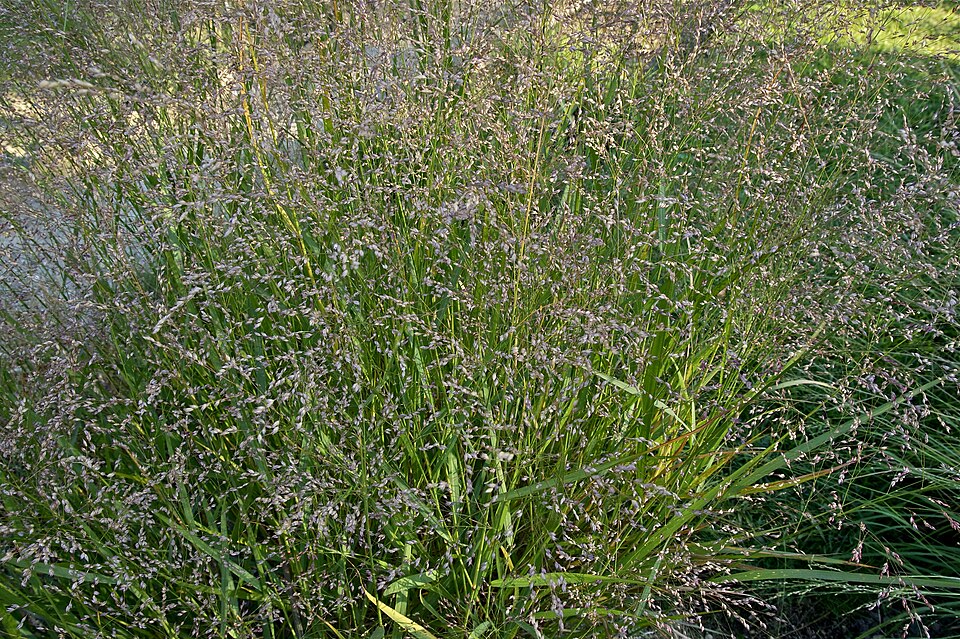
Botanical Description and Modern Scientific Context
Switchgrass, botanically Panicum virgatum, is a warm-season, perennial C4 bunchgrass native to North America. It forms upright clumps ranging from 3–8 feet (0.9–2.4 m) tall, depending on ecotype, with narrow bluish-green leaves, open airy panicles, and a dense fibrous root system that can extend 8–10 feet (2.5–3 m) deep.
The species is physiologically notable for its C4 photosynthetic pathway, which confers high water-use efficiency, strong heat tolerance, and exceptional biomass productivity under low-input conditions. These traits place switchgrass at the center of research on carbon sequestration, soil regeneration, and bioenergy systems.
In modern agronomy, ecology, and systems biology literature, switchgrass is discussed for its roles in deep carbon storage, rhizosphere microbiome interactions, lignocellulosic biomass production, and prairie ecosystem resilience, rather than as a conventional food crop.
C4 Photosynthesis Advantage
The C4 photosynthetic pathway allows switchgrass to fix carbon dioxide more efficiently than C3 grasses under high-temperature and high-light conditions, resulting in superior biomass accumulation with lower water and nitrogen demands—a critical advantage for marginal-land productivity and large-scale carbon sequestration programs.
Origin, Ecotypes, and Historical Context
Switchgrass is native to most of the continental United States, historically dominating tallgrass prairie ecosystems alongside big bluestem and Indian grass. Two major ecotypes exist, each adapted to distinct landscape positions and climatic conditions.
| Ecotype | Characteristics | Habitat |
|---|---|---|
| Lowland | Taller, coarser, higher biomass | Moist soils and floodplains |
| Upland | Shorter, finer-textured, more cold- and drought-tolerant | Uplands and thin soils |
Indigenous peoples used switchgrass for thatching, bedding, cordage, and forage. Its modern prominence arose in the late 20th century through USDA and DOE programs investigating native perennial bioenergy crops.
Growth Habit, Root Architecture, and Ecological Function
Switchgrass is a true perennial, regrowing annually from a long-lived crown. Above-ground biomass senesces annually, while below-ground structures persist for decades.
The root system is one of the most ecologically significant features of the species:
- Penetrates deep soil layers well beyond the reach of most cultivated species
- Improves soil aggregation and porosity through continuous root turnover
- Increases water infiltration and reduces surface runoff
- Sequesters large amounts of stable soil carbon in deep horizons
Carbon Sequestration Potential
Switchgrass root systems can deposit carbon several meters below the surface, where it resists decomposition and remains stable for centuries. This deep carbon storage capacity is a primary reason the species is central to climate-resilient agriculture and regenerative land management research.
Climate Adaptation and Environmental Requirements
Switchgrass performs across USDA zones 3–9, one of the widest adaptation ranges of any North American grass. Growth initiates late in spring once soil temperatures exceed approximately 10°C (50°F).
| Parameter | Optimal Range |
|---|---|
| Growing Season Temperature | 20–35°C (68–95°F) |
| Cold Tolerance | Excellent; dormant crowns survive extreme cold |
| Sun Exposure | Full sun |
| Relative Humidity | Low to moderate |
| Water Requirement | Moderate; drought tolerant once established |
| Soil Temperature for Emergence | ≥10°C (50°F) |
Soil Preferences and Fertility Dynamics
Switchgrass tolerates a wide range of soils, including marginal and degraded sites where other crops fail. The plant efficiently recycles nutrients from senescing leaves back into roots each fall, reducing external fertility requirements over time.
| Parameter | Specification |
|---|---|
| Soil Texture | Sandy loam to clay loam |
| pH Range | 5.5–7.5 (tolerates wider range) |
| Drainage | Moderate to good |
Nutrient Requirements
| Nutrient | Demand | Notes |
|---|---|---|
| Nitrogen (N) | Low to moderate | Excess reduces stand longevity |
| Phosphorus (P) & Potassium (K) | Moderate | Required primarily during establishment |
| Micronutrients | Minimal | Rarely limiting in most soils |
Propagation, Establishment, and Growing Systems
Switchgrass is established from seed, not transplants. Seeds are small and lightweight, with dormancy that varies by ecotype. Cold stratification improves germination uniformity.
Establishment Parameters
| Parameter | Specification |
|---|---|
| Planting Depth | 0.6–1.2 cm (¼–½ in) |
| Seeding Rate | 5–8 lb pure live seed per acre (drilled) |
| Soil Temperature | ≥15°C (59°F) |
| Establishment Time | Slow first year; full production by year 3 |
Growing Systems
Switchgrass is deployed across a range of land management contexts:
- Prairie restoration and native grassland reconstruction
- Dedicated biomass production fields
- Erosion control plantings on slopes and disturbed sites
- Wildlife habitat establishment and enhancement
- Regenerative grazing systems integrated with livestock
Growth Cycle, Yield, and Stand Longevity
Switchgrass follows a predictable multi-year establishment pattern before reaching full biomass production capacity.
| Year | Growth Stage |
|---|---|
| Year 1 | Root establishment; limited top growth |
| Year 2 | Moderate biomass accumulation |
| Year 3+ | Full production capacity |
Biomass Yield Potential
Upland ecotypes produce 3–6 tons of dry matter per acre per year, while lowland ecotypes can yield 6–12+ tons per acre per year under favorable conditions. Well-managed stands persist for 15–30+ years, making switchgrass one of the most durable perennial biomass crops available.
Harvest Timing and Biomass Quality
Harvest timing depends on the intended end use and has significant implications for both biomass quality and stand persistence.
| End Use | Harvest Timing |
|---|---|
| Forage | Boot to early heading stage |
| Biomass & Carbon Systems | After frost and senescence |
| Wildlife Habitat | Unharvested or rotational harvest |
Post-frost harvest is generally preferred for biomass applications because it reduces nutrient removal from the stand, improves long-term persistence, and lowers moisture content in harvested material.
Processing, Preservation, and Transformation
Switchgrass biomass is processed through several pathways depending on the target application.
Forage and Grazing
- Grazed rotationally during early vegetative growth
- High-quality forage when young and actively growing
- Fiber content increases rapidly after heading, reducing palatability
Hay and Silage
- Cut early for maximum palatability and nutritive value
- Requires mechanical conditioning due to waxy leaf surfaces
Biomass Processing
Harvested switchgrass is chopped, baled, or pelleted for use in multiple conversion pathways:
- Cellulosic ethanol: Lignocellulosic feedstock for second-generation biofuel production
- Biochar: Pyrolysis converts biomass into stable carbon for soil amendment
- Combustion pellets: Densified fuel for thermal energy generation
- Anaerobic digestion: Biogas production from fermentable plant material
Mulch and Soil Building
- Whole stems used as surface mulch for weed suppression and moisture retention
- High lignin content slows decomposition, providing long-lasting ground cover
- Excellent material for long-term soil carbon building programs
Livestock and Wildlife Use Context
Livestock Integration
- Grazed by cattle, bison, and sheep during vegetative growth stages
- Best utilized as part of a mixed-species pasture system
- Requires careful management to prevent overgrazing and stand degradation
Wildlife Habitat
- Provides critical nesting habitat for grassland birds, including quail and meadowlarks
- Offers dense cover for small mammals and ground-nesting species
- Seeds serve as a food source for granivorous bird and mammal species
Functional Compound and Structural Context
While switchgrass is not cultivated for nutritional or medicinal compounds, its structural chemistry is central to understanding its ecological and industrial value.
| Compound | Function |
|---|---|
| Cellulose & Hemicellulose | Structural carbohydrates; primary targets for biofuel conversion |
| Lignin | High content drives biomass energy value and decay resistance |
| Silica | Contributes to grazing resistance and structural rigidity |
| Root Exudates | Support microbial communities and mycorrhizal associations |
These traits underpin the species' role in regenerative land management systems rather than in nutritional or pharmaceutical applications.
Carbon Sequestration and Soil Regeneration
Switchgrass is among the most effective plants for long-term carbon storage and soil regeneration.
- Deep soil carbon storage: Root systems deposit organic carbon well below tillage depth, where it resists disturbance and decomposition
- Erosion reduction: Dense root networks bind soil particles and dramatically reduce water and wind erosion
- Long-term soil structure improvement: Continuous root turnover improves aggregation, porosity, and biological activity
Net Carbon Gains Under Harvest
Studies consistently show significant net carbon gains in switchgrass systems even when biomass is harvested annually. The deep root system continues to accumulate stable carbon below the harvest zone, making switchgrass a viable crop for simultaneous biomass production and carbon sequestration.
Seed Production and Genetic Diversity
Seed is produced in late summer to fall, with lowland ecotypes requiring warmer climates to set seed reliably. Genetic diversity is critical for stand resilience and adaptability; monocultures of single cultivars are discouraged outside of controlled production systems.
Maintaining diverse seed sources and planting regionally adapted ecotypes ensures long-term stand health and ecological function, particularly in restoration and conservation plantings.
System Integration and Additional Considerations
Switchgrass excels in multiple landscape-scale roles:
- A keystone restoration species in tallgrass prairie reconstruction
- A biomass anchor in diverse polyculture planting systems
- A low-input perennial for productive use of marginal and degraded land
- A buffer strip species for waterway protection and nutrient filtration
Companion Species
Switchgrass pairs well with several complementary species in integrated systems:
- Legumes: Nitrogen-fixing companions that reduce external fertility requirements
- Other native warm-season grasses: Big bluestem, Indian grass, and sideoats grama for ecological diversity
- Silvopasture systems: Integration with tree crops for multi-strata land productivity
Safety, Use Boundaries, and Considerations
- Switchgrass is not a human food crop and is not consumed directly
- Mature forage can cause livestock digestive issues if unmanaged, due to high fiber content at advanced growth stages
- Fire management may be required in dry regions due to high standing biomass loads—prescribed burns are a traditional and effective management tool
Cultural and Educational Importance
Switchgrass is central to contemporary discussions of prairie ecology, climate-resilient agriculture, native plant restoration, and perennial biomass systems. It represents a fundamental shift in land management philosophy—from annual extraction-based cropping to long-term land function optimization.
As awareness grows around soil health, carbon drawdown, and ecosystem services, switchgrass stands as a practical model for reconciling agricultural productivity with ecological regeneration.
Scientific and Authoritative References
This article is informed by data and conclusions drawn from, but not limited to:
- McLaughlin & Kszos, BioEnergy Research
- USDA NRCS Plant Guide: Panicum virgatum
- Sanderson et al., Agronomy Journal
- FAO Bioenergy Crop Manuals
- Parrish & Fike, Critical Reviews in Plant Sciences
- Tilman et al., Science (carbon and biomass systems)
- Liebig et al., Soil Science Society of America Journal
- Vogel & Mitchell, Journal of Soil and Water Conservation
- Casler, Crop Science
- DOE Biomass Feedstock Research Reports