guides
Vetiver (Chrysopogon zizanioides): The Grass With 12-Foot Roots That Stops Erosion, Cleans Soil, and Smells Like a Luxury Perfume
Complete vetiver cultivation guide covering Chrysopogon zizanioides deep-rooted grass botany, erosion control engineering, phytoremediation science.
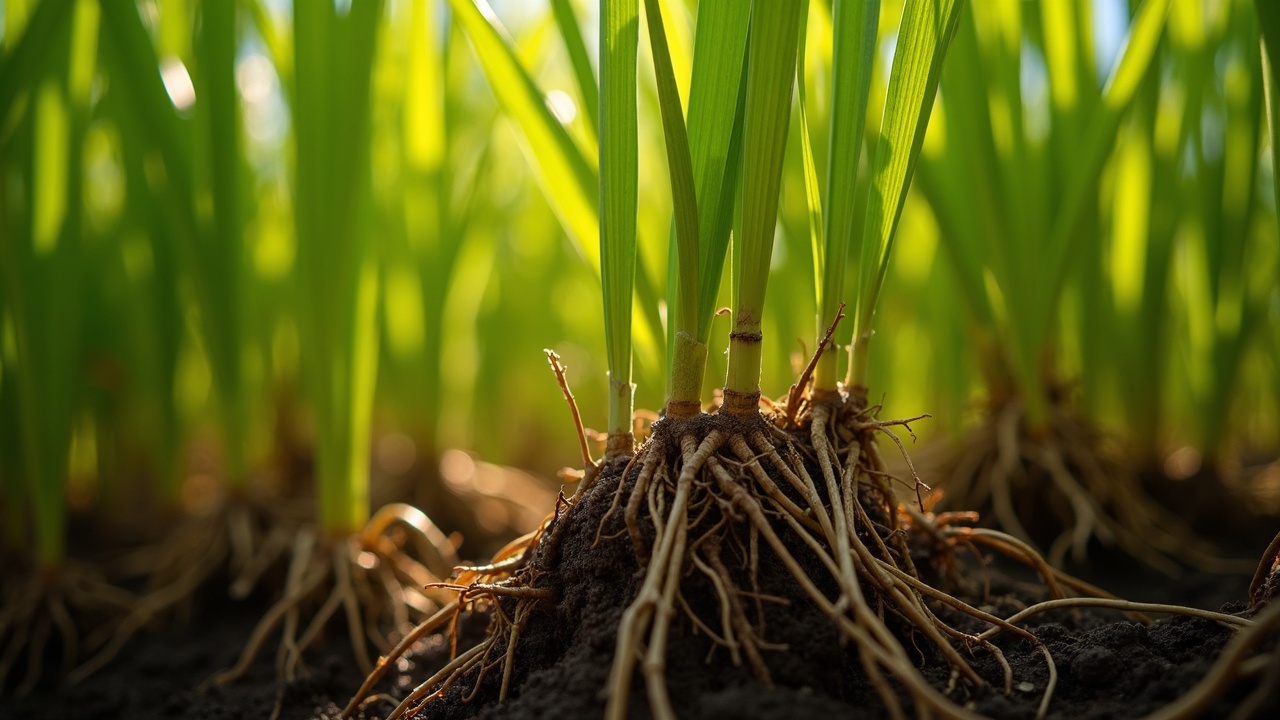
Botanical Description
Vetiver (Chrysopogon zizanioides, formerly Vetiveria zizanioides) is a tall, dense, clumping perennial grass native to India, growing 4–8 feet tall with stiff, narrow, deep-green blades. The above-ground portion is unremarkable—it looks like a large ornamental bunchgrass. The extraordinary feature is below ground: a massive, spongy, finely branched root system that can penetrate vertically to depths of 12–15 feet in loose soils, with root tensile strength approaching that of mild steel wire.
The roots are the source of vetiver’s commercial and ecological value. When dried, they emit a deep, earthy, woody, slightly smoky fragrance that has been described as “the smell of rain on dry earth”—in Hindi, the roots are called khus, and the fragrant screens woven from them (khus tattie) have been used for centuries to cool and scent hot-season Indian homes.
The Vetiver System for Erosion Control
The World Bank has endorsed vetiver grass hedgerows as one of the most cost-effective erosion control technologies available for tropical and subtropical regions. A single row of vetiver planted along a contour can reduce soil erosion by 90% and runoff velocity by 70%, while gradually creating natural terraces as sediment accumulates behind the living barrier. This “Vetiver System” has been deployed in over 100 countries for slope stabilization, watershed protection, and flood mitigation.
Growing Requirements
| Parameter | Range / Tolerance |
|---|---|
| USDA Hardiness Zones | 8b–12 (perennial); roots survive to ~15°F with mulch |
| Light | Full sun preferred; tolerates partial shade |
| Soil | Incredibly adaptable; grows in sand, clay, gravel, and even contaminated soils |
| pH Range | 3.3–12.5 (extraordinary tolerance) |
| Moisture | Drought-tolerant once established; also tolerates flooding and waterlogging |
| Salinity Tolerance | High; grows in moderately saline soils |
In Central Texas, vetiver can survive as a perennial in protected locations with heavy winter mulching. It reliably returns from roots after mild winters but may be killed to the ground by hard freezes below 15°F. Even when treated as a die-back perennial, the root system provides year-round erosion protection and soil improvement.
Cultivation
| Factor | Details |
|---|---|
| Propagation | Division only (cultivated vetiver is sterile and non-invasive; does not produce viable seed) |
| Planting | Space slips 4–6 inches apart for erosion hedgerows; 12–24 inches for ornamental use |
| Establishment | Water regularly for first 3 months while root system develops |
| Fertilization | Minimal once established; responds to nitrogen but does not require it |
| Maintenance | Cut back foliage annually; dried clippings make excellent mulch |
Sterile and Non-Invasive
A critical feature of cultivated vetiver: the variety used worldwide for erosion control and essential oil production (Monto or Sunshine cultivars) is sterile—it does not produce viable seeds. This means vetiver cannot become invasive. It spreads only by slow clump expansion and can be completely removed by digging. This sterility makes it one of the safest grasses for ecological applications.
Root Harvest and Essential Oil
Vetiver roots are typically harvested after 18–24 months of growth, when essential oil concentration peaks. The entire clump is dug (a substantial physical effort given root depth), washed, dried, and either steam-distilled for oil or dried for aromatic use.
Vetiver essential oil is one of the most complex in perfumery, containing over 150 identified compounds. It is used as a base note in high-end fragrances and is valued for its fixative properties—it slows the evaporation of more volatile top and middle notes, extending perfume longevity.
Phytoremediation
Vetiver is one of the most effective plants known for phytoremediation—the use of plants to clean contaminated soil and water. Research demonstrates its ability to:
- Absorb and sequester heavy metals (lead, cadmium, zinc, chromium, mercury) in root tissue
- Tolerate and reduce nitrate and phosphate levels in agricultural runoff
- Survive in soils contaminated with petroleum hydrocarbons, pesticides, and industrial chemicals
- Filter gray water and sewage effluent in constructed wetland systems
Extraction & Medicinal Use
Vetiver root (“khus” in South Asian tradition) is primarily processed for its essential oil — one of the most complex and persistent natural essences used in perfumery and traditional medicine. The root also has direct medicinal applications in Ayurvedic and South Asian folk medicine as a cooling, calming herb.
Simple Home Methods
Vetiver root’s primary active compounds are sesquiterpenes — fat-soluble and aromatic. Oil infusions are the most effective home extraction method. The cold water infusion captures a smaller fraction of the aromatic compounds but is the traditional South Asian daily preparation.
Cold water infusion: Add 1 tablespoon of shredded or coarsely chopped dried vetiver root to a jar with 2 cups of cold water. Cover and refrigerate overnight for 8–12 hours. Strain in the morning. The infusion is subtly earthy and aromatic — the traditional South Asian summer cooling drink. Use the same root for a second cold infusion the following day before composting it.
Hot infusion: Simmer shredded root in a covered pot for 10 minutes, then steep covered for another 10 minutes. Strain. Produces a stronger, more aromatic preparation than the cold method. Traditionally used as a diuretic and cooling herb for heat stress and fever in Ayurvedic practice.
MCT or olive oil infusion: Fill a mason jar with shredded dried vetiver root, cover completely with MCT oil or extra-virgin olive oil. Place in a warm water bath at 140°F for 4–6 hours, or leave sealed in a warm sunny spot for 4–6 weeks. Strain through cheesecloth and press firmly. The resulting oil is earthy, smoky, and deeply aromatic — the same olfactory profile as commercial vetiver essential oil but in an oil carrier. Use as a topical skin oil, in lotion or salve formulations, or in a diffuser by adding a few drops to a cotton ball. Take 1 teaspoon orally as a calming nervine preparation. Store refrigerated.
Butter infusion: Melt 1 cup of unsalted butter over a double boiler. Add 1 ounce of shredded dried vetiver root and hold at 160°F for 3–4 hours. Strain through cheesecloth. The infused butter carries the sesquiterpene fraction and can be used in cooking or taken as ½ teaspoon daily. Pairs well with cardamom and ginger in a traditional kheer or porridge preparation.
Vinegar extraction: Pack a jar with shredded dried root, cover with apple cider vinegar, seal, and macerate 4–6 weeks. Strain and press. Captures the water-soluble fraction and some aromatic compounds. Less complete than the oil infusion but useful as an alcohol-free tonic. Take 1 tablespoon in water daily as a digestive tonic or cooling herb.
Room aromatic (no extraction required): Bundle or loosely pile dried vetiver root in a mesh bag or woven basket near a window or fan. As air moves through the dried root, it releases the earthy-smoky sesquiterpene aroma — the traditional Indian “khus tatties” window screens that cooled homes and perfumed the air before air conditioning. No equipment, no preparation, effective aromatherapy.
Essential Oil (Steam Distillation)
Vetiver essential oil is produced by steam distillation of the dried, shredded root system. Fresh roots yield less oil than dried material; roots are typically harvested after 18–24 months, washed, dried at moderate temperatures, and shredded or chipped before distillation. Yield is 0.5–3.0% oil by weight depending on cultivar and growing conditions. Distillation requires extended time (8–14 hours) because vetiver’s sesquiterpene compounds are high molecular weight and slow to carry over with steam. Vetiver oil is dark brown, viscous, and intensely smoky-earthy with exceptional fixative properties — it slows the evaporation of all other components in a blend, making it irreplaceable as a base note in natural perfumery.
Root Infusion (Traditional Ayurvedic Preparation)
In Ayurveda, dried vetiver root is used as a cooling tonic. Steep 1 teaspoon of shredded dried root in cold water for several hours (cold infusion, not hot), or in hot water for 10 minutes. The cold infusion method preserves the delicate aromatic compounds better. Consumed as a mild diuretic, cooling remedy for fever, and nervine for anxiety and insomnia. Traditional South Asian application includes placing dried vetiver mats (khas-khas tatties) in windows where water evaporation releases the cooling aroma indoors.
Product Use
The essential oil is the primary commercial product. In aromatherapy, vetiver is grounding and calming — used for anxiety, overstimulation, and sleep support. Inhalation or topical diluted application (2–3% in carrier oil) is the standard method. Internally, the root infusion is a traditional cooling herb for heat stress and nervous system support. Vetiver’s deep root architecture also makes it one of the best bioremediation plants available — vetiver grass has been used to stabilize heavy-metal contaminated soils and filter agricultural runoff due to its extraordinary root depth and hyper-accumulation tolerance.
References
- Truong et al., The Vetiver System (World Bank Technical Paper) — comprehensive application guide
- Danh et al., Reviews in Environmental Science and Biotechnology — vetiver phytoremediation review
- National Research Council, Vetiver Grass: A Thin Green Line Against Erosion (National Academies Press)
- Vetiver Network International — technical bulletins and case studies
- Martinez et al., Journal of Essential Oil Research — vetiver oil chemistry