compounds
Curcuminoids: The Anti-Inflammatory Polyphenols of Turmeric
Scientific guide to curcuminoids from Turmeric (Curcuma longa). Covers curcumin's NF-kB and COX-2 inhibition, the bioavailability challenge.
What Are Curcuminoids?
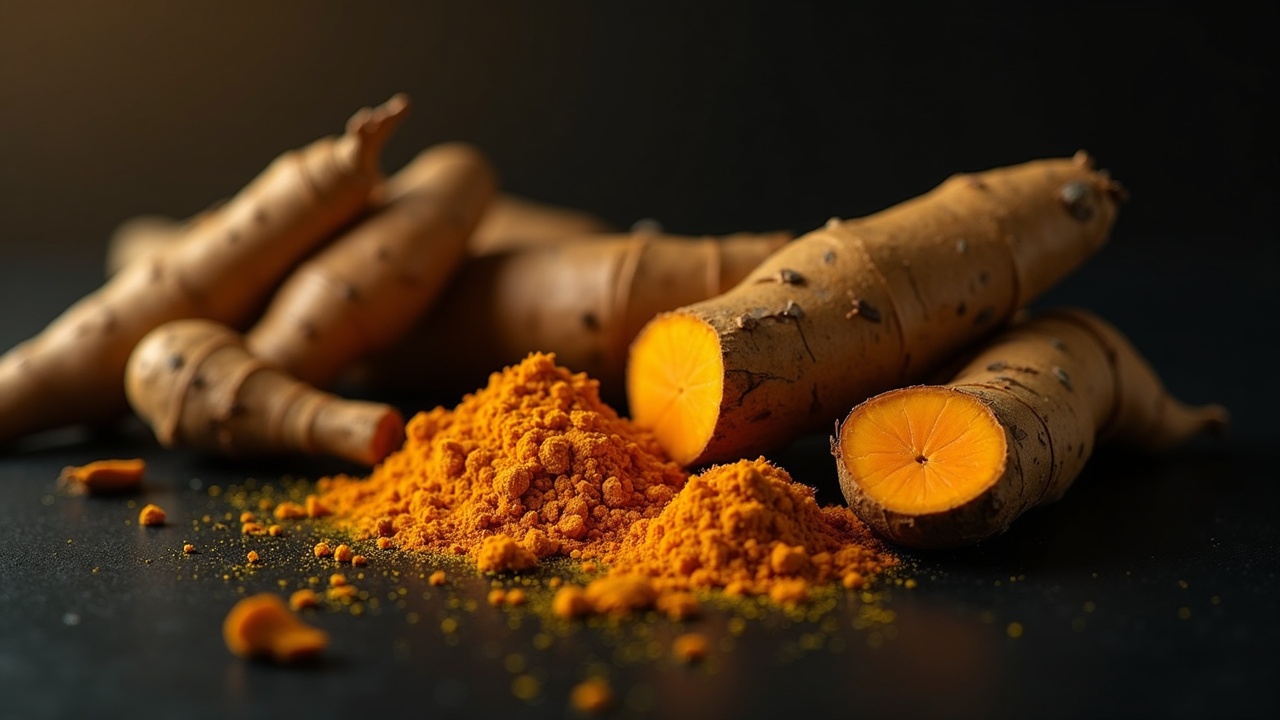
Curcuminoids are a group of yellow-orange polyphenolic pigments found in the rhizome of turmeric (Curcuma longa), a tropical plant in the ginger family. Turmeric has been a cornerstone of Ayurvedic and Traditional Chinese Medicine for over 4,000 years and is among the most extensively studied botanical compounds in modern pharmacology, with over 15,000 published research papers.
The three primary curcuminoids are curcumin (diferuloylmethane, 77% of the curcuminoid fraction), demethoxycurcumin (17%), and bisdemethoxycurcumin (~6%). Curcumin is the most pharmacologically active and best studied, though the minor curcuminoids also demonstrate significant biological activity and may contribute to the overall efficacy of whole turmeric preparations.
Curcumin Chemical Profile
- IUPAC name: (1E,6E)-1,7-Bis(4-hydroxy-3-methoxyphenyl)-1,6-heptadiene-3,5-dione
- Molecular formula: C21H20O6
- Molecular weight: 368.38 g/mol
- Chemical class: Diarylheptanoid polyphenol
- Key structural features: Two phenol rings connected by a beta-diketone bridge (keto-enol tautomerism)
- Solubility: Poorly water-soluble; soluble in ethanol, DMSO, and fats
Mechanisms of Action
Curcumin is described as a “multi-target” compound because it modulates numerous molecular targets simultaneously. While this property has sometimes been criticized in drug development circles (where single-target selectivity is valued), it is precisely what makes curcumin interesting as an anti-inflammatory and cytoprotective agent.
NF-kB Pathway Inhibition
The nuclear factor kappa-B (NF-kB) pathway is a master regulator of inflammatory gene expression, controlling the production of pro-inflammatory cytokines (TNF-alpha, IL-1beta, IL-6), COX-2, iNOS, and cell adhesion molecules. Curcumin inhibits NF-kB activation at multiple levels: it blocks IKK activation (the kinase that triggers NF-kB release), prevents nuclear translocation of the NF-kB complex, and inhibits NF-kB DNA binding. This multi-level inhibition of a single key pathway produces broad anti-inflammatory effects.
COX-2 and Lipoxygenase Inhibition
Curcumin directly inhibits cyclooxygenase-2 (COX-2) and 5-lipoxygenase (5-LOX), enzymes responsible for producing prostaglandins and leukotrienes from arachidonic acid. These lipid mediators drive pain, swelling, and inflammatory tissue damage. The dual COX-2/5-LOX inhibition profile is pharmacologically advantageous because it blocks two parallel inflammatory pathways simultaneously—an approach that pharmaceutical companies have pursued with limited success due to toxicity concerns with synthetic dual inhibitors.
Antioxidant Activity
Curcumin functions as both a direct free radical scavenger (through its phenolic hydroxyl groups and beta-diketone structure) and an indirect antioxidant (by activating the Nrf2-ARE pathway, which upregulates the body’s endogenous antioxidant enzymes including superoxide dismutase, catalase, and glutathione peroxidase). The indirect antioxidant mechanism is considered more therapeutically significant because it amplifies the body’s own defenses rather than relying on stoichiometric scavenging.
The Bioavailability Challenge
The central challenge of curcumin pharmacology is its extremely poor oral bioavailability. Unformulated curcumin is poorly absorbed from the gut, rapidly metabolized by the liver (extensive first-pass metabolism), and quickly eliminated. Oral doses of standard curcumin powder result in barely detectable plasma levels. This means that many in vitro findings (where curcumin is applied directly to cells at high concentrations) may not translate directly to oral supplementation without enhanced delivery systems.
Solving Bioavailability
The bioavailability problem has driven substantial innovation in curcumin formulation technology. Several approaches have demonstrated clinically meaningful improvements in absorption.
| Technology | Bioavailability Increase | Mechanism |
|---|---|---|
| Piperine (black pepper extract) | ~20x | Inhibits glucuronidation in liver and gut, slowing curcumin metabolism |
| Phytosome (Meriva) | ~29x | Phospholipid complex enhances membrane absorption |
| Nano-emulsion | ~40–185x | Reduces particle size to nanometers, increasing surface area and absorption |
| Micelle formulation (NovaSOL) | ~185x | Self-assembling micelles enhance water solubility and absorption |
| Amorphous solid dispersion (CurcuWin) | ~46x | Converts crystalline curcumin to amorphous form with enhanced dissolution |
Clinical Evidence
- Osteoarthritis: A 2016 meta-analysis of 8 RCTs found that curcuminoids significantly reduced pain and improved physical function in osteoarthritis, with effect sizes comparable to ibuprofen but with fewer gastrointestinal side effects
- Inflammatory bowel disease: Curcumin as adjunct therapy to mesalamine reduced relapse rates in ulcerative colitis maintenance (Hanai et al., 2006). A 2023 meta-analysis confirmed benefit in inducing and maintaining remission
- Depression: A meta-analysis of 9 RCTs found curcumin supplementation significantly reduced depressive symptoms, with greater effects at higher doses and in populations with clinical depression (Fusar-Poli et al., 2020)
- Metabolic syndrome: Multiple trials show improvements in fasting blood glucose, insulin sensitivity, triglycerides, and HDL cholesterol with curcumin supplementation in metabolic syndrome populations
- Exercise recovery: Reduced delayed-onset muscle soreness (DOMS) and inflammatory markers following intense exercise, though optimal dosing and timing protocols are still being refined
Source Plant: Turmeric
Turmeric (Curcuma longa) is a perennial herbaceous plant native to South and Southeast Asia. The rhizome (underground stem) is harvested, dried, and ground to produce the familiar golden spice. Culinary turmeric powder contains approximately 2–5% curcuminoids by weight, meaning that dietary intake through cooking provides far lower doses than those used in clinical trials (typically 500–2,000 mg of curcuminoids daily).
Safety and Interactions
- Generally recognized as safe: The FDA classifies turmeric as GRAS. Clinical trials have used doses up to 8 g/day without serious adverse effects
- Gastrointestinal effects: High doses may cause nausea, diarrhea, or stomach upset in some individuals. Taking with food minimizes this
- Blood thinning: Curcumin inhibits platelet aggregation and may potentiate anticoagulant medications. Discontinue 2 weeks before surgery
- Iron absorption: Curcumin may chelate iron and reduce absorption. Individuals with iron deficiency should separate curcumin and iron supplementation
- Gallbladder disease: Curcumin stimulates bile production and may worsen gallstone symptoms. Contraindicated in biliary obstruction
- Oxalate content: Turmeric contains significant oxalate. High-dose supplementation may increase kidney stone risk in susceptible individuals
References
- Aggarwal, B.B. & Harikumar, K.B. “Potential therapeutic effects of curcumin, the anti-inflammatory agent, against neurodegenerative, cardiovascular, pulmonary, metabolic, autoimmune, and neoplastic diseases.” International Journal of Biochemistry & Cell Biology, 2009.
- Daily, J.W. et al. “Efficacy of turmeric extracts and curcumin for alleviating the symptoms of joint arthritis.” Journal of Medicinal Food, 2016.
- Hanai, H. et al. “Curcumin maintenance therapy for ulcerative colitis.” Clinical Gastroenterology and Hepatology, 2006.
- Fusar-Poli, L. et al. “Curcumin for depression: a meta-analysis.” Critical Reviews in Food Science and Nutrition, 2020.
- Stohs, S.J. et al. “A comparative pharmacokinetic assessment of a novel highly bioavailable curcumin formulation.” Journal of the American College of Nutrition, 2020.