guides
Lavender (Lavandula angustifolia): Mediterranean Royalty That Thrives in Texas Limestone
Complete lavender cultivation guide covering English lavender botany, Mediterranean growing conditions, linalool and linalyl acetate chemistry.
Botanical Description
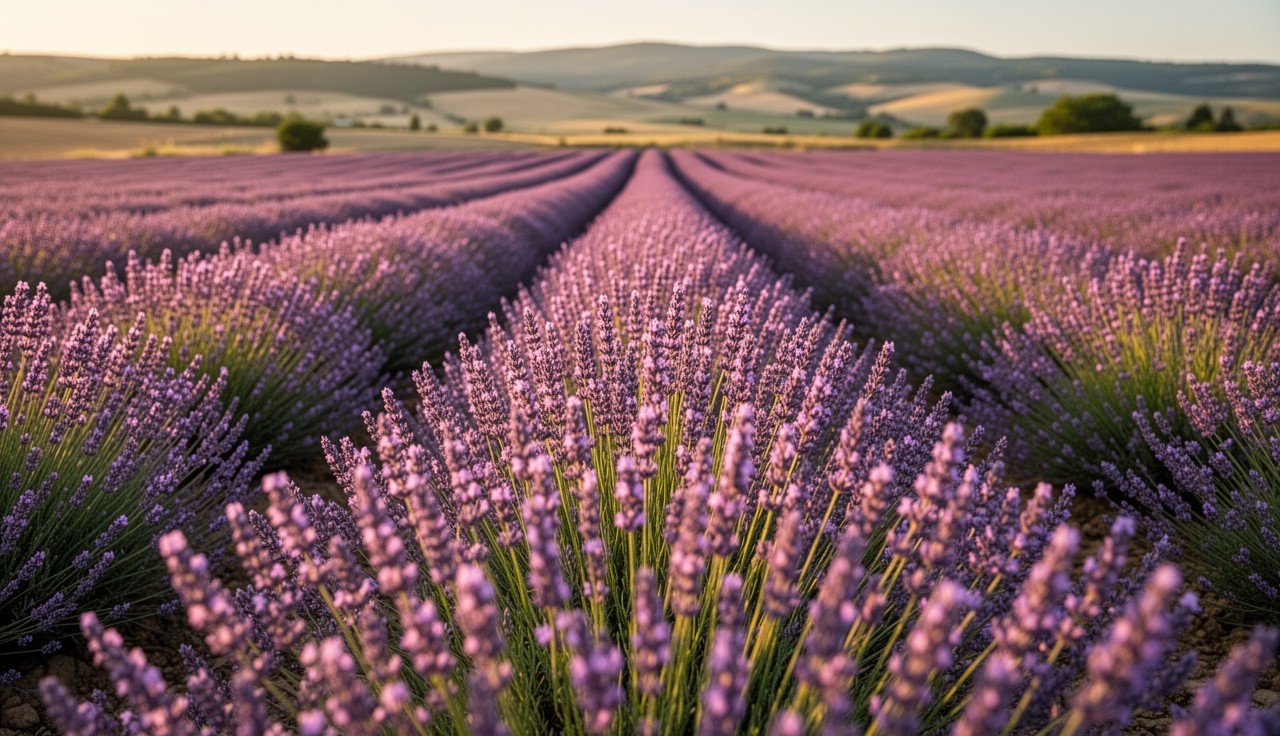
English lavender (Lavandula angustifolia, syn. L. officinalis, L. vera) is a compact, woody-based perennial sub-shrub in the Lamiaceae family, native to the western Mediterranean region. Plants form dense, silvery-green mounds 1–3 feet tall and wide, topped with iconic spikes of purple-blue flowers on long, slender stems. The entire plant—leaves, stems, and flowers—is intensely aromatic.
English lavender is the species valued for the highest-quality essential oil, distinguished from the larger but more camphoraceous spike lavender (L. latifolia) and the vigorous hybrid lavandin (L. x intermedia) commonly grown for commercial oil production. True English lavender essential oil commands premium prices due to its superior linalool-to-camphor ratio and more refined, floral aroma.
Humidity, Not Heat, Is the Killer
The most common misconception about lavender is that it cannot tolerate Texas summers. In reality, lavender handles heat up to 110°F with ease—its native Mediterranean habitat regularly exceeds 100°F. The real killer is humidity and wet soil, which cause root rot and fungal crown disease. Texas Hill Country limestone soils with their excellent drainage actually provide near-ideal conditions. The key is raised beds or slopes, excellent air circulation, and zero supplemental irrigation once established.
Growing Requirements
| Parameter | Range / Tolerance |
|---|---|
| USDA Hardiness Zones | 5–9 (cultivar dependent) |
| Light | Full sun mandatory (8+ hours) |
| Soil | Alkaline, rocky, fast-draining; pH 6.5–8.5; limestone-based ideal |
| Moisture | Very low; drought-tolerant; overwatering is the primary cause of death |
| Humidity Tolerance | Low; requires excellent air circulation; susceptible to fungal diseases in humid climates |
| Frost Tolerance | Moderate to good; most cultivars survive to 10–15°F |
Texas-Adapted Cultivars
- ‘Phenomenal’: A lavandin hybrid with exceptional heat and humidity tolerance. The single best choice for Texas growers who want reliable lavender.
- ‘Provence’: Another lavandin hybrid with good heat tolerance and prolific flowering.
- ‘Hidcote’: True English lavender, compact, with deep purple flowers. Performs well in Hill Country with good drainage.
- ‘Munstead’: Cold-hardy English lavender that also tolerates mild humidity better than most cultivars.
Cultivation
| Factor | Details |
|---|---|
| Propagation | Stem cuttings (preferred; maintains cultivar traits) or seed (slow; variable results) |
| Spacing | 18–24 inches for hedging; 24–36 inches for specimen plants |
| Soil Amendment | Add crushed limestone, gravel, or perlite to heavy soils; never add compost to established beds |
| Pruning | Essential: prune by 1/3 annually in spring after new growth appears; never cut into old wood |
| Mulch | Light-colored gravel or crushed stone only; never organic mulch against stems |
| Watering | Deep soak at transplanting; then minimal to none once established |
Harvesting and Distillation
Harvest lavender when approximately half the flowers on each spike have opened—the window between tight bud and full bloom captures peak essential oil content. Cut stems long and bundle for drying, or process immediately for distillation.
Steam distillation of lavender is one of the most accessible essential oil extraction methods for small-scale growers. A simple copper still and 10–15 pounds of fresh flowering stems yield approximately 1–2 ounces of essential oil. The distillation byproduct—lavender hydrosol (floral water)—is itself a valuable product for skin care and room sprays.
Phytochemistry
| Compound | Proportion in Essential Oil |
|---|---|
| Linalool | 25–45% (the primary calming compound) |
| Linalyl acetate | 25–47% (floral, sweet character) |
| Camphor | Less than 0.5% in true English lavender |
| 1,8-Cineole (Eucalyptol) | Less than 2.5% |
| Beta-caryophyllene | 2–8% |
| Terpinen-4-ol | 1–5% |
Clinical Research
- Anxiety (oral): Silexan (a standardized lavender oil capsule) has demonstrated anxiolytic effects comparable to lorazepam (Ativan) in multiple large RCTs for generalized anxiety disorder, without sedation, dependence, or withdrawal effects. This is arguably the strongest clinical evidence for any aromatherapy herb.
- Anxiety (inhalation): Numerous trials support inhalation of lavender essential oil for reducing pre-procedural anxiety in dental and surgical settings.
- Sleep quality: Consistent evidence for modest improvements in sleep quality from lavender inhalation, particularly in elderly, postpartum, and ICU populations.
- Pain (topical): Some evidence for topical lavender reducing pain in conditions including labor, osteoarthritis, and post-operative recovery.
Precautions
- Hormonal effects: Lavender essential oil has been associated with prepubertal gynecomastia in case reports, though a causal link remains debated. The concern relates to potential estrogenic and anti-androgenic activity of certain lavender compounds in vitro.
- Skin sensitivity: Undiluted essential oil can cause skin irritation or allergic contact dermatitis. Always dilute in a carrier oil for topical use.
- Sedative interactions: May enhance effects of CNS depressants.
- Ingestion: Essential oil ingestion should only be done with pharmaceutical-grade preparations (like Silexan) under guidance. Neat essential oil ingestion can cause GI irritation.
References
- Kasper et al., European Neuropsychopharmacology (2010) — Silexan vs. lorazepam RCT
- Woelk & Schläfke, Phytomedicine (2010) — Silexan for GAD
- Koulivand et al., Evidence-Based Complementary and Alternative Medicine (2013) — lavender and the nervous system
- Lillehei & Halcon, Journal of Alternative and Complementary Medicine (2014) — lavender inhalation and sleep
- ISO 3515:2002 — lavender essential oil quality standards
- Texas A&M AgriLife Extension — lavender production in Texas