Growing
Lemon Balm (Melissa officinalis): The Beginner’s Herb That Ancient Greeks Called the “Elixir of Life”
Complete lemon balm cultivation guide covering Melissa officinalis botany, easy-grow garden tips, rosmarinic acid content, traditional calming uses, culinary applications, and clinical research on anxiety and cognition.
On this page
Botanical Description
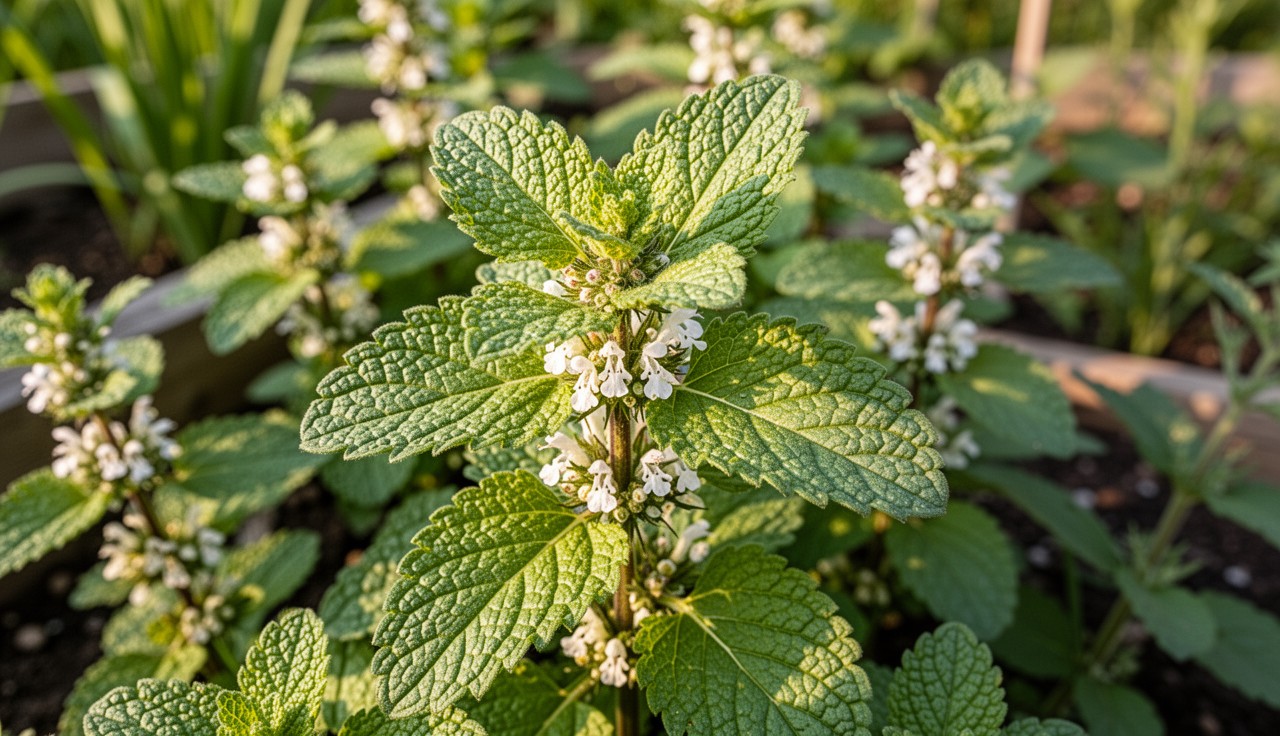
Lemon balm (Melissa officinalis) is a bushy, herbaceous perennial in the mint family (Lamiaceae), native to southern Europe, the Mediterranean, and Central Asia. It grows 12–30 inches tall in loose, branching mounds with soft, crinkled, ovate leaves that release an unmistakable lemon scent when crushed. Small white or pale yellow flowers appear in summer, attracting bees in such quantities that the genus name Melissa derives from the Greek word for honeybee.
Like most members of the mint family, lemon balm spreads by both seed and underground runners, and can become aggressively invasive in favorable conditions. This vigor is simultaneously its greatest asset for beginner growers and its greatest liability for anyone trying to maintain a tidy garden bed.
Containment Strategy
To prevent lemon balm from colonizing your entire garden, grow it in containers, bottomless pots sunk into the ground, or dedicated raised beds with root barriers. Removing flower heads before seed set also dramatically reduces volunteer seedlings. Alternatively, embrace its enthusiasm and let it serve as a fragrant, pollinator-attracting ground cover beneath trees or along pathways where foot traffic releases its scent.
History and Cultural Significance
Lemon balm is one of the oldest recorded medicinal herbs in European tradition. Dioscorides recommended it for scorpion stings and dog bites. Avicenna wrote that it “maketh the heart merry.” Paracelsus called it the “elixir of life” and believed it could completely revitalize the body. Carmelite nuns distilled it into Eau de Melisse des Carmes, a digestive and calming tonic sold continuously since 1611, one of the longest-running herbal products in European history.
The plant was introduced to North America by European colonists and quickly naturalized across the eastern United States. Thomas Jefferson grew it at Monticello, and it remains a fixture of cottage gardens and herb collections throughout the continent.
Climate and Growing Requirements
| Parameter | Range / Tolerance |
|---|---|
| USDA Hardiness Zones | 3–9 |
| Light | Full sun to partial shade; appreciates afternoon shade in hot climates |
| Moisture | Moderate; tolerates brief drought but prefers consistent moisture |
| Frost Tolerance | Excellent; dies back in winter, returns reliably from roots in spring |
| Heat Tolerance | Good with afternoon shade; bolts quickly in sustained heat above 90°F |
| Soil pH | 6.0–7.5 |
Lemon balm is one of the most forgiving herbs a gardener can grow. It tolerates poor soil, inconsistent watering, shade, frost, and neglect. The main challenge in most climates is not keeping it alive but keeping it from taking over.
Cultivation Details
| Factor | Details |
|---|---|
| Propagation | Seed (slow, 14–21 days), stem cuttings (fastest), or division (easiest) |
| Spacing | 18–24 inches; will fill in rapidly |
| Fertilization | Light; excessive nitrogen reduces essential oil concentration |
| Pruning | Cut back by half 2–3 times per season to encourage bushy growth and prevent legginess |
| Companion Plants | Excellent with tomatoes, squash, brassicas; attracts beneficial pollinators |
Harvesting and Preservation
Leaf Harvest
Harvest leaves just before the plant flowers, when essential oil concentration peaks. Cut stems back to a leaf node in the morning after dew has dried but before midday heat causes volatile oils to dissipate. Multiple harvests per season are possible, the plant regrows vigorously after cutting.
Drying
Lemon balm loses its characteristic scent quickly if dried at high temperatures. Dry in small bundles hung in a dark, well-ventilated area at room temperature, or use a dehydrator set below 95°F. The dried herb retains potency for about 6 months, significantly less than many other dried herbs.
Fresh Preservation
For best flavor, use lemon balm fresh. It freezes well in ice cube trays with water or olive oil. Fresh leaf tinctures also capture volatile compounds that are lost during drying.
The Volatile Oil Challenge
Lemon balm’s essential oil content is relatively low (0.05–0.30%), making it one of the most expensive essential oils to produce, it takes roughly 3.5 tons of fresh plant material to yield just 1 pound of essential oil. This is why true Melissa officinalis essential oil commands premium prices and why adulteration with lemongrass or citronella oil is common in the marketplace.
Phytochemical Profile
| Compound Class | Key Members |
|---|---|
| Phenolic Acids | Rosmarinic acid (primary active), caffeic acid, chlorogenic acid |
| Volatile Terpenes | Citral (neral + geranial), citronellal, beta-caryophyllene |
| Flavonoids | Luteolin, apigenin, quercetin glycosides |
| Triterpenes | Ursolic acid, oleanolic acid |
Rosmarinic acid is the dominant bioactive compound and a potent antioxidant. It also inhibits the enzyme GABA transaminase, which may partly explain lemon balm’s calming effects, by slowing the breakdown of the inhibitory neurotransmitter GABA in the brain.
Culinary Uses
- Fresh tea: A handful of fresh leaves steeped in hot (not boiling) water for 5–10 minutes produces a gentle, lemony, calming infusion. Excellent iced in summer.
- Salads and garnishes: Young leaves add a bright citrus note to green salads, fruit salads, and desserts.
- Compound butter and pesto: Blended with butter or substituted for basil in pesto recipes for a unique lemon twist.
- Cocktails and mocktails: Muddled with gin, vodka, or sparkling water as a sophisticated alternative to conventional mint.
- Baking: Infused into syrups, custards, and ice cream bases for a delicate citrus flavor.
Traditional and Functional Uses
- Calming and mood: The most established traditional use. Lemon balm tea before bed is one of the gentlest and most widely recommended herbal approaches to mild anxiety and nervous restlessness.
- Digestive comfort: Used in European herbal medicine for bloating, gas, and stress-related digestive upset. Often combined with chamomile or peppermint.
- Cognitive enhancement: Paradoxically for a calming herb, lemon balm has shown surprising effects on alertness and cognitive performance in clinical studies.
- Topical antiviral: Concentrated lemon balm extracts have been used topically for cold sores (herpes simplex virus) in European clinical practice, with some supporting clinical evidence.
Clinical Research
Unusually Strong Human Evidence
For a common garden herb, lemon balm has an unusually robust body of human clinical trial data, particularly for acute cognitive and mood effects. Several well-designed crossover studies have demonstrated measurable effects within hours of a single dose.
- Anxiety and calm: Multiple clinical trials report dose-dependent reductions in anxiety, stress, and agitation. Effects are generally mild but consistent across study populations.
- Cognitive performance: Studies at Northumbria University found that a single 600mg dose of lemon balm extract improved both speed and accuracy of cognitive tasks, with effects peaking at 2.5 hours post-dose. Higher doses (1,600mg) increased calmness but reduced cognitive speed.
- Sleep: A combination of lemon balm and valerian has shown clinical efficacy for sleep quality comparable to low-dose triazolam in one comparative trial.
- Cold sores: Topical lemon balm extract (1% concentration) reduced healing time and prevented spread in RCTs, with effects attributed to rosmarinic acid’s antiviral properties.
Precautions
- Thyroid: Lemon balm may inhibit thyroid-stimulating hormone (TSH) binding. Individuals with hypothyroidism or those taking thyroid medication should use with caution.
- Sedation: May enhance the effects of sedative medications and alcohol.
- Glaucoma: Theoretical concern about increased intraocular pressure based on animal studies; clinical significance uncertain.
References
- Kennedy et al., Psychosomatic Medicine (2004), cognitive and mood effects
- Kennedy et al., Nutrients (2018), review of Melissa officinalis clinical evidence
- Koytchev et al., Phytomedicine (1999), topical antiviral RCT
- Cases et al., Mediterranean Journal of Nutrition and Metabolism (2011), stress and anxiety
- European Medicines Agency, Herbal Monograph on Melissa officinalis
- PFAF Plant Database, Melissa officinalis cultivation
Common questions
What is botanical description?
Lemon balm ( Melissa officinalis ) is a bushy, herbaceous perennial in the mint family (Lamiaceae), native to southern Europe, the Mediterranean, and Central Asia. It grows 12–30 inches tall in loose, branching mounds with soft, crinkled, ovate leaves that release an unmistakable lemon scent when crushed. Small white or pale yellow flowers appear in summer, attracting bees in such quantities that the genus name Melissa derives from the Greek word for honeybee. Like most members of the mint family, lemon balm spreads by both seed and underground runners, and can become aggressively invasive in favorable conditions.
What has lemon balm traditionally been used for?
Lemon balm is one of the oldest recorded medicinal herbs in European tradition. Dioscorides recommended it for scorpion stings and dog bites. Avicenna wrote that it “maketh the heart merry.” Paracelsus called it the “elixir of life” and believed it could completely revitalize the body. Carmelite nuns distilled it into Eau de Melisse des Carmes , a digestive and calming tonic sold continuously since 1611, one of the longest-running herbal products in European history. The plant was introduced to North America by European colonists and quickly naturalized across the eastern United States.
What climate does lemon balm tolerate?
USDA Hardiness Zones: 3–9. Light: Full sun to partial shade; appreciates afternoon shade in hot climates. Moisture: Moderate; tolerates brief drought but prefers consistent moisture. Frost Tolerance: Excellent; dies back in winter, returns reliably from roots in spring. Heat Tolerance: Good with afternoon shade; bolts quickly in sustained heat above 90°F.
How do I grow lemon balm?
Propagation: Seed (slow, 14–21 days), stem cuttings (fastest), or division (easiest). Spacing: 18–24 inches; will fill in rapidly. Fertilization: Light; excessive nitrogen reduces essential oil concentration. Pruning: Cut back by half 2–3 times per season to encourage bushy growth and prevent legginess. Companion Plants: Excellent with tomatoes, squash, brassicas; attracts beneficial pollinators.
When should I harvest lemon balm?
Harvest leaves just before the plant flowers, when essential oil concentration peaks. Cut stems back to a leaf node in the morning after dew has dried but before midday heat causes volatile oils to dissipate. Multiple harvests per season are possible, the plant regrows vigorously after cutting. Lemon balm loses its characteristic scent quickly if dried at high temperatures. Dry in small bundles hung in a dark, well-ventilated area at room temperature, or use a dehydrator set below 95°F.
What is phytochemical profile?
Phenolic Acids: Rosmarinic acid (primary active), caffeic acid, chlorogenic acid. Volatile Terpenes: Citral (neral + geranial), citronellal, beta-caryophyllene. Flavonoids: Luteolin, apigenin, quercetin glycosides. Triterpenes: Ursolic acid, oleanolic acid. Rosmarinic acid is the dominant bioactive compound and a potent antioxidant.
What can I make from lemon balm?
Fresh tea: A handful of fresh leaves steeped in hot (not boiling) water for 5–10 minutes produces a gentle, lemony, calming infusion. Excellent iced in summer. Salads and garnishes: Young leaves add a bright citrus note to green salads, fruit salads, and desserts. Compound butter and pesto: Blended with butter or substituted for basil in pesto recipes for a unique lemon twist. Cocktails and mocktails: Muddled with gin, vodka, or sparkling water as a sophisticated alternative to conventional mint.
What is clinical research?
Unusually Strong Human Evidence. For a common garden herb, lemon balm has an unusually robust body of human clinical trial data, particularly for acute cognitive and mood effects. Several well-designed crossover studies have demonstrated measurable effects within hours of a single dose. Anxiety and calm: Multiple clinical trials report dose-dependent reductions in anxiety, stress, and agitation. Effects are generally mild but consistent across study populations.