Growing
Stinging Nettle (Urtica dioica): The Most Nutritious “Weed” You’re Not Eating
Complete stinging nettle cultivation guide covering Urtica dioica botany, nutrient-rich leaf harvest, iron and mineral content, culinary preparation.
On this page
Botanical Description
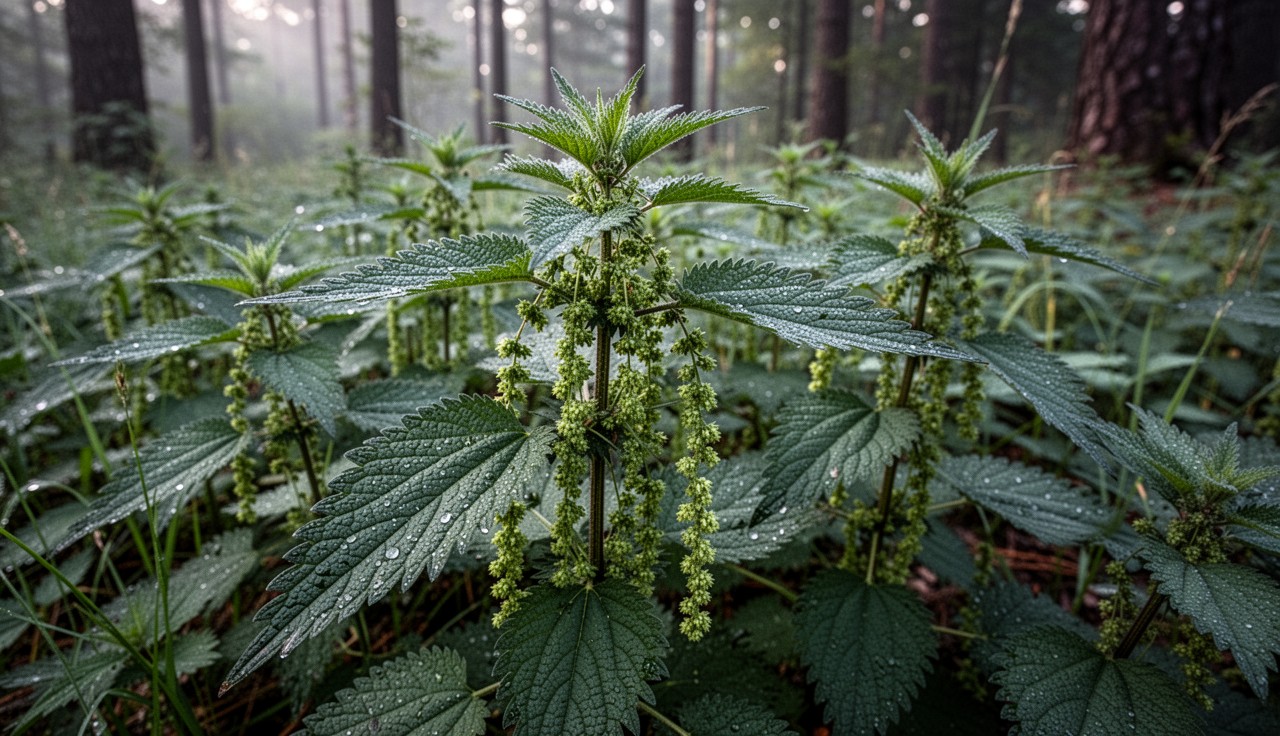
Stinging nettle (Urtica dioica) is a vigorous, spreading perennial growing 3–7 feet tall with opposite, coarsely toothed, heart-shaped leaves covered in hollow, silica-tipped stinging hairs (trichomes). Contact with these hairs injects a cocktail of histamine, acetylcholine, serotonin, and formic acid into the skin, causing the familiar stinging, itching sensation that gives the plant its name and reputation.
Despite this aggressive defense mechanism, nettle is one of the most useful plants in the human botanical repertoire. Every part of the plant has documented uses: the leaves are food and medicine, the stems produce fiber stronger than cotton, the roots have distinct medicinal applications, and the plant itself is a critical habitat for butterfly larvae (including the red admiral and painted lady).
Handling Nettle Safely
The sting is neutralized by cooking, drying, or blending. Harvest with thick gloves and long sleeves. Once wilted, dried, or blanched for 30 seconds in boiling water, the trichomes collapse and nettles are perfectly safe to handle and eat. Traditional folklore suggests that dock leaves (Rumex), which often grow nearby, can soothe nettle stings, this may have modest basis in the alkaline compounds in dock sap neutralizing the acidic sting components.
Growing Requirements
| Parameter | Range / Tolerance |
|---|---|
| USDA Hardiness Zones | 2–10 |
| Light | Partial shade to full sun |
| Soil | Rich, moist, nitrogen-rich; thrives in compost piles and manured areas; pH 6–7 |
| Moisture | High; prefers consistently moist to wet conditions |
| Propagation | Seed, division, or root cuttings (easiest) |
| Containment | Essential; spreads aggressively by rhizome. Use buried barriers or containers. |
Nettle is an indicator of nitrogen-rich, disturbed soils. If nettles grow wild near your property, the soil is fertile. For intentional cultivation, plant in a contained area with rich, moist soil and partial shade. The plant will produce prolifically with minimal care.
Nutritional Profile
| Nutrient | Content per 100g (blanched) |
|---|---|
| Protein | 5–7g (exceptionally high for a green) |
| Iron | 1.6–4.1mg (higher than spinach) |
| Calcium | 481mg |
| Vitamin A | 2,011 IU |
| Vitamin C | Significant (degrades with cooking) |
| Vitamin K | 498mcg (extremely high) |
| Silica | Notable content; supports hair, skin, nail health |
Culinary Uses
- Nettle soup: The classic preparation across Northern Europe and the British Isles. Young spring tops sautéed with onion and potato, blended into a vivid green soup.
- Nettle pesto: Blanched leaves substituted for basil produce a mineral-rich, earthy pesto.
- Spanakopita variation: Blanched nettles replace or supplement spinach in the Greek phyllo pie.
- Nettle tea: Dried leaves make a mineral-rich, slightly grassy tea. One of the most recommended herbal teas for overall nutrient supplementation.
- Nettle beer: A traditional British country brew using young nettle tops, still made by foragers and home brewers.
Traditional and Clinical Uses
- Seasonal allergies: Freeze-dried nettle leaf has shown clinical benefit for hay fever symptoms in a double-blind trial, with 58% of participants rating it effective. The mechanism may involve histamine receptor modulation or leukotriene inhibition.
- Prostate health (root): Nettle root extract is approved in Germany for benign prostatic hyperplasia (BPH), with clinical trials showing improvements in urinary flow and symptom scores.
- Joint inflammation: Traditional application of fresh stinging nettles to arthritic joints (urtication) has been validated in a small controlled trial showing reduced pain and disability in osteoarthritic thumbs.
- Nutritive tonic: Herbalists prescribe nettle tea as a gentle, long-term mineral and iron supplement, particularly for anemia, pregnancy support, and convalescence.
Beyond Food and Medicine
- Textile fiber: Nettle stem fiber was used for textiles from the Bronze Age through World War I (German army uniforms). Modern sustainable textile research has revived interest in nettle fiber as an alternative to cotton.
- Garden fertilizer: Nettle leaves steeped in water for 2–3 weeks create a nitrogen-rich liquid fertilizer prized by organic gardeners.
- Butterfly habitat: Nettles are the primary larval food plant for several butterfly species. A small nettle patch in a garden corner supports significant butterfly populations.
Precautions
- Blood thinning: Very high vitamin K content may interfere with warfarin therapy.
- Diuretic effect: Nettle has mild diuretic properties; ensure adequate hydration.
- Blood sugar: May lower blood glucose; monitor if diabetic.
- Handling: Always wear gloves when harvesting fresh nettles.
References
- Mittman, Planta Medica (1990), freeze-dried nettle for allergies
- Safarinejad, Journal of Herbal Pharmacotherapy (2005), nettle root for BPH
- Randall et al., Journal of the Royal Society of Medicine (2000), urtication for osteoarthritis
- USDA Nutrient Database, Urtica dioica nutritional data
- Vogl & Hartl, American Journal of Alternative Agriculture, nettle fiber textile review
- German Commission E Monograph, Urtica herb and root
Common questions
What is botanical description?
Stinging nettle ( Urtica dioica ) is a vigorous, spreading perennial growing 3–7 feet tall with opposite, coarsely toothed, heart-shaped leaves covered in hollow, silica-tipped stinging hairs (trichomes). Contact with these hairs injects a cocktail of histamine, acetylcholine, serotonin, and formic acid into the skin, causing the familiar stinging, itching sensation that gives the plant its name and reputation. Despite this aggressive defense mechanism, nettle is one of the most useful plants in the human botanical repertoire.
How do I grow nettle?
USDA Hardiness Zones: 2–10. Light: Partial shade to full sun. Soil: Rich, moist, nitrogen-rich; thrives in compost piles and manured areas. Moisture: High; prefers consistently moist to wet conditions. Propagation: Seed, division, or root cuttings (easiest).
What can I make from nettle?
Nettle soup: The classic preparation across Northern Europe and the British Isles. Young spring tops sautéed with onion and potato, blended into a vivid green soup. Nettle pesto: Blanched leaves substituted for basil produce a mineral-rich, earthy pesto. Spanakopita variation: Blanched nettles replace or supplement spinach in the Greek phyllo pie. Nettle tea: Dried leaves make a mineral-rich, slightly grassy tea.
What has nettle traditionally been used for?
Seasonal allergies: Freeze-dried nettle leaf has shown clinical benefit for hay fever symptoms in a double-blind trial, with 58% of participants rating it effective. The mechanism may involve histamine receptor modulation or leukotriene inhibition. Prostate health (root): Nettle root extract is approved in Germany for benign prostatic hyperplasia (BPH), with clinical trials showing improvements in urinary flow and symptom scores.