Growing
Reishi (Ganoderma lucidum): The “Mushroom of Immortality” You Can Grow on Logs in Your Backyard
Complete reishi mushroom cultivation guide covering Ganoderma lucidum biology, log and substrate growing methods, triterpene and beta-glucan chemistry.
On this page
Biological Description
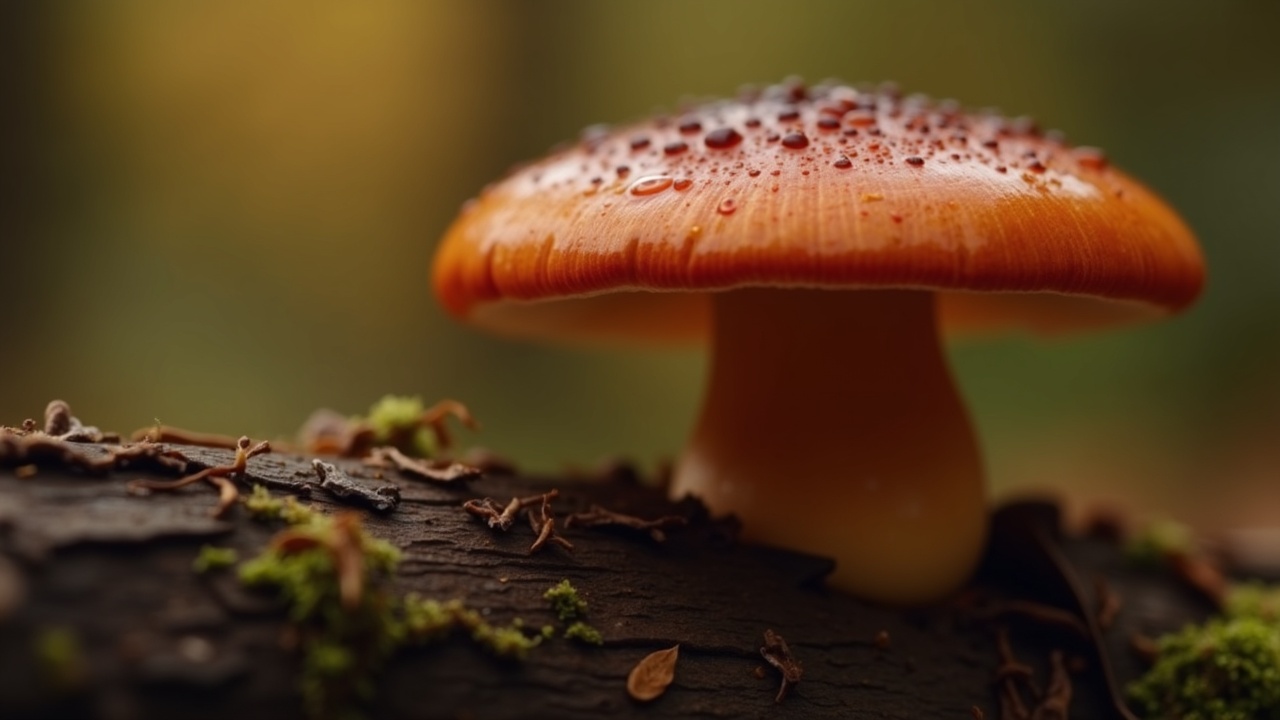
Reishi (Ganoderma lucidum), known as lingzhi in Chinese and mannentake in Japanese, is a polypore shelf fungus that grows on hardwood trees in temperate and subtropical forests worldwide. The fruiting body is distinctive: a kidney-shaped or fan-shaped cap with a lacquered, glossy surface ranging from deep red-brown to nearly black, with a white to cream-colored pore surface underneath. Wild reishi is woody, tough, and clearly not a culinary mushroom, it is bitter, hard, and must be processed (decocted or extracted) to release its bioactive compounds.
Unlike the edible mushrooms in this guide series (such as lion’s mane), reishi is used exclusively as a functional extract or tea, never as a food mushroom. Its bitter triterpenes and tough, woody texture make it entirely unpalatable in culinary preparations.
The Dual Extraction Problem
Reishi contains two primary categories of bioactive compounds: beta-glucan polysaccharides (water-soluble) and ganoderic acids/triterpenes (alcohol-soluble). No single extraction method captures both. Hot water decoction extracts the polysaccharides; alcohol tincture extracts the triterpenes. This is why “dual extraction” products (combining both methods) are preferred by knowledgeable practitioners. A product that is only a hot-water extract or only an alcohol tincture delivers only part of reishi’s bioactive spectrum.
Cultivation Methods
Log Cultivation (Outdoor)
The traditional and highest-quality method. Fresh-cut hardwood logs (oak, maple, sweet gum) 4–6 inches in diameter are drilled, inoculated with reishi plug spawn, sealed with wax, and placed in a shaded, humid outdoor location. Fruiting begins 6–18 months after inoculation and continues for 2–5 years as the fungus consumes the wood.
Substrate Bags (Indoor)
Supplemented hardwood sawdust blocks in filter-patch bags produce reishi in a controlled indoor environment. Fruiting occurs 60–90 days after inoculation. This method produces consistent results but generally lower triterpene concentrations than log-grown reishi.
| Parameter | Range |
|---|---|
| Temperature (fruiting) | 70–80°F optimal; tolerates 60–90°F range |
| Humidity | 85–95% during fruiting; critical for cap development |
| Light | Indirect ambient light; controls cap morphology and color |
| Fresh Air | Moderate exchange; high CO2 produces antler-like forms instead of caps |
| Substrate | Hardwood logs or supplemented hardwood sawdust (5–20% wheat bran) |
Phytochemistry
| Compound Class | Key Members |
|---|---|
| Triterpenes | Ganoderic acids A, Z (over 130 identified); responsible for bitter taste and many bioactivities |
| Polysaccharides | Beta-1,3/1,6-glucans (immunomodulatory); comprise 40–50% of dry weight |
| Proteins | LZ-8 (immunomodulatory protein), Ling Zhi-8 |
| Sterols | Ergosterol (vitamin D precursor), ganodesterol |
| Nucleotides | Adenosine and related compounds |
Traditional Use
Reishi is classified as a “superior” herb in the Chinese pharmacopoeia, the highest category, reserved for substances considered safe for long-term use that promote overall wellness and longevity. The Shen Nong Ben Cao Jing (oldest Chinese materia medica, ~200 CE) describes reishi as promoting vital energy, increasing thinking faculty, preventing forgetfulness, and prolonging life.
Clinical Research
- Immune modulation: Clinical studies demonstrate that reishi polysaccharides increase natural killer cell activity, T-lymphocyte counts, and cytokine production in cancer patients and healthy adults. Effects are modulatory rather than simply stimulatory.
- Cancer adjunct: A Cochrane review (2016) found that reishi combined with conventional cancer treatment improved tumor response rates and quality of life compared to conventional treatment alone, but noted that evidence quality was low.
- Sleep and fatigue: A notable 2012 RCT in breast cancer survivors demonstrated improvements in fatigue, anxiety, and quality of life after 4 weeks of reishi supplementation.
- Cardiovascular: Some clinical evidence for blood pressure reduction and cholesterol improvement, though studies are small.
Precautions
- Blood thinning: Ganoderic acids may inhibit platelet aggregation. Discontinue 2 weeks before surgery.
- Immunosuppressant interactions: Due to immune-modulating activity, caution with immunosuppressive medications.
- Hepatotoxicity: Rare case reports of liver injury with powdered reishi products (not extracts); quality and contamination may be factors.
- GI effects: Bitter triterpenes can cause stomach upset in sensitive individuals. Take with food.
Extraction & Preparation
Reishi requires dual extraction to access both its primary active compound classes: beta-glucans (water-soluble polysaccharides, immune-modulating) and triterpenes (alcohol-soluble, anti-inflammatory, adaptogenic). A water-only extraction leaves the triterpenes behind. An alcohol-only extraction leaves the beta-glucans behind. Single-solvent extracts are incomplete preparations.
Simple Home Methods
Reishi needs both water and alcohol to get the full compound profile. Beta-glucans come out in water, triterpenes come out in alcohol. The pot-and-mason-jar two-step method is completely doable at home with no special equipment.
Water decoction: Break or slice dried reishi into small pieces. Simmer 1 ounce of dried mushroom in 4 cups of water in a covered pot on low for 2 hours, don’t let it boil hard. The broth turns dark brown and intensely bitter. Strain through cheesecloth, squeezing the spent mushroom to extract as much liquid as possible. Drink 1 cup daily or reduce further by simmering uncovered and add to broth, soups, or coffee. Keeps in the fridge 5–7 days.
Home dual extraction: After completing the water decoction above, pack the spent mushroom material (still wet) into a clean mason jar. Cover completely with Everclear diluted to 60% or 80-proof vodka. Seal and macerate 3 weeks. Strain and press. Combine equal parts of the refrigerated water decoction and this alcohol extract when dosing. That is your functional home dual extract. Take 2–3 tablespoons of the combined preparation daily.
Vinegar extraction: Apple cider vinegar at 5% acidity extracts a portion of the polysaccharide fraction and is a reasonable alcohol-free option. Pack dried sliced reishi into a mason jar, cover with ACV, seal, and macerate 4–6 weeks. Strain and press. The triterpene fraction is largely absent in ACV preparations, but the polysaccharide content is partially captured. Dose: 1–2 tablespoons in water daily.
Fermentation: Add dried sliced reishi to an active kombucha fermentation vessel or a jun tea brew. The SCOBY will incorporate the reishi compounds into the finished ferment over 7–10 days. Reishi mead (honey wine) is another option, combine 2 ounces of dried reishi with 2 pounds of honey, 1 gallon of water, and wine yeast; ferment with an airlock for 3–4 weeks. Fermentation extracts both water-soluble and some lipid-soluble fractions over the fermentation period.
Hot Water Extraction (Beta-Glucans)
Reishi’s tough, woody fruiting body must be decocted, not steeped. Simmer dried, powdered or sliced reishi in water for 1–2 hours at a low boil. The cell walls are composed of chitin; prolonged heat is required to break them down and release the polysaccharide fraction. Typical ratio: 1 part dried mushroom to 10 parts water, simmered down by 50%. This produces a dark, bitter, intensely flavored liquid.
Ethanol Extraction (Triterpenes)
After completing the hot water extraction, the spent mushroom material can be macerated in 70–95% ethanol for 2–4 weeks to extract the triterpene fraction. Alternatively, fresh dried mushroom can be extracted in ethanol first, then the remaining material processed with hot water. The triterpenes, ganoderic acids A, B, C, D, and their derivatives, are responsible for the bitter taste and the hepatoprotective, anti-inflammatory, and adaptogenic effects.
Dual Extraction Protocol
The standard protocol for a complete reishi extract: (1) Decoct dried mushroom in water for 2 hours; strain and reserve the liquid. (2) Re-extract the spent material in 70% ethanol for 3 weeks; press and strain. (3) Combine both extractions and reduce to desired concentration. The final product contains both polysaccharide and triterpene fractions. This is what commercially sold “dual extract” reishi products should contain, single-solvent products miss half the chemistry.
Product Use
Reishi is classified as an adaptogen: it modulates immune response bidirectionally rather than simply stimulating or suppressing it. The beta-glucan fraction activates macrophages and NK cells; the triterpene fraction downregulates inflammatory cascades. This combination is used for chronic immune support, stress adaptation, and liver protection. Consistent daily use over months is the appropriate model. Reishi is not an acute preparation. The recommended dose for dried extract powder is 1.5–9 grams daily of the dual-extracted material.
References
- Jin et al., Cochrane Database of Systematic Reviews (2016), reishi for cancer treatment
- Zhao et al., Journal of Cancer Research and Clinical Oncology (2012), breast cancer fatigue RCT
- Wachtel-Galor et al., Herbal Medicine: Biomolecular and Clinical Aspects (CRC Press)
- Boh et al., Biotechnology Annual Review, ganoderic acid chemistry
- Stamets, Growing Gourmet and Medicinal Mushrooms (Ten Speed Press)
Common questions
What is biological description?
Reishi ( Ganoderma lucidum ), known as lingzhi in Chinese and mannentake in Japanese, is a polypore shelf fungus that grows on hardwood trees in temperate and subtropical forests worldwide. The fruiting body is distinctive: a kidney-shaped or fan-shaped cap with a lacquered, glossy surface ranging from deep red-brown to nearly black, with a white to cream-colored pore surface underneath. Wild reishi is woody, tough, and clearly not a culinary mushroom, it is bitter, hard, and must be processed (decocted or extracted) to release its bioactive compounds.
How do I grow reishi mushroom?
Log Cultivation (Outdoor). The traditional and highest-quality method. Fresh-cut hardwood logs (oak, maple, sweet gum) 4–6 inches in diameter are drilled, inoculated with reishi plug spawn, sealed with wax, and placed in a shaded, humid outdoor location. Fruiting begins 6–18 months after inoculation and continues for 2–5 years as the fungus consumes the wood. Supplemented hardwood sawdust blocks in filter-patch bags produce reishi in a controlled indoor environment.
What has reishi mushroom traditionally been used for?
Reishi is classified as a “superior” herb in the Chinese pharmacopoeia, the highest category, reserved for substances considered safe for long-term use that promote overall wellness and longevity. The Shen Nong Ben Cao Jing (oldest Chinese materia medica, ~200 CE) describes reishi as promoting vital energy, increasing thinking faculty, preventing forgetfulness, and prolonging life.
What is clinical research?
Immune modulation: Clinical studies demonstrate that reishi polysaccharides increase natural killer cell activity, T-lymphocyte counts, and cytokine production in cancer patients and healthy adults. Effects are modulatory rather than simply stimulatory. Cancer adjunct: A Cochrane review (2016) found that reishi combined with conventional cancer treatment improved tumor response rates and quality of life compared to conventional treatment alone, but noted that evidence quality was low.
What can I make from reishi mushroom?
Reishi requires dual extraction to access both its primary active compound classes: beta-glucans (water-soluble polysaccharides, immune-modulating) and triterpenes (alcohol-soluble, anti-inflammatory, adaptogenic). A water-only extraction leaves the triterpenes behind. An alcohol-only extraction leaves the beta-glucans behind. Single-solvent extracts are incomplete preparations. Reishi needs both water and alcohol to get the full compound profile.