Growing
Stevia (Stevia rebaudiana): Growing Your Own Zero-Calorie Sweetener Is Easier Than You Think
Complete stevia cultivation guide covering Stevia rebaudiana botany, subtropical growing, steviol glycoside chemistry, leaf drying and extraction, the regulatory history, and growing your own calorie-free sweetener in the garden.
On this page
Botanical Description
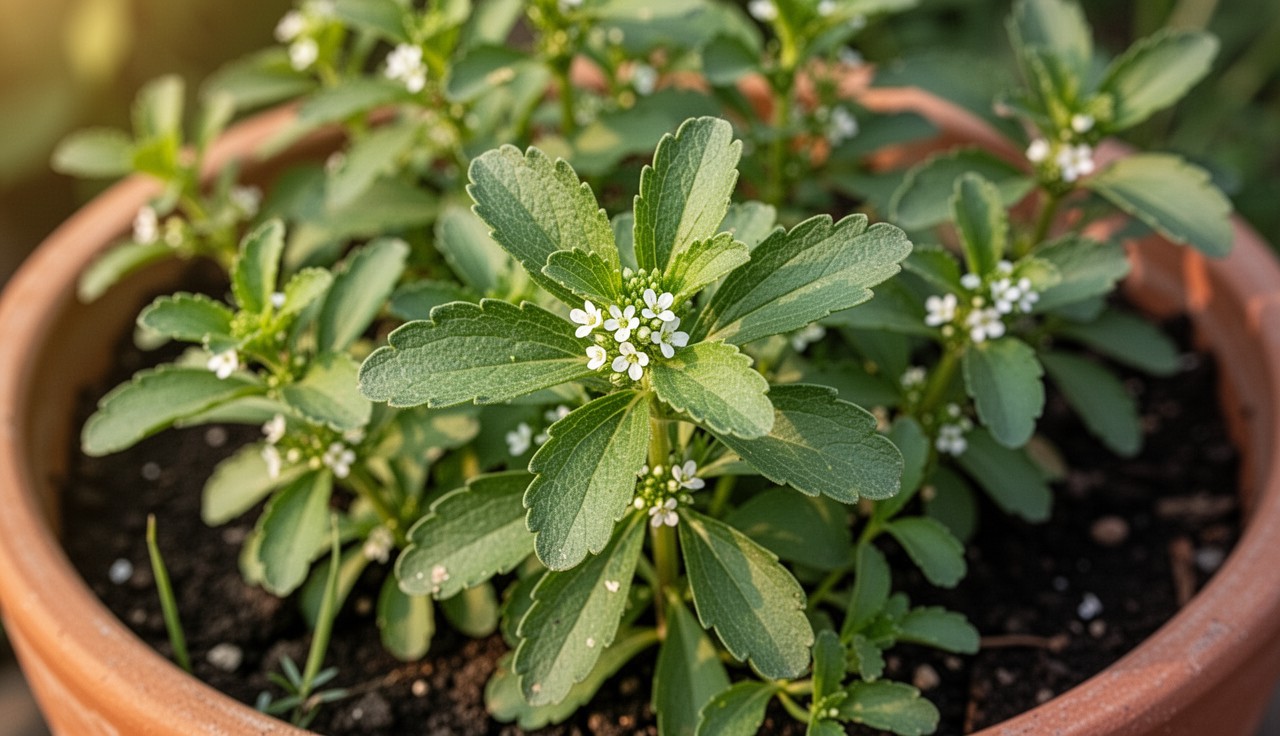
Stevia (Stevia rebaudiana) is a tender perennial herb in the Asteraceae family, native to the highlands of Paraguay and Brazil. Plants grow 12–24 inches tall with opposite, serrated, slightly sticky leaves and small white flowers. The entire plant has a sweet taste, but the leaves contain the highest concentration of steviol glycosides, the compounds responsible for intense sweetness.
Of the roughly 230 species in the genus Stevia, only S. rebaudiana produces significant amounts of sweet compounds. The Guaraní people of Paraguay have used the leaves as a sweetener for over 1,500 years, calling the plant ka’a he’ê (“sweet herb”).
Fresh Leaf vs. Commercial Powder
If your only experience with stevia is the white powder or liquid drops from the grocery store, you are in for a surprise when tasting the fresh leaf. Fresh stevia has a complex, herbal sweetness with slight licorice notes, a completely different experience from highly refined rebaudioside A products. Many people who dislike commercial stevia enjoy the fresh leaf, and vice versa. Growing your own is the only way to experience the plant as the Guaraní have for centuries.
Growing Requirements
| Parameter | Range / Tolerance |
|---|---|
| USDA Hardiness Zones | 9–11 (perennial); grown as annual in zones 3–8 |
| Light | Full sun to partial shade |
| Soil | Rich, well-drained, slightly acidic; pH 5.5–7.0; does not tolerate alkaline soil |
| Moisture | Moderate and consistent; does not tolerate drought or waterlogging |
| Temperature | 65–85°F optimal; growth stalls below 55°F |
| Frost Tolerance | None; killed by first frost |
In Central Texas, treat stevia as a warm-season annual planted after last frost. It performs well in containers with regular watering. The primary challenge is our alkaline soil, stevia strongly prefers acidic conditions. Container culture in an acidic potting mix (add peat or sulfur) bypasses this issue entirely.
Cultivation
| Factor | Details |
|---|---|
| Propagation | Stem cuttings (preferred; true to type) or seed (erratic germination; variable sweetness) |
| Spacing | 12–18 inches |
| Pinching | Pinch growing tips regularly to promote bushy growth and delay flowering |
| Flowering | Short-day trigger; flowering reduces leaf sweetness. Remove flower buds for maximum glycoside content. |
| Fertilization | Moderate; balanced organic fertilizer; avoid excessive nitrogen |
Harvesting and Processing
Timing
Harvest just before flowering for maximum sweetness. The steviol glycoside concentration peaks in late summer as days shorten but before flower buds open. Strip leaves from stems (stems are much less sweet).
Drying
Dry leaves quickly at low temperatures (95–105°F) to preserve sweetness and color. The dried leaves can be crumbled directly into tea, blended into a fine green powder for baking, or used to make a concentrated liquid extract.
Simple Liquid Extract
Steep 1 cup of fresh or dried leaves in 1 cup of warm (not boiling) water for 24 hours, strain, and refrigerate. This produces a concentrated green liquid sweetener that keeps for 1–2 weeks. For longer storage, add a small amount of food-grade alcohol as a preservative.
Sweetness Chemistry
| Glycoside | Sweetness vs. Sugar |
|---|---|
| Stevioside | 250–300x sweeter; slight bitter aftertaste |
| Rebaudioside A (Reb A) | 200–400x sweeter; cleanest taste, least bitter |
| Rebaudioside C | ~30x sweeter |
| Dulcoside A | ~30x sweeter |
| Steviolbioside | ~100x sweeter |
The ratio of stevioside to Reb A determines the taste profile. High-Reb-A cultivars are bred for commercial production because Reb A has the cleanest sweet taste with the least bitterness. Home growers can experiment with different cultivars and harvest timing to find their preferred flavor balance.
Safety and Regulatory Status
- GRAS status: Purified steviol glycosides (95%+ purity) are Generally Recognized as Safe (GRAS) by the FDA since 2008.
- Whole leaf: The FDA has not approved whole stevia leaf or crude stevia extracts as food additives, though they are freely sold as dietary supplements and are widely consumed globally.
- Blood sugar: Clinical studies show no significant effects on blood glucose in non-diabetic individuals. Some studies suggest modest blood-sugar-lowering effects in diabetic populations.
- Blood pressure: Some evidence for mild blood pressure reduction with long-term use.
References
- Lemus-Mondaca et al., Food Chemistry (2012), stevia comprehensive review
- Goyal et al., Journal of Medicinal Food, steviol glycoside pharmacology
- EFSA Panel, EFSA Journal, European safety assessment
- Brandle et al., Canadian Journal of Plant Science, stevia agronomy
- FDA GRAS Notices for steviol glycosides
Common questions
What is botanical description?
Stevia ( Stevia rebaudiana ) is a tender perennial herb in the Asteraceae family, native to the highlands of Paraguay and Brazil. Plants grow 12–24 inches tall with opposite, serrated, slightly sticky leaves and small white flowers. The entire plant has a sweet taste, but the leaves contain the highest concentration of steviol glycosides, the compounds responsible for intense sweetness. Of the roughly 230 species in the genus Stevia , only S. rebaudiana produces significant amounts of sweet compounds.
How do I grow stevia?
USDA Hardiness Zones: 9–11 (perennial); grown as annual in zones 3–8. Light: Full sun to partial shade. Soil: Rich, well-drained, slightly acidic; pH 5.5–7.0; does not tolerate alkaline soil. Moisture: Moderate and consistent; does not tolerate drought or waterlogging. Temperature: 65–85°F optimal; growth stalls below 55°F.
What can I make from stevia?
Harvest just before flowering for maximum sweetness. The steviol glycoside concentration peaks in late summer as days shorten but before flower buds open. Strip leaves from stems (stems are much less sweet). Dry leaves quickly at low temperatures (95–105°F) to preserve sweetness and color. The dried leaves can be crumbled directly into tea, blended into a fine green powder for baking, or used to make a concentrated liquid extract.
What is the active compound in stevia?
The ratio of stevioside to Reb A determines the taste profile. High-Reb-A cultivars are bred for commercial production because Reb A has the cleanest sweet taste with the least bitterness. Home growers can experiment with different cultivars and harvest timing to find their preferred flavor balance.
Is stevia safe?
GRAS status: Purified steviol glycosides (95%+ purity) are Generally Recognized as Safe (GRAS) by the FDA since 2008. Whole leaf: The FDA has not approved whole stevia leaf or crude stevia extracts as food additives, though they are freely sold as dietary supplements and are widely consumed globally. Blood sugar: Clinical studies show no significant effects on blood glucose in non-diabetic individuals. Some studies suggest modest blood-sugar-lowering effects in diabetic populations. Blood pressure: Some evidence for mild blood pressure reduction with long-term use.